

U0001 on 2015-2019 Hyundai Sonata: High-Speed CAN Bus Failure Causes and Fixes
The U0001 code on your Sonata indicates a serious communication failure between the car's computers. The most common causes are damaged wiring, loose connectors, or a single faulty control module. Diagnosis can be complex, so a professional scan is often required.
- U0001 is a critical network communication failure code that should be addressed immediately.
- The problem is most often in the wiring, connectors, or a single failed computer module, not necessarily the most expensive one.
- Do not start replacing parts without a proper diagnosis. A visual inspection of wiring and a professional network scan are essential first steps.
- While checking the battery is a good starting point, a simple low battery is a less common cause for this specific code.
- Driving with this code is not recommended due to the potential for stalling and the disabling of safety systems.
What's Unique About the 2015-2019 Hyundai Sonata
For the 2015-2019 (LF generation) Sonata, the U0001 code does not point to a single, widely-documented, recurring part failure. Unlike some vehicles with known problematic modules, the Sonata's network appears generally robust. Therefore, diagnosis should follow a logical, systematic approach starting with the basics (battery, grounds, visible wiring) rather than jumping to replace a specific 'common culprit' module. The issue is more likely related to a wiring fault, a poor connection at a major junction block, or a random module failure than a specific design flaw on this platform.
Symptoms You May Notice
- Check Engine Light is on
- Multiple warning lights on the dashboard (ABS, Airbag, Traction Control, Lane Keep Assist, Blind Spot Assist)
- Malfunctioning or erratic dashboard gauges (speedometer, tachometer)
- Random electrical failures (e.g., windows, locks, infotainment system, backup camera)
- Engine may stall, hesitate, or fail to start
- Transmission may not shift properly or get stuck in one gear
- Loss of power steering assist, causing stiff steering
- Advanced driver-assistance features (like blind-spot monitoring) may become inoperable
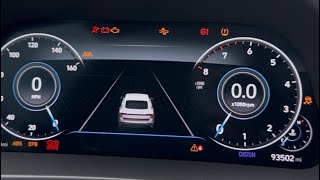
- Inability to shift out of Park 🎬 Watch: What a Sonata dashboard looks like during a network failure
- Replacing the ECM or another expensive module without first thoroughly checking all wiring, connectors, and grounds.
- Replacing the battery when the actual issue is a corroded ground strap or a wiring short.
- Overlooking a faulty ABS module, which is a central node on the CAN bus and can bring down the network if it fails.
Most Likely Causes
- Damaged or Corroded CAN Bus Wiring 🔴 High Probability Wiring can be damaged by previous repairs, accidents, rodent intrusion, or exposure to the elements, causing shorts or open circuits in the network. Areas near the engine, under the dashboard, and around collision repair zones are particularly vulnerable.
How to confirm: Visually inspect the main wiring harnesses, especially around the engine bay, under the dashboard, and at each control module. Look for chafed, broken, or corroded wires. A multimeter can be used to check for continuity and resistance (should be around 60 ohms between CAN-H and CAN-L with the battery disconnected).
Typical fix: Repair the damaged section of wiring or replace the affected harness.
Est. part cost: $5-$500 - Loose or Corroded Connectors 🟡 Medium Probability Connectors at major modules (ECM, BCM, ABS) or at main junction blocks can become loose over time or suffer from water intrusion, leading to poor communication. On similar Hyundai platforms, water leaks from A-pillars have been known to drip onto the interior junction box/BCM, causing corrosion and network failure.
How to confirm: Disconnect, inspect, and reseat connectors for all major control modules on the CAN bus. Check for bent, corroded, or loose-fitting pins (pin drag test).
Typical fix: Clean any corrosion from the pins and ensure the connector is securely seated. Replace the connector or terminal if it's damaged.
Est. part cost: $10-$100 - Faulty Control Module 🟡 Medium Probability Any single module on the network (ECM, TCM, BCM, ABS, Airbag Module, etc.) can fail internally, causing it to either stop communicating or flood the network with bad data, bringing down the entire system.
How to confirm: This requires a professional scan tool. The diagnostic process involves performing a network scan to see which modules are offline. If multiple modules are offline, a technician will isolate modules one by one by disconnecting them and seeing if communication is restored to the rest of the network.
Typical fix: Replace the faulty control module. The new module will likely require programming by a dealer or qualified shop.
Est. part cost: $200-$1500 - Poor Battery Connection or Weak Battery ⚪ Low Probability → Shop Vehicle Battery Low system voltage can cause unpredictable behavior in electronic modules, sometimes leading to communication error codes. While not a direct cause, an unstable power supply can expose underlying weaknesses in the CAN network.
How to confirm: Test the battery voltage (should be above 12.4V with the engine off). Clean the battery terminals and check that the connections are tight. A user on Reddit with a 2018 Sonata had the battery and alternator tested as a first step, and they passed, indicating a more complex issue.
Typical fix: Clean or tighten battery terminals. Replace the battery if it fails a load test.
Est. part cost: $150-$300
Rare But Worth Checking
- Aftermarket Electronics Interference: A poorly installed remote starter, alarm, or stereo system can interfere with the CAN bus if it's improperly wired into the network, causing communication errors. These devices should be disconnected as a primary diagnostic step.
- Software Corruption: In rare cases, a module's software can become corrupted, requiring a reflash or update from a Hyundai dealer.
- Faulty Gateway Module: The Body Control Module (BCM) or a dedicated gateway module acts as a bridge between different vehicle networks. If this module fails, it can prevent communication across the entire high-speed CAN bus.
Diagnosis Steps
- Check Battery and Connections: Ensure the battery is fully charged (12.4V+ engine off) and the terminals are clean and tight. Check alternator output when running (typically 13.5-14.5V).
- Perform a Visual Inspection: Carefully inspect all visible wiring harnesses for signs of damage, corrosion, or loose connections. Pay close attention to areas where harnesses pass through the firewall, near hot engine components, or in areas of previous collision repair.
- Scan for All Codes: Use a professional-grade scan tool to perform a full network scan. Note which modules are not communicating ('offline'). This is the most critical first step to understanding the scope of the failure.
- Check CAN Bus Resistance: With the battery disconnected, use a multimeter to measure the resistance between Pin 6 (CAN-H) and Pin 14 (CAN-L) on the OBD-II port. A healthy network should read approximately 60 ohms. A reading of 120 ohms suggests an open circuit or a missing termination resistor. A reading near 0 ohms indicates a short between the CAN lines.
- Check CAN Bus Voltages: With the key on and engine off, check the voltage on the CAN lines. CAN-H (Pin 6) should be around 2.6V and CAN-L (Pin 14) should be around 2.4V. Voltages that are stuck high or low can indicate a short to power or ground.
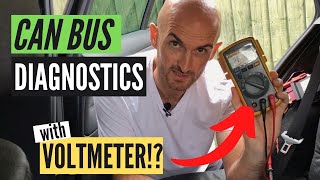
- Isolate Modules: If the resistance or voltage is incorrect, begin disconnecting modules from the CAN bus one at a time. Start with easily accessible modules like the ABS or modules in the cabin. After disconnecting each module, re-check the network resistance. The module that, when disconnected, restores the 60-ohm reading is likely the faulty one. 🎬 Watch: Step-by-step CAN bus diagnostics on a Hyundai
- Verify Power and Ground to the Faulty Module: Before replacing a suspected bad module, always use a wiring diagram to check that it has proper power and ground connections. A module can't communicate without correct power.
Parts You'll Likely Need
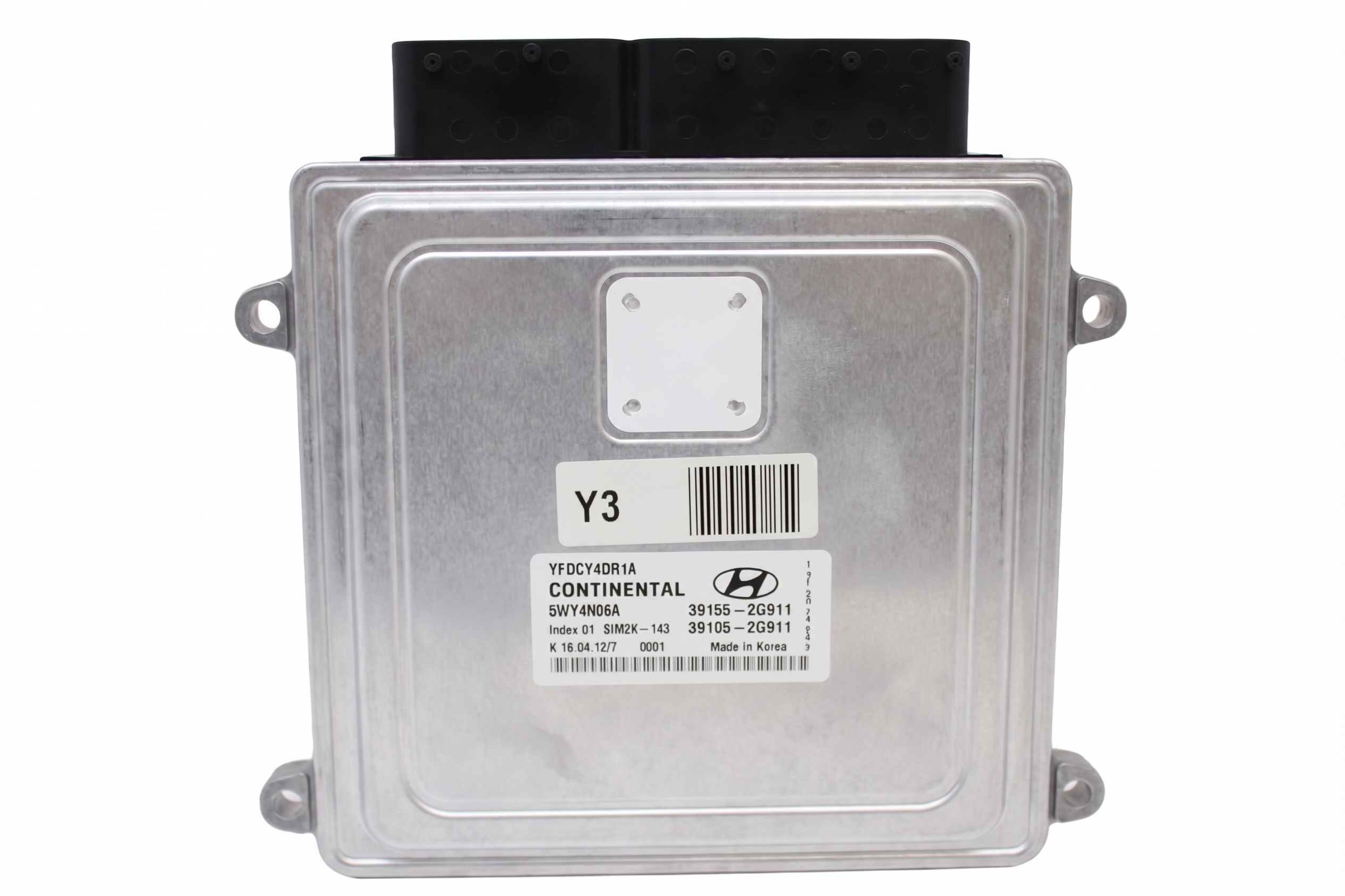
- Engine Control Module (ECM) — If the ECM fails internally, it can disrupt the entire CAN network. This is a common point of failure for network codes, though not guaranteed.
Trusted brands: Hyundai (OEM)
OEM price range: $800-$1500
Aftermarket price range: $400-$800 (Remanufactured) - Body Control Module (BCM)
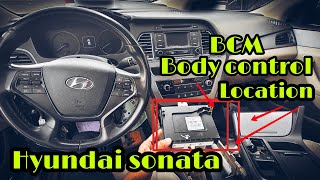
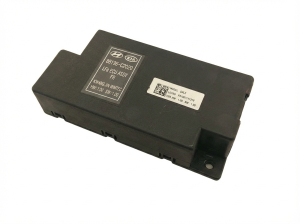
(OEM #e.g., 95400-C2110 (Varies by trim and year, must verify by VIN))— The BCM, often integrated with the smart junction block/interior fuse panel 🎬 Watch: How to locate the body control module, acts as a gateway for the CAN network. Water intrusion or internal failure is a possible cause.
Trusted brands: Hyundai (OEM)
OEM price range: $400-$700
Aftermarket price range: $200-$400 (Remanufactured) - Wiring Harness — If a section of the CAN bus wiring is damaged beyond simple repair, a portion of the harness may need to be replaced.
Trusted brands: Hyundai (OEM)
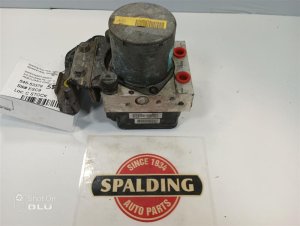
OEM price range: $300-$1000+ - ABS Control Module — The ABS module is a critical node on the high-speed CAN bus. An internal failure can short the communication lines and bring down the entire network.
Trusted brands: Hyundai (OEM)
OEM price range: $500-$1200
Aftermarket price range: $250-$600 (Remanufactured)
Related Codes That Often Appear With This One
- U0100 (Lost Communication With ECM/PCM)
- U0101 (Lost Communication with TCM)
- U0121 (Lost Communication With Anti-Lock Brake System (ABS) Control Module)
- U0140 (Lost Communication With Body Control Module)
- U0155 (Lost Communication With Instrument Panel Cluster (IPC) Control Module)
Mechanic-Grade Diagnostic Values
- CAN Bus Resistance at OBD-II Port — expected: Approximately 60 Ohms. Failure: A reading of 120 Ohms indicates an open circuit or a missing termination resistor. A reading near 0 Ohms indicates a short between the CAN-H and CAN-L lines.
- CAN-H Voltage at OBD-II Port (Pin 6) — expected: ~2.6 Volts (Key On, Engine Off). Failure: Voltage stuck high (near 5V) or low (near 0V) indicates a short to power or ground.
- CAN-L Voltage at OBD-II Port (Pin 14) — expected: ~2.4 Volts (Key On, Engine Off). Failure: Voltage stuck high (near 5V) or low (near 0V) indicates a short to power or ground.
Scan Tool Commands That Help
- Hyundai GDS (Global Diagnostic System): Network Scan / Module Status Check — This is the first and most critical step. It performs a 'roll call' of all modules on the network and provides a list of which ones are communicating ('OK') and which are not responding. A U0001 code will typically show multiple, if not all, modules as offline.
- Hyundai GDS (Global Diagnostic System): View Live Data — If some modules are still online, a technician can view their live data streams. If a module is online but providing erratic or nonsensical data, it could be the source of the network disruption.
- Professional Scan Tool: Clear All DTCs — After a repair attempt, such as cleaning a ground or reseating a connector, clearing all codes and re-scanning is necessary to see if the fault returns. Sometimes, low voltage events can set intermittent U-codes that will not return after being cleared if the underlying power issue is resolved.
Wiring & Ground Locations
- Smart Junction Block (SJB) / BCM — Integrated into the interior fuse panel, typically located on the driver's side of the dashboard, accessible behind a cover panel.. The BCM acts as the central gateway for the CAN bus network. Connectors on the rear of this fuse panel are critical communication hubs. Water intrusion or loose connections here can cause a total network failure.
- Data Link Connector (OBD-II Port) — Under the driver's side dashboard, to the left of the steering column.. This is the primary diagnostic access point. Pin 6 (CAN-H) and Pin 14 (CAN-L) are used for all network resistance and voltage tests.
- Main Engine Ground Strap — Typically a braided strap connecting the engine block or transmission case directly to the vehicle's chassis/frame rail in the engine bay.. A corroded or loose main ground strap can cause fluctuating system voltage and introduce electrical noise, disrupting module communication and potentially setting a U0001 code.
Real Owner Repair Stories
- Reddit user in r/AskAMechanic (Hyundai Sonata (year not specified, but symptoms align with LF generation)) — All emergency lights on, erratic speedometer, loss of power steering and acceleration. The backup camera had also failed a few months prior.
❌ Tried (didn't work) Not specified, user took it to the dealership for diagnosis.
✅ What actually fixed it The dealership diagnosed that the faulty backup camera was 'taking down the can network.' The user was seeking a way to fix the issue without replacing the camera, implying the camera itself was the confirmed root cause. - Reddit user in r/MechanicAdvice (2018 Hyundai Sonata) — Flashing blind spot and lane keep assist warnings, backup camera stopped working, stiff steering, unable to shift out of park. Speedometer and tachometer were also intermittently failing. Codes U0001 and U0164 were present.
❌ Tried (didn't work) Had battery and alternator tested (both passed). Checked ECM fuses (all appeared okay).
✅ What actually fixed it The user did not post a final resolution. This story is included as a clear example of the complex, multi-system symptoms that accompany a U0001 code, even after basic power checks pass.
OEM Part Supersession History
95400-C2200→95400-C2201— Standard part revision by the manufacturer.
Heads up: These parts are for 2015-2016 models with specific options (conventional ignition, w/o park assist). Part numbers are highly dependent on vehicle options like smart key, heated windshield, etc. Always verify the correct part number by VIN.N/A→95400-C2710— Part for 2017-2019 models.
Heads up: This BCM is for later models (2017-2019) with smart key but without heated windshield or park assist. Illustrates the changes across the generation.
Model Year Variations Within This Range
- 2018-2019: The 2018 model year marked a significant refresh for the Sonata. While the core CAN bus architecture remained similar, changes included a new 8-speed automatic transmission for the 2.0T engine, a revised rear suspension, and updated infotainment systems with standard Apple CarPlay/Android Auto. Blind Spot Detection became standard. These changes introduce more complexity and slightly different module configurations compared to the 2015-2017 models.
- 2015-2019: The Blue Link telematics system in these vehicles relied on 3G cellular networks. As of early 2023, these networks were shut down, rendering the Blue Link services inactive unless a specific software update was performed on certain models. While not a direct cause of U0001, this highlights that module software and network connectivity are critical on this platform.
Diagnostic Flowchart
Other Known Issues on This Vehicle
Issues unrelated to this code that are worth knowing about as an owner of this generation:
- Theta II Engine Failure (2.0L & 2.4L GDI) 🔴 High — Widespread issue affecting many 2011-2019 models. Manufacturing debris can lead to premature connecting rod bearing wear, causing engine knocking, seizure, and potential fires. Failures can occur at various mileages. (Ref: Subject of multiple recalls (e.g., Hyundai Campaign 953/NHTSA 21V-727 for KSDS update) and class-action lawsuits resulting in extended warranties.)
- Excessive Oil Consumption (2.4L GDI) 🔴 High — Very common complaint, with many owners reporting consumption of a quart of oil every 500-1000 miles. Often starts around 40,000-80,000 miles. Can lead to engine damage if not monitored closely. (Ref: Related to the Theta II engine issues; dealers perform oil consumption tests to determine if an engine replacement is warranted under the extended warranty.)
- Dual-Clutch Transmission (DCT) Problems (1.6T Eco) 🟠 Medium → Shop Transmission Assembly — Affects models with the 7-speed DCT, causing hesitation, shuddering from a stop, jerking, and sometimes a total loss of power. Problems can be intermittent and are often worse in hot weather or heavy traffic. (Ref: Hyundai issued TSBs (e.g., 16-01-038) and recalls (e.g., NHTSA 16V-628 for 2016 Tucson) to reprogram the Transmission Control Module (TCM) logic.)
- Parking Lights Remain On 🟡 Low — A widely reported electrical issue where the parking lights will not turn off, potentially draining the battery. It is one of the most common complaints logged for the 2015 model year on RepairPal.
Used vs. New Parts: Buying Guide for This Vehicle
When a used part is the smart pick: Used parts like wiring harnesses, connectors, or peripheral modules (like a backup camera or radio) from a reputable salvage yard can be a cost-effective choice, provided they are from a vehicle with no flood or major collision damage. A complete interior fuse panel (Smart Junction Box) can also be sourced used, but verify part numbers meticulously.
Donor-vehicle mileage cap: roughly under 80000 miles for the part to have meaningful remaining life.
What to inspect on the donor part:
- Verify the donor vehicle's VIN to ensure option compatibility (smart key, trim level, etc.).
- Inspect connectors for any signs of corrosion, bent pins, or cut wires.
- For wiring harnesses, ensure the protective loom is intact and there are no signs of rodent damage or previous repair splices.
- Ask about the donor vehicle's history; avoid parts from flood-damaged or heavily wrecked cars.
OEM-only on this vehicle (don't cheap out):
- Engine Control Module (ECM)
- Body Control Module (BCM)
- ABS Module
Aftermarket brands forum-validated for this vehicle:
- For control modules, remanufactured units from reputable suppliers like Cardone or BBA Reman are a viable alternative to new OEM parts.
Brands owners have reported issues with on this vehicle:
- Avoid unbranded, 'white box' electronic modules from online marketplaces, as they often lack proper programming, quality control, and can fail prematurely.
Real Owner Stories
Aggregated from forums and TSBs cited above. Mileages and costs reflect what owners reported in those sources.
2018 Hyundai Sonata
Symptoms: Multiple warning lights (blind spot, lane keep), stiff steering, erratic gauges, and inability to shift from park.
What fixed it: The owner confirmed the battery and alternator tested good, indicating a more complex network issue requiring isolation of modules or wiring inspection.
Source hint: Reddit r/MechanicAdvice
Related OBD-II Codes
Frequently Asked Questions
Can a weak battery cause the U0001 code on my 2018 Hyundai Sonata?
I have a 2015 Sonata and my parking lights won't turn off. Is this related to the U0001 communication code?
Could a water leak be causing the communication failure in my Sonata's interior?
Is there a recall for the engine issues that might be happening alongside my U0001 code?
My 2016 Sonata Eco with the DCT is jerking and now showing a U0001 code. Are they related?
What should the resistance be when testing the CAN bus on my Sonata?
Helpful Videos
Used OEM Parts in Stock
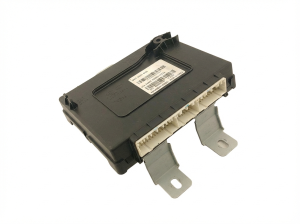
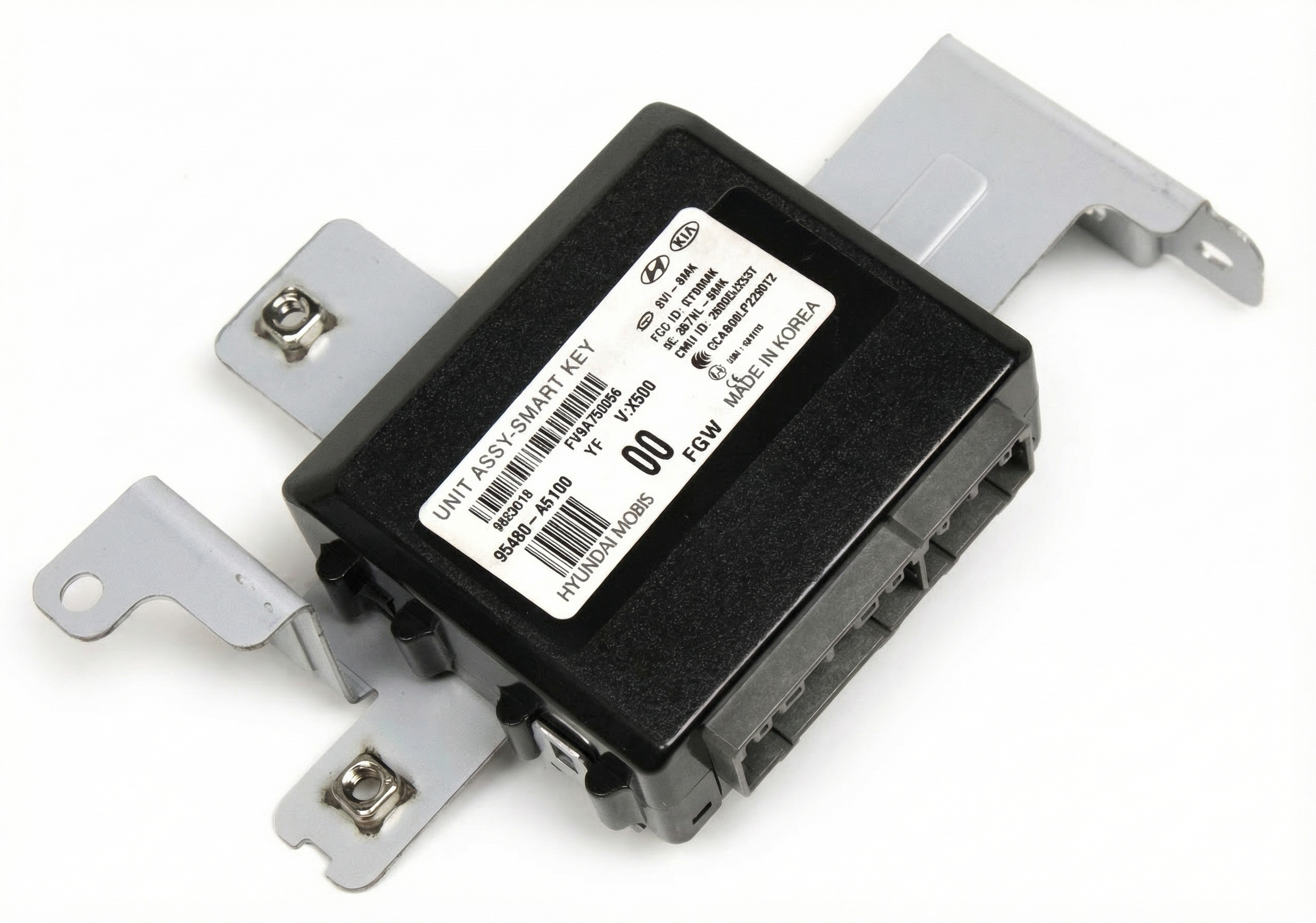
New Aftermarket Parts Available


The information in this article is provided for general reference and educational purposes only. Vehicle specifications, procedures, and part compatibility can vary by production date, trim level, and region. Always consult your vehicle's factory service manual and verify part numbers before purchasing or performing repairs. Safety-critical components such as airbags, seat belts, and braking systems should be installed by a qualified professional.
- Hyundai Sonata:
- 🧭 Diagnostic Flowchart
- 🎬 Helpful Videos
- 🛍️ Shop This Part
- What's Unique About the 2015-2019 Hyundai Sonata
- Symptoms You May Notice
- Most Likely Causes
- Rare But Worth Checking
- Diagnosis Steps
- Parts You'll Likely Need
- Related Codes That Often Appear With This One
- Mechanic-Grade Diagnostic Values
- Scan Tool Commands That Help
- Wiring & Ground Locations
- Real Owner Repair Stories
- OEM Part Supersession History
- Model Year Variations Within This Range
- Other Known Issues on This Vehicle
- Used vs. New Parts: Buying Guide for This Vehicle
- Real Owner Stories
- 2018 Hyundai Sonata
- Related OBD-II Codes
- Frequently Asked Questions
- 🎟️ Get 5% Off