

U0001 on 2008-2010 Saturn Vue: High-Speed CAN Bus Communication Failure Causes and Fixes
Code U0001 on a 2008-2010 Saturn Vue means there's a critical failure on the main communication network. This often causes multiple warning lights (Stabilitrak, ABS, Check Engine) and can lead to a no-start condition. The most common causes are damaged wiring, a faulty control module (like the ECM or EBCM), or a weak battery. In some cases, a faulty ground connection to the engine or a module can be the culprit.
- U0001 is a critical network failure code; do not continue to drive the vehicle.
- Symptoms almost always include multiple warning lights like ABS and Stabilitrak.
- Diagnosis is complex and best left to a professional, but starts with checking the battery, grounds, and CAN bus resistance (should be ~60 ohms).
- The most likely causes are damaged wiring or a failed control module (ECM, EBCM, etc.).
- Any replacement modules will require professional programming to work with your vehicle.
What's Unique About the 2008-2010 Saturn Vue
The 2008-2010 Saturn Vue is part of a global GM platform (Theta) shared with the Chevrolet Captiva and Opel Antara. For this vehicle, a U0001 code is frequently accompanied by 'Service Stabilitrak' or 'Service Traction Control' messages, as the Electronic Brake Control Module (EBCM) is a key and sensitive component on the high-speed network. Some owner experiences and a detailed diagnostic case study suggest the Engine Control Module (ECM) on 2.4L models can be a specific point of failure, leading to a complete loss of communication and a no-start condition where the ECM is the only module not responding.
Symptoms You May Notice
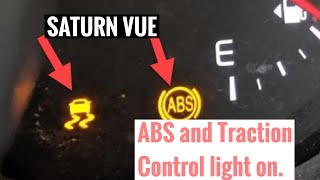
- Multiple warning lights on the dashboard at once (Check Engine, ABS, Stabilitrak, Traction Control).
- "Service Stabilitrak" or "Service Traction Control" message on the driver information center.
- Engine may not crank or start, with no communication to the ECM.
- Sudden stalling while driving.
- Gauges on the instrument cluster behaving erratically or dropping to zero.
- Loss of power steering assist.
- Transmission may shift harshly or get stuck in one gear (limp mode).
- A/C system may stop working or display errors.
- Replacing a single module that has a 'lost communication' code without first verifying the integrity of the entire network. The fault may lie with a different module or the wiring itself.
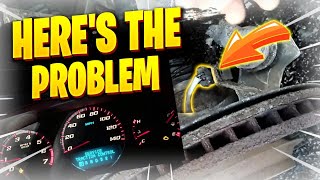
- Replacing wheel speed sensors for a 'Service Stabilitrak' message when the root cause is a network-wide U0001 fault. 🎬 Watch: How to fix ABS, Traction Control, and Stabilitrak lights.
Most Likely Causes
- Damaged or Corroded Wiring Harness 🔴 High Probability Wiring harnesses routed near the engine, transmission, or under the vehicle are exposed to heat, moisture, and physical stress, which can lead to chafing, breaks, or corrosion over time. Connectors for the ECM and EBCM are common points for moisture intrusion and pin corrosion.
How to confirm: Visually inspect the twisted pair of CAN bus wires (often Tan and Tan/Black on GM vehicles) for any signs of damage, especially near the ECM, TCM, and EBCM connectors. Check for corrosion inside the connectors. Measure resistance between Pin 6 and Pin 14 of the OBD-II port (with battery disconnected); it should be approximately 60 Ohms. A reading of 120 Ohms points to a break in the wiring or a failed terminating resistor, while a reading near 0 Ohms indicates the two wires are shorted together.
Typical fix: Repair the damaged section of the wiring harness. Clean or replace corroded connectors and pins. Ensure all connections are secure and protected from moisture.
Est. part cost: $10-$100 - Faulty Control Module 🟡 Medium Probability An internal failure in any module on the high-speed network (ECM, EBCM, TCM, BCM) can cause it to send corrupt data or stop communicating, bringing down the entire network. A 2008 Vue 2.4L with a no-start and U0001 was diagnosed with a failed ECM after confirming powers and grounds were good. The EBCM is also a common failure point that triggers Stabilitrak warnings.
How to confirm: This is a process of elimination. If the CAN bus wiring and termination resistance (60 Ohms) are confirmed to be good, disconnect one module at a time from the high-speed bus and re-check if communication is restored. A professional scan tool can show which modules are offline, which is the most effective method.
Typical fix: Replace the faulty module. Note that new modules (especially the ECM and BCM) require programming to the vehicle's VIN and specific configuration using a J2534 pass-thru device and GM's TIS2WEB service.
Est. part cost: $200-$800 - Weak Battery or Poor Electrical Ground ⚪ Low Probability → Shop Vehicle Battery Low system voltage can cause unpredictable behavior in electronic modules, leading to communication dropouts. A forum user reported that an unconnected main engine ground was the source of recurring electrical issues, including codes related to the ECM.
How to confirm: Test the battery voltage with the engine off; it should be at least 12.4V. With the engine running, check the alternator output, which should be between 13.5V and 14.5V. Inspect the main battery terminals, chassis ground straps, and engine ground straps for corrosion and tightness.
Typical fix: Charge or replace the battery. Clean, tighten, or replace faulty ground connections. Replace the alternator if its output is incorrect.
Est. part cost: $150-$400
Rare But Worth Checking
- Aftermarket Electronics Interference: Improperly installed aftermarket devices (remote starters, alarms, audio equipment) that are tapped into the CAN bus wiring can disrupt network communication.
Diagnosis Steps
- Check and record any and all stored fault codes from all modules using a professional scan tool capable of a network-wide scan.
- Check the battery's state of charge and the alternator's output. A running voltage should be 13.5V-14.5V. Ensure battery terminals and main ground connections (chassis and engine) are clean and tight.
- With the battery disconnected, use a multimeter to measure the resistance between Pin 6 (CAN High) and Pin 14 (CAN Low) at the OBD-II diagnostic port. A healthy network will read approximately 60 ohms.
- If the resistance is 120 ohms, there is an open in the circuit or a faulty terminating resistor (which is usually internal to the ECM or BCM).
- If the resistance is near 0 ohms, the CAN High and CAN Low wires are shorted together.
- Visually inspect the main wiring harness for obvious signs of damage, chafing, or corrosion, paying close attention to connectors at the ECM, TCM, and EBCM. Check for moisture or bent pins.
- If wiring and resistance are good, the fault is likely a module. Use a scan tool to see which modules are not responding. Disconnect suspect modules one by one to see if network communication is restored. The module whose disconnection restores the network is the likely culprit.
Parts You'll Likely Need
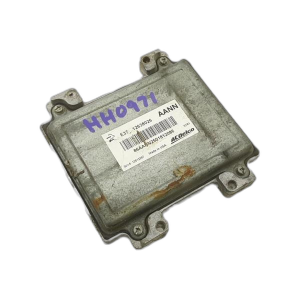
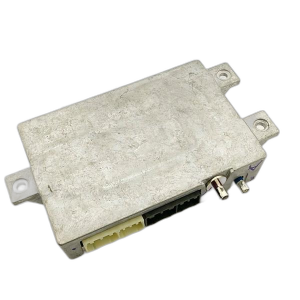
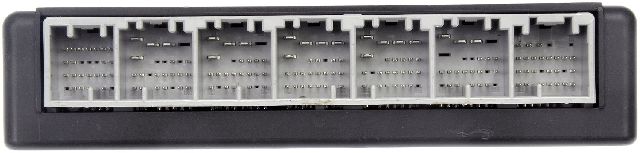
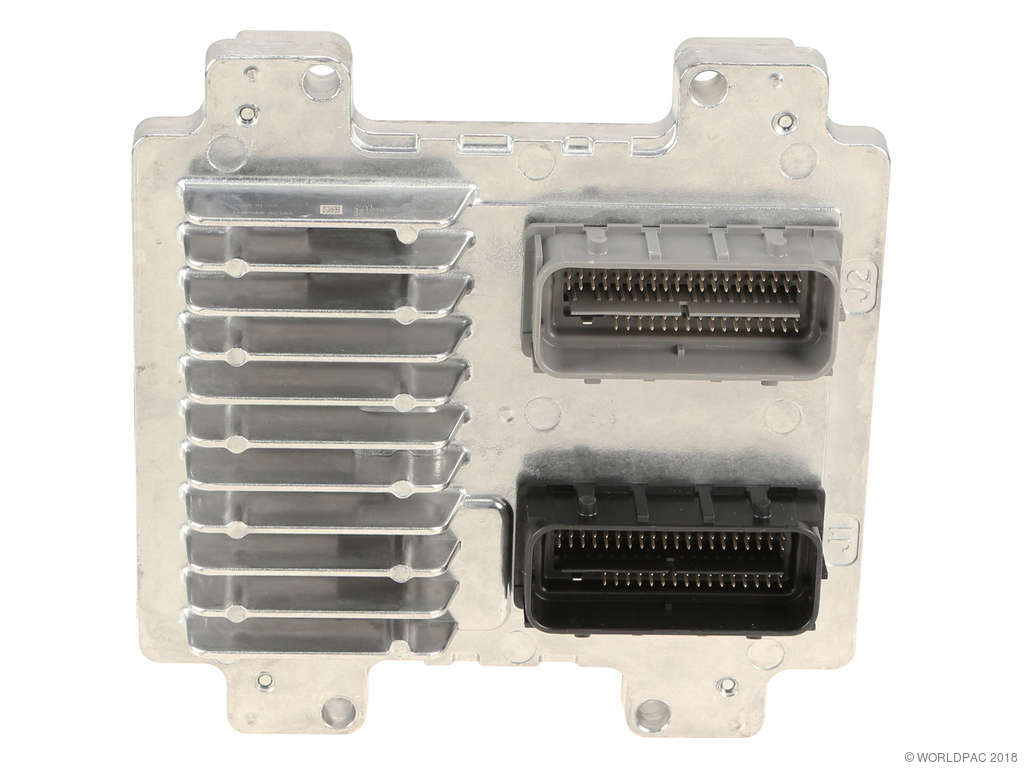
- Engine Control Module (ECM)
(OEM #12618028 (For 2008 2.4L models, check VIN for exact match))— Can be a primary point of failure, especially on 2.4L models, causing the entire high-speed network to go down and result in a no-start. Requires VIN-specific programming upon replacement.
Trusted brands: ACDelco (GM Genuine)
OEM price range: $400-$700
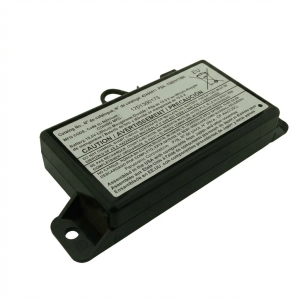
Aftermarket price range: $250-$500 - Electronic Brake Control Module (EBCM) — As a key node on the high-speed bus responsible for ABS and Stabilitrak, its failure is a common cause of network faults and related warning lights. 🎬 See this walkthrough on fixing the ABS pump control module.
Trusted brands: ACDelco
OEM price range: $300-$600
Aftermarket price range: $200-$450 - Wiring Harness Connector Pigtail — Corrosion or damage often occurs at the module connectors. Replacing the connector pigtail is often easier than repairing individual pins.
Trusted brands: ACDelco, Dorman
OEM price range: $40-$80
Aftermarket price range: $20-$50
Related Codes That Often Appear With This One
- U0100 — Lost Communication With ECM/PCM
- U0101 — Lost Communication with TCM
- U0121 — Lost Communication With Anti-Lock Brake System (ABS) Control Module
Platform-Specific Known Issues
- No Crank, No Communication with ECM on 2.4L Vue: A detailed YouTube case study on a 2008 Saturn Vue 2.4L showed a no-crank/no-start condition where the scan tool could communicate with all modules EXCEPT the Engine Control Module (ECM). After verifying all power and ground circuits to the ECM were intact and connector pins were clean, the ECM itself was determined to be internally faulty. Replacing and reprogramming the ECM resolved the U0001 code and restored vehicle function.
- Faulty Engine Ground Connection: A user on SaturnForum reported recurring electrical issues and multiple ECM-related codes on a 2008 Vue. A repair shop discovered the main engine ground was not connected and the ECM had been improperly grounded directly to the battery negative terminal by a previous owner. Correcting the ground connection was the recommended fix for the unstable electrical behavior.
Mechanic-Grade Diagnostic Values
- High-Speed CAN Bus Voltage (Key On, Engine Off) — expected: Both CAN High (Pin 6) and CAN Low (Pin 14) should show a bias voltage of approximately 2.5V when the bus is in a recessive (idle) state.. Failure: Voltages significantly deviated from 2.5V indicate a short to power or ground on one of the lines.
- High-Speed CAN Bus Active Communication Voltage — expected: During active communication, CAN High (Pin 6) should toggle from 2.5V up to ~3.5V, while CAN Low (Pin 14) should simultaneously toggle from 2.5V down to ~1.5V.. Failure: A signal that does not toggle, is stuck high or low, or shows a mirror image on only one line indicates a bus failure, short, or faulty module transceiver.
Scan Tool Commands That Help
- GM Tech2 with CANdi Module: Module Status/Network Scan — This is the primary step to determine which specific modules on the High-Speed CAN bus are not communicating. The CANdi module is required to interface with the CAN network on the Vue.
- GDS2 (Global Diagnostic System 2): Data Bus Diagnostic Tool — To graphically display the real-time voltage of the CAN High and CAN Low lines. This allows a technician to visually inspect the bus waveform for faults like shorts, opens, or interference that a simple multimeter test might miss.
Wiring & Ground Locations
- G103 — Located at the left rear of the engine compartment on the cowl, above the brake booster.. This is a critical ground point that serves the Body Control Module (BCM), Instrument Panel Cluster (IPC), and the Data Link Connector (DLC) itself. A fault here can cause widespread communication issues.
- G105 / G106 — G105 is at the left rear of the engine; G106 is on the engine at the left front top corner.. These are primary engine grounds. The Engine Control Module (ECM) and Transmission Control Module (TCM) rely on these grounds. A poor connection can cause the modules to drop off the network.
- EBCM Connector — The main electrical connector on the Electronic Brake Control Module, located near the left front shock tower.. This connector is a known point for corrosion. Since the EBCM is a key module on the high-speed bus, a bad connection here can bring down the network and trigger Stabilitrak warnings along with U0001.
- BCM Connectors — The Body Control Module is located below the front of the center floor console.. The BCM is a central hub for communication networks. It is susceptible to water damage from a leaking HVAC drain hose, which can corrode its connectors and cause network failure.
Real Owner Repair Stories
- YouTube user comment (2009 Saturn Vue) — Persistent "Service Stabilitrak" light for approximately five years that the dealership could not solve.
❌ Tried (didn't work) Dealership diagnosis (suggested it was the transmission), General parts searching and inspection
✅ What actually fixed it Replacing a sensor located in the center console area, between the driver's and passenger's seats. This is the typical location for the Yaw Rate and Lateral Accelerometer sensor, a key input for the Stabilitrak system that communicates over the CAN bus.
Diagnostic Flowchart
Other Known Issues on This Vehicle
Issues unrelated to this code that are worth knowing about as an owner of this generation:
- Premature Timing Chain Stretch (3.6L V6) 🔴 High — Very common on the LY7 V6 engine, often occurring between 70,000 and 120,000 miles. Triggers codes like P0008, P0009, P0017, P0019. (Ref: GM Special Coverage Adjustment #11340C (expired) and TSB #12-06-01-009F addressed this widespread issue.)
- Excessive Oil Consumption (2.4L Ecotec) 🟠 Medium — Common issue due to piston ring design, leading to oil burning between changes. Can cause low oil levels, accelerating wear on other components like timing chains. (Ref: While GM issued special coverage for this issue on other models like the Equinox, the Vue was also affected.)
- Transmission Failure (Wave Plate) 🔴 High → Shop Transmission Assembly — The 6T70/6T75 6-speed automatic transmission, often paired with the V6, is known for a high failure rate of the 3-5-R wave plate, which can break and cause loss of reverse and certain forward gears. This was particularly noted on 2008 models. (Ref: TSBs were issued for other GM models with this transmission, but it remains a known failure point for the Vue.)
- Leaking Engine Valve Cover Gasket 🟡 Low — Reported as a common issue on 2008 models, causing oil to leak onto the engine, resulting in a burning smell and potential smoke.
- Faulty A/C System Components 🟡 Low — Issues with the A/C system, including compressor failure or faulty thermostats causing the system to shut off, are reported across multiple model years including 2008-2010.
Used vs. New Parts: Buying Guide for This Vehicle
When a used part is the smart pick: A used Electronic Brake Control Module (EBCM) can be a cost-effective option, as some service information suggests it may not require reprogramming for the 2004-2007 model years, and this may extend to the 2008-2010 models. However, this is a risk. Other non-programmed modules are also good candidates for used parts.
Donor-vehicle mileage cap: roughly under 120000 miles for the part to have meaningful remaining life.
What to inspect on the donor part:
- Inspect the connector pins on the used module for any signs of corrosion, discoloration, or physical damage.
- Source parts from vehicles in dry climates to minimize the risk of moisture-related damage.
- Avoid parts from vehicles that show signs of flood damage or major front-end collisions.
- If possible, get the VIN of the donor car to check its history.
OEM-only on this vehicle (don't cheap out):
- Engine Control Module (ECM)
- Body Control Module (BCM)
Brands owners have reported issues with on this vehicle:
- Unbranded, no-name electronic modules from online marketplaces without warranties or seller history.
Real Owner Stories
Aggregated from forums and TSBs cited above. Mileages and costs reflect what owners reported in those sources.
2008 Saturn Vue 2.4L
Symptoms: A no-crank/no-start condition where a scan tool could communicate with all modules on the vehicle except for the Engine Control Module (ECM).
What fixed it: After verifying all power and ground circuits to the ECM were good, the ECM itself was determined to be faulty. Replacing and reprogramming the ECM resolved the U0001 code and restored vehicle function.
Source hint: vehicle_specific_issues: 'No Crank, No Communication with ECM on 2.4L Vue'
2008 Saturn Vue 2.4L
Symptoms: Recurring electrical issues and multiple ECM-related codes.
What fixed it: A repair shop discovered the main engine ground was not connected. Correcting the ground connection was the recommended fix for the unstable electrical behavior.
Source hint: SaturnForum: A thread titled '2008 vue - 4 cyl - multiple codes - please help'
Related OBD-II Codes
Frequently Asked Questions
My 2009 Saturn Vue has the 'Service Stabilitrak' message and a U0001 code. What's the most likely cause?
My 2008 Vue 2.4L won't crank and my mechanic says they can't communicate with the engine computer. Is this related to code U0001?
How can I perform a basic check of the CAN bus network on my Vue myself?
If I need to replace the Engine Control Module (ECM) on my Saturn Vue, can I just install a used one?
Could a bad ground wire really cause my Vue to stall and show multiple warning lights?
My dashboard is lighting up with Check Engine, ABS, and Traction Control lights all at once. Is this a U0001 fault?
Helpful Videos
Used OEM Parts in Stock
New Aftermarket Parts Available


The information in this article is provided for general reference and educational purposes only. Vehicle specifications, procedures, and part compatibility can vary by production date, trim level, and region. Always consult your vehicle's factory service manual and verify part numbers before purchasing or performing repairs. Safety-critical components such as airbags, seat belts, and braking systems should be installed by a qualified professional.
- Saturn Vue:
- 🧭 Diagnostic Flowchart
- 🎬 Helpful Videos
- 🛍️ Shop This Part
- What's Unique About the 2008-2010 Saturn Vue
- Symptoms You May Notice
- Most Likely Causes
- Rare But Worth Checking
- Diagnosis Steps
- Parts You'll Likely Need
- Related Codes That Often Appear With This One
- Platform-Specific Known Issues
- Mechanic-Grade Diagnostic Values
- Scan Tool Commands That Help
- Wiring & Ground Locations
- Real Owner Repair Stories
- Other Known Issues on This Vehicle
- Used vs. New Parts: Buying Guide for This Vehicle
- Real Owner Stories
- 2008 Saturn Vue 2.4L
- 2008 Saturn Vue 2.4L
- Related OBD-II Codes
- Frequently Asked Questions
- 🎟️ Get 5% Off