

U0073 on 2006-2016 Chevrolet Impala: Control Module Communication Bus 'A' Off Causes and Fixes
Code U0073 on a Chevy Impala means there's a major communication failure on the vehicle's main data network. The most common causes are a weak battery, bad ground connections, or a wiring issue. On 2014+ models, a pinched harness behind the dashboard is a known issue documented in a GM TSB.
- Do not immediately replace expensive modules. Start your diagnosis with the simplest and most common causes: the battery and all major ground connections.
- For 2014-2016 models, the first place to perform a wiring inspection should be the harness behind the driver's side dashboard, as specified in TSB PIC5894.
- This code indicates a serious fault that makes the vehicle unreliable and potentially unsafe to drive.
- Due to the complexity of network diagnostics, this issue is best left to a professional technician if the initial checks of the battery and grounds do not solve the problem.
What's Unique About the 2006-2016 Chevrolet Impala
The 2006-2016 Impala range covers two distinct generations with different common failure points. The 8th generation (2006-2013) is known for general wiring harness degradation from heat and age, especially loose grounds or corrosion in the connectors for the Transmission Control Module (TCM). The 9th generation (2014-2016) has a specific, documented issue where the instrument panel wiring harness can get pinched behind the dash near the Data Link Connector (DLC), causing this code, as outlined in GM Technical Service Bulletin PIC5894.
Generation note: This guide covers the 8th generation (2006-2013, plus 2014-2016 Impala Limited) and the 9th generation (2014-2016). Causes and wiring locations differ significantly between them. The 8th gen is prone to age-related wiring and ground faults, while the 9th gen has a known TSB for a pinched dashboard harness.
Symptoms You May Notice
- Check Engine Light is on
- ABS, Traction Control, and/or Stabilitrak warning lights illuminated
- "Service Stabilitrak" or "Reduced Engine Power" message on the driver information center
- Transmission may shift harshly, get stuck in one gear (limp mode), or fail to shift.
- Speedometer and other instrument cluster gauges may behave erratically or stop working
- Power door locks may stop working
- Vehicle may not start or may stall unexpectedly
- Loss of communication with OBD-II scan tool
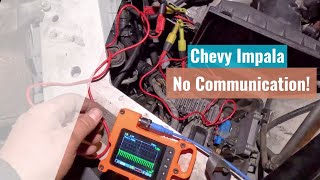
- Replacing the ECM or TCM without first confirming it is the source of the network failure. 🎬 Watch: Diagnosing a no communication issue on an 8th gen Impala The code indicates a network problem, and often the module setting the code is not the one that is broken. The fault is more often in the wiring, grounds, or a different module on the same network.
Most Likely Causes
- Weak Battery or Poor Ground Connection 🔴 High Probability → Shop Vehicle Battery All modern vehicles are sensitive to low voltage, which prevents control modules from initializing correctly. On GM vehicles of this era, a loose or corroded main battery ground terminal at the chassis is a frequent and simple-to-fix cause of widespread electrical issues and communication codes like U0073.
How to confirm: Test the battery voltage. It should be above 12.4V with the engine off and 13.7-14.7V while running. Physically check that the main battery terminals, especially the negative cable connection to the chassis/body, are clean, free of corrosion, and tight. A loose ground can cause intermittent sparking and voltage fluctuations.
Typical fix: Charge or replace the battery. Disconnect, clean with a wire brush, and securely tighten all main ground connections at the battery, engine block, and chassis.
Est. part cost: $0-$250 - Pinched Instrument Panel (IP) Harness (2014-2016 models) 🔴 High Probability GM issued TSB PIC5894 specifically for the 2014 Impala, identifying a manufacturing/design issue where the Data Link Connector (DLC) branch of the wiring harness can be pinched behind the instrument panel carrier. This shorts the CAN bus communication wires (Pins 6 and 14 on the DLC).
How to confirm: This requires accessing the wiring behind the driver's side dashboard and visually inspecting the harness that runs to the OBD-II port for signs of being crushed, pinched, or having chafed insulation.
Typical fix: Free the trapped harness and repair any damaged wires. This typically involves splicing, soldering, and heat-shrinking the affected CAN bus wires to restore their integrity.
Est. part cost: $5-$25 - Damaged or Corroded Wiring Harness 🟡 Medium Probability On 8th gen models, engine bay heat can make wiring insulation brittle over time. On all models, wires can chafe against brackets or other components. Connectors for modules exposed to the elements, like the ABS module or TCM (often located on the transmission or in the driver's side wheel well), can get moisture intrusion and corrode.
How to confirm: Visually inspect the main engine harness, especially around the TCM, ECM, and ABS module connectors. Look for chafed plastic conduit, exposed copper wires, or green/white corrosion inside connector pins. On some models, the TCM connector can fill with transmission fluid, causing a short.
Typical fix: Repair the damaged section of the harness by splicing in new wire. Clean corroded connectors with an electrical contact cleaner and apply dielectric grease to prevent future moisture intrusion.
Est. part cost: $10-$100 - Faulty Control Module ⚪ Low Probability Any module on the network (ABS, TCM, BCM, ECM, etc.) can fail internally and disrupt the entire bus by shorting it or 'babbling' nonsense data. This is less common than wiring or power issues.
How to confirm: Use a high-end scan tool that can poll all modules on the network. The module that fails to respond is a primary suspect. A common diagnostic technique is to disconnect suspect modules one by one; if communication returns or the 60 Ohm resistance reading is restored after unplugging a module, that module is the source of the problem.
Typical fix: Replace the faulty control module. Note that many modules, such as the ECM, BCM, and TCM, require programming to the vehicle's VIN after installation.
Est. part cost: $200-$1000
Rare But Worth Checking
- Faulty Aftermarket Electronics: Improperly installed remote starters, alarms, or stereos can create electrical noise or be incorrectly spliced into the CAN bus wiring, causing communication to drop. If the problem started after an accessory was installed, this should be the first thing you investigate.
Diagnosis Steps
- Check Battery Health: Ensure the battery has a full charge (12.4V+) and that the terminals are clean and tight. A weak or failing battery is a very common cause.
- Inspect Main Grounds: Check the negative battery cable connection to the chassis and any ground straps from the engine to the body for tightness and corrosion. A loose ground is a known simple fix.
- Scan for Codes in All Modules: Use a professional scan tool to attempt communication with every module (ECM, TCM, BCM, ABS, etc.). Make a list of which modules are responding and which are not. The non-responsive module is a primary suspect.
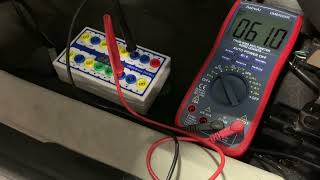
- Check CAN Bus Resistance: With the battery disconnected, measure the resistance between Pin 6 (CAN High) and Pin 14 🎬 See how to test CAN bus resistance with a multimeter (CAN Low) at the OBD-II port. A healthy network should read approximately 60 Ohms. A reading of 120 Ohms indicates a missing termination resistor or an open circuit. A reading near 0 Ohms indicates a short between the two wires.
- Visual Wiring Inspection: Inspect the wiring harness for physical damage. For 2014-2016 models, specifically check the harness behind the driver's side dashboard per TSB PIC5894. For all models, check harnesses near the transmission, ABS module, and around the engine for chafing or corrosion.
- Isolate Modules: If resistance is incorrect (e.g., 120 Ohms or 0 Ohms), begin unplugging modules from the CAN bus one at a time and re-checking resistance at the DLC. When the resistance returns to 60 Ohms, the last module unplugged is the likely cause of the failure.
- Professional Diagnosis: If the cause is not found, professional diagnosis with an oscilloscope may be needed to analyze the data signals on the network directly to identify noise or signal degradation.
Parts You'll Likely Need
- Battery — A weak or failing battery is a leading cause of module communication errors due to low system voltage.
Trusted brands: ACDelco
OEM price range: $200-$300
Aftermarket price range: $150-$250 - Body Control Module (BCM) — The BCM acts as a central gateway for network communication on many GM vehicles. An internal failure can bring down the entire network. It is a common point of failure for this code on GM platforms.
Trusted brands: ACDelco, Dorman
OEM price range: $250-$400
Aftermarket price range: $150-$300 - Transmission Control Module (TCM) — Due to its location, the TCM or its connector is prone to damage from heat, vibration, and fluid leaks, leading to communication loss.
Trusted brands: ACDelco
OEM price range: $300-$500
Aftermarket price range: $200-$400 - Wiring Harness Repair Supplies — Often the fix is not a component but a break, short, or corrosion in the wiring harness that needs to be repaired.
Trusted brands: 3M
OEM price range: $10-$50
Aftermarket price range: $5-$25
Related Codes That Often Appear With This One
- U0100 — Lost Communication with ECM/PCM
- U0101 — Lost Communication with TCM
- U0121 — Lost Communication with Anti-Lock Brake System (ABS) Control Module
- P0700 — Transmission Control System Malfunction (often triggered when the TCM loses communication)
Technical Service Bulletins (TSBs) & Recalls
- PIC5894: 'Multiple IPC Warning Indicators DIC Messages Displayed And Or Loss Of Communication DTCs In Various Modules' - Points to a pinched DLC branch in the IP Harness on 2014 Impalas.
Platform-Specific Known Issues
- TSB PIC5894: On 2014 Impalas, a pinched wiring harness for the diagnostic port behind the dashboard is a known cause for U0073 and a host of other communication codes.
Mechanic-Grade Diagnostic Values
- CAN Bus Resistance (Battery Disconnected) — expected: ~60 Ω between Pin 6 and Pin 14 of the DLC.. Failure: A reading of ~120 Ω indicates an open circuit or one of the two terminating resistors is offline. A reading near 0 Ω indicates a short circuit between the CAN High and CAN Low wires.
- GMLAN High-Speed Bus Voltage (Key On, Engine Off) — expected: CAN High (Pin 6): ~2.5V at rest, driven to ~3.5V during communication. CAN Low (Pin 14): ~2.5V at rest, driven to ~1.5V during communication.. Failure: Voltages stuck high, low, or at 0V indicate a short to power or ground. No voltage fluctuation indicates no communication.
Scan Tool Commands That Help
- GDS2 / Tech2: Module Status / Poll Modules — This is the first step with a professional scanner. It actively queries all modules on the network and provides a list of which ones are communicating and which are not. This helps isolate the area of the fault.
- GDS2 / Tech2: Clear All DTCs in All Modules — After a repair attempt (like tightening a ground or fixing a wire), this command clears codes from all controllers simultaneously. If the U0073 code immediately returns, the fault is still present. If it stays away, the repair was likely successful.
Wiring & Ground Locations
- Termination Resistors (8th Gen, 2006-2013) — Two 120Ω resistors are used. One is typically inside the Engine Control Module (ECM) and the other is inside the Body Control Module (BCM).. If the resistance at the DLC is 120Ω, it often means one of these modules (or its wiring) is disconnected from the network. Knowing they are internal to the modules is key; you cannot replace them separately.
- Termination Resistor (9th Gen, 2014-2016) — One resistor is internal to the ECM. The second is a separate, serviceable resistor often taped to the body harness in the rear of the vehicle, near the fuel pump flow control module or chassis control module.. Unlike the earlier generation, a 120Ω reading could be caused by this external resistor being unplugged or having failed. It is a replaceable part.
- G201 / G202 (8th & 9th Gen) — Located on the left and center areas of the dash structure, behind the instrument panel.. These are primary grounds for many in-cabin modules, including the Instrument Panel Cluster (IPC) and Body Control Module (BCM). A loose ground here can cause network failure.
- G101 / G115 (8th Gen) — G101 is typically behind the left headlight. G115 is on the transmission case, below the brake booster.. These are critical engine and transmission grounds. G115 is particularly relevant as a poor connection can directly affect the TCM's ability to communicate.
- Data Link Connector (DLC) Harness — The wiring harness running to the OBD-II port under the driver's side dashboard.. On 2014-2016 models, this harness is the subject of TSB PIC5894, as it can be pinched by a dash bracket, shorting the CAN wires and causing U0073.
Real Owner Repair Stories
- Trailblazer/Envoy Forum User (GM Truck with similar architecture) — U0073, U0101, P0700, P2544. Gauges acting up, door locks freaking out, limp mode.
❌ Tried (didn't work) Replaced battery, Cleaned maxi-fuse connections, Checked CAN bus resistance (read a solid 60 ohms initially)
✅ What actually fixed it The transmission connector was found to have water inside, causing corrosion on the lower pins. After cleaning the connector and applying dielectric grease, all communication was restored and codes were cleared. - YouTube video by 'Automotive Drama' (2020 Chevrolet Malibu (demonstrates a common GM issue)) — U0073, U0101, P0700 and other communication codes.
❌ Tried (didn't work) Checked fuses, Visually inspected for chewed wires
✅ What actually fixed it The main battery ground cable connection to the chassis was loose. Tightening the ground bolt resolved the intermittent sparking and stabilized the vehicle's electrical system, which is the likely fix for the communication codes.
Model Year Variations Within This Range
- 2006-2013 (8th Gen): The High-Speed GMLAN network is terminated by 120-ohm resistors located inside the ECM and BCM. There is no separate, external terminating resistor to service.
- 2014-2016 (9th Gen): The network uses one internal resistor (in the ECM) and one external, serviceable 120-ohm resistor. This resistor is typically located in the rear of the vehicle, taped to the body harness near the chassis or fuel pump control modules. This provides an additional, specific part to test and replace that does not exist on the earlier generation.
Diagnostic Flowchart
Other Known Issues on This Vehicle
Issues unrelated to this code that are worth knowing about as an owner of this generation:
- Transmission Pressure Control Solenoid (PCS) Failure 🔴 High → Shop Transmission Assembly — Very common on 8th gen (2006-2013) models, often occurring between 70,000 and 150,000 miles. Leads to harsh shifting, slipping, and can trigger P0700 codes.
- HVAC Blend Door Actuator Failure 🟠 Medium — Extremely common on 8th gen (2006-2013) models. Results in a persistent clicking/ticking noise from the dashboard when changing temperature or airflow settings. (Ref: No recall, but a very well-documented repair. The ACDelco part number 15-74122 (or superseding numbers like 604-108) is a common replacement.)
- Power Steering Fluid Leaks / Steering Rack Failure 🟠 Medium — Common on 8th gen models. Leaks can occur from the high-pressure power steering hose or internally within the steering rack boots, leading to a whining noise and difficult steering. (Ref: NHTSA investigated leaking power steering fluid on the 2006 model.)
- Premature Timing Chain Stretch (3.6L LFX V6) 🔴 High — A known issue on the 3.6L V6 engine used in both 8th (late models) and 9th gen Impalas. Caused by a combination of long oil change intervals and chain design. Symptoms include a rattle on startup and codes like P0008, P0016, P0017. (Ref: GM issued several special coverage adjustments and TSBs for other models with this engine, but owners often bear the cost. Onset can be from 100,000 miles.)
- Excessive Oil Consumption 🟠 Medium — Reported in both 3.5L/3.9L V6 (8th gen) and 3.6L V6 (9th gen) engines, often due to worn piston rings or valve seals.
Used vs. New Parts: Buying Guide for This Vehicle
When a used part is the smart pick: For major control modules like the BCM, TCM, or ECM, a used part from a reputable salvage yard can offer significant savings. Since these are electronic components without mechanical wear parts, a used module from a lower-mileage, collision-damaged vehicle is often a viable option, provided it is the exact same part number.
Donor-vehicle mileage cap: roughly under 100000 miles for the part to have meaningful remaining life.
What to inspect on the donor part:
- Verify the part number on the used module EXACTLY matches the original. GM uses many similar-looking modules with different software.
- Inspect the connector pins for any signs of corrosion, damage, or being bent.
- Ask for the VIN of the donor car to check for compatibility and to aid in potential reprogramming.
- Choose a seller that offers a warranty or return policy in case the module is faulty.
OEM-only on this vehicle (don't cheap out):
- While used modules are an option, they MUST be programmed to your vehicle's VIN using professional tools like GDS2. This is not a plug-and-play repair. For this reason, some owners prefer a new OEM part that comes 'clean' and ready for programming.
Aftermarket brands forum-validated for this vehicle:
- ACDelco (OEM)
- Dorman (For some modules like BCM, but verify reviews for your specific model year as quality can vary)
Brands owners have reported issues with on this vehicle:
- Unbranded, no-name electronic modules from online marketplaces should be avoided. They often have software incompatibilities or high failure rates.
Real Owner Stories
Aggregated from forums and TSBs cited above. Mileages and costs reflect what owners reported in those sources.
2013 Chevrolet Impala
Symptoms: Vehicle experienced a no-start condition with multiple 'U' codes including U0073, U0100, U0101, U0121, and U0140. It appeared the owner 'lost communication with everything.'
What fixed it: Found a corroded wire in the harness near the driver's side front wheel well that was causing the entire CAN bus to go down.
Source hint: https://www.impalaforums.com/threads/u0073-u0100-u0101-u0121-u0140-lost-communication-with-everything.1912933/
2011 Chevrolet Impala
Symptoms: 'Service Stabilitrak' messages displayed on the driver information center.
What fixed it: Repairing a faulty wheel speed sensor circuit.
Source hint: https://www.reddit.com/r/Impala/comments/p9i90c/service_stabilitrak/
2014 Chevrolet Impala
Symptoms: Multiple IPC warning indicators, DIC messages displayed, and loss of communication DTCs in various modules.
What fixed it: Freeing a trapped/pinched DLC branch in the IP harness and repairing damaged wires.
Source hint: TSB PIC5894
Related OBD-II Codes
Frequently Asked Questions
I have a 2014 Impala with a U0073 code and multiple warning lights; is there a specific technical service bulletin for this?
My 2011 Impala is displaying 'Service Stabilitrak' along with communication codes. What could be the cause?
Can a loose battery cable really cause a U0073 code on my Chevy Impala?
Where should I check for wiring damage on an 8th generation Impala (2006-2013)?
How can I tell if a specific control module is causing the U0073 code?
Helpful Videos
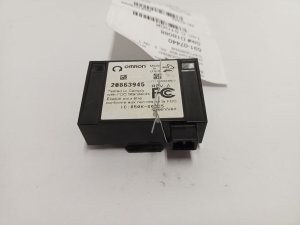
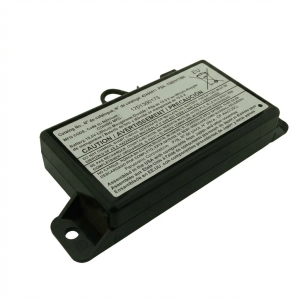
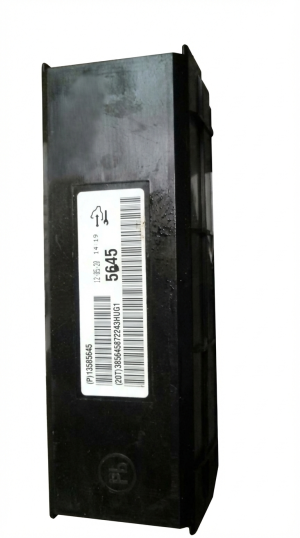
Used OEM Parts in Stock
New Aftermarket Parts Available



The information in this article is provided for general reference and educational purposes only. Vehicle specifications, procedures, and part compatibility can vary by production date, trim level, and region. Always consult your vehicle's factory service manual and verify part numbers before purchasing or performing repairs. Safety-critical components such as airbags, seat belts, and braking systems should be installed by a qualified professional.
- Chevrolet Impala:
- 🧭 Diagnostic Flowchart
- 🎬 Helpful Videos
- 🛍️ Shop This Part
- What's Unique About the 2006-2016 Chevrolet Impala
- Symptoms You May Notice
- Most Likely Causes
- Rare But Worth Checking
- Diagnosis Steps
- Parts You'll Likely Need
- Related Codes That Often Appear With This One
- Technical Service Bulletins (TSBs) & Recalls
- Platform-Specific Known Issues
- Mechanic-Grade Diagnostic Values
- Scan Tool Commands That Help
- Wiring & Ground Locations
- Real Owner Repair Stories
- Model Year Variations Within This Range
- Other Known Issues on This Vehicle
- Used vs. New Parts: Buying Guide for This Vehicle
- Real Owner Stories
- 2013 Chevrolet Impala
- 2011 Chevrolet Impala
- 2014 Chevrolet Impala
- Related OBD-II Codes
- Frequently Asked Questions
- 🎟️ Get 5% Off