

U0073 on 2012-2020 Chevrolet Sonic: Control Module Communication Bus 'A' Off Causes and Fixes
U0073 on a Chevy Sonic means there's a major communication failure between essential computer modules. This is most often caused by a weak battery, bad ground connections (specifically the G103 ground), or a wiring harness chafing against the firewall. It is rarely a failed computer module itself.
- U0073 is a serious network failure code that makes the vehicle unsafe to drive.
- Do not immediately assume a costly computer module has failed. The problem is much more likely to be a weak battery, a bad ground connection, or a wiring issue.
- Thoroughly check the battery voltage and all major ground connections before proceeding with more complex diagnostics.
- Inspect the engine wiring harness for signs of chafing, especially near the firewall.
- Due to the complexity, professional diagnosis with an advanced scan tool is highly recommended to avoid replacing unnecessary parts.
What's Unique About the 2012-2020 Chevrolet Sonic
While U0073 is a generic network code, on GM's Gamma II platform (Sonic, Trax, Encore), it often points towards specific, documented vulnerabilities. GM Technical Service Bulletin 19-NA-113 describes the engine wiring harness chafing against the bulkhead (firewall), causing wires to short out. Another TSB, 19-NA-068, identifies a poor connection at the G103 ground stud on the left front frame rail as a primary cause for this and other communication codes. Owners frequently trace this code to one of these two issues or low battery voltage before suspecting a more expensive module failure.
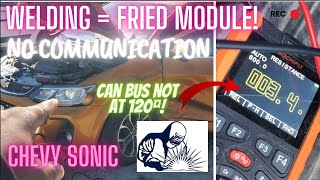
🎬 Watch: Diagnosing a Sonic with no communication and a major BCM fault.Symptoms You May Notice
- Check Engine Light is on
- ABS and Traction Control lights are on
- Service StabiliTrak message may appear
- Transmission may shift erratically or get stuck in one gear
- Reduced engine power or rough running
- Loss of power steering assist
- Gauges on the instrument cluster may behave erratically or drop to zero
- Vehicle may not start or may stall
- Cooling fans may run constantly at high speed
- Replacing the ECM or BCM without proper diagnosis. A wiring or power/ground issue is far more likely to be the root cause than a failed module.
Most Likely Causes
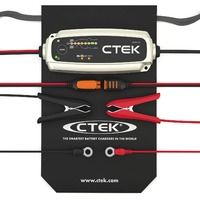
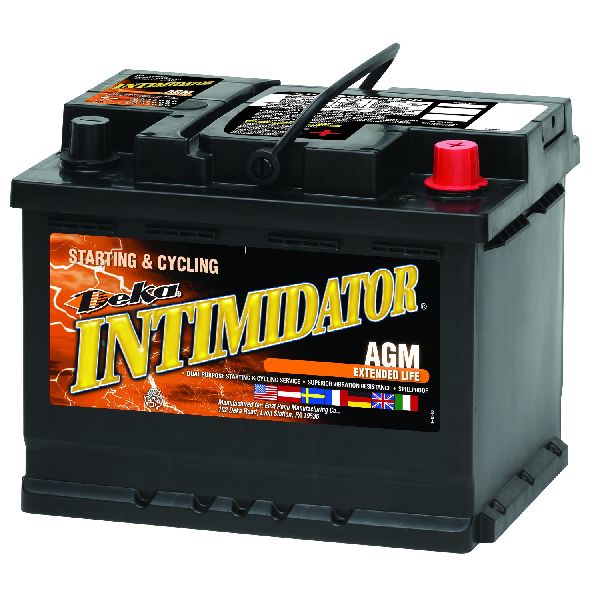
- Low Battery Voltage or Failing Alternator 🔴 High Probability → Shop Vehicle Battery Modern control modules are sensitive to voltage. If system voltage drops too low, especially during startup, modules may not initialize correctly, causing a network shutdown. NHTSA ODI #10733263 highlights a case where U0073 and U0100 were present and the battery had to be replaced twice, illustrating how power issues often mask as network faults.
How to confirm: Test the battery with a multimeter. A healthy battery should show at least 12.4V with the engine off and 13.7V-14.7V with the engine running. Most auto parts stores can perform a load test on your battery and check the alternator's output.
Typical fix: Charge or replace the battery. If the alternator is faulty, it will need to be replaced.
Est. part cost: $100-$250 - Poor Ground Connection at G103 🔴 High Probability GM TSB 19-NA-068 specifically calls out the G103 ground as a common source of communication issues. This ground point, located on the left front frame rail in front of the battery, can corrode or loosen, creating resistance that disrupts stable voltage to multiple modules. This aligns with NHTSA ODI #11105156, where a technician identified ground issues as the cause for U0073 and power circuit malfunctions.
How to confirm: Locate the G103 ground stud. Disconnect the battery, then disassemble the ground connection. Visually inspect the main ground straps, stud, and eyelets for corrosion, fraying, or loose bolts. Clean all contact surfaces to shiny metal.
Typical fix: Clean the ground connection points (stud, frame, and wire eyelets) with a wire brush until they are shiny metal. Apply dielectric grease and re-torque the nut securely. In some cases, a damaged ground strap may need to be replaced.
Est. part cost: $5-$30 - Damaged or Corroded Wiring Harness 🟡 Medium Probability GM TSB 19-NA-113 for the platform-mate Trax points to the engine harness chafing against the firewall (bulkhead), which can damage the CAN bus wires. This is a known failure point due to engine vibration and harness routing.
How to confirm: Visually inspect the wiring harness, especially where it passes near the engine, transmission, and through the firewall. Pay close attention to the area TSB 19-NA-113 identifies. Diagnosis often requires a multimeter to check for continuity and resistance on the CAN high and CAN low wires at the OBD-II port (pins 6 and 14).
Typical fix: Repair the damaged section of wire. This involves soldering the broken wire, covering it with heat shrink tubing, and securing the harness away from the source 🎬 See this walkthrough on how to properly solder and shrink-wrap damaged wires. of friction or heat.
Est. part cost: $10-$50 - Faulty Control Module ⚪ Low Probability While less common, a single control module (like the EBCM/ABS, ECM, or BCM) can fail internally and short out the entire communication network. NHTSA ODI #11518731 notes that communication errors can even be triggered by OnStar modules causing invalid data across the BCM.
How to confirm: This is difficult to confirm without a professional scan tool that can show which modules are online. The diagnostic process involves disconnecting modules one by one to see if communication is restored to the remaining modules.
Typical fix: Replace the faulty module. The new module will likely require programming by a dealer or a qualified shop with the correct software.
Est. part cost: $200-$800+
Rare But Worth Checking
- Blown Fuse: Always check the fuses for the various control modules (ECM, BCM, TCM, EBCM) first. A simple blown fuse can take a module offline and cause this code.
- Aftermarket Electronics: Improperly installed remote starters, alarms, or stereos can interfere with the CAN bus network and trigger communication faults. If you have recently installed an aftermarket device, try disconnecting it to see if the problem resolves.
Diagnosis Steps
- Check Battery Health: Ensure the battery is fully charged and the terminals are clean and tight. Test voltage with the engine off (should be >12.4V) and running (should be 13.7-14.7V).
- Scan for All Codes: Use a high-quality OBD-II scanner that can read codes from all modules (ECM, TCM, BCM, ABS, etc.). Note which modules are not responding.
- Inspect Fuses: Check all fuses related to the vehicle's control modules in the interior and under-hood fuse boxes.
- Inspect G103 Ground: Per TSB 19-NA-068, locate the G103 ground on the driver's side frame rail, ahead of the battery. Disconnect the battery, then remove, clean all contact surfaces to bare metal, and securely retighten the ground nut.
- Visual Wiring Inspection: Per TSB 19-NA-113, carefully inspect the engine wiring harness for any signs of damage, paying close attention to the area where it passes near the firewall/bulkhead.
- Check CAN Bus Resistance: With the battery disconnected, use a multimeter to measure the resistance between Pin 6 (CAN High, typically a TAN wire) and Pin 14 (CAN Low, typically a TAN/BLACK wire) on the OBD-II port. 🎬 Watch: A step-by-step guide to testing CAN bus resistance with a multimeter. You should read approximately 60 ohms. A reading of 120 ohms suggests a missing termination resistor or a break in the circuit. A reading near 0 ohms indicates a short between the wires.
- Isolate Modules: If the steps above do not reveal the issue, the next step is to disconnect modules one at a time to see if the faulty one can be isolated. This is best left to a professional.
Parts You'll Likely Need
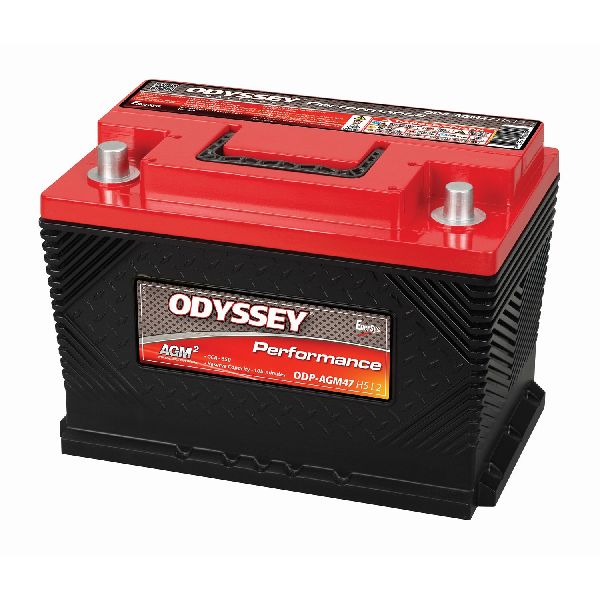
- Battery — A weak or failing battery is a very common cause of low system voltage, which can trigger network communication codes like U0073.
Trusted brands: ACDelco
OEM price range: $180-$250
Aftermarket price range: $120-$200 - Engine Wiring Harness — If the harness is chafed or damaged per TSB 19-NA-113, it may need to be repaired. A full replacement is rare and very expensive; typically only the affected wires are repaired.
Trusted brands: ACDelco, GM Genuine
OEM price range: $500-$1000+
Aftermarket price range: $300-$700
Related Codes That Often Appear With This One
- U0100 — Lost Communication With ECM/PCM 'A'. This code often appears with U0073 because if the entire network is down, communication with the Engine Control Module is also lost.
- U0101 — Lost Communication with TCM. Similar to U0100, this indicates the network failure is preventing communication with the Transmission Control Module.
- U0121 — Lost Communication With Anti-Lock Brake System (ABS) Control Module. This indicates the network failure is preventing communication with the ABS module.
Technical Service Bulletins (TSBs) & Recalls
- Addresses erratic gauge readings and communication DTCs (U0073, U0100, U0101, U0121) caused by the engine wiring harness chafing against the bulkhead (firewall).
- Addresses intermittent MIL, service messages, and erratic gauges with communication DTCs (U0073, U0121, U0100, U0101) caused by a poor connection at the G103 ground.
Platform-Specific Known Issues
- A Technical Service Bulletin (19-NA-113) for the similar Chevrolet Trax platform notes that the engine wiring harness can chafe against the bulkhead (firewall), causing a short that triggers U0073. This is a highly relevant check for any Sonic with this code.
- TSB 19-NA-068 points to a poor connection at the G103 ground on the left front frame rail as a direct cause for U0073 and other communication codes. Cleaning this ground is a primary diagnostic step.
- One user on Chevrolet Forum with U0073, U0100, and U0101 noted the issue occurred after changing the throttle body, suggesting a disturbed connector or harness. Another user suggested adding a supplemental ground wire from the body to the engine block as a potential fix for grounding issues.
Mechanic-Grade Diagnostic Values
- CAN Bus Resistance — expected: ~60 Ohms. Failure: A reading of ~120 Ohms indicates an open circuit or a missing termination resistor. A reading near 0 Ohms indicates the CAN High and Low wires are shorted together.
- CAN Bus Voltage (Idle/Key On, Engine Off) — expected: CAN-H (Pin 6 to ground) and CAN-L (Pin 14 to ground) should both read approx. 2.5V.. Failure: Significant deviation from 2.5V on either line at rest indicates a short to power or ground. For example, a CAN line shorted to ground will read 0V.
- CAN Bus Voltage (Communicating) — expected: CAN-H (Pin 6) toggles to ~3.5V and CAN-L (Pin 14) toggles to ~1.5V. A multimeter will show an average, not these peak values.. Failure: Voltages that are stuck high or low, or do not mirror each other (one high, one low) indicate a fault. For example, if CAN High is shorted to ground, it will not be able to rise to 3.5V.
Scan Tool Commands That Help
- GDS2 (GM Global Diagnostic System 2): Data Bus Diagnostic Tool — This function polls the entire network and provides a list of which modules are communicating and which are not. It is the primary professional tool for isolating the location of a network break on a GM vehicle.
- GDS2 (GM Global Diagnostic System 2): Module Setup / Programming (SPS) — After replacing a major control module (BCM, ECM, TCM, EBCM), this function is required to load the correct software and VIN into the new or used module, allowing it to integrate with the vehicle's other systems.
- GDS2 (GM Global Diagnostic System 2): Output Controls — To verify if a module is powered and functional but simply not communicating. For example, if the BCM is not on the network, a technician can use output controls to try and command the headlights or wipers. If they don't respond, it points towards a BCM power/ground issue rather than just a network wire fault.
Wiring & Ground Locations
- ECM Connector X1 (1.8L Engine) — On the Engine Control Module (ECM).. For a 2016 Sonic 1.8L, Pin 25 is the High Speed GMLAN Serial Data (+) and Pin 26 is the High Speed GMLAN Serial Data (-). These are the direct CAN bus communication wires for the ECM. Testing for continuity, shorts, or using an oscilloscope here can isolate problems to or from the ECM.
- Termination Resistors — The High Speed GMLAN bus has two 120-Ohm terminating resistors. One is typically inside the ECM, and the other is often within the Body Control Module (BCM) or another key module.. The entire network relies on having a total resistance of 60 Ohms. If a module containing a resistor fails or is disconnected, the resistance will jump to 120 Ohms, causing signal reflections and communication failure. This is a key diagnostic measurement.
- TCM Connector — On the transmission housing.. The Transmission Control Module (TCM) is a critical node on the High Speed CAN bus. A failure of the TCM or its connector/wiring can bring down the entire network. In diagnostic procedures, it is often disconnected to see if the rest of the network communication is restored.
Real Owner Repair Stories
- YouTube Channel 'global commerce' (Chevrolet Sonic, year not specified.) — No crank, no start, no communication with ECM, ABS, or BCM. Multiple communication codes including U0073.
❌ Tried (didn't work) Initial scan showed no communication with most modules., Disconnecting the ECM and ABS module did not resolve the short on the CAN bus.
✅ What actually fixed it The vehicle had been worked on by a welder who did not disconnect the battery, causing a massive electrical surge that destroyed the Transmission Control Module (TCM). The technician diagnosed this by measuring resistance on the CAN bus (which was only 3 ohms, indicating a dead short). He then disconnected modules one by one along the network path. When the TCM was disconnected, the short disappeared and resistance returned to a more normal value (120 ohms, indicating the rest of the network was open but not shorted). Replacing the TCM and repairing its connector fixed the issue. - NHTSA ODI #10566655 — An owner reported that all gauges went "nuts" and the vehicle started shifting hard. A dealership initially read code U0073 and replaced terminals, but the issue recurred a day later.
Diagnostic Flowchart
Other Known Issues on This Vehicle
Issues unrelated to this code that are worth knowing about as an owner of this generation:
- PCV System / Valve Cover Failure (1.4L Turbo) 🔴 High — Very common. The PCV diaphragm inside the valve cover tears, causing a vacuum leak, rough idle, and code P0171. The entire valve cover must be replaced. (Ref: Special Coverage N202299080, N192282200 (extends warranty to 10 yrs/120k miles for certain model years).)
- Leaking Water Pump (1.4L and 1.8L) 🟠 Medium — Common failure, especially on earlier 1.4L models. Leaks are often slow and evaporate, making them hard to spot until coolant is low. (Ref: Special Coverage 14371A (extends warranty to 10 yrs/150k miles for 2012-2014 1.4L models).)
- Cracked Plastic Thermostat Housing (1.4L and 1.8L) 🟠 Medium — Extremely common. The plastic housing becomes brittle from heat cycles and cracks, leading to significant coolant leaks, often onto the transmission housing. Upgrading to an aluminum aftermarket part is a popular fix.
- Cracked Coolant Reservoir 🟡 Low — The plastic coolant overflow tank is prone to developing hairline cracks, especially at the hose nipples, causing slow coolant loss.
- Timing Belt Replacement (1.8L Engine) 🔴 High — This is a critical maintenance item, not a failure. The 1.8L engine uses a timing belt that requires replacement at 97,500 miles. Failure to do so will result in catastrophic engine damage.
Used vs. New Parts: Buying Guide for This Vehicle
When a used part is the smart pick: For wiring-related issues, a used wiring harness pigtail or connector from a salvage yard is an excellent, cost-effective repair. Used control modules (ECM, BCM, TCM, EBCM) can also be a viable option to save significant money over new OEM parts.
Donor-vehicle mileage cap: roughly under 100000 miles for the part to have meaningful remaining life.
What to inspect on the donor part:
- For wiring, ensure there is no corrosion on the pins, no cut wires too close to the connector body, and the plastic is not brittle or cracked.
- For modules, check for any signs of water intrusion, physical damage to the case or connectors, or burnt electronic smells.
- Verify the part number on the used module matches the original part exactly.
OEM-only on this vehicle (don't cheap out):
- While not strictly OEM-only, replacement control modules MUST be programmed to the vehicle's VIN using GM's Service Programming System (SPS) via a tool like GDS2. A used module will not work correctly (and may prevent the car from starting) until this programming is performed. This often requires a trip to a dealer or a well-equipped independent shop.
Aftermarket brands forum-validated for this vehicle:
- For batteries, brands like ACDelco (OEM), DieHard, and Interstate are consistently reliable choices.
Brands owners have reported issues with on this vehicle:
- Be cautious with remanufactured control modules from unknown online sellers. Stick to reputable rebuilders if not buying a used OEM part.
Documented NHTSA Reports
Power Steering and StabiliTrak Warnings
Symptoms: Sudden stiff steering, steering wheel locks, and "Service power steering" or "Stabilitrak" warnings accompanied by DTCs U0073 and U0101.
What the record says: NHTSA ODI #11673769 describes these symptoms and identifies a potentially defective gear assembly or the need for a revised torque sensor cover kit.
Real Owner Stories
Aggregated from forums and TSBs cited above. Mileages and costs reflect what owners reported in those sources.
Chevrolet Sonic (General)
Symptoms: The owner experienced U0073, U0100, and U0101 codes specifically after performing maintenance/changing the throttle body.
What fixed it: The discussion suggested the issue was a disturbed connector or harness during the repair, and potentially required a supplemental ground wire from the body to the engine block.
Source hint: Chevrolet Forum thread titled 'u0073-u0100-u0101-codes-67319'
2013-2022 Chevrolet Trax (Platform Mate)
Symptoms: Erratic gauge readings and communication DTCs including U0073.
What fixed it: Repairing the engine wiring harness where it was chafing against the bulkhead (firewall).
Source hint: TSB 19-NA-113
Chevrolet Sonic (General)
Symptoms: Intermittent MIL (Check Engine Light), service messages, and erratic gauges with communication DTCs.
What fixed it: Cleaning the G103 ground connection points (stud, frame, and eyelets) to shiny metal and re-torquing the nut.
Source hint: TSB 19-NA-068
Related OBD-II Codes
Frequently Asked Questions
Does TSB 19-NA-068 apply to my Chevrolet Sonic if I have erratic gauges and a U0073 code?
I have a U0073 code and my engine harness is rubbing against the firewall; is there a known issue for this?
Where is the G103 ground located on the 2012-2020 Chevrolet Sonic?
Can a low battery cause the U0073 code on my Sonic?
What should the resistance be when testing the CAN bus at the OBD-II port?
Could replacing my throttle body have caused a U0073 code?
Helpful Videos
We Have This Part in Stock


The information in this article is provided for general reference and educational purposes only. Vehicle specifications, procedures, and part compatibility can vary by production date, trim level, and region. Always consult your vehicle's factory service manual and verify part numbers before purchasing or performing repairs. Safety-critical components such as airbags, seat belts, and braking systems should be installed by a qualified professional.
- Chevrolet Sonic:
- 🧭 Diagnostic Flowchart
- 🎬 Helpful Videos
- 🛍️ Shop This Part
- What's Unique About the 2012-2020 Chevrolet Sonic
- Symptoms You May Notice
- Most Likely Causes
- Rare But Worth Checking
- Diagnosis Steps
- Parts You'll Likely Need
- Related Codes That Often Appear With This One
- Technical Service Bulletins (TSBs) & Recalls
- Platform-Specific Known Issues
- Mechanic-Grade Diagnostic Values
- Scan Tool Commands That Help
- Wiring & Ground Locations
- Real Owner Repair Stories
- Other Known Issues on This Vehicle
- Used vs. New Parts: Buying Guide for This Vehicle
- Documented NHTSA Reports
- Power Steering and StabiliTrak Warnings
- Real Owner Stories
- Chevrolet Sonic (General)
- 2013-2022 Chevrolet Trax (Platform Mate)
- Chevrolet Sonic (General)
- Related OBD-II Codes
- Frequently Asked Questions
- 🎟️ Get 5% Off