

U0073 on 2009-2017 Chevrolet Traverse: Causes and Fixes for Communication Bus Failure
On a 2009-2017 Traverse, code U0073 is most often caused by a poor connection at the Engine Control Module (ECM) connectors. Before replacing any parts, check for loose battery grounds and carefully inspect and reseat the large electrical connectors at the ECM. A YouTube video of a 2017 Traverse with this exact issue showed this was a no-cost fix that resolved a cascade of communication codes.
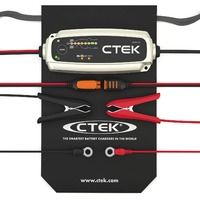
- First, check the simple things: ensure the battery is fully charged and that the ground cables at the battery and chassis are clean and tight.
- The most likely cause on a 2009-2017 Traverse is a loose connection at the Engine Control Module (ECM). Disconnect the battery and reseat these connectors firmly.
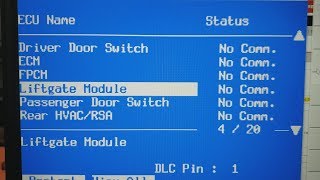
- This code is almost always accompanied by other communication codes (U0100, U0121, etc.). The presence of multiple 'U' codes strongly points to a network-wide issue, not a single failed part.
- Do not replace any expensive control modules until all wiring, connector, and power/ground checks have been performed.
- Due to the disabling of safety systems like ABS and StabiliTrak, the vehicle is not safe for normal driving until the issue is resolved.
What's Unique About the 2009-2017 Chevrolet Traverse
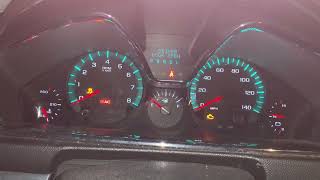
The first-generation Traverse and its Lambda-platform siblings (GMC Acadia, Buick Enclave) seem particularly susceptible to intermittent connection issues at the main Engine Control Module (ECM) connectors. An owner of a 2017 model documented in a detailed YouTube video that a host of communication codes, including U0073, U0100, U0121, and U0140, were resolved simply by wiggling and reseating the ECM connectors. 🎬 Watch: How to diagnose and fix these common ECM connection issues. This suggests that before suspecting a failed module or complex wiring damage, the first and most important check is the physical connection at the engine's main computer, which can become loose or develop poor contact over time.
Symptoms You May Notice
- Check Engine Light is on
- "Service StabiliTrak" or "Traction Control Off" messages on the driver information center
- Instrument cluster gauges behaving erratically or dropping to zero (speedometer, tachometer)
- Engine running in 'Reduced Power' mode
- Harsh or incorrect transmission shifting
- ABS and Brake warning lights illuminated
- Vehicle may intermittently fail to start or stall.
- Multiple other 'U' codes for lost communication are often stored at the same time, such as U0100, U0101, U0121, and U0140.
- Cruise control may become inoperative.
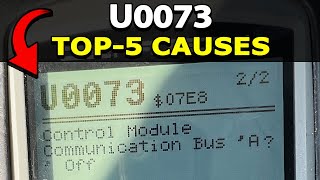
- Replacing the Engine Control Module (ECM) or another module without first thoroughly checking all wiring, connectors, and grounds. The U0073 code points to a communication line problem, and the modules themselves are often not the root cause. 🎬 Watch: Understanding the most common causes and fixes for U0073.
Most Likely Causes
- Loose or Poor Connection at ECM Connectors 🔴 High Probability Vibration and thermal cycles can cause the large multi-pin connectors at the Engine Control Module (ECM) to develop a poor or intermittent connection. This is a well-documented failure point for this platform.
How to confirm: With the vehicle off, locate the ECM on the driver's side of the engine bay. Disconnect the negative battery terminal. Carefully unlatch and disconnect the main wiring harness connectors from the ECM. Inspect for any corrosion or bent pins. Reconnect them firmly until they latch securely. A 2017 Traverse owner demonstrated on YouTube how simply pushing on the connectors restored functionality. Reconnect the battery and see if the symptoms disappear.
Typical fix: Reseating the connectors is often the only fix required. If pins are corroded, they may need to be cleaned with an electrical contact cleaner. In the cited video, the owner was able to resolve the issue at no cost.
Est. part cost: $0-$15 - Loose or Corroded Battery/Ground Connections 🟡 Medium Probability → Shop Vehicle Battery Modern vehicles are extremely sensitive to voltage fluctuations, and a loose ground cable at the battery or from the chassis to the engine block can interrupt module communication. On the 3.6L engine, there are several key ground points on the engine block and cylinder heads that can loosen over time.
How to confirm: Check that both the positive and negative battery terminals are clean and tight. Follow the main negative cable to its connection point on the vehicle body and ensure it is tight and free of corrosion. A Reddit user identified a key ground, G110, on the right rear of the engine mounted to the back of the cylinder head, which grounds the ECM and TCM. Inspect this 🎬 See how a bad ground can cause a no-communication fault. and other visible engine grounds for tightness and corrosion.
Typical fix: Clean the terminals and connection points with a wire brush and tighten the fasteners securely.
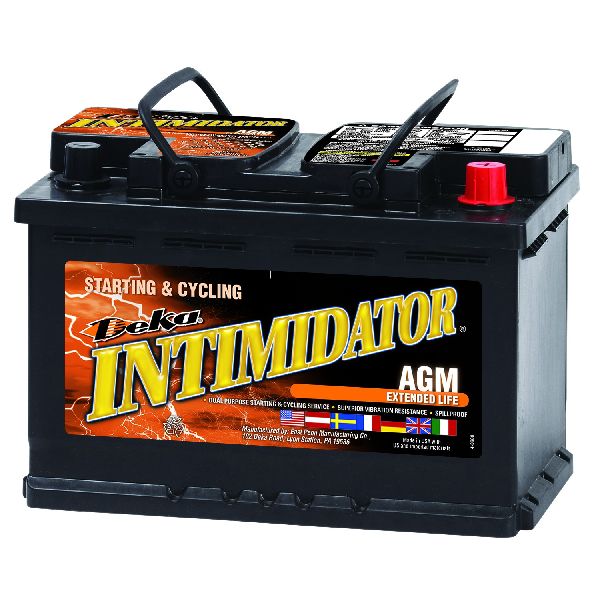
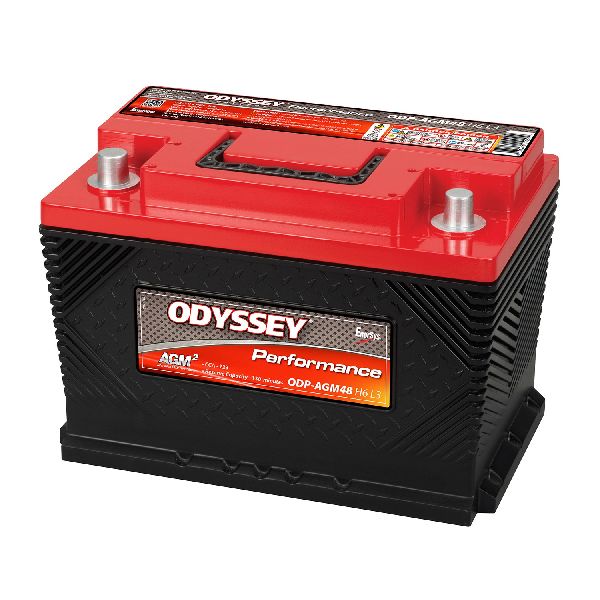
Est. part cost: $0-$5 - Weak or Failing Battery 🟡 Medium Probability → Shop Vehicle Battery Low system voltage, especially during engine cranking, can prevent control modules from initializing correctly, causing them to drop off the communication network.
How to confirm: Test the battery with a multimeter or a battery tester. A healthy battery should show approximately 12.4-12.6 volts with the engine off and 13.7-14.7 volts with the engine running. A simple voltage check can rule out this common cause.
Typical fix: Recharge or replace the battery if it fails a load test or cannot hold a proper charge.
Est. part cost: $150-$300 - Chafed or Damaged Wiring Harness ⚪ Low Probability Wiring harnesses can rub against engine components, the firewall (bulkhead), or chassis parts over time, eventually wearing through the insulation and causing a short or open circuit in the CAN bus wires.
How to confirm: Visually inspect the wiring harnesses, especially where they bend or pass near sharp metal edges. GM Technical Service Bulletin 19-NA-113 describes a similar issue on the Chevy Trax where the engine harness chafes against the bulkhead, causing U0073 and other codes. While for a different vehicle, the principle applies. Manipulate the harness while monitoring scan tool data to see if the fault appears or disappears.
Typical fix: Repair the damaged section of wire and protect the harness with loom or electrical tape to prevent future damage.
Est. part cost: $10-$50
Rare But Worth Checking
- Failed Control Module: While possible, a module (like the BCM, EBCM, or TCM) failing and taking down the network is less common than wiring or connection issues. Diagnosis involves using a scan tool to see which modules are offline and then unplugging them one by one to see if communication is restored. Don't replace any modules unless all wiring and connection checks have been exhausted.
- Aftermarket Electronics Interference: Improperly installed remote starters, alarms, trailer brake controllers, or audio equipment can interfere with the CAN bus network and cause communication errors. If you have recently installed such a device, try disconnecting it to see if the problem resolves.
Diagnosis Steps
- Scan for Codes: Use an OBD-II scanner capable of reading codes from all vehicle modules (ECM, TCM, BCM, ABS, etc.). Note all 'U' (communication) codes present, as they can help pinpoint the issue.
- Check Battery and Grounds: Ensure the battery has at least 12.4V with the engine off and is charging correctly (13.7-14.7V running). Inspect and tighten the main battery terminals and the primary body/engine ground straps. Pay special attention to ground G110 on the rear of the passenger-side cylinder head.
- Inspect and Reseat ECM Connectors: Disconnect the negative battery terminal. Carefully disconnect, inspect, and firmly reconnect the main wiring connectors at the Engine Control Module (ECM). This is a high-probability, no-cost fix for the Traverse.
- Visual Wiring Inspection: Inspect visible sections of the wiring harness for signs of chafing, pinching, or damage, particularly around the engine bay and where the harness passes through the firewall, as suggested by TSBs for similar issues.
- Check CAN Bus Resistance (Advanced): With the battery disconnected, use a multimeter to measure the resistance between Pin 6 (CAN High) and Pin 14 (CAN Low) at the OBD-II port. A healthy network should read approximately 60 ohms. A reading of 120 ohms indicates a missing termination resistor or an open circuit. A reading near 0 ohms indicates a short circuit.
- Isolate Modules (Advanced): If the resistance is incorrect, begin disconnecting modules on the high-speed CAN bus one by one (e.g., EBCM/ABS module, TCM connector) and re-measure the resistance each time. When the resistance returns to 60 ohms, the last module disconnected (or the wiring leading to it) is likely the source of the fault.
Parts You'll Likely Need
- Battery — A weak or failing battery is a common cause of low voltage, which can disrupt module communication.
Trusted brands: ACDelco, Interstate, DieHard - Electrical Contact Cleaner — Used to clean corrosion from the ECM connectors, ground points, or other harness connections, which can restore proper communication.
Trusted brands: CRC, WD-40 Specialist, DeoxIT
Related Codes That Often Appear With This One
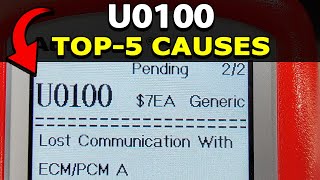
- U0100 — Lost Communication With Engine Control Module (ECM)
- U0101 — Lost Communication with Transmission Control Module (TCM)
- U0121 — Lost Communication With Anti-Lock Brake System (ABS) Control Module
- U0140 — Lost Communication With Body Control Module (BCM)
Technical Service Bulletins (TSBs) & Recalls
- 19-NA-113: While for a Chevy Trax, this TSB is relevant as it documents U0073 caused by an engine wiring harness chafing against the bulkhead, a plausible cause on the Traverse as well.
- 14329 (superseded by 14329A/B): Special coverage for loss of power steering assist on 2009-2011 models.
- 14404B: Special coverage for fractured 3-5-R transmission wave plate on 2009 models.
- Product Safety Notice #14515B: An owner reported in NHTSA ODI #10763059 that a mechanic identified this notice as potentially related to a failure where the vehicle did not accelerate and stored codes U0073 and U0121.
Platform-Specific Known Issues
- A documented case on a 2017 Traverse showed that multiple communication codes, including U0073, were caused by a poor connection at the ECM plugs, which was resolved by simply reseating them.
- NHTSA ODI #11673656 describes a critical CAN bus communication system failure where the check engine light was accompanied by U0073, indicating a malfunction in the vehicle's controller area network.
Mechanic-Grade Diagnostic Values
- High-Speed GMLAN Bus Resistance — expected: 60 ohms (± 5 ohms). Failure: A reading of ~120 ohms indicates an open circuit or a missing termination resistor. A reading near 0 ohms indicates a short between the CAN High and Low wires.
- High-Speed GMLAN Bus Voltage (at rest) — expected: Approximately 2.5V on both Pin 6 and Pin 14.. Failure: Significant deviation from 2.5V on either line at rest can indicate a short to power or ground.
- High-Speed GMLAN Bus Voltage (communicating) — expected: GMLAN High (Pin 6) averages ~2.66V and GMLAN Low (Pin 14) averages ~2.34V. During data transmission, the high line pulses to ~3.5V and the low line pulses to ~1.5V.. Failure: A flat line or voltage outside these ranges on an oscilloscope indicates a communication failure.
Scan Tool Commands That Help
- GDS2 / Professional Scan Tool: Module Isolation via Fuse Removal — When the CAN bus resistance test is good (60 ohms) but no modules will communicate, this helps find a single module that is corrupting the bus. Remove the power fuse for each high-speed CAN module one by one, and see if communication returns to the remaining modules.
- Bench Programming Tool (e.g., OBDSTAR DC706): ECM/BCM Cloning (Read/Write EEPROM and Flash) — When the ECM or BCM is confirmed to be faulty, this function allows you to transfer all critical data (VIN, security, programming) from the original module to a compatible used donor module, creating a plug-and-play replacement.
Wiring & Ground Locations
- G110 — On the right rear of the engine, mounted to the back of the cylinder head, sometimes on a bracket directly above the power steering pump pressure hose.. This is a primary ground point for both the Engine Control Module (ECM) and the Transmission Control Module (TCM). A poor connection here can directly cause communication loss codes U0073 and U0101.
- G103 — In the left rear of the engine compartment on the cowl (firewall), located above the brake booster.. This ground serves the Body Control Module (BCM), Instrument Panel Cluster (IPC), and the Data Link Connector (DLC) itself. A fault here can prevent a scan tool from communicating and cause various 'U' codes.
- High-Speed GMLAN Termination Resistors — There are two 120-ohm resistors. One is located internally within the Engine Control Module (ECM). The second is often at the opposite end of the bus, sometimes as a standalone resistor taped into the harness or inside another module like the Electronic Brake Control Module (EBCM).. The network requires both termination resistors to be present to achieve the correct 60-ohm total resistance for proper communication. A failure of a resistor or the wiring to it will cause the resistance to read 120 ohms, leading to code U0073.
- Data Link Connector (DLC) Pins — The OBD-II port under the driver's side dashboard.. Pin 6 is the GMLAN High (+) wire and Pin 14 is the GMLAN Low (-) wire. These are the primary test points for measuring bus voltage and resistance.
Real Owner Repair Stories
- OBDSTAR DC706 Tutorial / Medium Article (2014 GMC Acadia (Lambda Platform Sibling)) — Engine hard start, ECM code for lost communication.
❌ Tried (didn't work) Not specified, but the diagnosis led to condemning the ECM.
✅ What actually fixed it The Engine Control Module (ECM) was faulty. The fix was to obtain a used ECM and perform a bench clone, transferring the EEPROM and Flash data from the original failed module to the donor module. This made the used part plug-and-play. - NHTSA ODI #10763059 — An owner reported that their vehicle failed to accelerate and the check engine light came on. A mechanic found codes U0121 and U0073, suggesting a potential link to a product safety notice.
When the Usual Fixes Don't Work
- While the most common fix for U0073 on the Traverse is checking simple connections and grounds, this is not always the case. There are confirmed instances where the Engine Control Module (ECM) itself fails internally, causing the communication loss. In one documented case on a sibling platform, the only solution was to replace the ECM and clone the original's programming to a used unit. This demonstrates that if basic wiring and connection checks do not resolve the issue, module failure is a real and probable cause that must be investigated.
OEM Part Supersession History
Multiple, e.g., 12643248, 12651994→Multiple, e.g., 12652814, 12663029— Revisions and updates by the manufacturer.
Heads up: The ECM for this Traverse is an ACDelco E39 or E39A. While many part numbers are interchangeable, it is critical that the service number on the replacement module is compatible with the vehicle's specific calibration to avoid damage or malfunction. Always verify compatibility by VIN.
Model Year Variations Within This Range
- 2009-2011 vs 2012-2017: The 3.6L engine changed from the LLT to the LFX version around 2012. While they use the same E39/E39A ECM family, the specific wiring pinouts at the ECM can differ. For example, on another code (P0202), the injector control wire moved from Pin 6 (X1 connector) on the 2011 LLT to Pin 48 (X1 connector) on the 2012+ LFX. This highlights the need to use the correct wiring diagram for the specific model year when performing advanced diagnostics.
Diagnostic Flowchart
Other Known Issues on This Vehicle
Issues unrelated to this code that are worth knowing about as an owner of this generation:
- Premature Timing Chain Stretch (3.6L V6) 🔴 High — Very common, especially on pre-2012 LLT engines, but still occurs on later LFX engines. Often appears between 70,000 and 120,000 miles. Triggers codes like P0008, P0016, P0017. (Ref: GM extended warranty coverage for some model years, but many are now outside the coverage window.)
- Cracked 3-5-R Transmission Wave Plate (6T70/6T75) 🔴 High → Shop Transmission Assembly — Common on early models (especially 2009). Results in loss of 3rd, 5th, and Reverse gears. (Ref: Special Coverage Adjustment 14404B extended warranty to 10 years/120,000 miles for 2009 models.)
- Power Steering Pump/Gear Failure 🟠 Medium — Common on 2009-2012 models, leading to whining noise or sudden loss of power assist, especially at low speeds. (Ref: Special Coverage Adjustment 14329 covered repairs for 10 years/150,000 miles.)
- Leaking Water Pump 🟠 Medium — A frequent failure item. Coolant is seen leaking from the weep hole on the passenger side of the engine. If ignored, can lead to overheating.
- Worn/Leaking A/C Lines to Rear HVAC 🟡 Low — The aluminum lines running to the rear A/C unit are prone to corrosion and leaking refrigerant, causing the A/C system to fail.
Used vs. New Parts: Buying Guide for This Vehicle
When a used part is the smart pick: A used control module (ECM, BCM) from a junkyard is a cost-effective choice ONLY if you have a plan for programming. It is not plug-and-play. Using a mail-in cloning service, where your original module's data is transferred to the used donor, is often the most practical DIY approach. Used connectors or harness pigtails are excellent, low-cost parts for repairing damaged wiring.
Donor-vehicle mileage cap: roughly under 150000 miles for the part to have meaningful remaining life.
What to inspect on the donor part:
- For a used module, the Service Part Number on the sticker MUST match the original or be a known compatible superseded number.
- Ensure the donor vehicle was not involved in a flood or fire.
- Inspect connector pins on the used module to ensure they are straight and free of corrosion.
OEM-only on this vehicle (don't cheap out):
- Engine Control Module (ECM)
- Body Control Module (BCM)
Aftermarket brands forum-validated for this vehicle:
- For replacement modules, remanufactured ACDelco units are the gold standard. Some reputable companies sell pre-programmed OEM modules based on your VIN.
Brands owners have reported issues with on this vehicle:
- Avoid off-brand, no-name electronic modules. The programming and internal components are complex and critical for vehicle operation; non-OEM modules have a high failure and incompatibility rate for this specific application.
Real Owner Stories
Aggregated from forums and TSBs cited above. Mileages and costs reflect what owners reported in those sources.
2017 Chevrolet Traverse
Symptoms: Multiple communication codes including U0073 were stored; the owner demonstrated the issue on YouTube.
What fixed it: Reseating the main wiring harness connectors at the Engine Control Module (ECM).
Cost: $0-$0
Source hint: https://www.traverseforum.com/threads/lots-of-codes-u0100-u0073-u0121-u0140-ecm-pcm-diagnosis-and-possible-fix.24137/
2011 Chevrolet Traverse
Symptoms: Loss of communication with ECM/TCM; owner was seeking the specific ground location for these modules.
What fixed it: Inspecting and securing the G110 ground connection on the rear of the cylinder head.
Source hint: https://www.reddit.com/r/MechanicAdvice/comments/wz2w5f/does_anyone_know_the_location_of_the_g110_ground/
Chevrolet Traverse Owner Report
Symptoms: An owner reported a CAN Bus Communication System Failure involving diagnostic code U0073, which they described as a critical vehicle system malfunction (NHTSA ODI #11673656).
What fixed it: Not specified in the report, but the failure was documented as a significant network issue.
Related OBD-II Codes
Frequently Asked Questions
Can a loose connection at the ECM really cause my 2017 Traverse to show U0073?
Where is the G110 ground located on a 2011 Traverse?
Does TSB 19-NA-113 apply to the Chevrolet Traverse?
Why is my Traverse showing 'Service StabiliTrak' along with the U0073 code?
Could a weak battery cause my gauges to drop to zero and throw communication codes?
Are there any special coverages for the 2009 Traverse that might be related to electrical or power issues?
Helpful Videos

We Have This Part in Stock


The information in this article is provided for general reference and educational purposes only. Vehicle specifications, procedures, and part compatibility can vary by production date, trim level, and region. Always consult your vehicle's factory service manual and verify part numbers before purchasing or performing repairs. Safety-critical components such as airbags, seat belts, and braking systems should be installed by a qualified professional.
- Chevrolet Traverse:
- 🧭 Diagnostic Flowchart
- 🎬 Helpful Videos
- 🛍️ Shop This Part
- What's Unique About the 2009-2017 Chevrolet Traverse
- Symptoms You May Notice
- Most Likely Causes
- Rare But Worth Checking
- Diagnosis Steps
- Parts You'll Likely Need
- Related Codes That Often Appear With This One
- Technical Service Bulletins (TSBs) & Recalls
- Platform-Specific Known Issues
- Mechanic-Grade Diagnostic Values
- Scan Tool Commands That Help
- Wiring & Ground Locations
- Real Owner Repair Stories
- When the Usual Fixes Don't Work
- OEM Part Supersession History
- Model Year Variations Within This Range
- Other Known Issues on This Vehicle
- Used vs. New Parts: Buying Guide for This Vehicle
- Real Owner Stories
- 2017 Chevrolet Traverse
- 2011 Chevrolet Traverse
- Chevrolet Traverse Owner Report
- Related OBD-II Codes
- Frequently Asked Questions
- 🎟️ Get 5% Off