

U0073 on 2017-2018 Chrysler Pacifica: Causes and Fixes for 'Control Module Communication Bus 'A' Off'
On a 2017-2018 Pacifica, code U0073 is most often caused by weak or failing batteries or a poor main battery ground connection. Start by load testing both the main and auxiliary batteries. Also, inspect the main ground stud for looseness or contamination, which was the subject of NHTSA recall 19V348000.
- Before any complex diagnostics, have both batteries professionally load-tested.
- Inspect and clean the main battery ground connection on the chassis; this is a known recall issue and a common fix.
- This code indicates a serious fault that can affect vehicle safety and control; do not continue to drive.
- The problem is more likely to be a power supply or wiring issue than a failed expensive computer module.
- Due to the complexity of network diagnostics, professional service is strongly recommended if the battery and ground checks do not resolve the issue.
What's Unique About the 2017-2018 Chrysler Pacifica
The Chrysler Pacifica of this era is known for having sensitive electronics highly dependent on a stable power supply from its dual-battery system (one main, one auxiliary). Many owners report a cascade of random electronic issues and communication codes, like U0073, as the first sign of a failing battery. Furthermore, a specific and widespread recall (NHTSA 19V348000, FCA V53) was issued for a poorly secured battery ground connection on these vans, making power supply issues a primary suspect, often before suspecting a complex wiring or module failure.
Symptoms You May Notice
- Multiple warning lights on the dashboard (Check Engine, ABS, Traction Control, Airbag)
- "Service Shifter" message appears
- Loss of power steering assist
- Vehicle may not start or may stall while driving
- Erratic behavior from electronic accessories (e.g., power doors, radio, flickering screens)
- Dashboard lights flickering or going dark
- Transmission may not shift correctly or seem unresponsive
- Replacing a single module without confirming it is the source of the fault. Often, a module is just reporting the network fault; it is not the cause.
- Replacing the Powertrain Control Module (PCM) or Body Control Module (BCM) when the issue is a simple battery ground or a wiring issue elsewhere.
- Overlooking a weak auxiliary battery, as many focus only on the main battery.
Most Likely Causes
- Weak or Failing Main/Auxiliary Batteries 🔴 High Probability The Pacifica uses a dual-battery system to manage its extensive electronics. Low voltage from either the main AGM or the smaller auxiliary battery can cause modules to drop off the network, triggering communication codes. This is a very common complaint from owners and a frequent first-step diagnosis for network faults.
How to confirm: Perform a load test on both the main and auxiliary batteries. A simple voltage check is not sufficient, as a battery can show 12V but fail under load. Many auto parts stores can do this for free.
Typical fix: Replace the weak or failing battery. It is often recommended to replace both at the same time, as they are typically the same age and wear at similar rates.
Est. part cost: $200-$450 for the main AGM battery, $80-$150 for the auxiliary. - Loose or Corroded Main Battery Ground Connection 🔴 High Probability → Shop Vehicle Battery Recall NHTSA 19V348000 (FCA recall V53) was issued for 198,731 vehicles because sealer applied during manufacturing could get on the battery ground stud. This contamination prevents a secure connection, leading to a loose ground over time and causing intermittent power loss to modules.
How to confirm: Locate the main battery ground stud on the chassis. Check if the nut is loose. Even if tight, the recall procedure should be performed. Visually inspect for a thick, non-conductive sealer under the ground cable's terminal.
Typical fix: Disconnect the battery, remove the ground nut, thoroughly clean the contact surfaces of the terminal eyelets and the stud down to bare metal using electrical contact cleaner, and securely reassemble the connection, tightening the nut to 9 N·m (80 in. lbs.). This was the official recall procedure.
Est. part cost: $0 if performing the cleaning yourself. - CAN Bus Wiring or Connector Fault 🟡 Medium Probability Forum users and diagnostic technicians point to specific weak points, such as the XY100 inline connector in the left front fender area being susceptible to water intrusion, and the star connector (a central network hub) behind 🎬 Watch: Diagnosing complex CAN bus communication and wiring issues. the glove box failing. Damage to the twisted pair CAN wires from chafing or rodents can also take the network down.
How to confirm: This requires advanced diagnostics. A technician would use a wiring diagram and multimeter to check for continuity, shorts to ground, or shorts to power on the CAN C bus wires (typically a twisted pair). Wiggling the harness in known problem areas while monitoring the network can help pinpoint the fault.
Typical fix: Repair the broken or corroded wire. If a connector is corroded, it may need to be cleaned or replaced. The star connector, if faulty, must be replaced.
Est. part cost: $5-$150 depending on whether it's a simple wire repair or a connector/hub replacement.
Rare But Worth Checking
- Faulty Control Module: While possible, it's less common than wiring or power supply issues. A single module (like the ABS, BCM, or even the radio) can fail internally and short out the entire network, causing a bus-wide failure. Diagnosis involves using a high-end scan tool to see which modules are offline and then unplugging them one by one to see if communication is restored.
- Loose 12V Power Distribution Connection (Hybrid Models): On a Pacifica Hybrid, a loose connection at a 12-volt isolator post behind the driver's seat was the subject of a recall (NHTSA 20V-334) as it could develop high resistance, leading to similar power and communication issues. This highlights the sensitivity to power supply integrity on all Pacifica models.
- Faulty Aftermarket Electronics: Improperly installed aftermarket devices like remote starters, alarms, or trailer brake controllers can interfere with or damage the CAN bus network, leading to communication codes like U0073. If you have such devices, try disconnecting them to see if the issue resolves.
Diagnosis Steps
- Check for open recalls, especially NHTSA 19V348000 (FCA V53) related to the battery ground. Have the recall service performed even if the ground seems tight.
- Using a professional scan tool, perform a full network scan. Note all stored U-codes and identify which modules are not communicating.
- Thoroughly inspect and, more importantly, load test both the main and auxiliary batteries. Ensure all battery terminal connections are clean and tight. Low voltage is a primary cause of this code.
- Inspect the main battery-to-chassis ground connection per the recall instructions. Disconnect, clean all surfaces to bare metal, and re-torque to 9 N·m (80 in. lbs.).
- Visually inspect the CAN bus wiring harness for any obvious damage, corrosion, or signs of rodent activity, paying close attention to the area under the fuse box and near the left front fender.
- Locate the CAN bus star connector (also called a diagnostic hub) which is often behind the glove box. Inspect its connections for looseness or corrosion.
- If the problem persists, advanced diagnostics are needed. This involves using a multimeter to measure resistance between the two CAN bus wires (should be ~60 ohms with the battery disconnected) and checking each wire for shorts to power or ground.
Parts You'll Likely Need
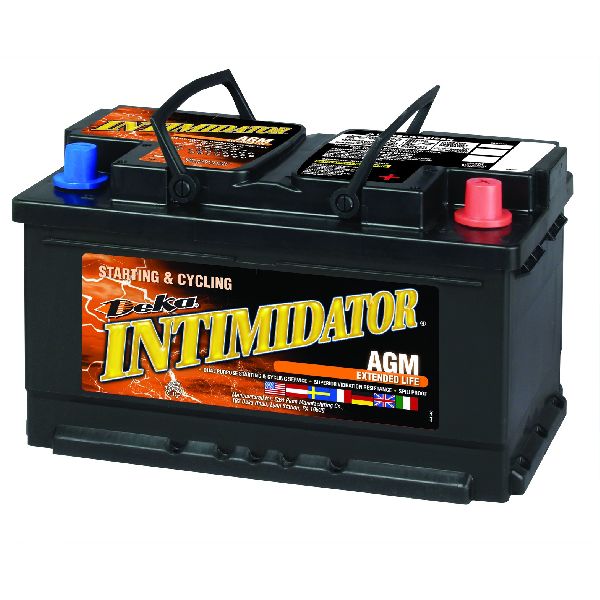
- AGM Main Battery
(OEM #BBAH7L48)— A weak primary battery is a leading cause of network communication faults on this vehicle.
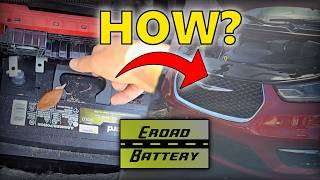
Trusted brands: Mopar, Deka, Odyssey, NAPA The Legend Premium 🎬 Watch: Step-by-step guide to replacing your main AGM battery.
OEM price range: $300-$450
Aftermarket price range: $200-$350 - Auxiliary Battery
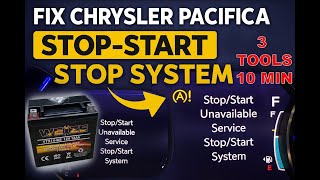
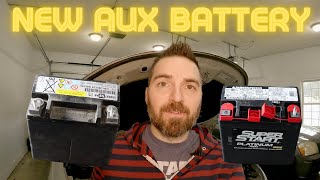
(OEM #BBAUX101AB)— The smaller auxiliary battery also supports the vehicle's electronics, and its failure can cause the same 🎬 See how to replace the auxiliary battery in 10 minutes. communication issues.
Trusted brands: Mopar, ACDelco, Deka
OEM price range: $120-$180
Aftermarket price range: $80-$150 - CAN Bus Star Connector / Hub
(OEM #68321746AA)— This central hub can fail, bringing down the entire network. It's a known, though less common, failure point.
Trusted brands: Mopar
OEM price range: $50-$100
Related Codes That Often Appear With This One
- U01xx (e.g., U0100, U0121, U0140) — These codes indicate a loss of communication with a *specific* module (e.g., U0100 with ECM, U0121 with ABS). When the entire bus is down (U0073), it's common for multiple modules to log these codes as they can no longer hear from their neighbors.
Technical Service Bulletins (TSBs) & Recalls
- NHTSA Recall 19V348000 (FCA #V53): Addresses the primary battery ground connection. The official repair involves cleaning the ground stud and terminals and re-torquing the nut.
Platform-Specific Known Issues
- Recall 19V348000: A loose battery ground connection from sealer contamination at the factory can cause intermittent loss of power to modules and trigger network codes.
- Water intrusion into the XY100 inline harness connector in the left front fender area is a known cause of CAN C bus faults.
- Failure of the dual-battery system is a very frequent cause of widespread, seemingly unrelated electronic faults and communication codes.
Mechanic-Grade Diagnostic Values
- CAN Bus Network Resistance — expected: ~60 Ohms. Failure: A reading of ~120 Ohms indicates one of the two terminating resistors (or the wiring to it) has failed. A reading of 0 Ohms indicates a short between the CAN High and CAN Low wires. An open loop (OL) reading indicates a break in the circuit.
- CAN Bus Voltage (Key On, Engine Off) — expected: CAN High (Pin 6): ~2.5V to 3.5V. CAN Low (Pin 14): ~1.5V to 2.5V. The sum of both lines should be ~5V.. Failure: Voltages stuck at 0V, 5V, or 12V, or not mirroring each other (one going up while the other goes down) indicates a short to ground, short to power, or an open circuit. A bias voltage shift (e.g., both lines centered around 3.5V instead of 2.5V) can indicate a bad module ground.
Scan Tool Commands That Help
- Chrysler wiTECH: View Network Topology / Bus Diagnostics — This function provides a visual map of all control modules on the network and shows which ones are actively communicating and which are offline. It is the primary tool for isolating a network-wide fault like U0073, helping to determine if a single module is down or if the entire bus is compromised.
Wiring & Ground Locations
- CAN Bus Star Connector (Splice Block) — Located on the passenger side, behind a plastic trim panel near the door opening. It is a 20-way green or tan connector where multiple CAN bus branches meet.. This is the central hub for the CAN C network. A failure, corrosion, or loose connection at this single point can bring down the entire network, causing a U0073 code and widespread communication failures. It is a known failure point.
- Main Battery Ground Stud — On the chassis frame near the main 12V battery in the engine compartment.. This is the subject of NHTSA recall 19V348000. Factory-applied sealer can contaminate the connection, leading to high resistance and intermittent power loss to all vehicle modules, a primary cause of U0073.
- Engine/Manifold Grounds — There are multiple ground straps connecting the engine block and manifold to the chassis. One is located on the front of the engine, another is near the top.. While less common to cause a total bus failure than the main battery ground, poor engine grounds can introduce electrical noise and voltage fluctuations that can disrupt module communication.
Real Owner Repair Stories
- KOEO YouTube Channel (2017 Chrysler Pacifica) — No power steering, multiple CAN bus communication codes including U0073, loss of communication with the power steering control module.
❌ Tried (didn't work) A used rack and pinion (with integrated module) had already been installed by another shop., Initial code scan showed a massive number of communication faults across many modules.
✅ What actually fixed it After verifying good power and ground to the power steering module, a lab scope was used to test the CAN wires. The signal was missing. The technician found a hidden break in one of the CAN bus wires under the insulation, which was not visible externally. Repairing the broken wire restored communication and fixed the power steering. - Peter L. YouTube Channel (2017 Chrysler Pacifica) — No start, no crank, no electricity to any part of the car initially.
❌ Tried (didn't work) Initially suspected a blown main relay., Suspected a bad alternator, but ruled it out because the car wasn't running when it failed., Suspected a bad battery, but a jump start didn't solve it.
✅ What actually fixed it The battery terminals were heavily corroded with white and bluish deposits. The owner disconnected the terminals, cleaned them thoroughly with a wire brush, and reconnected them. This restored power and the vehicle started normally.
"I Checked Everything" — The Actual Cause
- In one documented case, a 2017 Pacifica had no power steering and a U0073 code. The power steering module had proper power and ground, and a visual inspection of the wiring harness revealed no damage. The actual cause was a break in a CAN wire hidden underneath the wire's insulation, which was only discoverable by testing the circuit with a lab scope while wiggling the harness. This highlights that even when basic power/ground checks and visual inspections are clean, an internal wire break can be the root cause.
OEM Part Supersession History
68222875AD→68222875AI— Part revision or update by manufacturer.68402176AA→68402176AB— Part revision or update by manufacturer.
Model Year Variations Within This Range
- 2017-2019: While many parts are physically similar, there are underlying software and module differences. For example, when programming keys, the procedure or 'pin read' can be different for each model year, indicating variations in the security modules or BCM software that a technician must account for.
Diagnostic Flowchart
Other Known Issues on This Vehicle
Issues unrelated to this code that are worth knowing about as an owner of this generation:
- Harsh Shifting or Transmission Failure (9-Speed Auto) 🔴 High → Shop Transmission Assembly — Commonly reported on 2017-2018 models. Can manifest as jerky shifting, hesitation, or complete failure. (Ref: Software updates were issued, but some owners required transmission replacement.)
- Engine Stalling (Hybrid Models) 🔴 High — A wiring connector inside the transmission could short, causing unexpected engine shutdown. Affects 2017-2023 hybrids. (Ref: NHTSA Recall 23V-010 and warranty extension D-23-07 address this issue.)
- Power Sliding Door Malfunction 🟠 Medium — Doors may fail to open/close, or reverse direction without reason. Often caused by sensor calibration issues, dried weather stripping, or wiring harness damage in the door track. (Ref: No specific recall, but it is a widely discussed owner complaint. Recalibration procedures and lubrication often resolve it.)
- Infotainment System Glitches (Uconnect) 🟡 Low — Owners report issues like the screen freezing, blacking out, or being unresponsive. (Ref: Software updates can sometimes resolve these issues, but in some cases, the unit requires replacement.)
- Cruise Control Fails to Disengage 🔴 High — A short circuit could prevent the cruise control from being cancelled, posing a significant safety risk. (Ref: A large recall was issued in 2018 to reprogram the PCM to fix this.)
- Paint Bubbling and Peeling on Hood 🟠 Medium — Premature paint bubbling, typically on the aluminum hood, is a frequent cosmetic complaint.
Used vs. New Parts: Buying Guide for This Vehicle
When a used part is the smart pick: Used parts are generally not recommended for the primary causes of this code. However, for a complex wiring harness repair, sourcing a specific connector pigtail from a salvage yard can be a cost-effective and reliable solution instead of replacing the entire harness.
Donor-vehicle mileage cap: roughly under 80000 miles for the part to have meaningful remaining life.
What to inspect on the donor part:
- For connectors: ensure there is no corrosion (green or white powder) on the pins.
- Check for signs of water intrusion or dirt inside the connector housing.
- Ensure locking tabs are intact and not brittle.
- For a harness section, look for intact insulation with no signs of chafing, melting, or rodent damage.
OEM-only on this vehicle (don't cheap out):
- Body Control Module (BCM)
- Powertrain Control Module (PCM)
- Radio Frequency Hub (RFH)
Aftermarket brands forum-validated for this vehicle:
- For batteries: Deka, Odyssey, and NAPA The Legend Premium are well-regarded alternatives to OEM.
Brands owners have reported issues with on this vehicle:
- Avoid unbranded, low-cost control modules from online marketplaces. These often have high failure rates or cause compatibility issues. For this vehicle, using a used OEM module that is professionally cloned or programmed is a safer bet than a new, unverified aftermarket module.
Real Owner Stories
Aggregated from forums and TSBs cited above. Mileages and costs reflect what owners reported in those sources.
2017-2018 Chrysler Pacifica
Symptoms: The fault handling strategy of the Powertrain Control Module (PCM) software on about 1% of vehicles can cause an unexpected engine shutdown.
What fixed it: Reprogramming the PCM with updated software to prevent the engine from stalling or shutting down unexpectedly.
Source hint: NHTSA owner report regarding PCM software fault handling strategy
2017-2018 Chrysler Pacifica
Symptoms: Multiple warning lights on the dashboard, 'Service Shifter' message, and erratic behavior from electronic accessories like power doors and flickering screens.
What fixed it: Cleaning the main battery ground stud of non-conductive sealer and re-tightening the ground nut to 9 N·m.
Source hint: NHTSA Recall 19V348000 (FCA #V53)
2017-2023 Chrysler Pacifica Hybrid
Symptoms: Unexpected engine shutdown while driving.
What fixed it: Addressing a wiring connector inside the transmission that could short out.
Source hint: NHTSA Recall 23V-010
Related OBD-II Codes
Frequently Asked Questions
My 2017 Pacifica is showing a 'Service Shifter' message and multiple warning lights; could this be related to a recall?
How do I fix the battery ground issue mentioned in the V53 recall?
Can a bad auxiliary battery cause the U0073 code on my 2018 Pacifica?
I'm seeing U0073 and my power sliding doors are acting up; are these related?
Is there a specific wiring connector I should check for CAN bus issues?
Does the Chrysler Voyager have the same U0073 issues as the Pacifica?
Helpful Videos
We Have This Part in Stock



The information in this article is provided for general reference and educational purposes only. Vehicle specifications, procedures, and part compatibility can vary by production date, trim level, and region. Always consult your vehicle's factory service manual and verify part numbers before purchasing or performing repairs. Safety-critical components such as airbags, seat belts, and braking systems should be installed by a qualified professional.
- Chrysler Pacifica:
- 🧭 Diagnostic Flowchart
- 🎬 Helpful Videos
- 🛍️ Shop This Part
- What's Unique About the 2017-2018 Chrysler Pacifica
- Symptoms You May Notice
- Most Likely Causes
- Rare But Worth Checking
- Diagnosis Steps
- Parts You'll Likely Need
- Related Codes That Often Appear With This One
- Technical Service Bulletins (TSBs) & Recalls
- Platform-Specific Known Issues
- Mechanic-Grade Diagnostic Values
- Scan Tool Commands That Help
- Wiring & Ground Locations
- Real Owner Repair Stories
- "I Checked Everything" — The Actual Cause
- OEM Part Supersession History
- Model Year Variations Within This Range
- Other Known Issues on This Vehicle
- Used vs. New Parts: Buying Guide for This Vehicle
- Real Owner Stories
- 2017-2018 Chrysler Pacifica
- 2017-2018 Chrysler Pacifica
- 2017-2023 Chrysler Pacifica Hybrid
- Related OBD-II Codes
- Frequently Asked Questions
- 🎟️ Get 5% Off