

U0073 on 2011-2024 Dodge Durango: Control Module Communication Bus 'A' Off Causes and Fixes
U0073 on a Dodge Durango means there's a major communication failure between the vehicle's computers. The most common causes are a weak battery, a bad wiring connection, or a faulty CAN bus 'Star Connector'. This is a complex electrical issue that often requires professional diagnosis.
- U0073 indicates a complete breakdown of your Durango's primary computer network.
- Do not drive the vehicle. It is unsafe and you risk being stranded.
- Before suspecting expensive computers, always have your battery and charging system professionally tested. Low voltage is a top cause.
- The problem is most often related to wiring, a bad connection, or a faulty central 'Star Connector', not necessarily a failed computer module.
- This is not a simple DIY fix. Accurate diagnosis requires professional tools and knowledge of the vehicle's network layout.
What's Unique About the 2011-2024 Dodge Durango
The 2011-2024 Durango, like other Chrysler products of the era, uses a 'Star Connector' or 'Junction Block' system to link its computer modules together on the CAN bus network. This connector acts as a central communication hub. While it aids in diagnostics by allowing a technician to disconnect individual modules to isolate a fault, the Star Connector itself can fail, bringing down the entire network. On many Durangos, a primary Star Connector is located behind the glove box or driver-side kick panel, often identifiable as a green connector block for the CAN-C (powertrain) bus. Owners may also see a 'NO BUS' message on the instrument cluster, a classic symptom of this failure on Dodge vehicles.
Symptoms You May Notice
- Check Engine Light is on
- ABS, Traction Control, or other warning lights are illuminated
- Vehicle will not start, or it starts and immediately stalls
- Instrument cluster gauges are inoperative or drop to zero
- 'NO BUS' message appears in the odometer display
- Wipers, turn signals, or cruise control may not work or may operate erratically
- Transmission may shift harshly or get stuck in one gear ('limp mode')
- Power windows or other electronic accessories may fail to operate
- Radio or Uconnect screen may be blank or non-functional
- Power door locks may fail to operate
- Replacing the Powertrain Control Module (PCM) without proper diagnosis. While the PCM can be a cause, it's expensive and often not the root of a network-wide failure.
- Replacing the Totally Integrated Power Module (TIPM) or fuse box. The TIPM is a gateway module, but wiring or another module on the network is often the true cause.
Most Likely Causes
- Weak or Failing Battery / Charging System Issue 🔴 High Probability → Shop Vehicle Battery Modern electronic modules are highly sensitive to voltage. A battery that is old, weak, or has corroded terminals can provide unstable power during startup, causing modules to fail their initialization and trigger a network code. This is one of the most common and easiest-to-fix causes for U0073.
How to confirm: Test the battery voltage at rest (should be ~12.4V or higher) and while the engine is running (should be ~13.7V-14.7V). Have the battery load-tested at an auto parts store, as a battery can show good voltage but still fail under load.
Typical fix: Clean the battery terminals and cable ends thoroughly. If the battery fails a load test, it must be replaced.
Est. part cost: $150-$350 - Damaged Wiring or Corroded Connector 🟡 Medium Probability The CAN bus wiring harness runs throughout the vehicle. Wires can become chafed from vibration, especially in the engine bay, behind wheel well liners, or near the firewall. Moisture intrusion from water leaks can also corrode connectors, particularly at the Star Connector or modules located low in the cabin.
How to confirm: Perform a thorough visual inspection of the main wiring harnesses in the engine bay, under the dashboard, and near the fuse boxes (TIPM). Look for any signs of damage, chafing, or green/white corrosion on connector pins. Pay close attention to harnesses near the transmission and in door jambs.
Typical fix: Repair the damaged section of wire with a solder and heat-shrink connection. Clean corroded connectors with an electrical contact cleaner and a small brush. Replace connectors that are too damaged to be saved.
Est. part cost: $10-$100 - Faulty CAN Bus Star Connector 🟡 Medium Probability → Shop Data Link Connector The Star Connector (also called a junction block) is a central junction for the CAN bus. A capacitor within this connector can fail, or the connector itself can develop internal faults or corrosion, causing intermittent or total network failure. On 2018+ models, it is often a green connector located behind the driver's side kick panel.
How to confirm: This requires advanced diagnostics. A technician will locate the Star Connector and systematically unplug modules to see if network communication is restored. If the fault persists with all modules unplugged, the connector itself is suspect. Measuring resistance across the bus at this point can also help isolate the issue.
Typical fix: Replacement of the faulty Star Connector. A potential Mopar part number for a similar junction block is 68230877AA, but always verify with a dealer using your VIN.
Est. part cost: $50-$150 - Failed Electronic Module ⚪ Low Probability Any single module on the network (ABS, BCM, TIPM, etc.) can fail internally and broadcast disruptive signals or stop communicating, taking down the entire network. The Totally Integrated Power Module (TIPM) in 2011-2013 Durangos is a known failure point for other issues and can contribute to network problems.
How to confirm: This is a process of elimination. Using an advanced scan tool, a technician will isolate modules at the Star Connector. If unplugging a specific module restores communication for all other modules, that module is identified as the source of the problem.
Typical fix: Replace the failed module. Note that many modules (like the PCM, BCM, or TIPM) require programming by a dealer or qualified shop after installation.
Est. part cost: $200-$1500+
Rare But Worth Checking
- Poor Ground Connection: A loose or corroded main ground strap for the engine or chassis can create electrical noise that disrupts the CAN network. Always check that primary ground connections are clean and tight, especially those near the battery and on the engine block.
- Improperly Installed Aftermarket Electronics: A poorly installed remote starter, alarm system, or stereo can tap into the wrong wires and interfere with CAN bus signals, causing this code. If the issue started after an installation, this should be the first place to look.
Diagnosis Steps
- Check Battery Health: Start by ensuring the battery is fully charged and the terminals are clean and tight. A weak battery is a very common cause of communication codes. Have it load tested.
- Scan for All Codes: Use a high-quality scanner to read codes from ALL available modules, not just the engine computer. Note which modules are reporting 'Lost Communication' and which are not responding at all.
- Visual Inspection: Thoroughly inspect visible wiring harnesses for any signs of damage, chafing against metal parts, or rodent activity. Check connectors for looseness or corrosion, especially at the TIPM and main firewall pass-through.
- Check Fuses: Inspect all fuses related to the various control modules, including those in the main fuse box (TIPM). A blown fuse for a single module can sometimes cause network-wide issues.
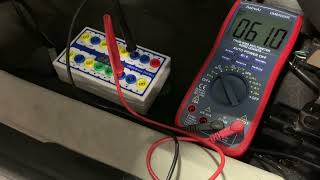
- Check CAN Bus Resistance: This is an advanced step. Disconnect the battery. Using a multimeter, measure the resistance between Pin 6 (CAN High) and Pin 14 (CAN Low) on the OBD-II port. A healthy network should read approximately 60 ohms. 🎬 See how to test CAN bus resistance with a multimeter A reading of 120 ohms suggests a break in the circuit or a missing terminating resistor.
- Isolate Modules (Professional Step): Locate the CAN bus Star Connector(s), often behind the glove box or driver's kick panel. Disconnect one module at a time and re-check if the network comes back online. This process isolates the faulty module or wiring branch.
- Check for TSBs: Check for any Technical Service Bulletins (TSBs) or recalls related to module software updates or known wiring issues. A recall for the 2011-2013 Durango TIPM exists (NHTSA Recall 14V-530), which can cause a variety of electrical issues.
Parts You'll Likely Need
- Battery — A weak or failing battery is a primary cause of network communication errors on modern vehicles.
Trusted brands: Interstate, DieHard, Duralast
OEM price range: $200-$400
Aftermarket price range: $150-$350 - CAN Bus Star Connector / Junction Block
(OEM #68230877AA (Verify with VIN))— This central connector can fail internally or corrode, bringing down the entire CAN network. It's a known failure point in the Chrysler/Dodge/Jeep architecture.
Trusted brands: Mopar
OEM price range: $50-$150
Related Codes That Often Appear With This One
- U0100 — Lost Communication With ECM/PCM
- U0101 — Lost Communication with TCM
- U0121 — Lost Communication With Anti-Lock Brake System (ABS) Control Module
- U0140 — Lost Communication With Body Control Module (BCM)
Technical Service Bulletins (TSBs) & Recalls
- NHTSA Recall 14V-530 / FCA Recall P54: Affects 2011-2013 Dodge Durango. The Totally Integrated Power Module (TIPM) contains a faulty fuel pump relay that can fail, causing the vehicle to stall. While not directly for U0073, a failing TIPM can cause widespread electrical and network issues.
- STAR Online Case S1709000010: Addresses camshaft/lifter failure on 5.7L HEMI engines, a separate major issue.
- TSB 23-023-20: For 2018-2020 models, addresses a coolant leak that can mimic heater core failure. While not directly related to U0073, it's a key platform issue.
Platform-Specific Known Issues
- A recall was issued for some 2022 Dodge Durango models for a software malfunction in the ABS control module that could disable the stability control system, which is a key function of the CAN bus.
- The use of Star Connectors as central junctions makes them a critical point of failure that can be difficult to access and diagnose without specific knowledge of the vehicle's architecture.
Mechanic-Grade Diagnostic Values
- CAN Bus Terminating Resistance — expected: Approximately 60 Ω. Failure: A reading of ~120 Ω indicates an open circuit or a problem with one of the two terminating resistors in the network. A reading near 0 Ω indicates a short between the CAN High and CAN Low wires.
- CAN High (CAN-H) Voltage to Ground — expected: ~2.5V when idle (recessive state), ~3.5V when active (dominant state).. Failure: Voltage significantly different from 2.5V-3.5V, stuck high, or stuck low indicates a bus fault.
- CAN Low (CAN-L) Voltage to Ground — expected: ~2.5V when idle (recessive state), ~1.5V when active (dominant state).. Failure: Voltage significantly different from 1.5V-2.5V, stuck high, or stuck low indicates a bus fault.
Scan Tool Commands That Help
- wiTECH 2.0 (Dealer Tool): Loss of Comm Test — This function actively 'pings' every module on the network every 100 milliseconds. If a module fails to respond, it is flagged in red, allowing a technician to quickly identify which module is offline or intermittently failing without having to manually test each one. This is extremely useful for intermittent U0073 codes.
- wiTECH 2.0 or capable aftermarket scanner: View Network Topology — This provides a visual map of all control modules on the vehicle's networks (e.g., CAN-C, CAN-IHS). It shows which modules are active (green/blue), which have codes (yellow), and which are not communicating (red), helping to localize the fault to a specific bus or module.
Wiring & Ground Locations
- CAN Bus Star Connector (CAN-C) — Typically a green connector located behind the driver's side kick panel or behind the glove box. It serves as the central hub for the high-speed powertrain network.. This is the primary diagnostic point. A technician can disconnect branches of the network here to isolate a faulty module or wiring harness that is bringing the entire bus down.
- CAN Bus Star Connector (CAN-IHS) — Typically a brown or tan connector located near the CAN-C star connector. It is the hub for the Interior High Speed bus for components like the radio and door modules.. A fault on the interior bus can sometimes cascade or be related to a gateway issue, causing faults on the main CAN-C bus. Isolating modules here can also be part of diagnosis.
- OBD-II Port Pins 6 & 14 — Under the driver's side dashboard. Pin 6 is CAN-H and Pin 14 is CAN-L for the primary high-speed bus.. These are the most accessible points for measuring overall bus health (resistance and voltage) before diving deeper into the vehicle's wiring.
- Engine-to-Chassis Ground — A braided strap connecting the engine block to the vehicle's chassis/frame. On V8 models, a key ground is on the passenger side of the engine block near the alternator.. A poor ground here can introduce electrical noise that disrupts CAN bus signals across the entire vehicle, leading to communication codes like U0073.
- Secure Gateway Module (SGW) — For 2018+ models, this module is located behind the dashboard, often near the radio or star connector.. This module blocks direct diagnostic commands from the OBD-II port. A bypass cable must be installed to perform advanced functions like the 'Loss of Comm Test' or to command individual modules, making it a required first step for deep diagnosis on newer Durangos.
Real Owner Repair Stories
- Documented repair on a similar platform (2019 Dodge Charger) (2019 Dodge Charger, similar CAN architecture) — No-start condition with U0140 (Lost Communication with BCM) and other communication codes.
❌ Tried (didn't work) Initial checks of the BCM power and ground were normal.
✅ What actually fixed it The root cause was an internally shorted Electronic Shifter Module (ESM). The fault was found by using the Star Connector to disconnect network branches one-by-one. When the ESM was disconnected, the rest of the network came back online. Replacing the ESM resolved all codes. - YouTube diagnostic video on a Dodge vehicle (Dodge vehicle with Star Connector architecture) — No communication on the interior CAN bus, causing multiple features to fail.
❌ Tried (didn't work) Initial visual inspection did not reveal the fault.
✅ What actually fixed it The technician connected an oscilloscope to the CAN lines and saw a bad signal (voltage pulled high). By disconnecting modules one at a time from the star connector, the signal returned to normal after unplugging the third connector. This isolated the fault to that specific module/branch, which was then repaired.
When the Usual Fixes Don't Work
- In multiple documented cases, the U0073 code was not caused by the most common culprits like the battery or a main module like the PCM/BCM. Instead, a secondary, less obvious module on the network, such as the Electronic Shifter Module, shorted internally and brought down the entire bus. The only way to find this was through a methodical process of elimination, disconnecting each module branch at the central Star Connector until communication was restored to the rest of the vehicle. This highlights why simply replacing the first suspected module is often the wrong approach.
OEM Part Supersession History
68084591AA, 68140666AA→68230877AA— Part has been updated by the manufacturer.
Heads up: The new part number should be a direct replacement for the older numbers, but always confirm fitment with a VIN at a dealership. These are often color-coded (e.g., green for CAN-C).
Model Year Variations Within This Range
- 2018-2024: Introduction of the Secure Gateway Module (SGW). This module prevents direct access to the CAN bus for writing commands or running advanced diagnostics from the OBD-II port. A special bypass cable connected directly to the module or star connector is required for a technician to perform deep diagnosis, flash modules, or use bidirectional controls.
- 2011-2013: These early third-generation models are more prone to issues with the Totally Integrated Power Module (TIPM). While a TIPM can fail on any year, a known history of faults and a recall (14V-530) make it a higher-probability suspect for widespread electrical issues, including network codes, on these specific years.
Diagnostic Flowchart
Other Known Issues on This Vehicle
Issues unrelated to this code that are worth knowing about as an owner of this generation:
- 5.7L HEMI Camshaft/Lifter Failure 🔴 High — Widespread reports, often occurring between 70,000 and 130,000 miles. Sometimes referred to as the 'Hemi tick'. (Ref: STAR Case S1709000010)
- Totally Integrated Power Module (TIPM) Failure 🔴 High → Shop Fuse Box — Very common on 2011-2013 models. Can cause stalling, no-start, fuel pump issues, and random electrical behavior. (Ref: NHTSA Recall 14V-530)
- Heater Core Failure / Coolant Leaks 🟠 Medium — Common across many model years. Symptoms include no heat, sweet smell in the cabin, and wet passenger floorboard. Repair is extremely labor-intensive. (Ref: TSB 23-023-20 for a related tube leak on 2018-2020 models.)
- Oil Filter Housing / Oil Cooler Leaks 🟠 Medium — The plastic oil filter housing is prone to cracking and leaking oil, a common issue on both V6 and V8 models. (Ref: TSB 09-022-24 for oil cooler erosion on 5.7L models.)
- Uconnect Infotainment System Glitches 🟡 Low — Owners report issues like screen delamination, ghost touches, freezing, and connectivity problems across various model years.
- Paint Blistering on Aluminum Hood 🟡 Low — Corrosion and blistering under the paint is a common cosmetic issue on the leading edge of the aluminum hood.
Used vs. New Parts: Buying Guide for This Vehicle
When a used part is the smart pick: Used parts are a reasonable choice for passive wiring components. This includes wiring harnesses, the CAN Bus Star Connector, and other pigtail connectors. These parts have no internal logic and can be visually inspected for damage, corrosion, or brittle insulation before purchase.
Donor-vehicle mileage cap: roughly under 120000 miles for the part to have meaningful remaining life.
What to inspect on the donor part:
- For wiring, check for any signs of previous repairs (splices, tape).
- Ensure connector pins are straight, clean, and free of green or white corrosion.
- Flex the wiring to check for brittleness or cracking in the insulation.
- Verify the part number and color of a Star Connector match the original exactly.
OEM-only on this vehicle (don't cheap out):
- Powertrain Control Module (PCM)
- Body Control Module (BCM)
- Totally Integrated Power Module (TIPM)
- ABS Module
Aftermarket brands forum-validated for this vehicle:
- For batteries, brands like Interstate, DieHard, and Odyssey are well-regarded.
- For module repair services (an alternative to buying new), companies like Module Experts or SIA Electronics have positive forum reputations.
Brands owners have reported issues with on this vehicle:
- Avoid unbranded, generic electronic modules from online marketplaces. These often have high failure rates and can cause further diagnostic confusion. It is critical that any replacement module is either a quality OEM part or a professionally remanufactured unit programmed to the vehicle's VIN.
Real Owner Stories
Aggregated from forums and TSBs cited above. Mileages and costs reflect what owners reported in those sources.
2011-2013 Dodge Durango
Symptoms: The vehicle would stall or experience a no-start condition due to a faulty fuel pump relay within the power module.
What fixed it: Replacement or repair of the Totally Integrated Power Module (TIPM) under NHTSA Recall 14V-530.
Source hint: NHTSA Recall 14V-530 / FCA Recall P54
2000 Dodge Durango 5.9L 4x4
Symptoms: The odometer displayed a 'no bus' code.
What fixed it: The owner sought advice for a 'no bus' condition which indicates a communication failure on the network.
Source hint: https://www.reddit.com/r/MechanicAdvice/comments/e69g0p/2000_dodge_durango_59l_4x4_with_no_bus_code_did/
2018-2020 Dodge Durango
Symptoms: Coolant leaks that could be mistaken for a heater core failure.
What fixed it: Repairs performed according to TSB 23-023-20 to address platform-specific coolant leakage issues.
Source hint: TSB 23-023-20
Related OBD-II Codes
Frequently Asked Questions
My 2012 Durango is stalling and won't restart; could this be related to the TIPM recall?
I'm seeing a 'NO BUS' message on my odometer. What does that mean for my Durango?
Where is the Star Connector located on a 2018 Dodge Durango?
Can a bad ABS module cause U0073 on a 2022 Durango?
Is there a specific part number for the junction block if my Star Connector is faulty?
Why are my wipers and turn signals acting crazy along with the U0073 code?
Helpful Videos
![How To Test CAN BUS With A Multimeter [CAN Bus Resistance Check] Mechanic Mindset](https://img.youtube.com/vi/JPE42HSJxAk/mqdefault.jpg)
![TIPM [Dodge, Chrysler, Jeep] Removal and Solution](https://img.youtube.com/vi/qea1H85HBwU/mqdefault.jpg)


The information in this article is provided for general reference and educational purposes only. Vehicle specifications, procedures, and part compatibility can vary by production date, trim level, and region. Always consult your vehicle's factory service manual and verify part numbers before purchasing or performing repairs. Safety-critical components such as airbags, seat belts, and braking systems should be installed by a qualified professional.
- Dodge Durango:
- 🧭 Diagnostic Flowchart
- 🎬 Helpful Videos
- What's Unique About the 2011-2024 Dodge Durango
- Symptoms You May Notice
- Most Likely Causes
- Rare But Worth Checking
- Diagnosis Steps
- Parts You'll Likely Need
- Related Codes That Often Appear With This One
- Technical Service Bulletins (TSBs) & Recalls
- Platform-Specific Known Issues
- Mechanic-Grade Diagnostic Values
- Scan Tool Commands That Help
- Wiring & Ground Locations
- Real Owner Repair Stories
- When the Usual Fixes Don't Work
- OEM Part Supersession History
- Model Year Variations Within This Range
- Other Known Issues on This Vehicle
- Used vs. New Parts: Buying Guide for This Vehicle
- Real Owner Stories
- 2011-2013 Dodge Durango
- 2000 Dodge Durango 5.9L 4x4
- 2018-2020 Dodge Durango
- Related OBD-II Codes
- Frequently Asked Questions
- 🎟️ Get 5% Off