

U0073 on 2011-2019 Ford Explorer: Control Module Communication Failure Causes and Fixes
U0073 on a 2011-2019 Explorer means a critical communication failure between modules like the engine computer and ABS. The most common causes are wiring issues, a failing SYNC/APIM infotainment module, or a weak battery. Diagnosis is complex and often requires professional help.
- U0073 is a serious network communication code that should be diagnosed promptly due to safety risks.
- If you are also having problems with your center touchscreen (black screen, freezing), the APIM (SYNC module) is a very likely cause.
- Before any expensive repairs, always check the simplest things first: battery health, terminal connections, and all related fuses.
- This is not a DIY-friendly repair. Accurate diagnosis requires specialized knowledge of CAN bus systems and tools beyond a basic code reader.
What's Unique About the 2011-2019 Ford Explorer
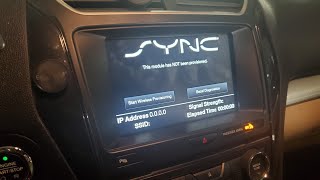
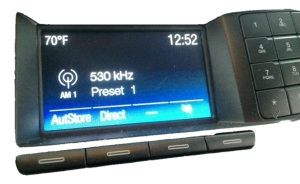
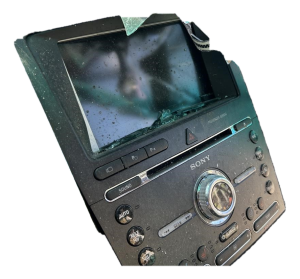
The fifth-generation Explorer (2011-2019) is known for electronic issues, particularly with the MyFord Touch / SYNC 2 infotainment system. The control module for this system, called the APIM (Accessory Protocol Interface Module), is a common failure point, especially in 2011-2015 models. When the APIM fails, it can flood the network with bad data or stop communicating entirely, which can bring down the entire HS-CAN bus and trigger a U0073 code. Therefore, if you're experiencing radio or screen problems (black screen, freezing, rebooting) along with this code, the APIM is a prime suspect. For later 2016-2019 models with SYNC 3, software glitches can cause similar symptoms, and Ford has issued Technical Service Bulletins (TSBs) to update the APIM software to resolve these issues before replacing the hardware.
Symptoms You May Notice
- Check Engine Light is on
- ABS and Traction Control warning lights are on
- Multiple other warning lights may appear on the dash
- Engine may not start or may stall
- Transmission may not shift correctly or may go into 'limp mode'
- Instrument cluster gauges behave erratically or go dead
- MyFord Touch / SYNC screen is black, frozen, or rebooting
- Loss of power steering assist (if electronic)
- Inability to communicate with the vehicle using a standard OBD-II scanner
- Reduced engine power or 'limp mode'
- Replacing random modules without proper network diagnosis. The U0073 code indicates a network-wide problem; the fault is often in the wiring between modules, not the modules themselves.
Most Likely Causes
- Wiring Harness or Connector Fault 🔴 High Probability Wiring can chafe against chassis components, and connectors for modules like the ABS unit are exposed to weather, leading to corrosion. Water intrusion into connectors is a known cause of CAN bus issues.
How to confirm: Visually inspect major wiring harnesses for chafing, especially near the battery, firewall, and under the dash near the steering column. Disconnect and inspect connectors for the PCM, ABS, and Instrument Cluster for green or white corrosion or bent pins. A professional would test resistance and check for shorts to power/ground on the CAN bus wires.
Typical fix: Repairing the damaged section of wire or cleaning/replacing the corroded connector.
Est. part cost: $10-$50 for wiring repair supplies - Failing APIM (SYNC Infotainment Module) 🔴 High Probability The early MyFord Touch (SYNC 2) systems used from 2011-2015 are notoriously unreliable. The internal electronics of the APIM fail, causing it to disrupt network traffic.
How to confirm: This is a likely cause if U0073 is accompanied by a black, frozen, or constantly rebooting center touchscreen, but the audio still works. A diagnostic scan may show a loss of communication specifically with the APIM. To isolate it, a technician may disconnect the APIM and see if network communication is restored to other modules.
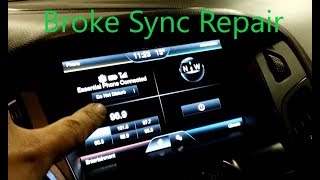
Typical fix: Replacement of the APIM. The new module must be programmed to the vehicle's VIN using software like FORScan or by a dealer. Pre-programmed modules are available from aftermarket suppliers. 🎬 See how to repair, replace, and reprogram a failed APIM
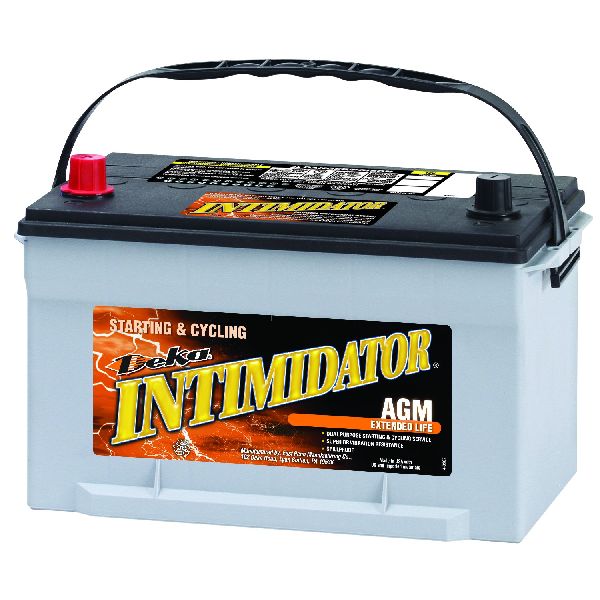
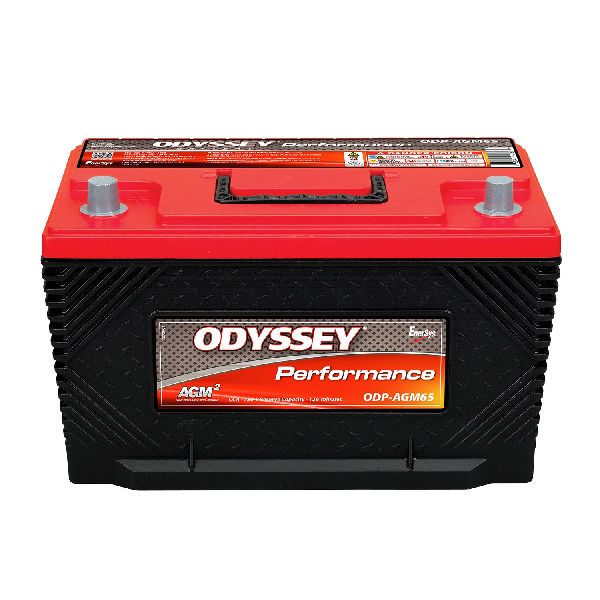
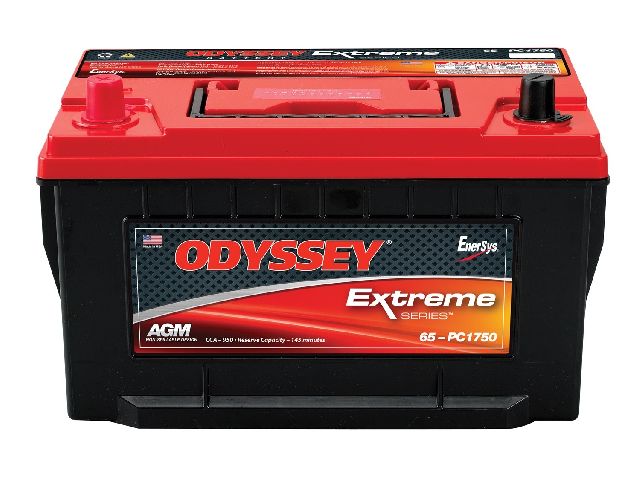
Est. part cost: $200-$600 for a pre-programmed used or aftermarket module - Weak Battery or Bad Ground Connection 🟡 Medium Probability → Shop Vehicle Battery Modern vehicles are highly sensitive to voltage. A weak battery can cause modules to fail their startup sequence and drop off the network. Ford vehicles are also known for having electrical issues caused by poor or corroded main ground points.
How to confirm: Test the battery voltage. It should be above 12.4V with the engine off. Check that the main battery terminals are clean and tight. Locate and inspect the main body and engine ground straps for corrosion or looseness.
Typical fix: Replace the battery if it fails a load test. Clean and tighten all ground connections.
Est. part cost: $150-$250 for a new battery - Failing ABS Control Module 🟡 Medium Probability → Shop ABS Control Module
How to confirm: This is a likely cause if the U0073 code is accompanied by ABS/Traction Control lights and specific ABS-related codes. A technician can attempt to communicate directly with the ABS module; if it's unresponsive but has power and ground, the module is likely bad. The connector is also a common point of failure due to its location.
Typical fix: Replace the ABS module and hydraulic unit, followed by a brake bleed procedure and module configuration.
Est. part cost: $400-$900 for a new or remanufactured module - Failing Instrument Panel Cluster (IPC) ⚪ Low Probability → Shop Instrument Cluster The IPC often acts as a network gateway. An internal failure in the cluster's circuit board can take down communication.
How to confirm: This is suspected when gauges act erratically or the cluster goes completely dead. If a scan tool shows multiple modules losing communication with the IPC, it points to the cluster itself.
Typical fix: The cluster is often sent to a specialized electronics repair service, which is more cost-effective than dealer replacement.
Est. part cost: $150-$400 for a repair service
Rare But Worth Checking
- Failed Powertrain Control Module (PCM): → Shop Engine Control Module (ECM) While rare, a complete internal failure of the PCM can cause a U0073. This would typically be accompanied by a no-start condition and an inability to communicate with the PCM at all.
- Poorly Installed Aftermarket Electronics: Aftermarket remote starters, alarms, or stereos that are improperly tapped into the vehicle's wiring can interfere with the CAN bus and cause communication errors.
Diagnosis Steps
- Check for other DTCs: Scan all modules for other 'U' codes. Codes pointing to a specific module (like ABS or IPC) can provide a starting point.
- Check Battery Health: Ensure the battery has a full charge (12.4V+ engine off) and that terminals are clean and tight. A weak battery is a common cause of module dropouts and communication codes.
- Visual Inspection: Thoroughly inspect the engine bay and under-dash wiring for obvious signs of damage, such as rodent nests, chafed wires, or corrosion. Pay close attention to the ABS module connector and grounds.
- Check Fuses: Check all fuses related to the various control modules (PCM, BCM, ABS, IPC, APIM) in both the under-hood and interior fuse panels.
- (Advanced) Check CAN Bus Resistance: Disconnect the negative battery terminal. Using a quality multimeter, measure the resistance between Pin 6 (CAN-H) and Pin 14 (CAN-L) on the OBD-II port. A healthy network should read ~60 Ω. A reading of ~120 Ω means there is an open in the circuit or a terminating module is offline. A reading near 0 Ω indicates a short circuit between the two wires.
- (Advanced) Isolate the Fault: If the resistance is incorrect, a technician will disconnect modules one by one (starting with the most likely culprits like the APIM or ABS module) and re-check resistance to see when the reading returns to normal. This identifies the faulty module or wiring branch.
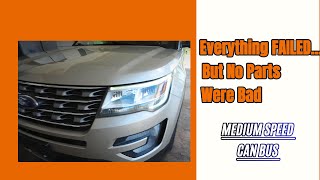
- (Professional) Oscilloscope Testing: For intermittent issues, a technician will use an oscilloscope to monitor the CAN bus signal waveform while wiggling harnesses to find shorts or opens that don't show up with a static resistance test. 🎬 Watch: Finding a hidden CAN bus failure that disabled everything
Parts You'll Likely Need
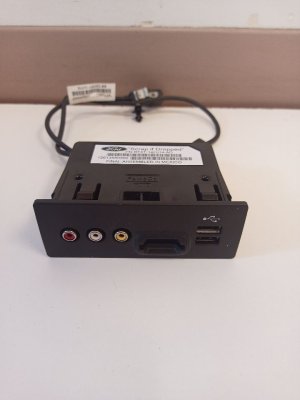
- Accessory Protocol Interface Module (APIM)
(OEM #DL3T-14F239-AN (example for 2012-2015, many variations exist))— This is the SYNC 2 module, a very common failure point on 2011-2015 models that can bring down the entire CAN network. - ABS Control Module
(OEM #DB5Z-2C219-C (example for 2013, many variations exist))— Can fail internally or have connector issues, causing network communication to drop. Often indicated by accompanying ABS-specific codes. - Battery — Low or unstable voltage from a failing battery is a frequent cause of network communication errors in modern vehicles.
Related Codes That Often Appear With This One
- U0140 — Lost Communication With Body Control Module
- U0155 — Lost Communication With Instrument Panel Cluster (IPC) Control Module
- U0121 — Lost Communication With Anti-Lock Brake System (ABS) Control Module
- U0100 — Lost Communication with ECM/PCM 'A'
Technical Service Bulletins (TSBs) & Recalls
- TSB 16-0166, 17-0029, 17-0044: These bulletins address the widely reported issue of exhaust odors entering the cabin, a significant known problem for this Explorer generation.
- SSM 47797: Mentions intermittent HVAC blower operation across many Ford models including the 2011-2019 Explorer, pointing to potential underlying electrical or module issues that can be related to network problems.
Platform-Specific Known Issues
- The MyFord Touch (SYNC 2) and SYNC 3 systems are known to have APIM module failures that can cause a black screen, unresponsiveness, and network communication codes like U0073.
- Some owners have reported intermittent electrical issues, including cluster failures, that were resolved by finding and cleaning a poor main ground connection.
Mechanic-Grade Diagnostic Values
- HS-CAN Bus Resistance — expected: ~60 Ω (Ohms) when measured between Pin 6 and Pin 14 of the OBD-II port with the battery disconnected.. Failure: A reading of ~120 Ω indicates an open circuit or a missing termination resistor (often in the IPC or PCM). A reading near 0 Ω indicates a short between the CAN High and CAN Low wires.
- HS-CAN High Voltage (Oscilloscope) — expected: Signal fluctuates between a recessive state of ~2.5V and a dominant state of ~3.5V.. Failure: No voltage, voltage stuck high/low, or a noisy signal indicates a short to power/ground or a module failure.
- HS-CAN Low Voltage (Oscilloscope) — expected: Signal fluctuates between a recessive state of ~2.5V and a dominant state of ~1.5V. The waveform should be a near-perfect mirror image of the CAN High signal.. Failure: No voltage, voltage stuck high/low, or a signal that doesn't mirror CAN High indicates a short or module failure.
Scan Tool Commands That Help
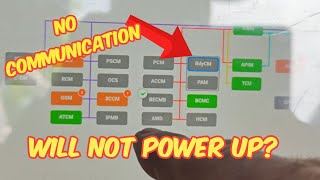
- Ford IDS (or high-level equivalent like FORScan): Network Test — This is one of the first steps a professional would take. It automatically pings all modules on the network and creates a map showing which modules are communicating and which are not, quickly identifying the source of the dropout.
- Ford IDS / FORScan: APIM Software Update — For 2016-2019 models with SYNC 3, if communication issues are present, TSBs recommend updating the APIM software before condemning the module. Many issues that trigger U-codes can be resolved with a software flash.
- Ford IDS / FORScan: Programmable Module Installation (PMI) — This is mandatory when replacing a key module like the Instrument Panel Cluster (IPC), PCM, or APIM. It transfers vehicle-specific configuration data (like VIN, security keys, and options) to the new module. Skipping this step will result in a no-start condition or loss of features.
Wiring & Ground Locations
- Gateway Module — On 2011-2015 models, the Instrument Panel Cluster (IPC) acts as the gateway module, translating messages between the HS-CAN and MS-CAN networks. On later models, a dedicated Serial Data Gateway Module (SDGM) is often located under the steering column/dashboard area.. As the central hub for network traffic, a failure of the gateway module (or its connections/ground) can bring down all communication and is a primary suspect for a U0073 code.
- G200 / G201 — G200 is located under the left front of the center console, and G201 is under the right front of the center console.. These are primary interior ground points for multiple modules located in the dash and console area, including the APIM and Front Controls Interface Module (FCIM). A loose or corroded connection here can cause intermittent communication faults for these modules.
- Driver's Side A-Pillar / Kick Panel Connectors — Large inline harness connectors are located behind the driver's side kick panel, near the parking brake. This area is a known water intrusion point from a leaking windshield or sunroof drain.. The HS-CAN bus wires run through these connectors. Corrosion on the pins for the CAN High (often Gray/Orange) and CAN Low (often Violet/Orange) wires in this specific location is a documented cause of U0073 and other communication codes.
- Terminating Resistors — The HS-CAN bus has two 120-ohm terminating resistors. On the Explorer, these are typically located inside the Powertrain Control Module (PCM) and the Instrument Panel Cluster (IPC).. If one of these modules fails or is disconnected, the total bus resistance will change from 60 ohms to 120 ohms, disrupting communication and setting a U0073 code. This is why a resistance test is a critical diagnostic step.
Real Owner Repair Stories
- ExplorerForum user (2013 Ford Explorer) — Multiple warning lights (ABS, Traction Control, Airbag), gauges sweeping, radio cutting out, and a U0073 code.
❌ Tried (didn't work) Replacing the battery., Checking all fuses., Inspecting under-hood wiring harnesses.
✅ What actually fixed it The root cause was found to be a corroded wire in the harness located in the driver's side A-pillar/kick panel area. A green/white wire (part of the CAN bus) had corroded due to water intrusion, likely from a clogged sunroof drain. Repairing this single wire by splicing in a new section resolved all symptoms and cleared the U0073 code. - NHTSA ODI #11549596 — An owner reported receiving a diagnostic report stating "U0073 Control module communication bus A off" with a failure type of "88 Bus off." This occurred in conjunction with a recommendation to replace the clutch assembly, highlighting how network communication failures can sometimes be logged alongside major mechanical repairs.
OEM Part Supersession History
Various (e.g., DL3T-14F239-xx for SYNC 2)→Various (e.g., for SYNC 3 upgrades, or later software revisions for SYNC 2)— Hardware revisions for reliability and feature updates. Software updates were also released via TSBs to fix performance issues without hardware replacement.
Heads up: A SYNC 2 APIM is not directly compatible with a SYNC 3 screen or system, and vice-versa. When replacing an APIM, the new module must be programmed to the vehicle's specific VIN and feature set using tools like FORScan or IDS to ensure all functions (Navigation, Camera, Climate Control) work correctly.
Model Year Variations Within This Range
- 2011-2015: These years used the MyFord Touch (SYNC 2) system. The APIM in these models is a very common hardware failure point, leading to black screens and network codes like U0073. The fix is almost always a replacement of the APIM module.
- 2016-2019: These years used the more reliable SYNC 3 system. While hardware failure is less common, these APIMs are prone to software glitches that can cause similar symptoms. Ford issued multiple TSBs (e.g., TSB 20-2255) advising technicians to update the APIM software as the first step before considering replacement.
Diagnostic Flowchart
Other Known Issues on This Vehicle
Issues unrelated to this code that are worth knowing about as an owner of this generation:
- Internal Water Pump Failure (3.5L & 3.7L V6) 🔴 High — Commonly occurs around 75,000-150,000 miles. Failure can cause coolant to mix with engine oil, leading to catastrophic engine damage.
- Power Transfer Unit (PTU) Failure (AWD Models) 🔴 High — The PTU fluid can overheat and break down, leading to gear and bearing failure. Ford considered the fluid 'lifetime,' but regular changes (every 30k miles) are recommended by owners to prevent failure.
- Exhaust Fumes in Cabin 🟠 Medium — Widespread issue, particularly on 2011-2017 models, where exhaust gas can enter the cabin during heavy acceleration or with the A/C on recirculate. (Ref: Multiple TSBs issued (e.g., TSB 16-0166, TSB 17-0029) to seal the body and, in some cases, reprogram HVAC logic.)
- Throttle Body Failure 🟠 Medium — Can cause the vehicle to unexpectedly enter 'limp mode' with reduced power, creating a safety risk.
- Paint Bubbling on Aluminum Hood 🟡 Low — Corrosion can form under the paint on the leading edge of the aluminum hood, causing it to bubble and flake off. Primarily a cosmetic issue.
Used vs. New Parts: Buying Guide for This Vehicle
When a used part is the smart pick: A used APIM (SYNC module) or ABS module from a reputable salvage yard can be a cost-effective option, especially for older (2011-2015) models. These parts are often significantly cheaper than new OEM parts.
Donor-vehicle mileage cap: roughly under 80000 miles for the part to have meaningful remaining life.
What to inspect on the donor part:
- For an APIM, ensure the donor vehicle was not in a front-end collision that could have damaged the module.
- Check the part number carefully to match your original, or ensure the seller can pre-program it to your VIN.
- For an ABS module, inspect the connector pins for any signs of corrosion or damage before purchasing.
- Ask for the donor vehicle's VIN to check for any outstanding recalls related to the part.
OEM-only on this vehicle (don't cheap out):
- Powertrain Control Module (PCM) - Due to complex security and software matching, using a used PCM is extremely difficult and often not possible without specialized tools and knowledge. New or remanufactured from a trusted source is best.
Aftermarket brands forum-validated for this vehicle:
- For APIMs, companies that specialize in pre-programmed SYNC 2 to SYNC 3 upgrades are generally well-regarded on forums.
- For ABS modules, remanufacturing services that offer a warranty are a viable alternative to new OEM.
Brands owners have reported issues with on this vehicle:
- Avoid unbranded, 'no-name' electronic modules from online marketplaces with no warranty or return policy. The risk of receiving a dead-on-arrival or incompatible part is very high.
Real Owner Stories
Aggregated from forums and TSBs cited above. Mileages and costs reflect what owners reported in those sources.
2011-2015 Ford Explorer
Symptoms: The center touchscreen was black, frozen, or constantly rebooting, though the audio still functioned. The vehicle threw a U0073 code indicating lost communication.
What fixed it: Replacement of the APIM (SYNC Infotainment Module) with a unit programmed to the vehicle's VIN.
Cost: $200-$600
Source hint: 4D Tech - 'Replacement SYNC 2 Module / APIM'
2014 Ford Explorer — ~100000 miles
Symptoms: Code U0073 lost communication with CAN bus A. Discussion involved the complexity of diagnosing the CAN bus and the need to check resistance between pins 6 and 14.
What fixed it: Professional diagnosis using a multimeter to check for 60 ohms of resistance and isolating modules one by one to find the fault.
Source hint: Reddit - r/MechanicAdvice - 'code U0073 lost communication with CAN bus A.'
2011-2019 Ford Explorer
Symptoms: Intermittent electrical issues including cluster failures and network communication errors.
What fixed it: Finding and cleaning a poor or corroded main ground connection.
Source hint: vehicle_specific_issues - 'Some owners have reported intermittent electrical issues... resolved by finding and cleaning a poor main ground connection.'
Related OBD-II Codes
Frequently Asked Questions
My 2013 Explorer's SYNC screen is black and I have a U0073 code; is this a known issue?
Could a bad battery cause the U0073 communication code on my 2017 Explorer?
Does TSB 16-0166 relate to the electrical issues causing my U0073 code?
I'm seeing U0073 along with ABS and Traction Control lights; what should I check first?
Can I use a standard OBD-II scanner to diagnose U0073 on my Explorer?
Is the Instrument Cluster a common failure point for network codes on the 2011-2019 models?
Helpful Videos
Used OEM Parts in Stock
New Aftermarket Parts Available

The information in this article is provided for general reference and educational purposes only. Vehicle specifications, procedures, and part compatibility can vary by production date, trim level, and region. Always consult your vehicle's factory service manual and verify part numbers before purchasing or performing repairs. Safety-critical components such as airbags, seat belts, and braking systems should be installed by a qualified professional.
- Ford Explorer:
- 🧭 Diagnostic Flowchart
- 🎬 Helpful Videos
- 🛍️ Shop This Part
- What's Unique About the 2011-2019 Ford Explorer
- Symptoms You May Notice
- Most Likely Causes
- Rare But Worth Checking
- Diagnosis Steps
- Parts You'll Likely Need
- Related Codes That Often Appear With This One
- Technical Service Bulletins (TSBs) & Recalls
- Platform-Specific Known Issues
- Mechanic-Grade Diagnostic Values
- Scan Tool Commands That Help
- Wiring & Ground Locations
- Real Owner Repair Stories
- OEM Part Supersession History
- Model Year Variations Within This Range
- Other Known Issues on This Vehicle
- Used vs. New Parts: Buying Guide for This Vehicle
- Real Owner Stories
- 2011-2015 Ford Explorer
- 2014 Ford Explorer — ~100000 miles
- 2011-2019 Ford Explorer
- Related OBD-II Codes
- Frequently Asked Questions
- 🎟️ Get 5% Off