

U0073 on 2014-2019 Kia Soul: Control Module Communication Bus 'A' Off Causes and Fixes
U0073 on a Kia Soul indicates a network communication failure. The most likely causes are a weak battery, poor ground connections, or a wiring issue. Start by testing the battery and cleaning all main power and ground connections before looking for a more complex fault. In some cases, a single faulty module, like the ABS unit, can bring down the entire network.
- U0073 is a serious network failure, not a simple component fault. Do not drive the vehicle if possible.
- Before suspecting expensive computers, always start by verifying the battery is healthy and all main power/ground connections are clean and tight.
- Diagnosis is a process of elimination. Be prepared for a potentially lengthy diagnostic time to find the root cause, which is often a wiring issue.
- This code is a prime candidate for professional diagnosis, as specialized scan tools that can check the status of all modules are often required.
- If you have recently installed any aftermarket electronics, they are the number one suspect. Try disconnecting them to see if the problem resolves.
What's Unique About the 2014-2019 Kia Soul
For the 2014-2019 Kia Soul, while there are no recalls specifically for U0073, the platform is known for certain electrical vulnerabilities. The wiring harnesses, particularly where they pass through the firewall or are exposed in the engine bay, can be prone to chafing. Furthermore, some owners have reported issues with water intrusion into key connector blocks. Kia also issued a TSB (ELE 133) for other models regarding poor connections at C-CAN connectors behind the dashboard, a diagnostic step that is relevant for the Soul as well, pointing to known issues with CAN bus connector integrity.
Symptoms You May Notice
- Multiple warning lights on the dashboard (Check Engine, ABS, Traction Control, etc.)
- Gauges on the instrument cluster suddenly drop to zero or behave erratically
- Transmission may shift harshly, get stuck in one gear (limp mode), or not shift at all
- Engine may stall, run rough, or fail to start
- Loss of electronic features like power steering, radio, or power windows
- OBD-II scanner may not be able to communicate with some or all modules
- Loss of power door lock functionality
- Replacing the Engine Control Module (ECM) first. The ECM is just one of many modules on the network. While it can fail, it's statistically more likely that the problem is in the wiring, power supply, or another module like the ABS or BCM.
Most Likely Causes
- Weak or Failing Battery / Poor Connections 🔴 High Probability → Shop Vehicle Battery All modern vehicles are sensitive to low voltage. As batteries age, their ability to provide stable voltage, especially during startup, diminishes, which can cause modules to fail to initialize and communicate correctly.
How to confirm: Test the battery voltage with a multimeter. It should be ~12.4V or higher with the engine off and 13.7V-14.7V with the engine running. Check battery terminals and main chassis grounds for looseness and corrosion. A load test is the most definitive way to confirm battery health.
Typical fix: Clean battery terminals and ground points. If the battery is old or fails a load test, replace it.
Est. part cost: $150-$250 - Damaged or Corroded Wiring Harness 🟡 Medium Probability Wiring in the engine bay is exposed to heat, vibration, and the elements. Wires can chafe against brackets or other components, and connectors can get water intrusion, leading to corrosion and loss of connection. Some owners on kiasoulforums.com have reported issues with the harness near the firewall and under the fuse box.
How to confirm: Perform a detailed visual inspection of the main wiring harnesses in the engine bay and under the dashboard. Look for any signs of chafing, melting, or green/white corrosion in connectors. Pay close attention to the main junction block, grounds, and where the harness passes through the firewall.
Typical fix: Repair the damaged section of wire. Clean or replace corroded connectors. This is often a labor-intensive repair.
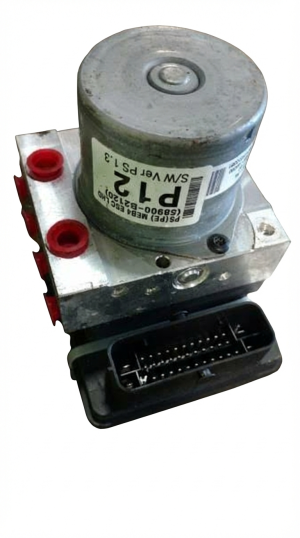
Est. part cost: $5-$50 for repair materials - Faulty Control Module ⚪ Low Probability Any module on the network (ABS, TCM, BCM, Instrument Cluster, etc.) can fail internally. When it does, it can send out garbage data or create a short on the network, preventing other modules from communicating. The ABS module is a commonly cited culprit in forum discussions for causing network-down situations.
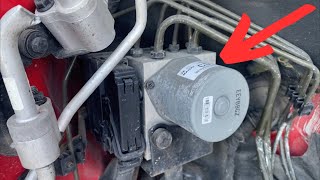
How to confirm: This is difficult without an advanced scan tool. The process involves scanning all modules to see which one is not responding. A common diagnostic trick is to disconnect modules one by one while monitoring the network to see if communication is restored. If the network comes back after unplugging the ABS module, for example, the ABS module is the likely culprit. 🎬 See how to diagnose a non-responsive ABS module
Typical fix: Replace the faulty module. Note that many modules require programming by the dealer or a qualified shop after installation.
Est. part cost: $200-$1000+
Rare But Worth Checking
- Interference from Aftermarket Electronics: If a remote starter, aftermarket alarm, or stereo was recently installed, it's a prime suspect. These devices are often tapped into the vehicle's wiring and can interfere with the CAN bus if not installed correctly.
- Faulty Clock Spring: The clock spring (steering wheel coil) is part of the CAN bus circuit for steering wheel controls and the driver's airbag. A failure here can sometimes cause intermittent communication issues on the network, often accompanied by airbag lights or non-functional steering wheel buttons.
Diagnosis Steps
- Check Battery Health: Ensure the battery has a full charge and that the terminals are clean and tight. A weak battery is the most common cause of communication codes. 🎬 Watch: Understanding U0073 causes and how to fix them
- Scan for All Codes: Use a high-quality OBD-II scanner that can read codes from all vehicle modules (not just the engine). Make a list of all present codes and which modules are reporting them. Note which modules are not responding to the scanner.
- Visual Inspection: Thoroughly inspect the main engine wiring harness, battery cables, and primary ground straps (from battery to chassis, chassis to engine). Look for any obvious signs of damage, corrosion, or looseness. Pay special attention to harnesses near the battery tray and under-hood fuse box.
- Check Fuses: Check all fuses related to the various control modules, both in the interior and under-hood fuse boxes.
- Isolate the Fault: If the above steps don't reveal the issue, the next step is to start disconnecting non-essential modules one by one (e.g., radio, telematics unit) to see if the fault clears. This helps isolate a single bad module that might be crashing the network.
- (Advanced) Check CAN Bus Resistance: With the battery disconnected, use a multimeter to measure the resistance between Pin 6 (CAN-H) and Pin 14 (CAN-L) on the OBD-II port. A healthy network should read approximately 60 ohms. A reading of 120 ohms suggests a break in the wiring or a missing terminating resistor. A reading near 0 ohms indicates a short circuit between the CAN wires.
- Review TSBs: Check for any Technical Service Bulletins related to wiring or communication. Kia TSB ELE 133, for example, addresses checking C-CAN connector pins for looseness, even though it's not specific to the Soul, the principle is highly relevant.
Parts You'll Likely Need
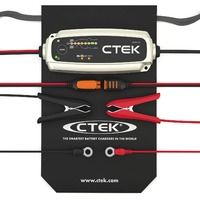
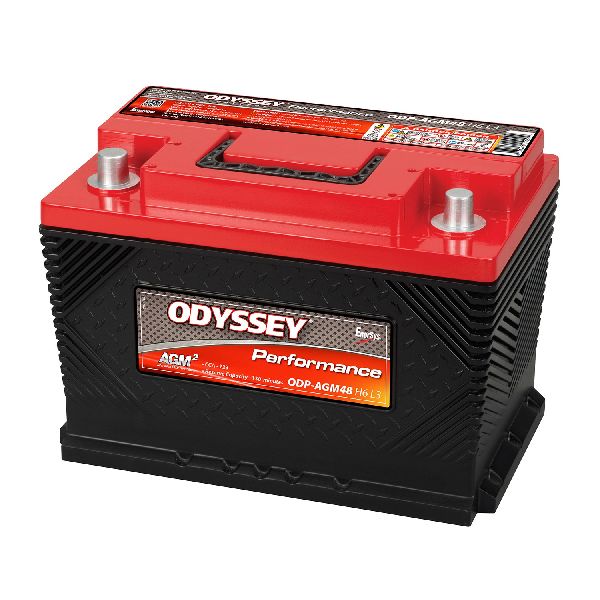
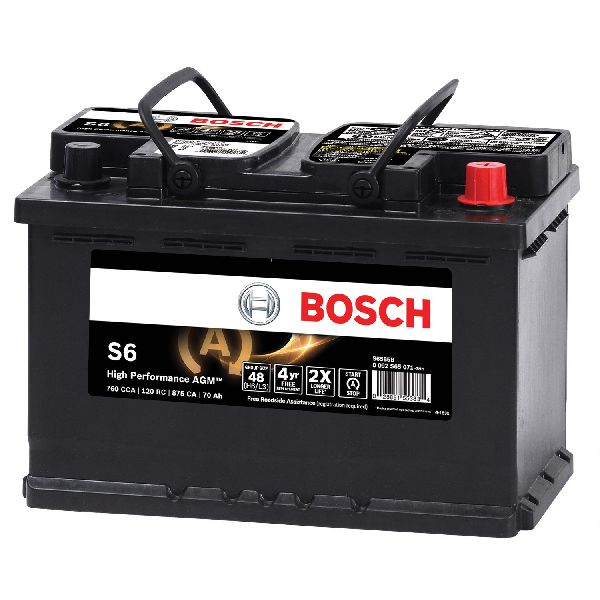
- Battery — A weak or failing battery is a very common cause of network communication errors on modern vehicles.
Trusted brands: Bosch, Interstate, DieHard
OEM price range: $200-$300
Aftermarket price range: $150-$250 - ABS Control Module
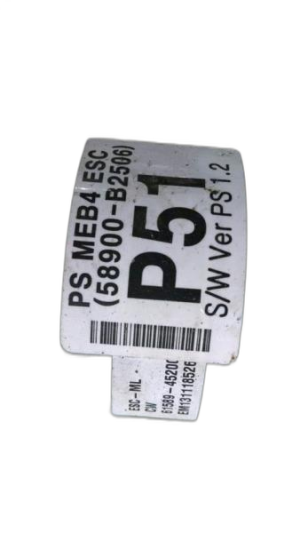
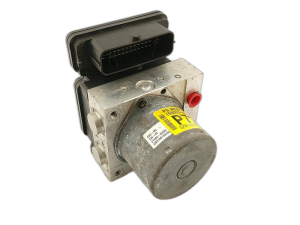
(OEM #58920-B2100 (example for 2014-2016 models, verify by VIN))— The ABS module is a common point of failure on many vehicles that can bring down the entire CAN network. It is just one example of a module that could be at fault.
Trusted brands: Bosch, Mando (OEM supplier)
OEM price range: $800-$1500
Aftermarket price range: $300-$700 (often remanufactured)
Related Codes That Often Appear With This One
- U0100 — Lost Communication With ECM/PCM
- U0101 — Lost Communication with TCM
- U0121 — Lost Communication With Anti-Lock Brake System (ABS) Control Module
- U0140 — Lost Communication With Body Control Module
Technical Service Bulletins (TSBs) & Recalls
- TSB ELE 133: While not for the Soul specifically, this Kia TSB for other models details a procedure for inspecting the pins within the C-CAN junction connector for poor tension. This is a valuable diagnostic step for any Kia experiencing CAN bus codes like U0073, as it points to a known issue with connector pin integrity. 🎬 Learn how to properly de-pin and repair Kia connectors
Platform-Specific Known Issues
- A user on 'kiasoulforums.com' reported that their 2016 Soul had the U0073 code appear along with multiple warning lights. The cause was traced to a corroded wiring harness connector located under the driver's side headlight, which had been damaged by moisture. The repair involved replacing the connector and a section of the harness.
- Another owner on Reddit described a scenario where their 2015 Soul would intermittently lose all gauges and throw the U0073 code. After checking the battery and grounds, the dealership found a loose pin in the main connector at the Body Control Module (BCM) located behind the glove box.
Mechanic-Grade Diagnostic Values
- CAN Bus Network Resistance — expected: ~60 Ω. Failure: A reading of ~120 Ω indicates an open circuit or a problem with one of the two terminating resistors. A reading near 0 Ω indicates a short between the CAN High and CAN Low wires.
- CAN High Voltage (Key On, Engine Off) — expected: ~2.6 V to 2.7 V. Failure: Voltage significantly higher (e.g., 3.5V+) can indicate an open on the CAN Low wire. Voltage near 0V or 12V suggests a short to ground or power, respectively.
- CAN Low Voltage (Key On, Engine Off) — expected: ~2.3 V to 2.4 V. Failure: Voltage significantly lower (e.g., 1.5V) can indicate an open on the CAN High wire. Voltage near 0V or 12V suggests a short to ground or power, respectively.
Hidden / Shadow Codes Worth Checking
- Proprietary 'U' Codes: While specific public shadow codes for U0073 are not documented, the official Kia GDS scan tool can identify which specific module is failing to communicate or has internal faults not visible to generic scanners. (see via Kia GDS (Global Diagnostic System) or KDS (Kia Diagnostic System) factory scan tool.)
- C1702: This code, meaning 'Variant Coding Required', is a common secondary code that appears after replacing a module like the ABS unit without performing the necessary programming. It indicates a configuration mismatch with the vehicle. (see via Professional-grade scan tool, including the Kia GDS.)
Scan Tool Commands That Help
- Kia GDS / KDS: Vehicle Software Management / S/W Management — Used to perform module programming, VIN writing, and software updates. This is mandatory when replacing most control modules (ECM, ABS, BCM, etc.) to ensure they are configured for the specific vehicle's options.
- Kia GDS / KDS: Reset Adaptive Values — After certain repairs or module replacements, this function resets learned values within a control unit (like the ECM or TCM) back to factory defaults.
- Kia GDS / KDS: Variant Coding — This is a critical function used after replacing a module (especially ABS or BCM) to tell the new module which features are installed on the vehicle (e.g., with/without ESC, with/without auto-braking). Failure to perform this will result in a non-functional system and fault codes like C1702.
- Kia GDS / KDS: Actuation Test — Allows the technician to command individual components (like ABS pump motors or solenoids) to activate, confirming if the module and the component it controls are working, which helps differentiate between a wiring, module, or component failure.
Wiring & Ground Locations
- IP Junction Block — The main interior fuse and relay center, located behind a cover on the driver's side of the instrument panel, under the dashboard.. This block is a central hub for many modules. CAN bus wires pass through its connectors, such as the white 32-pin plug (G) on some models, making it a key area to check for loose pins or corrosion.
- C-CAN Junction Connector — Typically located behind the driver's side kick panel or dash. It acts as a splice pack where CAN wires from multiple modules meet.. As mentioned in Kia TSB ELE 133 for other models, these connectors can suffer from poor pin tension or corrosion, causing intermittent or total network failure. A fault here can disconnect multiple modules at once.
- Main Chassis Grounds — Key ground points are located on the inner fender near the battery, on the engine block itself, and under the dashboard near the A-pillars.. A loose or corroded main ground can create a floating voltage reference for multiple modules, causing them to fail initialization and trigger communication codes like U0073.
- OBD-II Data Link Connector (DLC) — Under the driver's side dashboard.. This is the primary diagnostic access point. Pins 6 (CAN-H) and 14 (CAN-L) are used for network diagnostics. The wiring directly behind this connector can sometimes be damaged by frequently plugged-in devices.
OEM Part Supersession History
Varies Greatly→Varies Greatly— Module hardware and software revisions.
Heads up: For modules like the ABS unit or ECM, the part number must be matched EXACTLY to the original. Different part numbers exist for vehicles with different options (e.g., with/without auto emergency braking, with/without Idle Stop & Go). Installing a physically identical but functionally different module will fail, even with programming.
Model Year Variations Within This Range
- 2016+: For model year 2016, Kia added optional advanced safety systems like Lane Departure Warning and Forward Collision Warning. Vehicles equipped with these features have more complex ABS/ESC modules and additional data on the CAN bus, creating more potential points of failure.
- 2017+: The optional 1.6L Turbo GDI engine with a 7-speed Dual-Clutch Transmission (DCT) was introduced. These models use a different ECM and TCM compared to the standard 1.6L and 2.0L MPI engine models, with unique software and communication parameters.
- 2018+: The infotainment system was updated to include Apple CarPlay and Android Auto as standard. This primarily affects the M-CAN (multimedia) bus, but improper installation or failure of the head unit could potentially interfere with other vehicle networks.
Diagnostic Flowchart
Other Known Issues on This Vehicle
Issues unrelated to this code that are worth knowing about as an owner of this generation:
- Catastrophic Engine Failure (1.6L & 2.0L GDI) 🔴 High — Common enough to trigger multiple recalls (e.g., SC176) and a class-action lawsuit. Often presents as rod knock, seizure, or fire, particularly in 2014-2016 models. (Ref: Recall SC176, NHTSA 19V120000)
- Excessive Oil Consumption 🔴 High — A precursor to engine failure in many cases, related to issues with piston rings on 2.0L Nu engines. (Ref: Part of engine-related recalls and warranty extensions.)
- Faulty Steering Coupler 🟠 Medium — A common issue causing a distinct 'clunking' or clicking noise when turning the steering wheel. The flexible coupler disintegrates over time. (Ref: SC155 (related to steering gear, but coupler is a known separate issue))
- Headlight Electrical Plug Overheating 🟡 Low — Reported primarily on 2014-2015 models, the connector plug for the headlight bulbs can overheat, causing flickering or failure of the headlights.
- High Rate of Theft 🔴 High — Affects models without push-button start and immobilizers, making them targets for theft using a simple USB cable. A viral social media trend exacerbated this issue. (Ref: Software updates and security kits offered by Kia post-incident.)
Used vs. New Parts: Buying Guide for This Vehicle
When a used part is the smart pick: A used part is a viable option for control modules (ECM, BCM, ABS) ONLY if you have a confirmed plan for programming. It can save hundreds of dollars compared to a new OEM part. Used wiring harnesses or connectors are also excellent, cost-effective choices.
Donor-vehicle mileage cap: roughly under 100000 miles for the part to have meaningful remaining life.
What to inspect on the donor part:
- Inspect electrical connectors for any green/white corrosion, heat damage (melting), or bent pins.
- Check the module's housing for cracks or any signs it has been pried open.
- Verify the part number on the used module matches your original module EXACTLY. Do not rely on visual similarity.
OEM-only on this vehicle (don't cheap out):
- While not strictly 'OEM-only', any replacement control module (new, used, or aftermarket) is useless without access to Kia's GDS/KDS software for programming. The critical part is the programming, not necessarily the source of the hardware.
Aftermarket brands forum-validated for this vehicle:
- Flagship One (FS1)
- Car Computer Exchange
Brands owners have reported issues with on this vehicle:
- Unknown eBay/Amazon sellers offering 'plug-and-play' modules without requiring a VIN for pre-programming. These often do not work as the immobilizer and variant coding data will be incorrect.
Real Owner Stories
Aggregated from forums and TSBs cited above. Mileages and costs reflect what owners reported in those sources.
2016 Kia Soul
Symptoms: U0073 code appeared along with multiple warning lights on the dashboard.
What fixed it: Replacing a corroded wiring harness connector located under the driver's side headlight that had been damaged by moisture.
Source hint: kiasoulforums.com thread titled 'U0073 and every warning light on'
2015 Kia Soul
Symptoms: Intermittently losing all gauges on the instrument cluster and throwing the U0073 code.
What fixed it: Repairing a loose pin in the main connector at the Body Control Module (BCM) located behind the glove box.
Source hint: Reddit r/KiaSoulClub thread '2015 soul u0073 nightmare'
Related OBD-II Codes
Frequently Asked Questions
I have a 2016 Kia Soul with U0073 and every warning light is on. Is there a specific connector I should check?
My 2015 Soul intermittently loses all instrument cluster gauges. Could this be the Body Control Module?
Does Kia TSB ELE 133 apply to the Soul's communication issues?
Could my Soul's U0073 code be related to the common engine failure recalls?
Is the ABS module a common failure point for the CAN bus on this vehicle?
Helpful Videos
Used OEM Parts in Stock
New Aftermarket Parts Available



The information in this article is provided for general reference and educational purposes only. Vehicle specifications, procedures, and part compatibility can vary by production date, trim level, and region. Always consult your vehicle's factory service manual and verify part numbers before purchasing or performing repairs. Safety-critical components such as airbags, seat belts, and braking systems should be installed by a qualified professional.
- Kia Soul:
- 🧭 Diagnostic Flowchart
- 🎬 Helpful Videos
- 🛍️ Shop This Part
- What's Unique About the 2014-2019 Kia Soul
- Symptoms You May Notice
- Most Likely Causes
- Rare But Worth Checking
- Diagnosis Steps
- Parts You'll Likely Need
- Related Codes That Often Appear With This One
- Technical Service Bulletins (TSBs) & Recalls
- Platform-Specific Known Issues
- Mechanic-Grade Diagnostic Values
- Hidden / Shadow Codes Worth Checking
- Scan Tool Commands That Help
- Wiring & Ground Locations
- OEM Part Supersession History
- Model Year Variations Within This Range
- Other Known Issues on This Vehicle
- Used vs. New Parts: Buying Guide for This Vehicle
- Real Owner Stories
- 2016 Kia Soul
- 2015 Kia Soul
- Related OBD-II Codes
- Frequently Asked Questions
- 🎟️ Get 5% Off