

U0073 on 2016-2022 Lexus RX: Control Module Communication Bus 'A' Off Causes and Fixes
Code U0073 on a 2016-2022 Lexus RX means there's a critical communication failure on the vehicle's main data network (CAN bus). This is a complex electrical fault, often caused by a weak battery, wiring damage, or a single failed module. Professional diagnosis is strongly recommended as it requires specialized tools to isolate the fault.
- U0073 is a critical network failure code. Do not ignore it.
- Before any complex diagnostics, ensure the 12V battery is fully charged and healthy. Low voltage is a very common cause.
- This is not a DIY-friendly repair. Professional diagnosis is essential to avoid replacing expensive, non-faulty parts.
- The root cause is often a simple wiring or connector issue that is very time-consuming to locate.
- Be aware of the CAN bus theft vulnerability associated with this vehicle's generation, which involves the wiring near the front headlight.
What's Unique About the 2016-2022 Lexus RX
For the 2016-2022 Lexus RX, there isn't one single, commonly reported part that fails and causes U0073. The issue is almost always related to the fundamentals: battery voltage, wiring integrity, or a random module failure. However, this specific RX generation is known for a CAN bus security vulnerability where thieves can access the network wiring behind the driver's side front headlight to steal the vehicle. This is known as a "CAN Injection&quo 🎬 Watch: See how thieves exploit this CAN bus security flaw.t; attack. While this doesn't typically cause a U0073 code from a component failure standpoint, it highlights a known sensitivity and accessibility of the vehicle's CAN bus wiring in that specific area, which could also be prone to damage.
Symptoms You May Notice
- Multiple warning lights on the dashboard (Check Engine, ABS, VSC, etc.)
- Vehicle will not start, or cranks but fails to start
- Erratic or non-functional instrument cluster
- Loss of power steering assist
- Transmission shifting issues or being stuck in one gear
- Air conditioning not working
- Blind Spot Monitor (BSM) and other driver aids are inoperative
- Vehicle may stall while driving
- Replacing a control module (like the ABS module) without first confirming it is the source of the network failure. A forum user on ClubLexus with a similar model reported issues even after module replacement, suggesting the underlying problem was in the wiring or another component.
Most Likely Causes
- Weak or Failing Battery / Low System Voltage 🔴 High Probability → Shop Vehicle Battery Modern vehicles like the RX are highly sensitive to voltage. A battery that can still start the car may not provide the stable voltage (typically above 12.4V) required for all modules to initialize and communicate correctly.
How to confirm: Test the battery with a digital multimeter. A healthy battery should read approximately 12.4-12.6 volts with the engine off and 13.7-14.7 volts with the engine running. Perform a load test for a definitive health check.
Typical fix: Charge or replace the 12V battery. 🎬 Watch: A breakdown of common U0073 causes and fixes. Ensure terminals are clean and tight.
Est. part cost: $200-$400 - Damaged Wiring or Corroded Connector 🟡 Medium Probability Wiring can be damaged by rodents, previous repairs, or chafing against chassis components. The area behind the driver's side headlight is a known access point for CAN wires and can be a place to check for damage. Water intrusion into connectors in the kick panels or A-pillars, sometimes from clogged sunroof drains, is another potential cause.
How to confirm: Perform a thorough visual inspection of the main wiring harnesses. Pay close attention to the area behind the headlights, around the battery, and where the harness passes through the firewall. Check CAN junction connectors for any signs of water damage or corrosion.
Typical fix: Repair the damaged section of wiring or clean/replace the corroded connector. This is labor-intensive.
Est. part cost: $10-$50 for wiring supplies; labor is the primary cost. - Faulty Control Module ⚪ Low Probability Any single module on the CAN bus (e.g., ABS, ECM, Gateway, BCM) can fail internally and broadcast disruptive signals or stop communicating, bringing down the entire network. The ABS Actuator and Central Gateway Module are critical nodes.
How to confirm: This is a process of elimination. Using an advanced scan tool, a technician will identify which modules are offline. They will then disconnect modules one by one from the CAN bus until communication between the remaining modules is restored. The last module disconnected is the likely culprit.
Typical fix: Replace the faulty control module. The new module will require programming/initialization to the vehicle.
Est. part cost: $400-$2500+ depending on the specific module. - Improperly Installed Aftermarket Electronics ⚪ Low Probability Remote starters, alarms, or audio interfaces that are improperly tapped into the CAN bus wiring can introduce electrical noise or interference, disrupting communication.
How to confirm: Temporarily disconnect any aftermarket electronic devices, especially those wired into the vehicle's electrical system near the OBD-II port or dashboard.
Typical fix: Remove the device or have it professionally re-installed correctly.
Est. part cost: $0 if removing.
Rare But Worth Checking
- Water Intrusion in Cabin:
Diagnosis Steps
- Check Battery Health: Verify battery voltage is above 12.4V (engine off) and that the charging system is working correctly (13.7-14.7V engine on). A weak battery is a very common cause of communication codes.
- Full System Scan: Use a professional-grade scan tool to attempt communication with every control module on the vehicle. Make a list of all modules that are not responding and any accompanying 'U' codes.
- Visual Inspection: Thoroughly inspect all visible wiring harnesses for signs of damage, chafing, or rodent activity. Check major ground connections for tightness and corrosion. Pay special attention to the harness near the driver's side headlight.
- Check OBD-II Port: Inspect the pins on the OBD-II diagnostic port. A pushed-in or damaged pin (especially pins 6 and 14 for CAN) can prevent proper diagnosis and may indicate a wiring issue.
- Measure CAN Bus Resistance: Disconnect the 12V battery. Use a multimeter to measure the resistance between Pin 6 (CAN High) and Pin 14 (CAN Low) at the OBD-II port. A healthy network should read approximately 60 Ohms. A reading of 120 Ohms indicates an open circuit or a problem with one of the two terminating resistors (often in the ECM and Gateway module). A reading near 0 Ohms indicates a short circuit between the CAN High and Low wires.
- Isolate the Faulty Module/Wiring: If resistance is incorrect, begin disconnecting individual modules from the CAN bus one at a time and re-measuring the resistance. When the resistance returns to the correct value, the last module disconnected (or the wiring leading to it) is the source of the fault. This requires a vehicle wiring diagram to locate all modules and connectors.
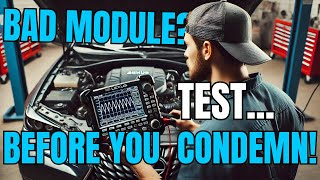
- Professional Diagnosis: If the steps above do not isolate the issue, a technician will use an oscilloscope to analyze the data signals on the CAN bus directly, which is the definitive way to diagnose complex network faults like shorts-to-power or signal interference.
Parts You'll Likely Need
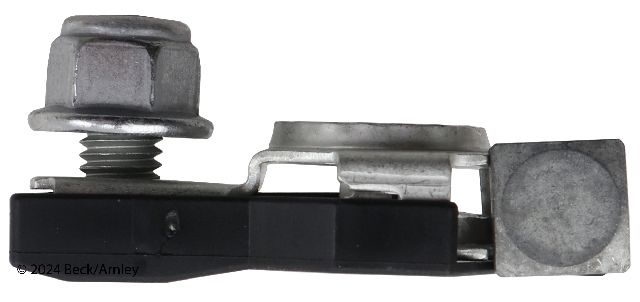
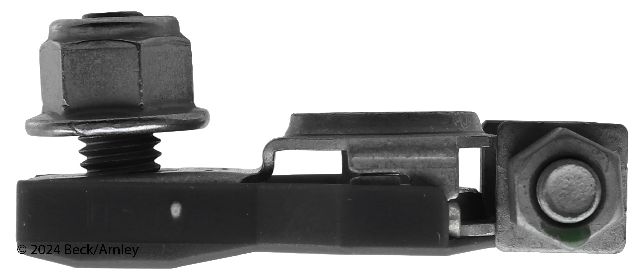
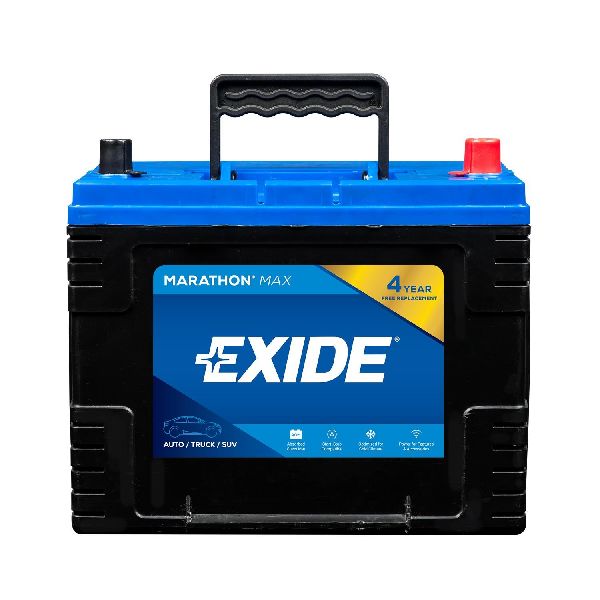
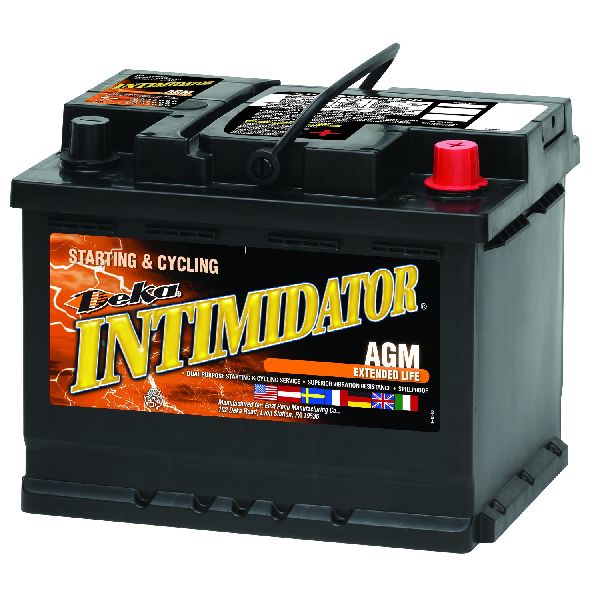
- 12V AGM Battery — Low or unstable system voltage is a frequent trigger for network communication faults on modern Lexus vehicles.
Trusted brands: Interstate, DieHard, ACDelco
OEM price range: $300-$500
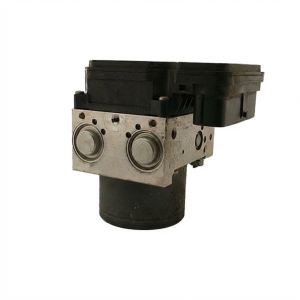
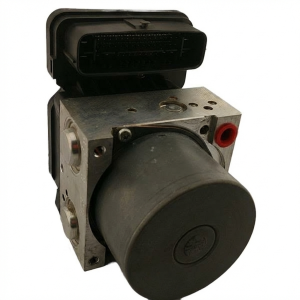
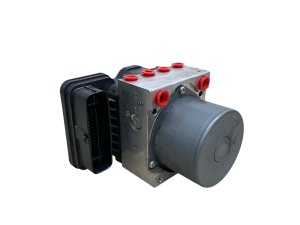
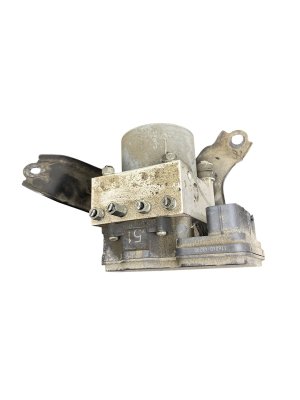
Aftermarket price range: $200-$400 - ABS Actuator Assembly
(OEM #44050-48320, 44050-0E251)— If a module is diagnosed as faulty, the ABS module is a common node on the high-speed CAN bus. It should only be replaced after definitive testing proves it is the cause of the network failure.
Trusted brands: Advics (OEM supplier), Bosch
OEM price range: $1300-$2500
Aftermarket price range: $500-$1200 (Remanufactured) - Gateway Module (Network Gateway Computer)
(OEM #89111-48130, 89111-48141)— This module acts as a router between different CAN buses. Its failure will cause a widespread communication loss across multiple systems.
Trusted brands: Denso (OEM)
OEM price range: $400-$600
Aftermarket price range: $150-$300 (Used)
Related Codes That Often Appear With This One
- U0100 — Lost Communication with ECM/PCM. This often appears with U0073 as the ECM is a primary module on the network that is no longer communicating.
- U0129 — Lost Communication With Brake System Control Module. This indicates the ABS/VSC module is offline, which can be either the cause or a symptom of the U0073 network failure.
- U0140 — Lost Communication With Body Control Module. The BCM is another critical node, and its failure to communicate will be logged alongside a general network code like U0073.
- U0126 — Lost Communication With Steering Angle Sensor Module. This often appears with ABS/VSC communication faults.
Technical Service Bulletins (TSBs) & Recalls
- L-SB-0024-21: Addresses clogged HVAC evaporator drains which can cause water leaks into the cabin.
- L-SB-0002-21: ECM update for harsh shifting/shudder on 2017-2021 models.
- L-SB-0109-17: ECM update for acceleration hesitation on 2016-2017 models.
Platform-Specific Known Issues
- CAN Injection Theft Vulnerability: The 2016-2022 Lexus RX is known to be vulnerable to a theft method called 'CAN bus injection'. Thieves gain access to the CAN bus wiring, often by pulling back the front bumper near the driver-side headlight, to send commands that unlock the doors and start the vehicle. While this doesn't cause the U0073 code during normal operation, it indicates a known sensitive area of the CAN bus wiring on this platform.
Mechanic-Grade Diagnostic Values
- CAN Bus Resistance — expected: ~60 Ω (Ohms) between Pin 6 (CAN-H) and Pin 14 (CAN-L) at the OBD-II port with the battery disconnected.. Failure: A reading of ~120 Ω indicates an open circuit or one missing terminating resistor. A reading near 0 Ω indicates a short between the CAN-H and CAN-L wires.
- CAN High (CAN-H) Voltage — expected: ~2.5V to 3.5V (Key On, Engine Off), measured between Pin 6 and chassis ground.. Failure: Voltage significantly outside this range, or at 0V or battery voltage, indicates a short or open circuit.
- CAN Low (CAN-L) Voltage — expected: ~1.5V to 2.5V (Key On, Engine Off), measured between Pin 14 and chassis ground.. Failure: Voltage significantly outside this range, or at 0V or battery voltage, indicates a short or open circuit.
- CAN Bus Baud Rate — expected: 500 kbit/s. Failure: This is a fixed value; an incorrect rate set by a faulty module can disrupt the entire network.
- Techstream Data List for Momentary Interruptions — expected: Parameters like 'EFI COM OPN', 'STEERING OPN', 'YAW RATE OPN' should read 'NORMAL'.. Failure: A reading of 'ERROR' indicates a momentary interruption in communication with that specific module, helping to isolate the fault.
Hidden / Shadow Codes Worth Checking
- C1391: Abnormal Leak in Accumulator. While not a 'U' code, this ABS-specific code is often the root cause that triggers a general U0073 if the ABS module fails and takes down the CAN bus. (see via Toyota Techstream or a professional-grade scan tool capable of reading chassis codes.)
Scan Tool Commands That Help
- Toyota Techstream: CAN Bus Check — This utility function checks the communication status of all connected ECUs on the CAN bus, providing a list of which modules are and are not responding. It's a primary step in diagnosing a U0073 code.
- Toyota Techstream: Health Check — Performs a full system scan of all ECUs to retrieve DTCs from every module, which helps identify which other systems are logging communication faults.
- Toyota Techstream: Actuator Bleed / ABS Bleed — This is a mandatory service function after replacing the ABS Actuator Assembly. It cycles the internal pump and solenoids to purge trapped air that cannot be removed with a manual bleed.
- Toyota Techstream: Zero Point Calibration — Required after replacing the ABS Actuator. This calibrates the Steering Angle, Yaw Rate, and Deceleration sensors so the Vehicle Stability Control (VSC) system knows the vehicle's neutral position.
Wiring & Ground Locations
- Main CAN Bus Lines — At the OBD-II port, CAN High is Pin 6 and CAN Low is Pin 14.. These are the primary diagnostic points for measuring network-wide resistance and voltage.
- CAN Junction Connector — While specific diagrams for the AL20 are scarce, on similar Lexus platforms, a key CAN junction connector is often located behind the navigation unit/center dashboard area. Another potential location is on the passenger side, to the upper-left of the fuse box.. A loose connection or corrosion at a central junction connector can take down the entire network. These are critical inspection points if a wiring fault is suspected.
- Gateway Module — Typically located behind the glove box or integrated into the junction block on the passenger side.. This is a terminating module for the CAN bus. Accessing its connector is necessary to test the wiring harness leading to it and to isolate it during diagnostics.
Real Owner Repair Stories
- ClubLexus Forum User (2011 Lexus RX450h (Related platform)) — ABS warning lights on the dash.
❌ Tried (didn't work) Replacing only the accumulator pump after getting code C1391 (Abnormal Leak in Accumulator). The warning lights returned after one day.
✅ What actually fixed it Replacing the entire ABS Actuator module resolved the issue.
When the Usual Fixes Don't Work
- While replacing a faulty module is a common fix, it's not a guarantee. A forum user with a different Lexus model experiencing a gateway module failure found that two separate used modules exhibited the exact same internal fault. This suggests that for certain modules, there may be a common board-level component failure, and simply swapping with a used part may not be a reliable fix. This underscores the importance of definitively testing the wiring and ruling out all other possibilities before module replacement.
OEM Part Supersession History
44510-48080→44050-48320 (and others)— Part revision/update.
Heads up: A forum user questioned if these ABS actuator part numbers were interchangeable for their 2011 model. It is critical to verify the exact part number for the specific vehicle's VIN, as using an incompatible (even if physically identical) module can cause system malfunction.89111-48130→89111-48131, 89111-48141— Part revision/update for the Network Gateway Module.
Model Year Variations Within This Range
- 2020-2022 (Facelift Models): The 2020 model year introduced a significant refresh. The infotainment system was updated to include a touchscreen, which likely involves changes to the Network Gateway Module and its integration with the CAN bus. Additionally, Lexus Safety System+ 2.0 became standard, adding more modules and complexity to the network (e.g., for bicyclist and low-light pedestrian detection). These changes could alter diagnostic procedures and the specific part numbers for control modules compared to the 2016-2019 models.
Diagnostic Flowchart
Other Known Issues on This Vehicle
Issues unrelated to this code that are worth knowing about as an owner of this generation:
- Low-Pressure Fuel Pump Failure 🔴 High — Widespread enough to trigger a massive multi-year safety recall (NHTSA 20V-012, Toyota recalls 20LA01/20TA02). Affects 2017-2020 RX models. (Ref: NHTSA Campaign Number: 20V012000)
- 8-Speed Transmission Hesitation or Jerky Shifting 🟠 Medium → Shop Transmission Assembly — Common complaint on 2017-2021 models, especially at low speeds or during light acceleration. Often described as a shudder or harsh shift. (Ref: L-SB-0002-21 (ECM software update to improve shift logic))
- HVAC Evaporator Drain Clogging 🟡 Low — In certain geographic areas, insect nests can clog the A/C drain hose, causing water to back up and leak into the passenger footwell, potentially damaging electronics. (Ref: L-SB-0024-21 (Procedure to install an insect-repellent drain hose tip))
- Sluggish Acceleration from a Stop 🟡 Low — Affects 2016-2017 models, where owners report a delay before the vehicle accelerates. Addressed by a software update. (Ref: L-SB-0109-17 (ECM software update))
Used vs. New Parts: Buying Guide for This Vehicle
When a used part is the smart pick: Used parts can be a cost-effective option for the ABS Actuator or Network Gateway Module, provided the part numbers match exactly. It is a gamble, as used electronics can have hidden faults. This is best for DIYers with a high risk tolerance or those on a strict budget.
Donor-vehicle mileage cap: roughly under 80000 miles for the part to have meaningful remaining life.
What to inspect on the donor part:
- Verify the OEM part number on the used part matches the original part EXACTLY.
- Source from a reputable recycler that offers a warranty or return policy.
- Inspect connectors for any signs of corrosion, bent pins, or physical damage.
- If possible, get the VIN of the donor car to check its history for flood or major electrical damage.
OEM-only on this vehicle (don't cheap out):
- Network Gateway Module: While used modules are available, they may require dealer-level programming or initialization to function correctly with the specific options on your vehicle. Given its central role, a new OEM part is the most reliable choice to avoid repeat labor.
- Any module related to the immobilizer system.
Aftermarket brands forum-validated for this vehicle:
- For the ABS Actuator, a remanufactured unit from a specialized electronics rebuilder is a viable alternative to new OEM.
Brands owners have reported issues with on this vehicle:
- New aftermarket ABS Actuators are generally not available or recommended for this vehicle due to their safety-critical nature and complex integration.
Real Owner Stories
Aggregated from forums and TSBs cited above. Mileages and costs reflect what owners reported in those sources.
2014 Lexus ES 350
Symptoms: ABS and BSM (Blind Spot Monitor) issues accompanied by code U0073.
What fixed it: The owner detailed a difficult diagnostic journey where the cause was hard to pinpoint even after replacing the ABS module, highlighting the complexity of the U0073 communication fault.
Source hint: ClubLexus - '2014 Lexus ES 350 - ABS & BSM issue - Code U0073'
Related OBD-II Codes
Frequently Asked Questions
Can a weak battery cause my 2016-2022 Lexus RX to throw a U0073 code even if the car still starts?
Is there a TSB for the transmission shifting issues I'm experiencing alongside this code on my 2017 RX?
I heard thieves can cause CAN bus errors on the Lexus RX. How does that happen?
Could a water leak be responsible for the U0073 communication code in my Lexus?
My Blind Spot Monitor and Air Conditioning stopped working at the same time as the Check Engine light. Is this related to U0073?
What should the resistance be when testing the CAN bus at the OBD-II port on my RX?
Helpful Videos


Used OEM Parts in Stock
New Aftermarket Parts Available


The information in this article is provided for general reference and educational purposes only. Vehicle specifications, procedures, and part compatibility can vary by production date, trim level, and region. Always consult your vehicle's factory service manual and verify part numbers before purchasing or performing repairs. Safety-critical components such as airbags, seat belts, and braking systems should be installed by a qualified professional.
- Lexus RX:
- 🧭 Diagnostic Flowchart
- 🎬 Helpful Videos
- 🛍️ Shop This Part
- What's Unique About the 2016-2022 Lexus RX
- Symptoms You May Notice
- Most Likely Causes
- Rare But Worth Checking
- Diagnosis Steps
- Parts You'll Likely Need
- Related Codes That Often Appear With This One
- Technical Service Bulletins (TSBs) & Recalls
- Platform-Specific Known Issues
- Mechanic-Grade Diagnostic Values
- Hidden / Shadow Codes Worth Checking
- Scan Tool Commands That Help
- Wiring & Ground Locations
- Real Owner Repair Stories
- When the Usual Fixes Don't Work
- OEM Part Supersession History
- Model Year Variations Within This Range
- Other Known Issues on This Vehicle
- Used vs. New Parts: Buying Guide for This Vehicle
- Real Owner Stories
- 2014 Lexus ES 350
- Related OBD-II Codes
- Frequently Asked Questions
- 🎟️ Get 5% Off