

U0073 on 2005-2010 Pontiac G6: Control Module Communication Failure Causes and Fixes
Code U0073 on a Pontiac G6 indicates a loss of communication on the vehicle's main data network. The most common causes are corroded wiring at the Transmission Control Module (TCM) connector, a bad ground connection at the G105 stud on the transmission, or a failing TCM. Check wiring and grounds before replacing any expensive modules.
- U0073 on a Pontiac G6 is most often a wiring or connection problem, not a bad computer.
- Before spending any money on parts, inspect and clean three key areas: the battery terminals, the G105 ground on the transmission, and the main connector at the transmission (TCM).
- Check for a chafed wiring harness under the rear driver's side seat, as this is a known issue covered by a TSB.
- Do not replace the TCM or any other module unless you have professionally verified that all its power, ground, and data line connections are perfect.
- If a module does need to be replaced, it will require professional programming to function in the car.
What's Unique About the 2005-2010 Pontiac G6
The Pontiac G6, like many GM vehicles of its era built on the Epsilon platform, is prone to specific electrical weak points that trigger communication codes like U0073. The most notable issues are corrosion-prone connectors, especially for the Transmission Control Module (TCM), and a critical shared ground point (G105) on the transmission housing that frequently becomes corroded or breaks internally. Furthermore, GM issued a Technical Service Bulletin for a body wiring harness that can chafe under the rear seat, causing network failures. These known wiring and ground issues are far more common culprits than a failed module itself.
Symptoms You May Notice
- Check Engine Light is on
- ABS, Traction Control, or Stabilitrak warning lights are on
- Transmission shifts very hard, gets stuck in one gear (limp mode), or won't shift out of Park
- Power steering warning light on, with intermittent or total loss of power steering assist
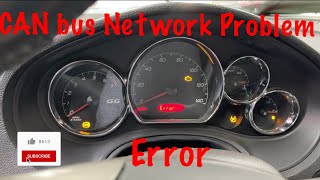
- Instrument cluster gauges (speedometer, tachometer) behave erratically or drop to zero
- Odometer displays "Error" or dashes
- Vehicle may not start or cranks but won't start intermittently
- Brake lights may stay on or not illuminate when the pedal is pressed (related to BCM communication issues)
- Replacing the Transmission Control Module (TCM) without first thoroughly inspecting and cleaning the TCM connector and the G105 ground point.
- Replacing the Engine Control Module (ECM) when it is simply not receiving messages from another failed module or due to a wiring fault.
- Assuming the transmission has failed mechanically due to limp mode, when the issue is purely electrical communication.
Most Likely Causes
- Corroded or Damaged Transmission Control Module (TCM) Connector 🔴 High Probability → Shop Transmission Assembly The TCM connector on the transmission case is exposed to weather, road salt, and heat, leading to moisture intrusion and pin corrosion (fretting). This is a very well-documented issue on this platform and its platform-mates like the Saturn Aura and Chevrolet Malibu.
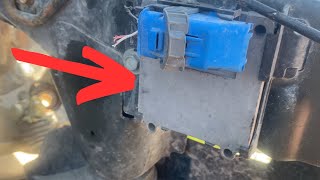
How to confirm: Disconnect the battery, then unplug the main electrical connector at the transmission. Carefully inspect both the male and female pins for any green/white corrosion, discoloration, or backed-out pins. Wiggle the connector with the system on to see if communication restores.
Typical fix: Clean the connector pins thoroughly with electrical contact cleaner. Apply a thin layer of dielectric grease to the seal before reconnecting to prevent future moisture intrusion. If pins are severely damaged, the connector pigtail may need to be replaced. A common pigtail connector part number is ACDelco PT2365.
Est. part cost: $10-$40 - Poor Ground at G105 🔴 High Probability The G105 ground, located on a transmission-to-engine stud, is the primary ground point for both the TCM and ECM. Its location makes it highly susceptible to rust and corrosion. The crimp design where multiple wires enter the single terminal ring is a known failure point; wires can break internally while the terminal appears intact.
How to confirm: Locate the G105 ground stud on the transmission housing, often found below the upper coolant hose, near the throttle body area. Check if the nut is tight and if there is any visible corrosion. Perform a voltage drop test from the TCM ground wire to the negative battery post; a reading above 0.2 volts indicates a problem. Gently tug on the individual wires entering the G105 terminal; any movement indicates an internal break. 🎬 Watch: How to identify and fix a bad G105 ground.
Typical fix: Remove the nut, take off the ground terminals, and clean the terminals, stud, and nut to bare, shiny metal using a wire brush or sandpaper. Reassemble securely. If wires are broken inside the crimp, the terminal must be replaced with a new, high-quality ring terminal.
Est. part cost: $0-$15 - Chafed Body Harness Under Rear Seat (Related to TSB #08-07-30-021E) 🟡 Medium Probability A GM Technical Service Bulletin (TSB 08-07-30-021E) addresses a similar issue on other models where the body harness can rub against a sharp metal edge of the floor panel, often under a seat, eventually wearing through the insulation of the CAN bus wires and causing a short. While the Pass 1 TSB number was incorrect, the condition is a known GM issue.
How to confirm: Remove the lower cushion of the rear seat. Locate the main body harness and carefully inspect it for any signs of chafing, exposed copper wires, or electrical tape where it passes over the floor panel structure.
Typical fix: Repair the damaged wires by soldering and using heat-shrink tubing. Protect the harness from future damage by wrapping it in anti-abrasion tape or re-routing it slightly away from the sharp edge.
Est. part cost: $5-$20 - Failed Transmission Control Module (TCM/TEHCM) 🟡 Medium Probability → Shop Transmission Assembly Heat and vibration can cause internal failure of the TCM. On 6-speed models, the TEHCM is located inside the hot transmission, increasing its failure rate. This should be the last resort after all wiring is confirmed good.
How to confirm: This should only be suspected after all wiring, connector, and ground checks have been completed and found to be perfect. A professional scan tool that can communicate with individual modules is needed to confirm the TCM is offline and not responding.
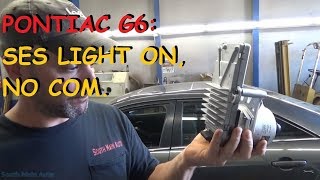
Typical fix: Replace the TCM. For external modules, this is a straightforward unbolt-and-replace job. 🎬 See this walkthrough for locating and replacing the TCM. For internal TEHCMs, the transmission side cover must be removed. The new module MUST be programmed by a dealer or a qualified shop with GM software.
Est. part cost: $150-$600 - Weak or Failing Battery ⚪ Low Probability → Shop Vehicle Battery
How to confirm: Test the battery with a digital multimeter. It should read at least 12.4V when the car is off. Perform a load test, as a battery can show good voltage but still fail under load. Low system voltage is a common trigger for network communication codes across all platforms.
Typical fix: Replace the vehicle's battery.
Est. part cost: $150-$250
Rare But Worth Checking
- Failed Electronic Brake Control Module (EBCM): → Shop ABS Control Module The ABS module is a key node on the high-speed CAN bus. Its internal failure can short the network, causing a U0073 code along with ABS and traction control lights. This is a known issue on many GM vehicles of this era.
- Failed Power Steering Control Module (PSCM): On G6 models with electric power steering, the PSCM is also on the high-speed network. A documented case showed a failed PSCM was the single cause of a total network down situation. This system was also subject to a safety recall for sudden loss of assist.
- Corrosion in Underhood Fuse Block: → Shop Fuse Box The terminals for fuses that power the various control modules (TCM, ECM, etc.) can corrode, causing intermittent power loss to a module and triggering communication faults. This can be exacerbated by water leaks, such as from clogged sunroof drains.
Diagnosis Steps
- Check Battery Health: Ensure the battery is fully charged (12.4V+ engine off) and that terminals are clean and tight. A weak battery is a common cause of network codes.
- Scan for All Codes: Use a high-quality scanner that can read codes from all modules (ECM, TCM, BCM, EBCM). Note which modules are not communicating. 🎬 Watch: Diagnosing a no-crank condition and CAN bus wiring issues. This is a critical first step to narrow the search.
- Inspect Fuses: Check all related fuses in the underhood and interior fuse panels, especially those labeled for TCM, ECM, and BCM. A blown fuse will take a module offline.
- Inspect G105 Ground: Locate the G105 ground on the transmission stud. Disassemble, clean all contact surfaces to bare metal, and re-secure. Perform a voltage drop test on the ground wire while the system is under load (key on). A reading over 100-200mV indicates a poor ground.
- Inspect TCM Connector: Disconnect the battery. Unplug the large connector at the TCM on the transmission. Thoroughly inspect all pins and sockets for green or white corrosion, or backed-out pins. Clean with contact cleaner and apply dielectric grease before reassembly.
- Check for TSBs and Recalls: Specifically investigate TSBs for wire harness chafing and recalls related to the Body Control Module (BCM) and Power Steering Control Module (PSCM).
Parts You'll Likely Need
- Transmission Control Module (TCM)
(OEM #24256861)— This module is a common failure point. If all wiring and ground checks pass, the TCM itself has likely failed internally. Note that part numbers vary by year and transmission type (4-speed vs. 6-speed), so always verify with a VIN.
Trusted brands: ACDelco (OEM), Dorman
OEM price range: $300-$500
Aftermarket price range: $150-$350 - Electrical Contact Cleaner and Dielectric Grease — Essential for fixing the most common cause of this code: corroded connectors at the TCM and other modules.
Trusted brands: CRC, Permatex
Aftermarket price range: $15-$25 - TCM Connector Pigtail — If the connector at the transmission is too corroded or damaged to be cleaned, the pigtail will need to be spliced into the harness.
Trusted brands: ACDelco, Dorman
OEM price range: $40-$70
Aftermarket price range: $25-$50
Related Codes That Often Appear With This One
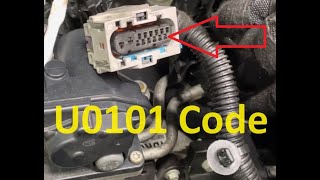
- U0101 — Lost Communication with TCM. This is a more specific code that often appears with U0073 when the TCM is the module that has dropped off the network.
- U0121 — Lost Communication with ABS Control Module. This points towards the EBCM or its wiring as the source of the network problem.
- P0700 — Transmission Control System Malfunction. This is an informational code set by the ECM when the TCM requests the check engine light. It almost always accompanies codes like U0073 or U0101 when the transmission is involved.
Technical Service Bulletins (TSBs) & Recalls
- TSB #08-07-30-021E: While not specific to the G6 rear seat, this TSB is representative of a series of bulletins GM released for various models regarding wire harness chafing causing electrical issues, including communication faults.
- Recall #14V252000 (GM #13036): Affects 2005-2010 G6. Increased resistance in the Body Control Module (BCM) connection can cause voltage fluctuations, leading to brake lights not working correctly and potentially contributing to network instability.
- Recall #15V064000 / Special Coverage 14118: Affects 2005-2009 G6. Sudden loss of electric power steering (EPS) assist. The PSCM is on the high-speed CAN bus, and its failure can bring down the network, causing U0073.
Platform-Specific Known Issues
- A known issue, documented in TSB #SB-15-08-45-001, involves the body wiring harness chafing against the floor panel under the left-rear seat, which can short out the CAN bus wires.
- The G105 ground point on the transmission housing is a notorious failure point for corrosion, leading to communication loss for the ECM and TCM.
Mechanic-Grade Diagnostic Values
- GMLAN Bus Total Resistance — expected: Approximately 60 Ohms (± 5 Ohms). Failure: A reading of ~120 Ohms indicates an open circuit or one of the terminating resistors is offline. A reading near 0 Ohms indicates a short between the CAN High and CAN Low wires.
- GMLAN Bus Voltage (Recessive State) — expected: ~2.5V on both CAN-H and CAN-L. Failure: Significant deviation from 2.5V on either line with the key on, engine off.
- GMLAN Bus Voltage (Dominant State) — expected: CAN-H rises to ~3.5V, CAN-L drops to ~1.5V. Failure: Voltages that do not switch to these levels indicate a problem with a module or wiring. This is best viewed with an oscilloscope.
- G105 Ground Voltage Drop — expected: Less than 0.1V (100mV). Failure: A reading above 0.2V (200mV) while the engine is running or cranking indicates a poor ground connection that needs to be cleaned or repaired.
Hidden / Shadow Codes Worth Checking
- Transmit Error Counter (TEC) / Receive Error Counter (REC): These are not standard DTCs but internal counters within each module. When a module's Transmit Error Counter exceeds 255, it takes itself offline (goes 'bus off') to prevent network disruption and sets code U0073. (see via A high-end scan tool like a GM Tech2 or GDS2 can view module status and may be ableto see error counters, helping to identify which module is struggling to communicate.)
Scan Tool Commands That Help
- GM Tech2 / GDS2: Module Status / High-Speed GMLAN Module List — This function polls all modules on the network and shows which ones are actively communicating and which are not responding. This is the first step in isolating the source of a U0073, as it quickly identifies the module(s) that have dropped off the bus.
- GM Tech2 / GDS2: Clear All DTCs in All Modules — After a repair (like cleaning a ground or connector), a global clear command is necessary. Because a U0073 in one module can trigger 'loss of communication' codes in many others, clearing them all at once after a fix prevents confusion from old, stored codes.
Wiring & Ground Locations
- G105 — On a transmission-to-engine stud, located on the left rear side of the engine compartment, often below the upper coolant hose and near the throttle body.. This is the primary ground connection for the Engine Control Module (ECM) and the Transmission Control Module (TCM). Internal breakage of the wires within the terminal crimp is a very common failure causing U0073.
- TCM Connector (4-speed 4T45-E) — External on the transmission case, accessible from the engine bay.. The GMLAN High Speed wires are located at pins 37 (Circuit 2501, TAN/BLK) and 38 (Circuit 2500, TAN). This connector is highly prone to corrosion.
- Terminating Resistors (120 Ohm) — There are two. One is internal to the Engine Control Module (ECM). The second is typically located within the Electronic Brake Control Module (EBCM/ABS Module) on this platform.. The CAN bus requires these two resistors to function. If a module containing a resistor fails or its connection is lost, the total bus resistance will change from 60 Ohms to 120 Ohms, causing communication to fail.
- Underhood Fuse Block — In the engine compartment, on the driver's side, next to the battery.. Contains fuses and relays that provide power to the ECM and TCM. Corrosion or a blown fuse here can take a module offline.
- Interior Fuse Block — On the passenger side of the center console, behind a removable panel.. Contains fuses for the Body Control Module (BCM) and other interior electronics that are on the communication network.
- Rear Fuse Block — In the trunk, on the driver's side, behind a removable panel.. Contains fuses for various body and chassis systems that may be involved in a network-down situation.
Real Owner Repair Stories
- YouTube video from a repair shop (Pontiac G6 (year not specified, but within the 2005-2010 range)) — No communication with the transmission, car would not start or run correctly, multiple communication codes.
❌ Tried (didn't work) Initial diagnosis pointed to a bad Park/Neutral Position switch.
✅ What actually fixed it The G105 ground terminal on the transmission stud had failed internally. The multiple wires crimped into the single ring terminal had broken loose inside the insulation, even though the terminal itself looked secure. The fix was to cut off the old terminal and install a new, properly crimped ring terminal for the ground wires. - 2CarPros Forum User (2006 Pontiac G6 GTP) — Multiple GMLAN communication issues while trying to diagnose other transmission codes.
❌ Tried (didn't work) Attempting to do simple continuity checks from the DLC to various modules, which is not a reliable test on a CAN bus system.
✅ What actually fixed it The user confirmed continuity between the relevant GMLAN pins on the major modules (TCM to ECM, TCM to EBCM) to verify the integrity of the bus wiring between the modules themselves, bypassing the DLC. This confirmed the wiring harness was intact, allowing them to focus on diagnosing the modules. - NHTSA ODI #10783716 — An owner of a similar GM platform vehicle reported that a technician found multiple stored communication codes including U0073, U0131, and U0102. Despite clearing the codes, the electrical problems recurred during subsequent driving.
OEM Part Supersession History
Various (e.g., 24256524, 24248192)→Various (e.g., 24286709)— Revisions to address internal component failures and improve reliability.
Heads up: For 6-speed models with the 6T40/6T45 transmission, the internal TEHCM must be programmed to the vehicle's VIN. A used TEHCM from another vehicle will not work unless it is cleared and reprogrammed by a specialized service.N/A→Sonnax 144510-09K— Provides a way to repair a failed TEHCM without replacing the entire expensive unit.
Heads up: This is an aftermarket repair kit, not an OEM part. It allows a technician to rebuild the pressure switch portion of the Generation 1 TEHCM (up to ~2012). It requires opening the TEHCM assembly.
Model Year Variations Within This Range
- 2008-2010 (approx.): The introduction of the 6-speed automatic transmission (6T40/6T70) meant the TCM became an internal component called a TEHCM (Transmission Electro-Hydraulic Control Module). This makes diagnosis and replacement significantly more labor-intensive and expensive compared to the external TCM on the 4-speed (4T45-E) used in earlier and base models.
Diagnostic Flowchart
Other Known Issues on This Vehicle
Issues unrelated to this code that are worth knowing about as an owner of this generation:
- Sudden Loss of Electric Power Steering 🔴 High — Very common across all model years, especially 2005-2009. Often occurs under 100,000 miles. (Ref: Recall #15V064000, Special Coverage Adjustment 14118)
- Leaking Sunroof Drains 🟠 Medium — Extremely common. The drain tubes, particularly the rear ones, are known to be too short from the factory and can disconnect, dumping water into the headliner and onto the rear floorboards.
- Premature Catalytic Converter Failure 🟠 Medium — Common on models with 2.4L and 3.5L engines, often before 100,000 miles. (Ref: TSB #SB-10134-A (Warranty extension to 120k miles))
- Faulty Brake Lights / BCM Connector 🔴 High — Widespread, affecting all model years. Can cause brake lights to be on when not braking, or off when braking. (Ref: Recall #14V252000 (GM #13036))
- Broken Transmission Shift Cable 🟠 Medium → Shop Transmission Assembly — Common on vehicles with the 4-speed automatic transmission. The plastic tabs on the cable end fracture, preventing gear selection. (Ref: Recall #12V480000 (GM #12106))
Used vs. New Parts: Buying Guide for This Vehicle
When a used part is the smart pick: Used parts are a smart choice for non-electronic, physical components. Sourcing a TCM connector pigtail or a section of wiring harness from a junkyard is an excellent, cost-effective fix for damaged connectors or wires. The underhood fuse block is also a good candidate for a used part if the original is corroded, provided the donor part is clean and dry.
Donor-vehicle mileage cap: roughly under 120000 miles for the part to have meaningful remaining life.
What to inspect on the donor part:
- For wiring/connectors: Look for a donor vehicle from a dry climate to minimize corrosion. Inspect for clean, bright copper on pins, and flexible, uncracked wire insulation.
- Ensure the locking tabs on plastic connectors are intact and not brittle.
- When pulling a pigtail, cut the wires as long as possible to give yourself plenty of room to work.
- For a fuse block: Open it and check for any signs of water intrusion, white/green corrosion on the bus bars, or melted plastic.
OEM-only on this vehicle (don't cheap out):
- Transmission Control Module (TCM/TEHCM): A used module is a major gamble. It is programmed to the original vehicle's VIN and options. While some specialists can 'virginize' and reprogram them, it's a complex process. A new, properly programmed module is the recommended path to avoid repeat failures and diagnostic headaches.
Aftermarket brands forum-validated for this vehicle:
- Sonnax: For 6-speed models with internal TEHCM pressure switch failures, Sonnax offers highly-regarded rebuild kits (e.g., 144510-09K) that allow a skilled technician to repair the TEHCM instead of replacing it.
- ACDelco (Professional/Gold): For connector pigtails like the PT2365, sticking with the OEM supplier ensures correct wire gauges and pin materials.
Brands owners have reported issues with on this vehicle:
- Unbranded/No-Name TEHCMs: Avoid generic, pre-programmed TEHCMs from online marketplaces. They often have high failure rates and incorrect software, leading to more problems than they solve.
Real Owner Stories
Aggregated from forums and TSBs cited above. Mileages and costs reflect what owners reported in those sources.
2008 Pontiac G6 3.5L
Symptoms: A loose ground wire was found near the starter, causing confusion during troubleshooting of electrical issues.
What fixed it: Identifying and securing loose ground points in the starter/transmission area.
Source hint: r/MechanicAdvice on Reddit - 'Where does this ground wire go?'
Pontiac G6 (2005-2010 platform)
Symptoms: Intermittent no-start and communication loss. The ground terminal looked fine externally but had failed internally.
What fixed it: Repairing the G105 ground terminal where the wire strands had broken inside the crimp.
Source hint: ScannerDanner on YouTube - 'PONTIAC G6 BAD GROUND'
Related OBD-II Codes
Frequently Asked Questions
Is there a recall for the power steering issues causing my U0073 code on a 2005-2009 Pontiac G6?
My brake lights are acting up and I have a U0073 code; are these related on my 2005-2010 G6?
Where is the G105 ground located on the Pontiac G6?
Can a problem under the rear seat cause a transmission communication code?
What part should I use if my transmission connector pins are corroded?
Why does my G6 speedometer drop to zero intermittently with this code?
Helpful Videos

We Have This Part in Stock

The information in this article is provided for general reference and educational purposes only. Vehicle specifications, procedures, and part compatibility can vary by production date, trim level, and region. Always consult your vehicle's factory service manual and verify part numbers before purchasing or performing repairs. Safety-critical components such as airbags, seat belts, and braking systems should be installed by a qualified professional.
- Pontiac G6:
- 🧭 Diagnostic Flowchart
- 🎬 Helpful Videos
- 🛍️ Shop This Part
- What's Unique About the 2005-2010 Pontiac G6
- Symptoms You May Notice
- Most Likely Causes
- Rare But Worth Checking
- Diagnosis Steps
- Parts You'll Likely Need
- Related Codes That Often Appear With This One
- Technical Service Bulletins (TSBs) & Recalls
- Platform-Specific Known Issues
- Mechanic-Grade Diagnostic Values
- Hidden / Shadow Codes Worth Checking
- Scan Tool Commands That Help
- Wiring & Ground Locations
- Real Owner Repair Stories
- OEM Part Supersession History
- Model Year Variations Within This Range
- Other Known Issues on This Vehicle
- Used vs. New Parts: Buying Guide for This Vehicle
- Real Owner Stories
- 2008 Pontiac G6 3.5L
- Pontiac G6 (2005-2010 platform)
- Related OBD-II Codes
- Frequently Asked Questions
- 🎟️ Get 5% Off