

U0073 on 2010-2016 Porsche Panamera: A Deep Dive into CAN Bus Failure Causes and Fixes
On a 2010-2016 Panamera, code U0073 indicates a CAN bus network failure, most often caused by a weak battery, a faulty voltage stabilizer, or water intrusion from clogged sunroof, cowl, or rear spoiler drains. Before suspecting an expensive Gateway Control Module failure, thoroughly test the battery and inspect for dampness under the carpets and in the trunk.
- U0073 on a Panamera is a serious network failure that makes the car unsafe to drive.
- Before suspecting expensive modules, fully charge and test the battery, as low voltage is a very common cause.
- Thoroughly inspect the vehicle for signs of water leaks, especially in the trunk near the battery and behind the side panels, as this is a known weakness.
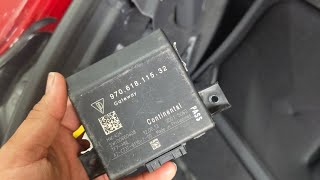
- The central Gateway Module, located in the rear driver's side of the trunk, is a key point of failure for this code.
- Diagnosis and repair almost always require a Porsche-specific scan tool and professional expertise due to the complexity of the CAN bus system.
What's Unique About the 2010-2016 Porsche Panamera
For the first-generation (970) Panamera, the U0073 code often has roots in two platform-specific weaknesses: water intrusion and the central Gateway Module. Clogged drains for the sunroof (draining down the A-pillars), front cowl, and active rear spoiler are a well-documented factory issue, allowing water into the cabin and trunk. This issue is so prevalent that it led to a class-action lawsuit (Washburn v. Porsche) for the 2014 models. This water corrodes wiring and control modules located under the seats and in the trunk. All communication is routed through a central Gateway Module located behind the driver's side trunk panel, making it a single point of failure that, if faulty or damaged by water, can bring down the entire network and trigger this code.
Symptoms You May Notice
- Multiple warning lights on the dashboard, often appearing simultaneously: 'PSM Failure', 'Chassis System Fault', 'Check Engine', 'Transmission Fault', and 'ABS'.
- Vehicle enters limp mode with reduced engine power.
- Transmission may get stuck in one gear or act as if it is in neutral.
- Instrument cluster gauges may freeze or show dashes.
- Erratic or non-functional electrical systems (e.g., climate control, windows, power liftgate).
- Vehicle may not start or may stall unexpectedly.
- Alarm may go off repeatedly and be difficult to disable.
- Replacing individual modules like the ABS or transmission controller without confirming they are the source of the network failure. The U0073 code indicates a network-wide problem, which is often caused by the wiring, power supply, or gateway, not the endpoint modules themselves.
- Replacing the battery but failing to register it with the vehicle's computer, leading to incorrect charging and a premature return of voltage-related electrical faults.
Most Likely Causes
- Weak or Failing Battery / Voltage Issues 🔴 High Probability → Shop Vehicle Battery The Panamera has numerous electronic modules that are extremely sensitive to voltage. A battery that is old, failing, or improperly registered cannot provide the stable voltage required for reliable CAN bus communication, often triggering communication faults after sitting or during a cold start.
How to confirm: Test the battery voltage at rest (should be >12.4V) and during cranking (should not drop below 10V). A slow engine crank is a key symptom. Have the battery professionally load-tested. Check for a bulging battery case, which indicates internal failure.
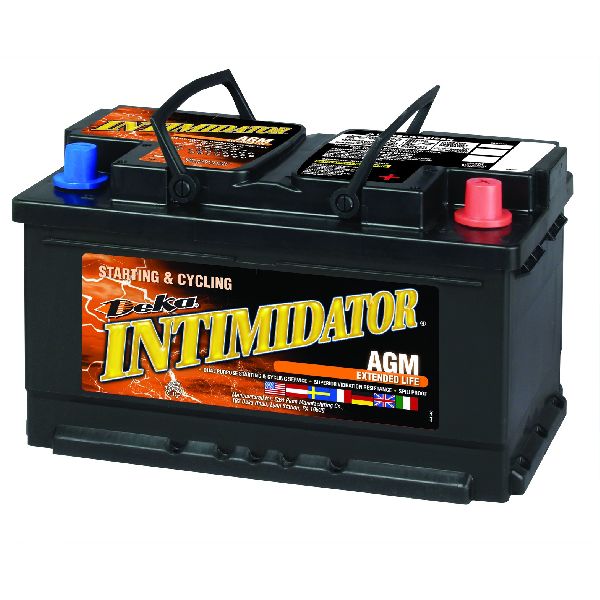
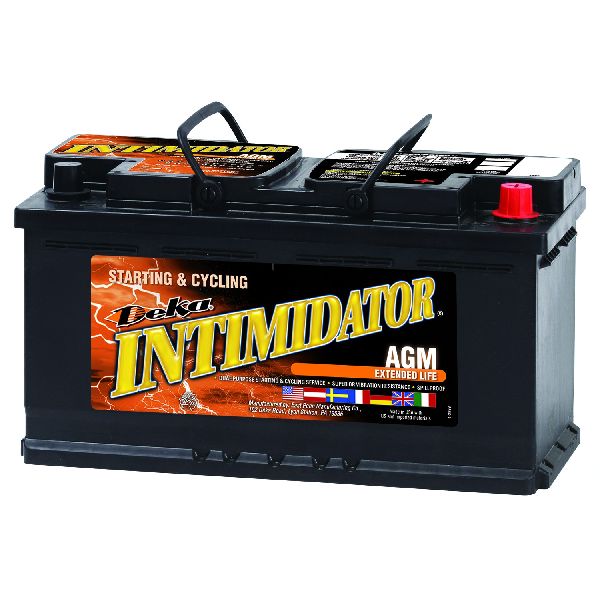
Typical fix: Recharge or replace the battery with a high-quality AGM battery. The new battery MUST be registered to the vehicle's energy management system using a Porsche-compatible scan tool to ensure proper charging and longevity.
Est. part cost: $250-$450 - Water Intrusion and Corrosion 🔴 High Probability Clogged drains for the sunroof, front cowl, and rear spoiler are a known design flaw. Water overflows into the cabin, pooling under the front seats and in the trunk where critical electronics, wiring harnesses, and the Gateway module are located. This leads to corrosion on connectors and module circuit boards.
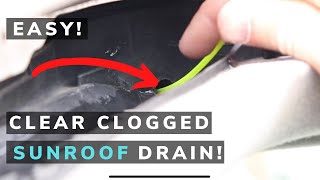
How to confirm: Inspect for dampness under carpets, especially under the driver's seat and in the trunk's side compartments. Check for a musty smell. Visually inspect electrical connectors for green or white corrosion. Proactively check drains by pouring water and ensuring it exits under the car. A flexible tool like weed whacker wire can be used to gently clear drains. 🎬 Watch: A helpful walkthrough on how to clean your sunroof drains.
Typical fix: Identify and fix the source of the water leak (clear all drains). Dry out the affected area completely. Clean any corroded connectors with an electrical contact cleaner. If corrosion is severe, the connector, wiring section, or affected module may need to be replaced.
Est. part cost: $20-$2000+ - Faulty Gateway Control Module 🟡 Medium Probability → Shop Body Control Module The Gateway Module is the central router for all CAN bus traffic. As a single point of failure, any internal fault will cause a U0073 code. It is also highly susceptible to damage from water leaks due to its location in the left side of the trunk.
How to confirm: This requires a Porsche-specific scan tool (PIWIS) to check if the Gateway Module is responsive. A technician will check for power, ground, and CAN signals at the module connector. If power and ground are good but the module is not communicating, it has likely failed.
Typical fix: Replace the Gateway Control Module. The new module must be programmed and coded to the vehicle using a PIWIS tool; it is not a plug-and-play part.
Est. part cost: $300-$600 for a new part, plus programming. - Damaged CAN Bus Wiring ⚪ Low Probability Wiring can be damaged from chafing against chassis components, previous improper repairs, rodent damage, or corrosion from water intrusion under the carpets.
How to confirm: Visually inspect the CAN bus wiring harnesses (typically a twisted pair of wires, often Orange/Green and Orange/Brown) for any signs of physical damage, especially in areas prone to water collection. A multimeter can be used to check for continuity and resistance between the CAN-High and CAN-Low lines. The resistance across the bus should be approximately 60 Ohms.
Typical fix: Repair the damaged section of wiring, ensuring to maintain the twisted-pair configuration to prevent signal interference. Solder and heat-shrink the repair for durability.
Est. part cost: $10-$100
Rare But Worth Checking
- Faulty Voltage Stabilizer / Converter: The Panamera uses a separate voltage stabilizer (DC-to-DC converter) to ensure sensitive electronics receive consistent voltage, especially during engine start/stop events. Failure of this module, often located near the main battery, can cause widespread communication faults that mimic a bad battery. It may require replacement and programming.
- Faulty ABS or Transmission Control Module: → Shop Transmission Assembly While less common than a Gateway failure, a critical module like the ABS or TCM can short internally and bring down the entire CAN bus. Diagnosis involves unplugging modules one by one to see if communication is restored.
- Aftermarket Electronics: Improperly installed aftermarket devices (e.g., remote starters, alarms, audio equipment) that are tapped into the CAN bus can disrupt communication and cause this code.
Diagnosis Steps
- Check Battery Health & Voltage: Start with the simplest cause. Test the battery's voltage at rest (>12.4V) and during cranking (>10V). A weak battery is a very common culprit. Ensure terminals are clean and tight.
- Scan for All Codes: Use a Porsche-specific scanner (PIWIS is ideal) to pull codes from all modules. This can help pinpoint which systems are offline and may give clues to the origin of the fault. Note which module fails to communicate first.
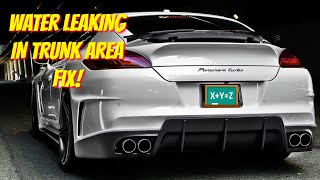
- Inspect for Water Intrusion: This is critical. Pull up carpets under the front seats and check all compartments in the trunk, especially the left side near the Gateway module 🎬 See how to find and fix water leaks in the trunk. and the battery well.
- Clear Body Drains: Proactively clean the sunroof drains (front corners), cowl drains (under the plastic panel at the base of the windshield), and rear spoiler drains (small holes under the spoiler assembly). Clogged drains are the root cause of most water damage.
- Check Fuses: Inspect all fuses related to the various control modules, particularly the Gateway (sometimes labeled ZGW), BCM (Front-End and Rear-End Electronics), and other body control modules.
- Isolate the Fault (Professional): If the basics don't reveal the issue, a technician will begin unplugging non-essential modules from the CAN bus one by one to see if communication is restored. This helps isolate a single module that may be bringing the network down.
- Test the Gateway Module (Professional): Check for proper power, ground, and CAN signal activity at the Gateway Module connector. If power and ground are good but the module is not communicating, it has likely failed.
- Check CAN Bus Resistance (Professional): With the battery disconnected, measure the resistance between the CAN-High and CAN-Low pins at the OBD-II port. A reading of ~60 ohms indicates the main bus wiring and terminating resistors are likely intact. A reading of 120 ohms suggests an open circuit or a module is unplugged, while a reading near 0 ohms indicates a short circuit.
Parts You'll Likely Need
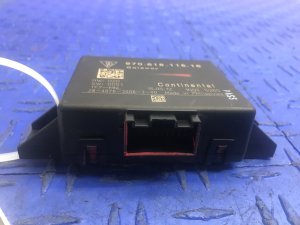
- Gateway Control Module
(OEM #970.618.115.16 (also see supersessions: 970.618.115.17, 970.618.115.15, 970.618.115.14, 970.618.115.13, 970.618.115.12, 970.618.115.11, 970.618.115.05, 970.618.115.04, 970.618.115.03, 970.618.115.02))— This is the central communication hub and a common single point of failure. It is also susceptible to water damage due to its location in the trunk. - AGM Battery — The complex electronics require a stable power source. A weak or old battery is a primary cause of communication faults.
- Voltage Stabilizer / Converter — A faulty voltage stabilizer can cause CAN bus errors that mimic a failing battery.
Related Codes That Often Appear With This One
- U0100 — Lost Communication with ECM/PCM
- U0101 — Lost Communication with TCM (Transmission Control Module)
- U0121 — Lost Communication with ABS Control Module
- P1613 — A Porsche-specific code for a CAN timeout to the vehicle electrical system control module.
Technical Service Bulletins (TSBs) & Recalls
- While not a formal TSB for this specific code, the class-action lawsuit 'Washburn v. Porsche Cars North America, Inc.' filed 9/1/2022 covers 2014-2023 Panamera models for defective sunroof drainage systems causing water damage to the interior and electronics. This legally substantiates the water intrusion issue as a known factory problem.
Platform-Specific Known Issues
- Water Leaks from Clogged Drains: The drains for the active rear spoiler and trunk lid are prone to clogging with leaves and debris, causing water to overflow into the trunk and damage the Gateway Module or other electronics.
- Water Ingress to Voltage Stabilizers: A video diagnosis on a 970 Panamera showed water wicking along wiring into the DC-to-DC voltage stabilizers located near the battery, causing corrosion and intermittent communication faults across the network.
Mechanic-Grade Diagnostic Values
- CAN Bus Resistance (at OBD-II port, battery disconnected) — expected: ~60 Ω. Failure: A reading of ~120 Ω indicates an open circuit or one terminating resistor is offline. A reading near 0 Ω indicates a short between CAN High and Low lines.
- CAN Bus Voltage (at OBD-II port, key on) — expected: CAN High: 2.6V to 3.5V (active); CAN Low: 2.4V to 1.5V (active). Both lines should idle around 2.5V.. Failure: Voltages that are stuck, reversed, or one line showing 0V can indicate a short to power or ground.
- Resistance of a disconnected module's CAN port — expected: 28kΩ - 50kΩ between CAN-H and CAN-L pins (for non-terminating modules).. Failure: Significant deviation suggests an internal module fault.
- Resistance of a disconnected module's CAN pins to chassis ground — expected: Mega-ohms or Open/OL. Failure: Low resistance indicates an internal short to ground within the module, which can bring down the entire network.
Hidden / Shadow Codes Worth Checking
- 000603: Load Switch Off (eCm) - This is a manufacturer-specific code logged in the Gateway module, indicating a power management command has been issued, possibly due to detected network instability. (see via Advanced Porsche-compatible scanners like Autel or PIWIS.)
Scan Tool Commands That Help
- PIWIS (Porsche Integrated Workshop Information System): Gateway Module Programming/Coding — This is mandatory after replacing the Gateway Control Module. The function adapts the new or used module to the car's specific VIN, immobilizer data, and equipment list. Failure to program will result in a no-start condition or continued communication errors.
- PIWIS: Automatic/Manual Programming — Used to write the vehicle order and configuration to a new module. A common failure message during this process is 'No relevant programming rules found', which can indicate an incorrect part number was installed or an issue with the tool's connection to Porsche servers.
- Autel IM608 / XP400 Pro (or similar): EEPROM Cloning / Chip Read & Write — As an alternative to dealer programming, a specialist can use these tools to read the data from the original (even faulty) Gateway module's EEPROM chip and write it to a used donor module. This makes the replacement module plug-and-play.
Wiring & Ground Locations
- Gateway Control Module (ZGW) — Located in the trunk, behind the driver's side (left) trim panel, above the rear wheel well.. This is the central point of failure for a U0073 code. Its location makes it vulnerable to water intrusion from clogged rear spoiler or trunk drains.
- CAN Bus Wiring — The primary CAN-C (Drive) bus wires are typically a twisted pair of Orange/Green (CAN High) and Orange/Brown (CAN Low) wires. They run throughout the vehicle connecting major control units.. Physical damage or corrosion to this twisted pair, especially under the carpets where water can pool, will break communication and trigger the code.
- OBD-II Diagnostic Port — Under the driver's side dashboard, to the left of the steering column.. This is the primary access point for testing the CAN bus resistance (~60 Ω) and voltages.
- Ground Point GP27 — A primary ground point located in the left rear of the luggage compartment.. A poor ground connection for the Gateway module or other nearby electronics can cause intermittent communication faults that mimic module failure.
Real Owner Repair Stories
- Rennlist Forum Member (Porsche Panamera (year not specified, but 970 generation)) — Dashboard lit up with PSM fault, ABS fault, Electronic Parking Brake fault, and Chassis System Fault.
❌ Tried (didn't work) Clearing codes initially worked, but the faults returned intermittently.
✅ What actually fixed it The root cause was a faulty rear wheel speed sensor. Although the initial codes were all communication-related, live data analysis showed the speed sensor signal dropping out, which intermittently brought down the network. Replacing the single sensor resolved all the communication faults. - 6SpeedOnline Forum Member (Porsche Panamera (year not specified, 970 generation)) — 'Chassis system fault' warning light appeared intermittently at first, then became constant. Could not change suspension modes.
❌ Tried (didn't work) Suspecting the air suspension compressor; replacing the compressor relay.
✅ What actually fixed it A stored code for 'pressure sensor short to ground' led to the diagnosis. The faulty pressure sensor was internal to the air suspension valve block. Replacing the entire valve block (an Arnott aftermarket unit) fixed the chassis fault warning. - Rennlist Forum Member (2014 Cayman S (similar CAN architecture)) — Recurring 'PSM FAULT' and 'start/stop deactivated' messages.
❌ Tried (didn't work) Replacing the brake light switch multiple times, as indicated by a specific fault code. The problem kept returning.
✅ What actually fixed it Forum members strongly advised that a failing battery was the most likely culprit for recurring, random electrical faults, even if the battery was only a couple of years old. The consensus was to replace the battery before chasing further module or sensor issues.
"I Checked Everything" — The Actual Cause
- A common pattern for U0073 is not a wiring break found with continuity tests, but a single module or sensor failing internally and flooding the network with bad data or creating an electrical short. In one documented case, a 'Chassis System Fault' was not caused by a leak in the air suspension system (which would be found with a soapy water test, similar to a smoke test), but by an internal short-to-ground in the air suspension's valve block pressure sensor.
- In another case, a cascade of communication faults (PSM, ABS, EPB) was not due to a gateway or wiring harness failure, but a single faulty rear wheel speed sensor that was intermittently dropping its signal. This type of fault is often missed by basic code reading and requires monitoring live sensor data streams with an advanced scan tool to catch the intermittent dropout.
OEM Part Supersession History
970.618.115.xx (e.g., 970.618.115.12)→Later revisions may exist.— Firmware updates and hardware revisions.
Heads up: The Gateway Module for the 970.1 (2010-2013) may differ from the 970.2 (2014-2016). It is critical to match the part number exactly or confirm supersession with a dealer. Installing a VW/Audi gateway is not possible as they lack Porsche-specific coding.
Model Year Variations Within This Range
- 2010-2013 (970.1) vs 2014-2016 (970.2): The Gateway Control Module part numbers may differ between the pre-facelift (970.1) and facelift (970.2) models. While the diagnosis is largely the same, it is crucial to source the correct module for the specific model year range.
Diagnostic Flowchart
Used vs. New Parts: Buying Guide for This Vehicle
When a used part is the smart pick: A used OEM Gateway Control Module is a viable option to save hundreds of dollars, but ONLY if you have a confirmed, pre-arranged plan for programming. It is not a plug-and-play part.
Donor-vehicle mileage cap: roughly under 120000 miles for the part to have meaningful remaining life.
What to inspect on the donor part:
- Verify the part number on the used module exactly matches the original or is a confirmed supersession.
- Inspect the module and its connectors for any signs of physical damage, corrosion, or water marks.
- Purchase from a reputable auto recycler that offers a warranty or guarantee of functionality.
OEM-only on this vehicle (don't cheap out):
- Gateway Control Module: Avoid cheap counterfeit modules from online marketplaces. These are known to have incomplete firmware, lack support for all necessary CAN addresses, and can cause severe issues like battery drain. Stick to a new or used genuine OEM part.
Aftermarket brands forum-validated for this vehicle:
- For related suspension faults that can trigger CAN errors, Arnott is a commonly cited aftermarket brand for components like air suspension valve blocks.
Brands owners have reported issues with on this vehicle:
- Unbranded 'Chinese' Gateway Modules sold on eBay or Amazon should be avoided entirely. They are notorious for being defective or incomplete.
Real Owner Stories
Aggregated from forums and TSBs cited above. Mileages and costs reflect what owners reported in those sources.
2014 Panamera
Symptoms: The active rear spoiler and trunk door would not open, accompanied by other electrical faults.
What fixed it: The root cause was identified as blocked spoiler drains, which led to water ingress and damaged the rear control unit. Clearing the drains and replacing the affected module resolved the issue.
Source hint: Rennlist: 2014 Panamera Spoiler and Trunk Door won't open. Possibly Water Damage
970 Panamera (2010-2016)
Symptoms: The vehicle experienced intermittent communication faults across the entire network, triggering multiple warnings.
What fixed it: A detailed diagnosis found that water was wicking along a wiring harness into the DC-to-DC voltage stabilizers located near the battery. Drying the area and repairing the corrosion on the stabilizers restored communication.
Source hint: Vehicle Specific Issues context: Water Ingress to Voltage Stabilizers
Related OBD-II Codes
Frequently Asked Questions
I have a U0073 code and suspect a water leak in my Panamera. Where are the most common places for water to get in and cause this?
My 2014 Panamera has electrical issues from water damage. Is this a known factory defect?
I'm replacing the battery to fix a U0073 code. Is it a simple swap?
Where is the Gateway Control Module located on a 2010-2016 Panamera?
What is the best way to clear the body drains on my Panamera to prevent these issues?
My mechanic is testing the CAN bus resistance at the OBD-II port. What reading indicates a healthy network?
Helpful Videos

Used OEM Parts in Stock
New Aftermarket Parts Available



The information in this article is provided for general reference and educational purposes only. Vehicle specifications, procedures, and part compatibility can vary by production date, trim level, and region. Always consult your vehicle's factory service manual and verify part numbers before purchasing or performing repairs. Safety-critical components such as airbags, seat belts, and braking systems should be installed by a qualified professional.
- Porsche Panamera:
- 🧭 Diagnostic Flowchart
- 🎬 Helpful Videos
- 🛍️ Shop This Part
- What's Unique About the 2010-2016 Porsche Panamera
- Symptoms You May Notice
- Most Likely Causes
- Rare But Worth Checking
- Diagnosis Steps
- Parts You'll Likely Need
- Related Codes That Often Appear With This One
- Technical Service Bulletins (TSBs) & Recalls
- Platform-Specific Known Issues
- Mechanic-Grade Diagnostic Values
- Hidden / Shadow Codes Worth Checking
- Scan Tool Commands That Help
- Wiring & Ground Locations
- Real Owner Repair Stories
- "I Checked Everything" — The Actual Cause
- OEM Part Supersession History
- Model Year Variations Within This Range
- Used vs. New Parts: Buying Guide for This Vehicle
- Real Owner Stories
- 2014 Panamera
- 970 Panamera (2010-2016)
- Related OBD-II Codes
- Frequently Asked Questions
- 🎟️ Get 5% Off