

U0073 on 2010-2014 Subaru Outback: CAN Bus Communication Failure Causes and Fixes
U0073 on a 2010-2014 Outback indicates a network communication failure, often causing multiple warning lights (ABS, VDC, etc.). The most common causes are a weak battery, corroded wiring connectors, or a faulty control module. Start by testing the battery and inspecting key wiring harnesses before replacing any expensive parts.
- U0073 is a network code, not a part code. Do not replace parts without a proper diagnosis.
- Always start with the simplest and most common cause: check, charge, or replace the vehicle's battery.
- A visual inspection of wiring harnesses and connectors, especially around the ABS module, can often reveal the problem.
- This code disables important safety features like ABS and VDC. The vehicle should be diagnosed and repaired promptly.
- Due to the complexity of network diagnostics, professional help is strongly recommended if a bad battery or obvious wiring damage is not the cause.
What's Unique About the 2010-2014 Subaru Outback
For the fourth-generation Subaru Outback (2010-2014), a U0073 code is frequently accompanied by a 'Christmas tree' effect on the dashboard, with the ABS, Vehicle Dynamics Control (VDC), and Hill Start Assist lights all coming on at once. While the root cause can be a simple wiring issue, the ABS/VDC control module is a key junction on this network and can sometimes be the source of the failure. Owners often find the problem is intermittent, happening over bumps, which points towards a loose connection or chafed wire rather than a hard part failure.
Symptoms You May Notice
- Multiple warning lights on the dashboard, especially Check Engine, ABS, VDC, and the flashing 'BRAKE' light
- Loss of cruise control functionality
- Vehicle may enter 'limp mode' with reduced engine power
- Transmission may not shift correctly or may feel harsh
- In rare cases, a no-start or no-crank condition
- Gauges on the instrument cluster may fluctuate or stop working
- Potential loss of power steering assist in some Subaru models
- Replacing the ECM (Engine Control Module) without proper diagnosis. The ECM is an expensive component and is less likely to be the sole cause of a network-wide failure than wiring or another module.
- Replacing individual wheel speed sensors. While a faulty wheel speed sensor can trigger an ABS light, it will not typically cause a U0073 network shutdown code.
Most Likely Causes
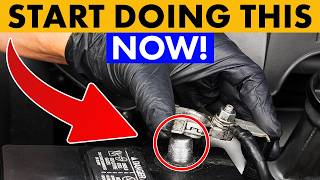
- Weak or Failing Battery 🔴 High Probability → Shop Vehicle Battery All modern vehicles are sensitive to low voltage. A battery that drops below the required voltage during startup can prevent control modules from initializing correctly, causing network communication faults.
How to confirm: Test the battery with a multimeter or a dedicated battery tester. It should read at least 12.4 volts with the engine off and 13.7-14.7 volts with the engine running. Many auto parts stores will test your battery for free.
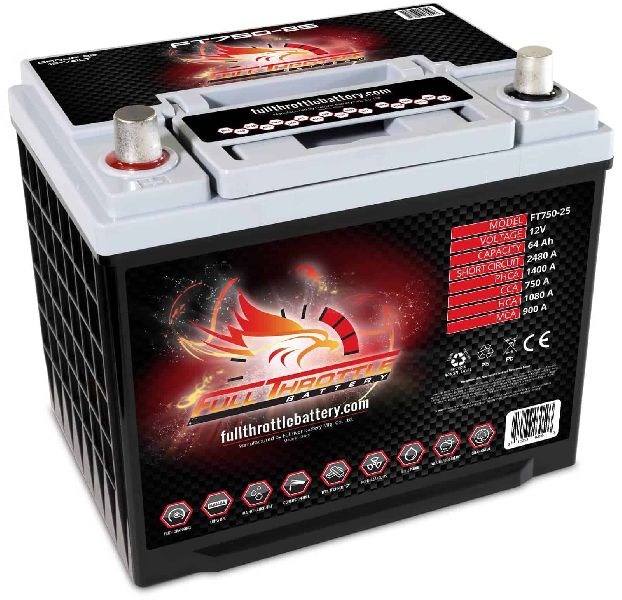
Typical fix: Replace the vehicle's battery.
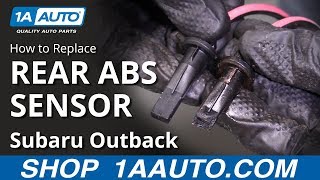
Est. part cost: $150-$300 - Corroded or Damaged Wiring/Connectors 🔴 High Probability Wiring harnesses, especially those exposed to the elements under the vehicle or in the engine bay, can suffer from corrosion, water intrusion, or physical damage over time. Intermittent issues over bumps strongly suggest a wiring problem. TSB 06-49-15R notes that retaining clips for the ABS wheel speed sensor harness can crack from exposure to some wheel cleaners, potentially allowing the harness to get damaged. 🎬 See this walkthrough on how to replace a rear ABS sensor
How to confirm: Perform a thorough visual inspection of the main wiring harnesses. Pay close attention to the connectors at the ECM, ABS/VDC module, and the main fuse box (Body Integrated Unit). Look for green or white corrosion, pinched wires, or rodent damage. Disconnect, inspect, and reseat major connectors.
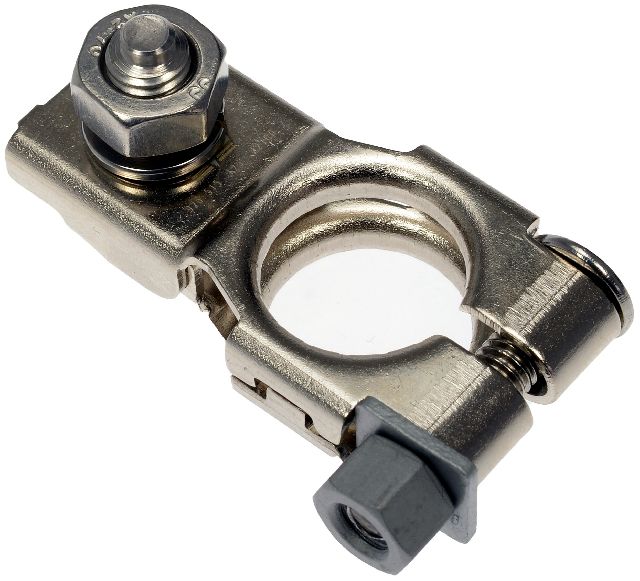
Typical fix: Clean corroded terminals using a contact cleaner and a small brush. Repair or replace damaged sections of the wiring harness. Ensure all connectors are fully seated and secured.
Est. part cost: $10-$500 - Faulty ABS/VDC Control Module 🟡 Medium Probability → Shop ABS Control Module The ABS/VDC module is a central hub for the CAN network. An internal failure in this module can disrupt the entire network, causing it to go offline and trigger a U0073 code. This is a commonly reported failure point on this platform after battery and wiring issues are ruled out.
How to confirm: This is difficult to confirm without a professional scan tool. A mechanic can check if the ABS/VDC module is responding on the network. If all other modules are online except the ABS/VDC unit, and its power and ground connections are good, the module itself is likely faulty.
Typical fix: Replace the ABS/VDC control module and hydraulic unit. Some sellers state the replacement module must be reprogrammed to the vehicle's VIN, while some repair services offer a plug-and-play fix.
Est. part cost: $800-$1600
Rare But Worth Checking
- Poor Ground Connections: A loose or corroded main ground strap for the engine or body can create unstable voltage across the entire electrical system, leading to various communication codes. Always check and clean the main ground points.
- Faulty Aftermarket Electronics: Improperly installed remote starters, alarms, or stereos can interfere with or damage the CAN bus wiring, causing network failures. If you have recently installed an aftermarket device, try disconnecting it.
Diagnosis Steps
- Check Battery Health: Ensure the battery is fully charged (at least 12.4V) and the terminals are clean and tight. A weak battery is a very common cause.
- Scan for All Codes: Use a quality OBD-II scanner that can read codes from all modules (Engine, ABS, Transmission, etc.). Note all present codes, especially other 'U' codes which can help pinpoint the origin.
- Visual Inspection: Thoroughly inspect the engine bay and under-dash wiring harnesses for any signs of damage, corrosion, or loose connections. Pay special attention to the connectors for the ECM and ABS/VDC module.
- Check Fuses: Inspect all fuses related to the various control modules (ECU, TCM, VDC, etc.) in both the interior and under-hood fuse boxes.
- Check Ground Connections: Locate, clean, and tighten the main engine and chassis ground straps.
- Isolate the Fault (Professional): If the problem persists, a technician will use an advanced scan tool to see which modules are 'offline'. They may disconnect modules one by one to see if communication is restored, which would isolate the faulty unit.
- Test CAN Bus Resistance (Professional): With the battery disconnected, a technician can measure the resistance between the two CAN bus wires (Pin 6 and Pin 14) at the OBD-II port. 🎬 Watch: A professional guide to diagnosing communication bus A faults It should be approximately 60 ohms. A reading of 120 ohms suggests one of the terminating resistors (or modules) is offline; a reading near 0 ohms indicates a short circuit.
Parts You'll Likely Need
- Vehicle Battery — Low system voltage is a primary trigger for network communication faults during startup.
Trusted brands: Subaru OE, Interstate, DieHard
OEM price range: $200-$300
Aftermarket price range: $150-$250 - ABS/VDC Control Module and Hydraulic Unit
(OEM #27596AJ00C (2010-2011), 27596AJ01A (2011+), 27536AJ00C (Hydraulic Portion). Always verify with VIN.)— This module is a critical node on the CAN network. If it fails internally, it can bring down the entire communication bus. This is a common point of failure after wiring and battery issues are ruled out.
Trusted brands: Subaru OE, Bosch (OEM supplier), XeMODeX (Remanufacturing Service)
OEM price range: $1200-$1800
Aftermarket price range: $200-$1000 (Used or Remanufactured)
Related Codes That Often Appear With This One
- U0100 — Lost Communication with ECM/PCM
- U0101 — Lost Communication with TCM (Transmission Control Module)
- U0122 — Lost Communication With Vehicle Dynamics Control Module
- U0140 — Lost Communication With Body Control Module
Technical Service Bulletins (TSBs) & Recalls
- TSB 06-49-15R: Addresses cracked or broken ABS wheel speed sensor harness retaining clips due to a reaction with certain wheel cleaners. This could lead to harness damage and potential CAN bus issues. The clip material was changed to be more resistant.
Platform-Specific Known Issues
- Real-World Repair Story: Intermittent Fault from Wiring: An owner on the Mainely Subarus forum with a U0073 code reported that their issue was intermittent and often occurred when driving over rough roads. This intermittent behavior strongly pointed to a physical wiring problem rather than a module that had completely failed. The diagnostic advice given was to check for backed-out terminals in harness connections, particularly the transmission harness, as a loose pin can cause intermittent loss of communication.
Mechanic-Grade Diagnostic Values
- CAN Bus Network Resistance — expected: ~60 Ohms. Failure: A reading of ~120 Ohms indicates one of the two terminating resistors is offline. A reading near 0 Ohms indicates a short between the CAN High and CAN Low wires.
- CAN High Voltage to Ground — expected: ~2.5V to 3.0V (Key On, Engine Off). Failure: Significant deviation from this voltage suggests a fault in a module's CAN transceiver or a short to power/ground.
- CAN Low Voltage to Ground — expected: ~2.0V to 2.5V (Key On, Engine Off). Failure: Significant deviation from this voltage suggests a fault in a module's CAN transceiver or a short to power/ground.
- CAN Bus Baud Rate — expected: 500k. Failure: N/A - this is a configuration setting for advanced diagnostic tools.
Scan Tool Commands That Help
- Subaru Select Monitor (SSM) or equivalent professional scan tool: ABS Sequence Control / Function Check Sequence — After replacing the ABS/VDC module or performing brake hydraulic work, this function is used to cycle the ABS pump and solenoids to properly bleed the system and verify its operation.
- Subaru Select Monitor (SSM) or equivalent professional scan tool: Network Status Check / Module Status — This is a primary diagnostic step to see a list of all expected control modules on the CAN bus and identify which specific module(s) are not communicating. This helps isolate the fault.
Wiring & Ground Locations
- OBD-II Data Link Connector — Under the driver's side dashboard, to the left of the steering column.. This is the primary access point for diagnostics. Pin 6 is CAN High and Pin 14 is CAN Low, where resistance and voltage measurements are taken.
- Bulkhead Wiring Harness Grounds — On the engine side of the firewall, often near the brake booster. One video shows a corroded ground point with multiple ring terminals stacked together on the upper part of the engine.. These grounds are critical for the engine wiring harness and associated modules. Corrosion here can cause intermittent communication faults across the entire network.
- VDC Control Module (ABS Module) — In the engine compartment, on the passenger side, near the firewall. It is an aluminum block with brake lines and a large electrical connector.. This is a central node on the CAN bus. A bad connection at its main harness connector or a faulty ground for the module itself can bring down the network.
- Body Integrated Unit (BIU) — Located in the center of the dash, behind the radio/HVAC controls.. The BIU is the body control module and a key part of the CAN network and immobilizer system. A fault here can cause widespread communication issues.
Real Owner Repair Stories
- Reddit user post (2013 Subaru Outback 2.5L PZEV) — After replacing an alternator due to an over-volting issue, the car would sometimes start and then immediately turn off. A U0073 code was present, along with communication faults for the TCM and BCM.
❌ Tried (didn't work) Using an OBD2 scanner to run a 'drive cycle procedure' seemed to make the issue worse. Deleting the stored DTCs did not resolve the issue initially.
✅ What actually fixed it Disconnecting the battery overnight caused the U0073 code to disappear and the vehicle started normally. However, other 'C' codes related to the VDC system remained until cleared separately. This suggests a module 'lock-up' state that was resolved by a hard reset (battery disconnect). - LegacyGT.com forum user (2017 Subaru Legacy (different generation, but relevant ABS module principle)) — After replacing a physically damaged ABS pump module with a used one of the same part number, the ABS and BRAKE lights were on, and EyeSight was disabled.
❌ Tried (didn't work) The dealer advised that a new ABS pump would be required and would need programming.
✅ What actually fixed it Using a capable aftermarket scan tool (Autel MK808), the user performed a full system scan and then cleared all fault codes. This successfully resolved the issue without needing dealer programming or a new module.
Documented NHTSA Reports
- NHTSA ODI #11723030: A report for a related Subaru model (XV Crosstrek) highlights that a CAN bus communication fault U0073 can affect multiple vehicle safety systems simultaneously. The report specifically mentions an Electronic Power Steering (EPS) fault code creating a safety critical steering concern in conjunction with the U0073 code.
Model Year Variations Within This Range
- 2010-2011 vs 2011+: The OEM part number for the ABS/VDC control module changes. The earlier models (2010-2011) often use part number 27596AJ00C, while later models (2011+) may use 27596AJ01A. It is critical to verify the correct part number with the vehicle's VIN before ordering.
- 2010-2014: The Gen4 Outback/Legacy was the first generation to introduce CAN bus control. The immobilizer system is more complex than in prior generations, involving the Engine ECU, Body Integrated Unit (BIU), key/antenna, and the instrument cluster itself. A failure in any of these components can lead to communication-related issues.
Diagnostic Flowchart
Other Known Issues on This Vehicle
Issues unrelated to this code that are worth knowing about as an owner of this generation:
- Excessive Oil Consumption (2.5L FB25 Engine) 🔴 High — Common in 2013-2014 models with the FB25 engine. Can start as early as 30,000-60,000 miles. Consumption of over 1/3 quart per 1200 miles is considered excessive. (Ref: Subaru addressed this with TSB 02-157-14R (and subsequent revisions), which ultimately replaced the piston rings and later the entire short block assembly for verified cases.)
- CVT Transmission Failure/Shudder 🔴 High → Shop Transmission Assembly — Widespread enough that Subaru extended the warranty. Issues include shuddering, hesitation, and potential failure of the torque converter or valve body. (Ref: Subaru extended the CVT warranty to 10 years/100,000 miles for many models, including the 2010-2014 Outback. TSB 16-90-13R was issued for shuddering complaints.)
- Steering Wheel Vibration / "Shaky Steering" 🟠 Medium — Frequently reported by owners at highway speeds. The cause can be difficult to pinpoint, ranging from tires to suspension components. (Ref: TSB SB-05-48-10R was released to address steering wheel shake at highway speeds. Other potential causes include worn inner CV joints, wheel bearings, or simply out-of-balance tires.)
- Takata Airbag Recalls 🔴 High — Affects a massive number of vehicles from this era, including the 2010-2014 Outback. The inflators can rupture during deployment, causing serious injury. (Ref: Multiple mandatory recalls were issued by NHTSA. Owners must have this fixed by a dealer.)
- Head Gasket Failure (2.5L EJ25 Engine) 🟠 Medium — While less common on the later SOHC EJ25 engines in the 2010-2012 models compared to earlier DOHC versions, head gasket leaks can still occur at higher mileage, leading to coolant loss and overheating.
Used vs. New Parts: Buying Guide for This Vehicle
When a used part is the smart pick: For the expensive ABS/VDC Control Module, a used part from a reputable salvage yard can be a very cost-effective option. Forum evidence suggests that if you match the OEM part number exactly from a donor vehicle of the same year, it may be plug-and-play, requiring only a fault code clear with a capable scanner rather than expensive dealer reprogramming.
Donor-vehicle mileage cap: roughly under 120000 miles for the part to have meaningful remaining life.
What to inspect on the donor part:
- Verify the part number on the used module EXACTLY matches your original module.
- Obtain the VIN of the donor car to cross-reference its model year and options.
- Inspect the electrical connector pins for any signs of corrosion, damage, or moisture.
- Ask the seller if the part comes with any warranty or return policy.
- Avoid modules from vehicles with obvious signs of major flood or fire damage.
Aftermarket brands forum-validated for this vehicle:
- XeMODeX (Remanufacturing Service for original module)
Brands owners have reported issues with on this vehicle:
- Unknown, unbranded ABS modules from online marketplaces without a warranty or clear return policy.
Real Owner Stories
Aggregated from forums and TSBs cited above. Mileages and costs reflect what owners reported in those sources.
2010-2014 Subaru Outback
Symptoms: The issue was intermittent and often occurred when driving over rough roads; the owner suspected a physical wiring problem rather than a total module failure.
What fixed it: Checking for backed-out terminals in harness connections, specifically the transmission harness where a loose pin caused intermittent loss of communication.
Source hint: Mainely Subarus forum thread titled 'Anyone know about this code U0073?'
2010-2014 Subaru Outback
Symptoms: Traction Control (TC), hillstart, and ABS lights all illuminated simultaneously on the dashboard.
What fixed it: Diagnosis of the CAN bus network to identify which module (such as the ABS/VDC or ECM) went offline.
Source hint: reddit.com/r/subaru user report
2010-2014 Subaru Outback
Symptoms: An owner reported a CAN bus communication fault U0073 affecting multiple vehicle safety systems simultaneously, including an Electronic Power Steering (EPS) fault that created a safety critical steering concern.
What fixed it: Investigation into the CAN bus network and electrical system health.
Source hint: NHTSA ODI #11723030
Related OBD-II Codes
Frequently Asked Questions
My 2010-2014 Outback has a U0073 code and the ABS/VDC lights are on. Could this be related to the wheel speed sensors?
Could a weak battery really cause a U0073 communication code on my Subaru?
I'm seeing U0073 and my transmission is shifting harshly. Is my CVT failing?
Is the U0073 code covered under the extended CVT warranty for 2010-2014 models?
Can I fix a U0073 code by just cleaning the wiring connectors?
Does the 2010-2014 Subaru Legacy suffer from the same U0073 issues as the Outback?
Helpful Videos

We Have This Part in Stock


The information in this article is provided for general reference and educational purposes only. Vehicle specifications, procedures, and part compatibility can vary by production date, trim level, and region. Always consult your vehicle's factory service manual and verify part numbers before purchasing or performing repairs. Safety-critical components such as airbags, seat belts, and braking systems should be installed by a qualified professional.
- Subaru Outback:
- 🧭 Diagnostic Flowchart
- 🎬 Helpful Videos
- 🛍️ Shop This Part
- What's Unique About the 2010-2014 Subaru Outback
- Symptoms You May Notice
- Most Likely Causes
- Rare But Worth Checking
- Diagnosis Steps
- Parts You'll Likely Need
- Related Codes That Often Appear With This One
- Technical Service Bulletins (TSBs) & Recalls
- Platform-Specific Known Issues
- Mechanic-Grade Diagnostic Values
- Scan Tool Commands That Help
- Wiring & Ground Locations
- Real Owner Repair Stories
- Documented NHTSA Reports
- Model Year Variations Within This Range
- Other Known Issues on This Vehicle
- Used vs. New Parts: Buying Guide for This Vehicle
- Real Owner Stories
- 2010-2014 Subaru Outback
- 2010-2014 Subaru Outback
- 2010-2014 Subaru Outback
- Related OBD-II Codes
- Frequently Asked Questions
- 🎟️ Get 5% Off