

U0100 on 2018-2024 Chevrolet Equinox 1.5L: Lost ECM Communication Causes and Fixes
On a 2018-2024 Equinox, U0100 is most often caused by a software glitch in the Serial Data Gateway Module (SDGM), a chafed engine wiring harness near the transmission, or loose connectors at the SDGM, as outlined in GM service bulletins. A dealer reprogram or wiring inspection is the most likely fix, not a bad ECM.
- Do not immediately replace the ECM. The problem is far more likely to be a software issue, a bad connector, or a chafed wire.
- Check for GM Technical Service Bulletins 20-NA-212 and 19-NA-206, as they point directly to the most common fixes.
- A weak battery can cause this code. Always start your diagnosis by load-testing the battery and checking all main power and ground connections.
- This is not a DIY-friendly repair unless you are experienced with electrical diagnostics. A professional with access to GM's software is often required.
- The vehicle is unsafe to drive with this code. The risk of stalling in traffic is high.
What's Unique About the 2018-2024 Chevrolet Equinox
For this specific generation of Equinox, GM has issued technical service bulletins (TSBs) that point to very specific causes for U0100. TSB 20-NA-212 identifies a software error in the Serial Data Gateway Module (SDGM) that can cause a total communication loss, as well as issues with the connectors to that module. Additionally, TSB 19-NA-206 warns of the engine wiring harness chafing against the transmission case, causing shorts that bring down the network. These known issues mean the problem is more likely in the network wiring or a secondary module (the SDGM) than the ECM itself. Manufacturer service bulletin Bulletin #PIT5427B also suggests that technicians should inspect the X411 connector for damage or corrosion, which can trigger a cascade of communication codes including U0100, U0101, and U0121.
Symptoms You May Notice
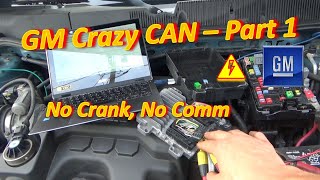
- No-crank or no-start condition 🎬 Watch: A real-world diagnosis of a no-crank Equinox CAN bus issue.
- Engine stalls while driving, sometimes intermittently
- Check Engine Light is on
- Multiple other warning lights may appear, such as 'Service StabiliTrak,' 'Service Airbag,' or 'Service Brake Assist'
- Instrument panel gauges may fluctuate, go blank, or be completely inoperative
- Transmission may shift harshly or get stuck in one gear (limp mode)
- Engine cooling fans run constantly at high speed as a fail-safe
- Reduced engine power ('limp mode')
- Radio display may be blank or not shut off with the door open
- Replacing the Engine Control Module (ECM) without first inspecting for TSBs, checking wiring harnesses for chafing, verifying SDGM function, and testing the battery and grounds. An expensive ECM replacement will not fix a simple wiring, connector, or software issue.
Most Likely Causes
- Serial Data Gateway Module (SDGM) Software Error or Connector Fault 🔴 High Probability → Shop Telematics Interface Module GM TSB 20-NA-212 specifically calls out a software anomaly in the SDGM and issues with its X1/X2 connectors for 2018+ models, causing widespread communication loss. This module acts as a router between different CAN bus networks, and its failure silences multiple systems at once.
How to confirm: A technician must check for codes in all modules. If many modules report losing communication simultaneously (U0100, U0101, U0121, U0140, U0155 etc.), the SDGM is the prime suspect. Visually inspect the SDGM connectors for bent, loose, or corroded terminals. Attempting to reprogram the SDGM with dealer tools is a key diagnostic step.
Typical fix: First, a dealer or qualified shop should attempt to reprogram the SDGM with the latest software available through GM's TIS2Web service. If reprogramming fails or the issue is with the physical connection, the terminals or connector pigtail must be repaired. In some cases, the SDGM itself may have a hardware failure and require replacement.
Est. part cost: $0-$500 - Chafed Engine Wiring Harness 🔴 High Probability → Shop Engine Wiring Harness Per GM TSB 19-NA-206, the engine harness is known to rub against the top of the transmission housing, just below the electronic brake control module (EBCM), leading to cut or shorted wires. This can short the CAN bus wires, bringing down the entire network.
How to confirm: Visually inspect the engine wiring harness in the area where it passes over the transmission. Look for any signs of abrasion, exposed copper wire, or damage to the loom. The contact point is often subtle and may require moving the harness to see the damage underneath.
Typical fix: Repair the damaged wires using approved splicing techniques and waterproof heat-shrink connectors. Wrap the repaired section and the entire contact area with protective anti-abrasion tape (like Tesa cloth tape) and secure the harness away from the transmission case to prevent future contact.
Est. part cost: $5-$50 - Weak or Failing Battery / Poor Ground Connections 🟡 Medium Probability → Shop Vehicle Battery All modern vehicles are sensitive to low voltage, which can cause random communication faults between modules. A bad ground connection to the engine or chassis, particularly the main ECM ground, can also mimic a module failure by starving it of a stable reference voltage.
How to confirm: Test the battery with a digital multimeter and a load tester. A healthy, resting battery should be at ~12.6V. Inspect the main battery terminals, chassis ground straps (especially near the engine and transmission), and the ground points for the ECM and SDGM for corrosion or looseness. Key grounds to check are G101 (ECM/TCM ground on engine block) and G103 (BCM/DLC ground on cowl).
Typical fix: Recharge or replace the battery if it fails a load test. Clean all corroded terminals and ground points with a wire brush and apply a dielectric grease to prevent future corrosion. Ensure all connections are tight.
Est. part cost: $20-$250
Rare But Worth Checking
- Failed Engine Control Module (ECM): → Shop Engine Control Module (ECM) The ECM is rarely the actual point of failure. It should only be considered after all wiring, power, ground, and other network module issues (especially the SDGM) have been completely ruled out. A GM TechLink article from November 2024 noted that incorrect ECM part numbers were sometimes being used in replacements, causing no-start conditions, so verifying the correct part number is critical.
Diagnosis Steps
- Check Battery Health: Perform a load test on the battery. Ensure system voltage is stable and above 12.4V with the engine off. Low voltage is a common cause of network communication errors.
- Full System Scan: Use a professional scan tool (like a GM GDS2) to check for DTCs in ALL available modules. Note which modules are not communicating and which ones are reporting 'lost communication' codes. A pattern of many modules losing communication points to a network-level fault.
- Check for TSBs: Specifically look for TSB 20-NA-212 (SDGM) and 19-NA-206 (harness chafing), which address the most common causes for this code on this vehicle.
- Inspect SDGM Connectors: Following TSB 20-NA-212, locate the Serial Data Gateway Module (often behind the glove box or in the center console area). Carefully disconnect and inspect its X1 and X2 connectors for any loose, bent, or corroded terminals.
- Inspect Wiring Harness: Following TSB 19-NA-206, visually and physically inspect the engine wiring harness for any signs of chafing or damage where it passes over the transmission case, near the EBCM.
- Check Power and Grounds: Using a multimeter and wiring diagrams, verify that the ECM and SDGM have proper battery voltage on their power pins and less than 0.1V of resistance on their ground circuits.
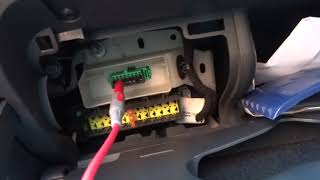
- Check CAN Bus Resistance: With the battery disconnected, measure the resistance between Pin 6 (CAN High) and Pin 14 (CAN Low) at the OBD-II port. A healthy network should read approximately 60 ohms. 🎬 See how to test the CAN bus network with a multimeter. A reading of 120 ohms indicates one of the two terminating resistors is offline. An open or shorted reading indicates a wiring fault.
- Reprogram Modules: If wiring and connections are confirmed good, the next step is to have a dealer or qualified shop attempt to reprogram the SDGM per TSB 20-NA-212. This requires a specific GM programming tool and a stable power supply.
- Module Replacement: If all other steps fail, suspect a hardware failure in the SDGM or, as a last resort, the ECM.
Parts You'll Likely Need
- Serial Data Gateway Module (SDGM)
(OEM #13537963 (Verify with VIN))— This module is a central hub for network communication and is cited in TSB 20-NA-212 as a primary cause of failure, often due to a software glitch that requires reprogramming or a hardware fault requiring replacement.
Trusted brands: ACDelco, GM Genuine
OEM price range: $150-$300
Aftermarket price range: $100-$200 - Engine Control Module (ECM)
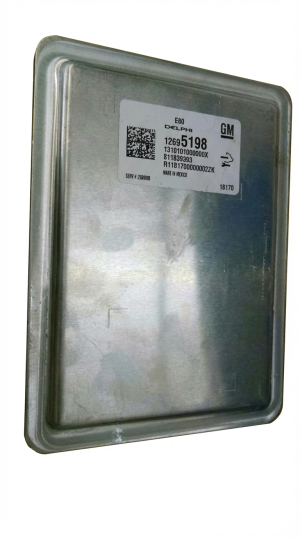
(OEM #12719250 (Verify with VIN, per GM TechLink))— This is a rare but possible cause, only to be replaced after all other diagnostic steps have been exhausted.
Trusted brands: ACDelco, GM Genuine
OEM price range: $400-$700
Aftermarket price range: $250-$500
Related Codes That Often Appear With This One
- U0073 — Stands for 'Control Module Communication Bus A Off'. It indicates a general failure of the high-speed CAN bus, which is the direct cause of the U0100 code.
- U0101 — Stands for 'Lost Communication with TCM'. The Transmission Control Module (TCM) is on the same network, so a network-wide failure will often cause communication to be lost with both the ECM and TCM.
- U0121 — Stands for 'Lost Communication with ABS Control Module'. The ABS module is another critical node on the high-speed CAN bus that will report a fault when the network is down.
- U0140 — Stands for 'Lost Communication with Body Control Module (BCM)'. This code often appears alongside U0100 when the SDGM is the root cause, as the SDGM is the gateway for the BCM.
- U0155 — Stands for 'Lost Communication With Instrument Panel Cluster (IPC) Control Module'. This is another common companion code when the SDGM fails, leading to blank or erratic gauges.
- P0700 — This is a general fault code requested by the Transmission Control Module (TCM). The TCM will set this code when it logs its own faults, such as losing communication with the ECM (U0100).
Technical Service Bulletins (TSBs) & Recalls
- 20-NA-212: Addresses SDGM software errors and connector issues causing widespread communication loss.
- 19-NA-206: Details engine wiring harness chafing against the transmission case.
- Bulletin #PIT5427B: Advises technicians to inspect the X411 connector for damage or corrosion when multiple communication codes, including U0100, U0101, and U0140, are present.
- 21-NA-268: Describes catastrophic brake vacuum pump failure and its potential to damage the camshaft.
- 18-NA-171 / 19-NA-122: Bulletins related to diagnosing misfires that can be caused by cracked pistons.
- 18-NA-020: Details moisture accumulation in the Charge Air Cooler (CAC).
Platform-Specific Known Issues
- TSB 20-NA-212: A software error in the Serial Data Gateway Module (SDGM) or faulty terminals in its connectors can cause a complete loss of network communication, triggering U0100 and numerous other codes.
- TSB 19-NA-206: The engine wiring harness has a known tendency to chafe against the transmission housing, leading to short circuits on the CAN bus lines.
Mechanic-Grade Diagnostic Values
- CAN Bus Network Resistance — expected: Approximately 60 Ω. Failure: A reading of 120 Ω indicates one of the two terminating resistors is offline. A reading of 0 Ω or infinite resistance (OL) indicates a short or open in the wiring.
- ECM/SDGM Ground Circuit Resistance — expected: Less than 1.0 Ω. Failure: A higher resistance reading indicates a poor ground connection, which can cause module malfunction.
- Terminating Resistor Value — expected: 120 Ω. Failure: An incorrect reading when measuring an individual resistor (by isolating it) indicates a faulty resistor or module.
Hidden / Shadow Codes Worth Checking
- U0100-01, U0100-02, etc.: These are manufacturer-specific sub-codes or 'symptom bytes' that provide more detail. For example, a sub-code might specify which module is reporting the loss of communication, helping to narrow down the fault. (see via Typically only visible on dealer-level scan tools like the GM GDS2.)
- U1814-02: Powertrain High Speed CAN Wake Up Circuit Short to Ground. This code can appear with U0100 and points specifically to an issue on the circuit that 'wakes up' modules, preventing them from joining the network. (see via Visible on professional scan tools like the Verus Edge or GM GDS2.)
Scan Tool Commands That Help
- GM GDS2: Module Diagnostics — This is the first step to get a network-wide view, showing a list of all vehicle modules and their communication status (e.g., 'Communicating' or 'Not Communicating').
- GM GDS2: K56 Serial Data Gateway Module: Programming and Setup — This function is required per TSB 20-NA-212 to update the SDGM software, which is a primary known cause of U0100 on these vehicles.
- GM GDS2: Clear All DTCs — After a repair (like fixing a ground or reprogramming a module), this command clears codes from all modules simultaneously. Note that this will reset I/M readiness monitors.
Wiring & Ground Locations
- G101 — At the left front of the engine, on the lower block.. This is a primary ground point for both the Engine Control Module (ECM) and Transmission Control Module (TCM). A loose or corroded connection here can directly cause U0100 and U0101.
- G103 — At the left rear of the engine compartment, on the cowl sheet metal above the brake booster.. This ground serves the Body Control Module (BCM), Instrument Panel Cluster (IPC), and the Data Link Connector (DLC). A fault here can cause multiple communication codes and may even prevent a scan tool from connecting properly.
- SDGM (K56) — Behind the main dashboard trim, located below the infotainment screen and above the climate controls.. This is the physical location of the Serial Data Gateway Module. TSB 20-NA-212 points to faults with its connectors (X1/X2), making physical access necessary for inspection.
- Engine Harness Chafe Point — The section of the engine wiring harness that passes over the top of the transmission housing, often just below the EBCM.. TSB 19-NA-206 identifies this as a common spot for the harness to rub through, causing shorts in the CAN bus wires that can bring the entire network down.
Real Owner Repair Stories
- Chevy HHR Network Forum User (Chevrolet HHR (Uses similar GM CAN architecture)) — No start, check engine light on, security light on, transmission shifting hard, code U0100.
❌ Tried (didn't work) Resetting the BCM by pulling its 50 amp fuse.
✅ What actually fixed it Disconnecting the negative battery cable for 20 minutes to perform a 'hard reset' of all modules. After reconnecting, the code was gone and the car started normally, suggesting a module logic lock-up. - YouTube user 'm0bilemechanix' (2018 Chevrolet Equinox) — No-crank, no-start condition with a single click. All lights and accessories worked, indicating sufficient battery power.
❌ Tried (didn't work) Using a booster pack (did not change symptom)., Scanning for codes (no codes were stored).
✅ What actually fixed it The negative battery terminal was loose. After cleaning and tightening the terminal, the vehicle started normally. This highlights how a poor main power connection can cause a no-start that mimics a module failure. - NHTSA ODI #11231903 — An owner reported that their local dealership found a U0100 code for lost communication with the ECU, though a mechanic checked communication with the PCM, TCM, and BCM and found no poor connections at that time.
- NHTSA ODI #10733263 — One owner experienced a check engine indicator with codes P069E, P0700, U0073, and U0100; despite replacing the battery with a new one twice, the vehicle had to be towed to the dealership multiple times.
- NHTSA ODI #10676316 — A driver reported receiving codes U0100, P0324, and P2135 during a diagnosis after experiencing electronic stability control issues.
- NHTSA ODI #10176882 — An owner documented a series of communication failures including P1626, C0276, U0100 (Lost Communications with Transmission Control Module), and U2105 (Lost Communication with Engine Control Module).
"I Checked Everything" — The Actual Cause
- In a case on a 2017 Equinox with multiple communication codes, a technician found 1k Ohm resistance to ground on a CAN circuit. This reading was not a dead short, which might lead some to believe the wiring was okay. However, after methodically disconnecting modules, the resistance remained. The final cause was determined to be an internal short to ground within the Body Control Module (BCM) itself, which was pulling the network down.
OEM Part Supersession History
Varies by year→TSB 20-NA-212— Software Anomaly
Heads up: This isn't a part number change, but a procedural one. TSB PI1542G, which covered similar issues, was amended to exclude 2018 and newer models. The official fix for 2018-2020 models became the software reprogram outlined in the new TSB 20-NA-212, indicating the problem was software-defined for this specific generation.
Model Year Variations Within This Range
- 2018-2020: These model years are specifically called out in TSB 20-NA-212 for the Serial Data Gateway Module (SDGM) software anomaly and connector terminal issues. While later years (2021-2024) can still experience U0100, they are less likely to be caused by this specific, well-documented software glitch.
Diagnostic Flowchart
Other Known Issues on This Vehicle
Issues unrelated to this code that are worth knowing about as an owner of this generation:
- Brake Vacuum Pump Failure 🔴 High — Common enough to trigger a class-action lawsuit. Can occur at various mileages, leading to a sudden hard brake pedal. (Ref: TSB 21-NA-268, PIP5835. A catastrophic failure can damage the camshaft.)
- Cracked Pistons / Ring Land Failure 🔴 High — A known, but not rampant, issue on early 1.5L LYX engines (approx. 2018-2020). Leads to oil consumption, low compression, and misfires (P0300). (Ref: TSB 18-NA-171, 19-NA-122 (related diagnostics))
- 'Shift to Park' Message Error 🟠 Medium — Widespread issue where the vehicle doesn't recognize it's in Park, preventing shutdown and draining the battery. Caused by a faulty switch in the shifter assembly. (Ref: TSB 19-NA-206)
- Charge Air Cooler (CAC) Moisture Accumulation 🟠 Medium — Common in cold or humid climates. Moisture builds up and can freeze or be ingested, causing misfires (P0300) and reduced power, especially during acceleration. (Ref: TSB 18-NA-020, 22-NA-065)
- Transmission Shudder (9T45/9T50) 🟡 Low → Shop Transmission Assembly — Some owners report shudder or hesitation at low speeds. Often addressed with a fluid flush using an updated fluid type. (Ref: TSB 20-NA-142)
Used vs. New Parts: Buying Guide for This Vehicle
When a used part is the smart pick: A used wiring harness pigtail from a junkyard is a smart, cost-effective choice for repairing a chafed or damaged section of the engine harness. A used SDGM or ECM is risky; only consider it if you can verify it's from a later model year or has an updated part number to avoid inheriting the same software flaw.
Donor-vehicle mileage cap: roughly under 80000 miles for the part to have meaningful remaining life.
What to inspect on the donor part:
- For wiring: Check that the loom is not brittle or cracked, and inspect connectors for intact locking tabs and no signs of corrosion.
- For modules (SDGM/ECM): Inspect the case for any signs of physical damage or water marks. Check all connector pins to ensure they are straight, clean, and free of any green or white corrosion.
OEM-only on this vehicle (don't cheap out):
- Serial Data Gateway Module (SDGM)
- Engine Control Module (ECM)
Aftermarket brands forum-validated for this vehicle:
- For wiring repairs: 3M (electrical tape, splices), Tesa (anti-abrasion cloth harness tape).
Brands owners have reported issues with on this vehicle:
- Unknown or 'white box' remanufactured electronic modules. Their quality control can be inconsistent, and they may not accept the required VIN programming.
Real Owner Stories
Aggregated from forums and TSBs cited above. Mileages and costs reflect what owners reported in those sources.
2010 Chevrolet Equinox 2.4L AWD
Symptoms: A multi-year struggle with U0100 where the owner had to perform extensive diagnostic work to identify the root cause.
What fixed it: Checking wiring and grounds thoroughly before replacing expensive modules.
Source hint: https://chevroletforum.com/forum/equinox-23/2010-equinox-2-4-awd-u0100-86361/
2008 Chevrolet Equinox
Symptoms: No-crank and no-start condition immediately following a battery replacement.
What fixed it: Addressing low voltage/battery issues that triggered the communication code.
Source hint: Reddit thread titled 'no_crank_no_start_on_chevy_equinox_2008_w_u0100/'
Related OBD-II Codes
Frequently Asked Questions
My 2018 Equinox has a 'Service StabiliTrak' message and won't start; does TSB 20-NA-212 apply to this?
Can a wiring issue near the transmission cause a U0100 on my 1.5L Equinox?
Where are the main ground points I should check for U0100 on this vehicle?
Is there a specific tool needed to fix the SDGM communication loss?
Could a simple battery replacement cause a U0100 code on my Equinox?
What should the resistance be at the OBD-II port if the network is healthy?
Helpful Videos
We Have This Part in Stock

The information in this article is provided for general reference and educational purposes only. Vehicle specifications, procedures, and part compatibility can vary by production date, trim level, and region. Always consult your vehicle's factory service manual and verify part numbers before purchasing or performing repairs. Safety-critical components such as airbags, seat belts, and braking systems should be installed by a qualified professional.
- Chevrolet Equinox:
- 🧭 Diagnostic Flowchart
- 🎬 Helpful Videos
- 🛍️ Shop This Part
- What's Unique About the 2018-2024 Chevrolet Equinox
- Symptoms You May Notice
- Most Likely Causes
- Rare But Worth Checking
- Diagnosis Steps
- Parts You'll Likely Need
- Related Codes That Often Appear With This One
- Technical Service Bulletins (TSBs) & Recalls
- Platform-Specific Known Issues
- Mechanic-Grade Diagnostic Values
- Hidden / Shadow Codes Worth Checking
- Scan Tool Commands That Help
- Wiring & Ground Locations
- Real Owner Repair Stories
- "I Checked Everything" — The Actual Cause
- OEM Part Supersession History
- Model Year Variations Within This Range
- Other Known Issues on This Vehicle
- Used vs. New Parts: Buying Guide for This Vehicle
- Real Owner Stories
- 2010 Chevrolet Equinox 2.4L AWD
- 2008 Chevrolet Equinox
- Related OBD-II Codes
- Frequently Asked Questions
- 🎟️ Get 5% Off