

U0100 on 2006-2013 Chevrolet Impala: Lost Communication with ECM/PCM Causes and Fixes
On a 2006-2013 Impala, code U0100 means the Engine Control Module (ECM) has stopped communicating with other modules. This is often caused by a weak battery, poor ground connections, or a faulty ECM. The most common fix is diagnosing and repairing the underlying electrical issue, which could be as simple as cleaning a ground or replacing the battery. It is frequently accompanied by a U0101 (lost communication with TCM) and is often related to issues detailed in GM TSB 08-07-30-021H regarding GML
- U0100 on your Impala means the Engine Control Module (ECM) has gone offline.
- Before suspecting an expensive ECM failure, thoroughly check the battery, all related fuses, and especially the engine/chassis ground connections.
- Symptoms are severe and can include a no-start, stalling, and harsh transmission shifting, making the vehicle unsafe to drive.
- Diagnosing this code often requires professional tools to test the CAN bus network.
- If the ECM needs replacement, it must be programmed to your car's VIN.
What's Unique About the 2006-2013 Chevrolet Impala
The 9th generation Impala, built on the GM W-body platform, shares its GMLAN communication architecture with vehicles like the Buick LaCrosse and Pontiac Grand Prix. While U0100 is a universal code, on these cars it frequently points to specific vulnerabilities. A key GM Technical Service Bulletin (TSB #08-07-30-021H) addresses widespread GMLAN communication loss, often caused by terminals backing out of the 16-way transmission electrical connector, wiring harness chafing, or corrosion. Another bulletin (07-08-47-004E) warns technicians that removing a BCM ground without first disconnecting the negative battery terminal can damage the BCM, leading to communication faults. Specific ground points like G111 (on a transmission-to-engine bolt) and G113 (on the front of the transaxle) are critical and prone to corrosion, making them a common source of communication codes on this platform. For this generation, the two 120-ohm terminating resistors for the high-speed CAN bus are located internally within the ECM and the BCM, meaning they are not separately serviceable parts.
Symptoms You May Notice
- Check Engine Light is on
- Vehicle will not start or has a 'no crank' condition.
- Engine stalls intermittently while driving.
- Transmission shifts harshly or gets stuck in one gear (default mode).
- Loss of power steering assist
- Instrument cluster gauges may fluctuate or drop out.
- Warning messages on the driver information center (DIC) like 'Service StabiliTrak' or 'Engine Power Reduced'.
- Cooling fans running at maximum speed constantly
- Door locks may cycle by themselves.
- Replacing the Transmission Control Module (TCM) when the actual fault is a bad ground or wiring issue affecting the ECM.
- Replacing other modules that have set communication codes without realizing they are just symptoms of the ECM being offline.
- Condemning the ECM before thoroughly checking and cleaning all power and ground connections, which is a much more common and cheaper fix.
Most Likely Causes
- Weak or Failing Battery 🔴 High Probability → Shop Vehicle Battery Control modules require a stable voltage (typically above 12.0V) to communicate. Low voltage during startup is a very common reason for modules to drop off the network and trigger communication codes. An owner report (NHTSA ODI #10733263) highlights the complexity of these issues, noting that a vehicle continued to throw U0100 and U0073 codes even after the battery was replaced twice.
How to confirm: Test the battery voltage with a multimeter. A healthy, fully charged battery should show approximately 12.6 volts with the engine off. Perform a load test to check its true health, as a battery can show good voltage but fail under load.
Typical fix: Recharge or replace the battery.
Est. part cost: $150-$250 - Poor ECM/Engine Ground Connections 🟡 Medium Probability Ground straps and connections on the engine block and chassis can become corroded, loose, or frayed over time, interrupting the ground path for the ECM and other components. Specific grounds noted in wiring diagrams for the 2006 Impala include G111 (on a transmission-to-engine bolt, above the starter) and G113 (on the front of the automatic transaxle). GM TSB 07-08-47-004E also warns that improperly disconnecting grounds can damage the BCM.
How to confirm: Visually inspect the main ground straps from the battery to the chassis and from the engine block to the chassis. Check for corrosion, tightness, and broken wires. Use a multimeter to check for resistance between the ECM connector's ground pin and the chassis ground; it should be less than 1 ohm.
Typical fix: Clean the contact points of the ground connections with a wire brush and ensure they are tight. Replace any corroded or broken ground straps.
Est. part cost: $15-$50 - Faulty Engine Control Module (ECM) 🟡 Medium Probability → Shop Engine Control Module (ECM) Internal failure of the ECM, either due to component breakdown, cracked solder joints, or moisture intrusion, can cause it to stop communicating. This is a common point of failure after power and ground issues have been ruled out. In a related GM vehicle, NHTSA ODI #10676316 describes a case where U0100 was diagnosed alongside P0324 (Knock Control) and P2135 (Throttle Position), pointing to a broader ECM failure.
How to confirm: This is typically a last step after all other possibilities are exhausted. Verify the ECM is receiving proper power and ground. If all wiring and power inputs are good, but the module still won't communicate (even with a capable scan tool), the ECM itself is likely faulty.
Typical fix: Replace the Engine Control Module. The new module will need to be programmed to the vehicle's VIN and security system.
Est. part cost: $200-$500 for a remanufactured unit, $800+ for a new OEM unit. - Damaged Wiring or Connectors ⚪ Low Probability The CAN bus wiring harness can be damaged by abrasion, heat, or improper repairs. TSB 08-07-30-021H specifically calls out terminals backing out of the 16-pin transmission harness connector and chafing of the main engine harness as common causes for GMLAN communication loss.
How to confirm: Visually inspect the wiring harness leading to the ECM and other modules for any signs of damage. Check the main connectors (especially the 16-pin transmission connector) for corrosion, moisture, or bent/backed-out pins. A multimeter can be used to check for continuity and resistance on the CAN bus wires (typically a twisted pair).
Typical fix: Repair the damaged section of wiring or replace the affected connector.
Est. part cost: $10-$100 for wiring supplies
Rare But Worth Checking
- Faulty Transmission Control Module (TCM): → Shop Transmission Assembly On the 2006-2013 Impala with the 4T65-E transmission, the TCM is located inside the transmission on the valve body cover. It is prone to failure from heat and vibration. A failing TCM can disrupt the entire CAN bus network, causing other modules to set U-codes like U0100. Often, a U0101 (Lost Communication with TCM) will be present as well, pointing towards this as a root cause.
- Faulty Body Control Module (BCM): → Shop Body Control Module The BCM acts as a gateway between different data networks in the vehicle. A failure in the BCM can interrupt communication to and from the ECM. TSB 07-08-47-004E notes that the BCM can be damaged if grounds are removed before the battery is disconnected, leading to these types of faults. Manufacturer Bulletin #20-NA-206 also notes that replacing the BCM may be necessary to clear persistent U0100 codes in some GM models.
Diagnosis Steps
- Check the battery. Ensure it is fully charged (12.6V+) and passes a load test. Clean the battery terminals.
- Use a scan tool to see which other modules are reporting a loss of communication. Note if the scan tool can communicate with the ECM at all. The presence of U0101 is a strong clue.
- Inspect all fuses related to the ECM, TCM, and BCM in both the underhood and interior fuse panels.
- Visually inspect and test the main engine and chassis ground connections. Pay special attention to grounds G111 and G113 on or near the transmission. Ensure they are clean, tight, and free of corrosion.
- Inspect the wiring harness and connectors at the ECM and TCM for any visible damage, corrosion, or loose pins. Per TSB 08-07-30-021H, pay close attention to the 16-way transmission connector for backed-out terminals.
- If all of the above are confirmed good, the next step is to use a wiring diagram and multimeter to verify power, ground, and data line integrity at the ECM connector itself.
- If all wiring, power, and grounds are confirmed to be good, the ECM is the most likely failed component.
Parts You'll Likely Need
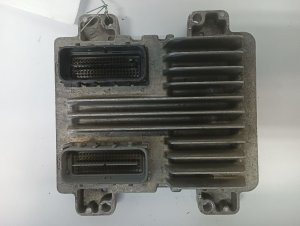
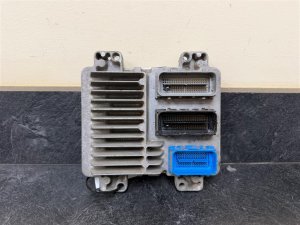
- Engine Control Module (ECM)
(OEM #12612397 (Service Number), 12635901, 12635902)— If all wiring, power, and grounds are verified as good, the internal circuitry of the ECM has likely failed, preventing it from communicating.
Trusted brands: ACDelco, Cardone (A1), Solo Auto Electronics
OEM price range: $400-$800
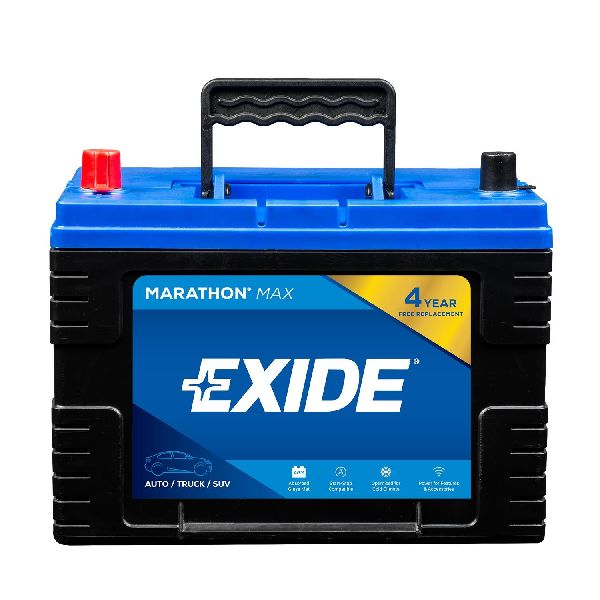
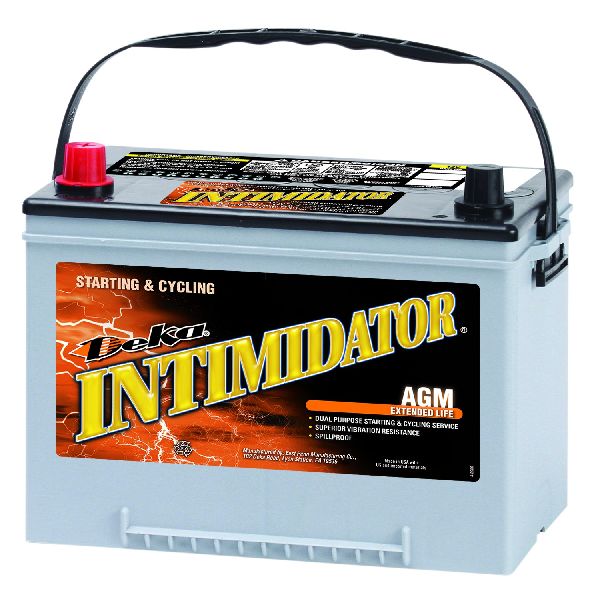
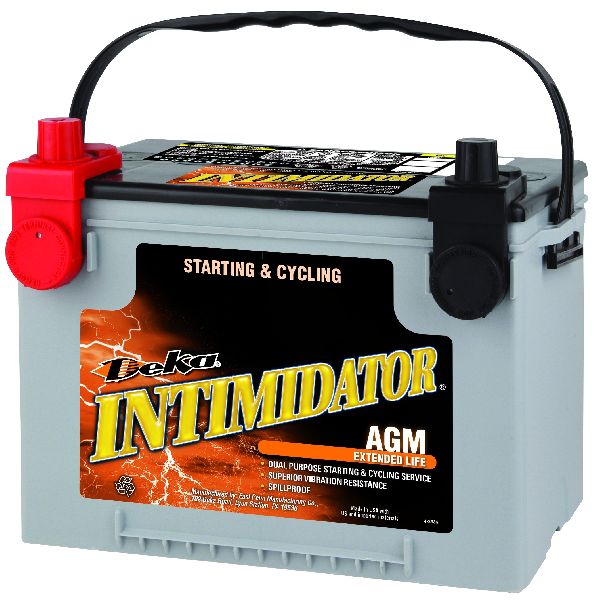
Aftermarket price range: $200-$500 - Battery — A weak or failing battery is a very common cause of low voltage, which can cause modules to randomly drop off the communication network.
Trusted brands: ACDelco, DieHard, Interstate
OEM price range: $200-$300
Aftermarket price range: $150-$250
Related Codes That Often Appear With This One
- U0101 — Lost Communication with TCM. If the ECM is offline, the TCM will report that it can't communicate with it. Seeing both codes often points to a network-wide issue or a problem with the ECM itself, as described in TSB 08-07-30-021H.
- U0073 — Control Module Communication Bus 'A' Off. This is a more general code indicating a fault with the high-speed GMLAN bus itself, which could be the root cause of the U0100.
Technical Service Bulletins (TSBs) & Recalls
- 08-07-30-021H: Loss of High Speed GMLAN Communications, Intermittent No Crank, IP Gage Fluctuation, Transmission May Not Shift, and various communication DTCs including U0100. Points to backed-out terminals in the transmission harness connector and other wiring issues.
- 07-08-47-004E: Informs technicians that the BCM may be damaged if a BCM ground is removed before the negative battery cable is disconnected, which can cause communication issues.
- Bulletin #20-NA-206: Provides a procedure to replace the BCM and PSCM to correct a condition where U0100 and/or U1814-02 set and will not clear.
Platform-Specific Known Issues
- A GM Technical Service Bulletin (08-07-30-021H) for similar platforms points to potential issues in the transmission harness connector and poor ground connections as common causes for high-speed GMLAN communication codes like U0100.
Mechanic-Grade Diagnostic Values
- GMLAN Bus Resistance — expected: ~60 Ω. Failure: A reading of ~120 Ω indicates an open circuit or one of the terminating modules (ECM/BCM) is offline. A reading near 0 Ω indicates a short between the CAN High and CAN Low wires.
- GMLAN Bus Voltage — expected: CAN High (Pin 6) and CAN Low (Pin 14) should both show a baseline of ~2.5V. During data transmission, High toggles to ~3.5V and Low toggles to ~1.5V.. Failure: Voltages stuck high, low, at battery/ground potential, or not showing the 2.5V baseline indicate a short or open on the bus.
- Module Ground Circuit Resistance — expected: Less than 1.0 Ω. Failure: Resistance greater than 1.0 Ω indicates a poor ground connection, which can cause a module to drop offline.
Hidden / Shadow Codes Worth Checking
- U0100 00: The '00' is a standard GM symptom byte that may be displayed on a Tech2 or GDS2 scanner. In this case, '00' typically means 'No Additional Symptom Information'. While not a hidden code, it's an extra piece of data provided by dealer-level tools. (see via GM Tech2, GDS2, or other advanced professional scan tools.)
Scan Tool Commands That Help
- GM Tech2 / GDS2: Module Status / Network Test — This function is used at the start of diagnosis to poll all modules on the network and see which ones are actively communicating and which are reporting 'No Communication'. This helps identify the scope of the problem (one module vs. many).
- GM Tech2 / GDS2 with SPS: Service Programming System (SPS) — This function is required after replacing the ECM. It downloads the correct software and VIN to the new module, allowing it to integrate with the vehicle's other systems, including the anti-theft (VATS).
- Professional Scan Tool (e.g., Autel): Bidirectional Control / Actuation Test — If a specific module like the TCM is suspected, a technician can command it to perform an action (e.g., 'turn shift solenoid on/off'). If the command works, it confirms communication is at least partially active to that module.
Wiring & Ground Locations
- GMLAN Terminating Resistors — For the 2006-2013 Impala, the two 120-ohm resistors are internal. One is inside the Engine Control Module (ECM) and the other is inside the Body Control Module (BCM).. These resistors are essential for network integrity. If a resistance test at the DLC shows 120 ohms instead of 60, it points directly to a break in the wiring to either the ECM or BCM, or an internal failure of one of those modules. They cannot be replaced separately from the module.
- G111 — On a transmission-to-engine bolt, located above the starter motor.. This is a primary ground point for the engine harness, which includes the ECM. Corrosion or looseness here can directly cause the ECM to lose power and drop off the network.
- G113 — On the front of the automatic transaxle, to the left of ground G111.. Another critical powertrain ground. Its proximity to the transmission makes it susceptible to corrosion from road salt and moisture, leading to intermittent communication faults.
- DLC (Data Link Connector) Pins — Under the driver's side dashboard.. Pin 6 is GMLAN High (+) and Pin 14 is GMLAN Low (-). These are the primary test points for checking network resistance and voltage with a multimeter.
Documented NHTSA Reports
- NHTSA ODI #11093283: An owner reported that while the alternator and battery were in optimal working condition, the vehicle presented diagnostic codes P0700 and U0100, accompanied by dimming lights.
- NHTSA ODI #11129698: A report describes a rough start followed by Stabilitrak and Traction Control warnings, where a dealer pulled codes P0300, U0121, and U0100.
Real Owner Repair Stories
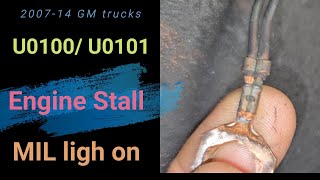
- YouTube video by 'Garrys repair and auto electrical diagnostics' (2012 Chevy Malibu/Impala with 3.6L V6) — Lost communication with TCM (U0101), door locks cycling, car goes into limp mode.
❌ Tried (didn't work) Initial checks of power and ground to the ECM and TCM were normal.
✅ What actually fixed it The main transmission electrical connector was full of transmission fluid that had wicked up the harness. The conductive fluid was shorting the communication pins. The fix was to thoroughly clean the fluid out of the connector plug and socket. - YouTube video by 'Garrys repair and auto electrical diagnostics' (Part 2) (2011-2020 Chevy Malibu/Impala) — Intermittent U0101 (Lost communication with TCM), erratic behavior.
❌ Tried (didn't work) Owner had taken the car to multiple shops who were afraid to diagnose it.
✅ What actually fixed it A physical inspection of the transmission connector revealed one of the female pins was burnt black and clearly damaged, causing a poor connection. The likely cause was fretting corrosion from vibration over time. The fix required repairing or replacing the connector and terminal. - Go-Parts.com article citing a YouTube video (2006-2013 generation vehicle) — Gauges acting up, door locks freaking out, limp mode, U0073 present.
❌ Tried (didn't work) Replaced battery, Cleaned maxi-fuse connections
✅ What actually fixed it Water was found inside the transmission connector, causing corrosion on the lower pins. Cleaning the connector and applying dielectric grease restored communication.
Model Year Variations Within This Range
- 2006-2011: These years used the 3.5L V6 (LZ4) or 3.9L V6 (LGD/LZ9) engines, and the 5.3L V8 (LS4) in the SS model (through 2009). All were paired with a 4-speed (4T65-E) automatic transmission.
- 2012-2013: A major powertrain update occurred. All previous engines were replaced with a single 3.6L LFX V6 engine producing 300 hp, paired with a 6-speed automatic transmission. While the GMLAN architecture is similar, the ECM and TCM are different parts from the earlier models.
Diagnostic Flowchart
Other Known Issues on This Vehicle
Issues unrelated to this code that are worth knowing about as an owner of this generation:
- 4T65-E Transmission Failure / Harsh Shifting 🔴 High → Shop Transmission Assembly — Very common, especially in earlier models of this generation (2006-2008). Issues include failed pressure control solenoids causing erratic shifting and complete transmission failure requiring rebuilds costing thousands. (Ref: Multiple TSBs exist, including #08-07-30-040B for harsh engagement.)
- HVAC Blend Door Actuator Failure 🟠 Medium — Extremely common. Owners report a loud clicking or knocking sound from the dashboard as the plastic gears inside the actuator strip. This results in an inability to control cabin temperature.
- Excessive Oil Consumption 🟠 Medium — Reported in some engines, particularly the 2006 model year. Can be caused by worn piston rings or valve seals, leading to engine damage if not monitored.
- Power Steering Fluid Leaks 🟠 Medium — Commonly reported issue where high-pressure power steering hoses leak, or the rack and pinion assembly itself develops leaks.
- Ignition Key Stuck in Ignition 🟡 Low — A common complaint where the key cannot be removed from the ignition due to a failed shifter assembly or related electronics.
Used vs. New Parts: Buying Guide for This Vehicle
When a used part is the smart pick: A used ECM from a junkyard is a cost-effective option ONLY if you have a clear plan for programming. It is not a plug-and-play part. It can be used if you send it along with your original module to a cloning service, or if you have access to a J2534 pass-thru tool and a GM SPS subscription to program it yourself.
Donor-vehicle mileage cap: roughly under 150000 miles for the part to have meaningful remaining life.
What to inspect on the donor part:
- Ensure the donor vehicle is the same model year range and, ideally, has the same engine.
- Inspect the connector pins on the used ECM for any signs of corrosion, moisture, or physical damage.
- If possible, confirm with the seller that the donor vehicle did not have electrical or communication-related fault codes.
- For cloning services, they may require that the original (faulty) module is still able to communicate on some level to extract the necessary data.
OEM-only on this vehicle (don't cheap out):
- Engine Control Module (ECM) - While remanufactured units are common, a new ACDelco part offers the highest probability of success. Avoid unbranded, 'no-name' modules from online marketplaces.
Aftermarket brands forum-validated for this vehicle:
- ACDelco (New or Remanufactured)
- Solo Auto Electronics (Offers pre-programming services)
- Auto Computer Exchange (ACR) (Offers pre-programming services)
Brands owners have reported issues with on this vehicle:
- Cardone (A1) has very mixed reviews among professionals and DIYers. While they are a massive remanufacturer and even handle some OEM programs, the quality can be inconsistent, with reports of receiving dead-on-arrival units. It is often considered a gamble.
Real Owner Stories
Aggregated from forums and TSBs cited above. Mileages and costs reflect what owners reported in those sources.
2008 Chevrolet Impala LT
Symptoms: No-start, no-crank, and no communication with the ECM.
What fixed it: The discussion pointed toward checking grounds, the under-hood fuse block, and potential ECM failure after ruling out power issues.
Source hint: https://www.impalaforums.com/threads/2008-impala-lt-no-start-no-crank-no-communication-with-ecm.1738529/
2011 Chevrolet Impala
Symptoms: Vehicle threw codes U0100 and U0101.
What fixed it: Replacing a faulty Engine Control Module (ECM).
Source hint: https://www.chevytalk.org/fusionbb/showtopic.php?tid/343608/
2006-2013 Chevrolet Impala
Symptoms: Intermittent no crank, IP gage fluctuation, and the transmission may not shift.
What fixed it: Repairing backed-out terminals in the 16-way transmission harness connector.
Source hint: TSB 08-07-30-021H
Related OBD-II Codes
Frequently Asked Questions
My 2006 Impala has a no-start condition and the gauges are fluctuating; could this be related to a specific TSB?
I heard that working on the Body Control Module (BCM) can cause communication codes on this car. Is that true?
Where are the main engine ground connections located on a 2006 Impala?
Can a weak battery cause the 'Service StabiliTrak' or 'Engine Power Reduced' messages on my DIC?
Why are my cooling fans running at maximum speed while I have a U0100 code?
Helpful Videos
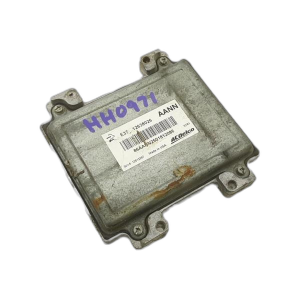
Used OEM Parts in Stock
New Aftermarket Parts Available


The information in this article is provided for general reference and educational purposes only. Vehicle specifications, procedures, and part compatibility can vary by production date, trim level, and region. Always consult your vehicle's factory service manual and verify part numbers before purchasing or performing repairs. Safety-critical components such as airbags, seat belts, and braking systems should be installed by a qualified professional.
- Chevrolet Impala:
- 🧭 Diagnostic Flowchart
- 🎬 Helpful Videos
- 🛍️ Shop This Part
- What's Unique About the 2006-2013 Chevrolet Impala
- Symptoms You May Notice
- Most Likely Causes
- Rare But Worth Checking
- Diagnosis Steps
- Parts You'll Likely Need
- Related Codes That Often Appear With This One
- Technical Service Bulletins (TSBs) & Recalls
- Platform-Specific Known Issues
- Mechanic-Grade Diagnostic Values
- Hidden / Shadow Codes Worth Checking
- Scan Tool Commands That Help
- Wiring & Ground Locations
- Documented NHTSA Reports
- Real Owner Repair Stories
- Model Year Variations Within This Range
- Other Known Issues on This Vehicle
- Used vs. New Parts: Buying Guide for This Vehicle
- Real Owner Stories
- 2008 Chevrolet Impala LT
- 2011 Chevrolet Impala
- 2006-2013 Chevrolet Impala
- Related OBD-II Codes
- Frequently Asked Questions
- 🎟️ Get 5% Off