

U0100 on 2020-2026 Ford Escape: Lost Communication With ECM/PCM Causes and Fixes
On a 2020-2026 Ford Escape, U0100 means the main engine computer (PCM) has lost communication. Before replacing parts, check your battery and all fuses. A known issue is a harmless U0100 code stored in the audio module (ACM) which should be ignored if there are no symptoms. Parasitic battery drain from the telematics module is another known issue that can cause low voltage and trigger this code.
- U0100 is a critical code that can cause a no-start or stalling condition; do not drive the vehicle.
- Always start diagnosis by testing the battery and checking all related fuses.
- On a 2020 Escape, if the U0100 code is only in the Audio Control Module (ACM) and there are no symptoms, it can be ignored per Ford TSB SSM 48916.
- Do not replace the PCM unless all wiring, power, and ground issues have been ruled out by a professional.
- The problem is a network failure; a professional diagnosis is highly recommended to avoid replacing incorrect parts.
What's Unique About the 2020-2026 Ford Escape
For the 2020 Ford Escape, there is a specific Technical Service Bulletin (SSM 48916) stating that a U0100 code may appear in the Audio Control Module (ACM) without any noticeable symptoms or warning lights. In this particular case, Ford advises that the code should be disregarded. This is a critical distinction, as chasing this 'ghost' code can lead to unnecessary diagnostics. Additionally, some owners of 2020+ Escapes and platform-mates have reported issues with parasitic battery drain caused by the Telematics Control Unit (TCU) or faulty ABS module programming, which can lower battery voltage and induce communication codes like U0100. A separate SSM (50804) addresses this battery drain issue.
Symptoms You May Notice
- Check Engine Light is on
- Vehicle will not start (no crank or cranks but won't fire)
- Engine stalls intermittently while driving
- Reduced engine power or 'limp mode'
- Erratic or rough idle
- Transmission shifting problems
- Multiple warning lights on the dashboard may appear simultaneously
- Flashing Check Engine light, indicating severe communication loss under load
- Inoperative instrument cluster
- Replacing the PCM first. The PCM is expensive and requires programming. It is more often the victim of a bad signal or poor power/ground than the cause of the failure.
- Ignoring a weak battery. Many technicians and DIYers jump to complex wiring diagnosis without first confirming the battery is providing a stable 12.6V+ and can hold a load.
- Chasing the U0100 code in the ACM. Per TSB SSM 48916, a U0100 code stored only in the Audio Control Module (ACM) with no other symptoms should be ignored.
Most Likely Causes
- Low or Faulty Battery 🔴 High Probability → Shop Vehicle Battery Modern vehicles like the 4th gen Escape are highly sensitive to voltage. A weak battery (below 12.4V) can cause unpredictable communication errors between modules before any other starting issues are noticed. Parasitic drains from the telematics module (TCU) or faulty ABS module software are known issues on this platform that can weaken the battery.
How to confirm: Test the battery voltage with a multimeter. A healthy, fully charged battery should read at least 12.6 volts with the engine off. Check the battery terminals for corrosion and ensure they are tight. Perform a load test to confirm battery health, as a battery can show good voltage but fail under load.
Typical fix: Recharge or replace the battery. Clean the battery terminals and cable ends. If a parasitic drain is suspected, perform a drain test or have a dealer investigate TSBs related to the telematics or ABS modules.
Est. part cost: $150-$300 - Blown Fuses 🟡 Medium Probability Multiple modules, including the PCM, have dedicated fuses in both the under-hood and passenger compartment fuse boxes. A blown fuse will cut power and prevent communication.
How to confirm: Visually inspect all fuses in the engine bay and interior fuse panels. On a 2020 Escape, the interior panel is on the passenger side. Pay special attention to fuses labeled for the PCM, ECM, BCM, or Gateway Module.
Typical fix: Replace the blown fuse with one of the same amperage. If the fuse blows again, a short circuit exists that requires further diagnosis.
Est. part cost: $1-$10 - Wiring Harness Damage or Corrosion 🟡 Medium Probability While no single common chafe point is widely documented for this generation yet, wiring issues are a frequent cause of communication faults. On other Ford models, a common trouble spot for CAN bus wiring is a large connector near the driver's side parking brake that can get kicked or corroded.
How to confirm: Perform a thorough visual inspection of the wiring harnesses connected to the PCM, BCM, and around the engine bay. Look for signs of chafing, rodent damage, melting near exhaust components, or corrosion on connector pins. Pay close attention to connectors in the driver and passenger footwells.
Typical fix: Repair the damaged section of the wiring harness. Clean or replace corroded connectors and apply dielectric grease to protect them.
Est. part cost: $10-$500 (depending on the extent of damage) - Poor Ground Connection 🟡 Medium Probability A faulty ground connection for the PCM or the main chassis can introduce electrical noise and disrupt network communication. These connections can loosen or corrode over time.
How to confirm: Locate the main engine-to-chassis and battery ground straps. The primary ground can be traced from the negative battery terminal to the chassis. Inspect them for corrosion, looseness, or breakage. Use a multimeter to check for voltage drops on the ground side; it should be less than 0.1 ohms.
Typical fix: Clean the ground connection points to bare metal and tighten securely. Replace corroded or broken ground straps.
Est. part cost: $20-$75
Rare But Worth Checking
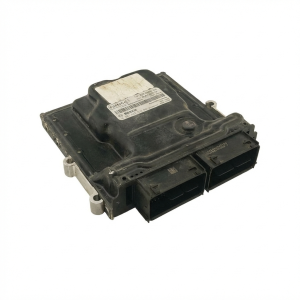
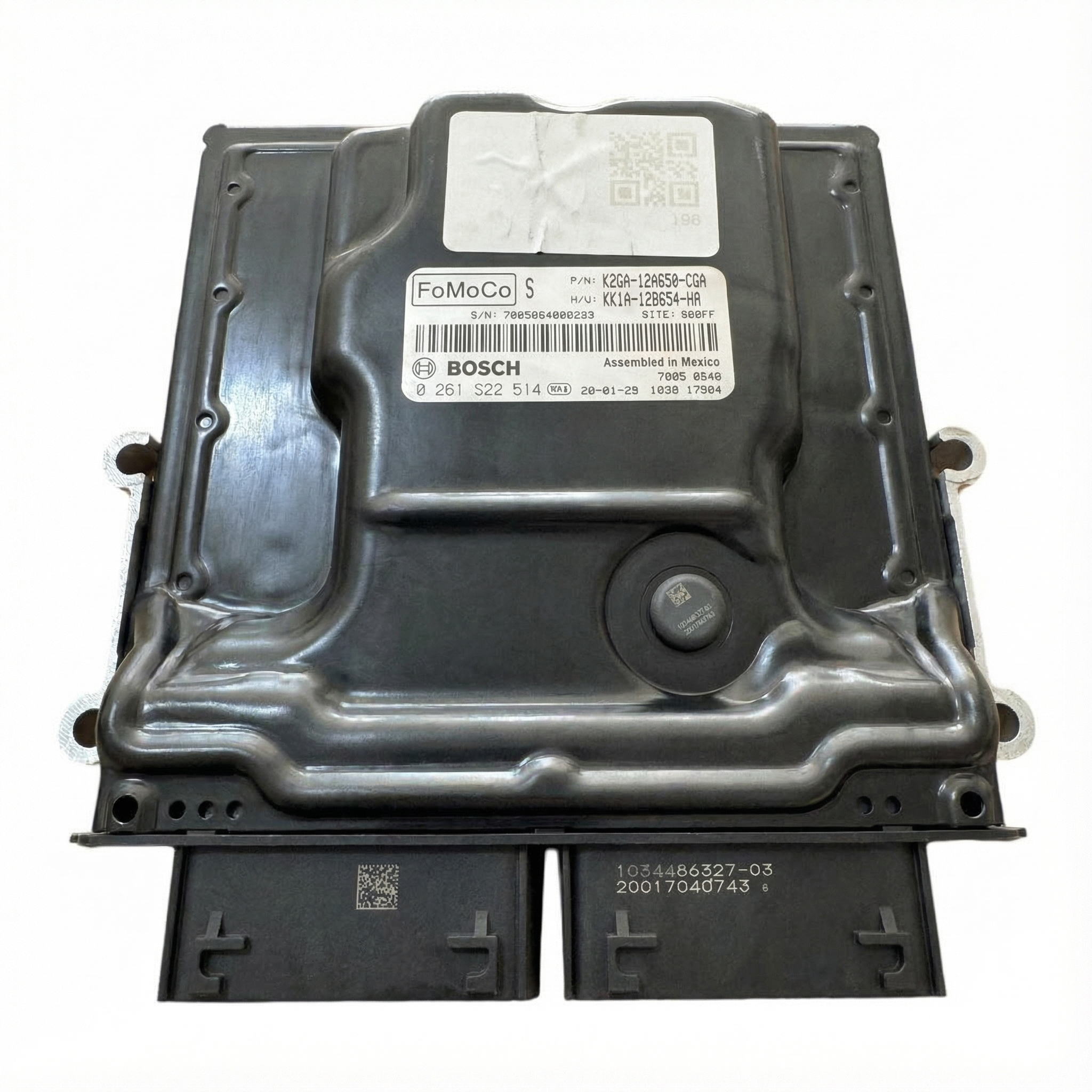
- Faulty Powertrain Control Module (PCM): → Shop Engine Control Module (ECM) The PCM is rarely the root cause. It should only be considered after all other possibilities (wiring, power, grounds, other modules) have been exhaustively ruled out. A replacement PCM will require VIN-specific programming by a dealer or specialist.
- Faulty Gateway Module or Other Control Module: A single faulty module (like the ABS or BCM) can sometimes disrupt the entire CAN bus network, causing a U0100 code to be set. A network test with a high-end scan tool is needed to identify which module is offline or 'shouting' on the network.
- PCM Software Glitch: A TSB for the 2020-2021 Explorer (20-2429) shows that a U0100 code can be caused by a software issue requiring a PCM reprogram. While not specific to the Escape, it highlights the possibility on modern Fords. Technicians often reflash the PCM as a diagnostic step if wiring and power supply are confirmed to be good.
Diagnosis Steps
- Check for TSBs: Specifically, be aware of SSM 48916, which states that a U0100 in the Audio Control Module (ACM) on 2020 models can be ignored if there are no other symptoms. Also check for TSBs related to parasitic battery drain (like SSM 50804, SSM 49574, and SSM 49990).
- Scan for All Codes: Use a high-quality OBD-II scanner to read codes from all modules, not just the engine. Note any other 'U' codes, as they can help pinpoint the network failure.
- Check Battery Health: Test the battery. Ensure it is fully charged (12.6V+) and the terminals are clean and tight. A weak battery is a very common cause. A load test is recommended.
- Inspect Fuses: Check all relevant fuses for the PCM, BCM, and other control modules in both the under-hood and passenger-side interior fuse boxes.
- Visual Inspection: Thoroughly inspect the main wiring harness to the PCM and around the engine bay. Look for any obvious signs of damage, melting, or corrosion. Check that all connectors are fully seated. Pay attention to the area near the driver's footwell.
- Check Grounds: Locate and inspect the main battery, engine, and chassis ground connections. Ensure they are clean, tight, and free of corrosion. A voltage drop test on the ground circuit should read less than 100-200mV.
- CAN Bus Test (Professional): If the basics check out, a technician will use a multimeter to check the resistance of the CAN bus at the OBD-II port (pins 6 and 14 for HS-CAN). It should be ~60 ohms with the battery disconnected. They will also check for proper voltage on the CAN High and Low lines (around 2.5V each, fluctuating during communication).
- Isolate Modules (Professional): Using a bidirectional scanner, a technician can attempt to communicate with each module individually to determine which one is offline and causing the network to fail.
- Test PCM Power/Ground (Professional): The final step before condemning the PCM is to verify it is receiving proper power and has a good ground directly at its connector pins using a wiring diagram.
Parts You'll Likely Need
- Automotive Battery — A weak or failing battery is a primary cause of communication faults on modern, voltage-sensitive vehicles. The 2020 models in particular are noted for having a small battery prone to issues.
- PCM Power or Ground Fuse — A blown fuse will cut power to the PCM, preventing it from communicating on the network.
- Wiring Harness Repair Supplies — Used to fix chafed, broken, or corroded wires that are interrupting the CAN bus signals.
- Telematics Control Unit (TCU) — A known source of parasitic battery drain on this platform, which can lead to low voltage and trigger U0100.
Related Codes That Often Appear With This One
- U0101 — Lost communication with the Transmission Control Module (TCM).
- U0121 — Lost communication with the Anti-Lock Brake System (ABS) Control Module.
- U0140 — Lost communication with the Body Control Module (BCM).
- U0155 — Lost communication with the Instrument Panel Cluster (IPC) Control Module.
Technical Service Bulletins (TSBs) & Recalls
- SSM 48916 - 2020 Escape/Corsair/Explorer/Aviator - DTC U0100 Stored In The ACM
Platform-Specific Known Issues
- SSM 48916: Some 2020 Escape vehicles may log a U0100 code in the Audio Control Module (ACM) only. If there are no symptoms, this code is considered a ghost code and should be ignored.
- SSM 50804: Addresses parasitic battery drain on many 2013-2023 Ford/Lincoln models caused by the telematics modem staying awake, often due to third-party apps polling the vehicle. This can lead to low voltage conditions that trigger communication codes.
Mechanic-Grade Diagnostic Values
- HS-CAN Bus Resistance — expected: ~60 Ω (Ohms) ± 5 Ω. Failure: A reading of ~120 Ω indicates an open circuit or a missing terminating resistor (e.g., PCM or IPC unplugged). A reading near 0 Ω indicates a short between the CAN High and CAN Low wires.
- CAN High Voltage (Key On, Engine Off) — expected: ~2.7 Volts (fluctuating). Failure: A line stuck near 0V or 5V, or a voltage that mirrors the CAN Low line, indicates a short or open circuit.
- CAN Low Voltage (Key On, Engine Off) — expected: ~2.3 Volts (fluctuating). Failure: A line stuck near 0V or 5V, or a voltage that mirrors the CAN High line, indicates a short or open circuit.
- PCM Ground Circuit Voltage Drop — expected: Less than 100-200 mV (0.1-0.2V). Failure: A higher voltage reading indicates excessive resistance in the ground circuit, which can cause module communication issues.
Hidden / Shadow Codes Worth Checking
- U0100:87: This specific Ford sub-code means 'Missing Message'. It indicates that a module expected a message from the PCM but did not receive it within the specified time. This is more specific than a general bus failure and points to a timeout condition. (see via Advanced scan tools like Ford IDS or FORScan can read these extended DTCs with failure type bytes (the ':87').)
Scan Tool Commands That Help
- Ford IDS (Integrated Diagnostic System): Network Test — This is a primary diagnostic step. The function 'pings' all modules on the network and reports which ones fail to respond. This quickly identifies offline modules, including the PCM, and is the starting point for network diagnosis.
- Ford IDS / FORScan: PCM/TCM/ABS/BCM Self-Test — After running a network test, you can run a self-test on individual modules that are still communicating. This can reveal codes stored within those modules that point to the root cause (e.g., a BCM reporting a fault that is disrupting the network).
- Ford IDS / FORScan: Module Reprogramming / PMI (Programmable Module Installation) — This is required when a module like the PCM, BCM, or TCU is replaced. The new module must be programmed with the vehicle's specific VIN and configuration data to function correctly.
Wiring & Ground Locations
- C175B — The main and largest electrical connector on the Powertrain Control Module (PCM).. This connector is the primary interface for the PCM. The HS-CAN bus wires (CAN_H and CAN_L) pass through this connector. Checking for power, ground, and network signals at these specific pins is a critical diagnostic step.
- G104 / G105 — Located at the left front corner of the engine compartment, near the Battery Junction Box (BJB).. These are major chassis and engine ground points. While diagrams are for older models, their location near the BJB is typical. A corroded or loose connection here can disrupt power to the PCM and other modules, causing communication loss.
- G108 — Typically located on the front of the engine block.. This is a primary engine ground. Poor connection here can cause electrical noise and voltage stability issues for the PCM and its sensors, leading to network faults.
- OBD-II Port Pins 6 & 14 — The Data Link Connector (DLC) under the driver's side dashboard.. Pin 6 is CAN High and Pin 14 is CAN Low. These are the primary access points for testing the entire HS-CAN network's resistance and voltage without having to access individual modules.
Real Owner Repair Stories
- Reddit user on r/fordescape (2020 Ford Escape Hybrid) — Intermittent no-start, battery completely dead overnight.
❌ Tried (didn't work) Replacing the 12V battery (problem returned after a few months)., Disconnecting from FordPass app.
✅ What actually fixed it A Ford dealer diagnosed a parasitic battery drain caused by a faulty Telematics Control Unit (TCU). Replacing the TCU resolved the battery drain and the associated no-start condition. - Reddit user on r/fordescape (2020 Escape Titanium Hybrid) — Battery dying completely, requiring replacement. Problem reoccurred.
❌ Tried (didn't work) Replacing the 12V battery., Disconnecting from FordPass app., Keeping key fob far from the vehicle.
✅ What actually fixed it The suggested fix, based on Ford TSBs, was to have the dealer reprogram the ABS module and PCM. Faulty ABS programming was identified as a cause for keeping the communication network active when the car is off, leading to a parasitic drain. The specific TSBs mentioned are SSM 49574 and SSM 49990.
OEM Part Supersession History
LX6A-12A650-YA→Unknown, but part numbers are frequently superseded.— Part revisions often address hardware or software flaws from the original design.
Heads up: When replacing a PCM, it is critical to order by the hardware type code printed on the original module's label (e.g., a code like '9L8A-12B684-BC'), not just the main service number. Different hardware types may exist for the same model year and are not interchangeable.
Model Year Variations Within This Range
- 2020: Early 2020 models are specifically mentioned in TSBs for issues like the ghost U0100 in the ACM (SSM 48916) and parasitic drains from ABS module software (SSM 49574, SSM 49990). They are also noted to have a smaller 12V battery that was up-sized in later models, making them more susceptible to low voltage issues.
Diagnostic Flowchart
Real Owner Stories
Aggregated from forums and TSBs cited above. Mileages and costs reflect what owners reported in those sources.
Ford Escape PHEV
Symptoms: Received an 'Electrical System Drain' message and experienced a dead battery.
What fixed it: Diagnosed as a communication failure in the telemetry module that continually tried to connect; addressing the telemetry module drain resolved the electrical issues.
Source hint: Reddit r/FordEscapePHEV thread titled 'Electrical System Drain'
Ford (Model Unspecified)
Symptoms: Vehicle presented with U0100 and U0121 communication codes.
What fixed it: A PCM reflash resolved the communication faults, proving it was a software glitch rather than a wiring issue.
Source hint: Reddit r/Justrolledintotheshop thread titled 'U0100 and U0121 fixed after PCM reflash'
2020 Ford Escape
Symptoms: DTC U0100 stored in the Audio Control Module (ACM) with no other drivability symptoms.
What fixed it: No repair necessary; Ford advises ignoring this specific code if no other symptoms are present.
Source hint: SSM 48916 - 2020 Escape/Corsair/Explorer/Aviator - DTC U0100 Stored In The ACM
Related OBD-II Codes
Frequently Asked Questions
I have a 2020 Ford Escape with a U0100 code but no drivability symptoms. What should I do?
Can a weak battery cause a U0100 code on my 4th generation Escape?
Why does my Escape PHEV keep getting a U0100 code and a dead battery?
Are there any specific TSBs for parasitic battery drain on the 2020-2026 Escape?
I swapped a digital instrument cluster into my vehicle and now have a U0100 code. Is this normal?
Where should I check for wiring issues causing a U0100 on my Escape?
Helpful Videos

We Have This Part in Stock

The information in this article is provided for general reference and educational purposes only. Vehicle specifications, procedures, and part compatibility can vary by production date, trim level, and region. Always consult your vehicle's factory service manual and verify part numbers before purchasing or performing repairs. Safety-critical components such as airbags, seat belts, and braking systems should be installed by a qualified professional.
- Ford Escape:
- 🧭 Diagnostic Flowchart
- 🎬 Helpful Videos
- 🛍️ Shop This Part
- What's Unique About the 2020-2026 Ford Escape
- Symptoms You May Notice
- Most Likely Causes
- Rare But Worth Checking
- Diagnosis Steps
- Parts You'll Likely Need
- Related Codes That Often Appear With This One
- Technical Service Bulletins (TSBs) & Recalls
- Platform-Specific Known Issues
- Mechanic-Grade Diagnostic Values
- Hidden / Shadow Codes Worth Checking
- Scan Tool Commands That Help
- Wiring & Ground Locations
- Real Owner Repair Stories
- OEM Part Supersession History
- Model Year Variations Within This Range
- Real Owner Stories
- Ford Escape PHEV
- Ford (Model Unspecified)
- 2020 Ford Escape
- Related OBD-II Codes
- Frequently Asked Questions
- 🎟️ Get 5% Off