

U0100 on 2013-2020 Ford Fusion: Lost Communication with PCM Causes and Fixes
The U0100 code on a 2013-2020 Ford Fusion means the Powertrain Control Module (PCM) has lost communication with other modules. The most common causes are a weak battery, corroded ground wires, or damaged wiring. Before replacing expensive parts, always test the battery and clean major ground connections, as modern Ford electronics are highly sensitive to voltage drops.
- U0100 is a critical code indicating a communication breakdown with the main engine computer; do not drive the vehicle.
- Always start diagnosis with the simplest and most common causes: test the battery and inspect all major ground connections before suspecting expensive parts.
- A visual inspection of the wiring harness for damage, especially around the PCM and TCM, can often reveal the problem.
- This code almost always requires professional diagnosis due to the need for specialized tools to analyze the vehicle's communication network.
- Do not automatically replace the PCM; it is more often a victim of the problem (bad power, ground, or wiring) than the cause.
What's Unique About the 2013-2020 Ford Fusion
The 2013-2020 Ford Fusion, like many modern Fords, has a complex network of modules that are highly sensitive to voltage irregularities. A weak or failing battery is a very common trigger for communication codes like U0100 and should always be the first suspect. While module failures can occur, owners and technicians often find that the root cause is a more basic electrical issue, such as a poor ground connection or a damaged wire, rather than a faulty PCM itself. Specific wiring harness chafe points and ground locations are known weak spots on this platform.
Symptoms You May Notice
- Engine will not crank or start
- Engine stalls while driving
- Check Engine Light is on (may be intermittent or not on at all due to communication failure)
- Transmission warning light is on
- Transmission gets stuck in one gear or shifts erratically ('limp mode')
- Loss of power steering assist
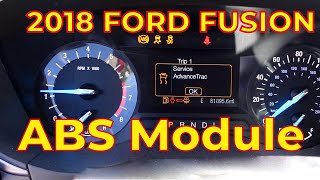
- Multiple warning lights on the dashboard may illuminate simultaneously (e.g., ABS, Airbag, Service AdvanceTrac)
- Odometer displays dashes instead of mileage
- Drastic drop in fuel economy
- Replacing the PCM when the actual fault was a bad battery or a corroded ground wire.
- Replacing the battery without testing the alternator, leading to the new battery failing and the code returning.
- Replacing a module (like ABS or TCM) when the fault is in the shared wiring harness.
Most Likely Causes
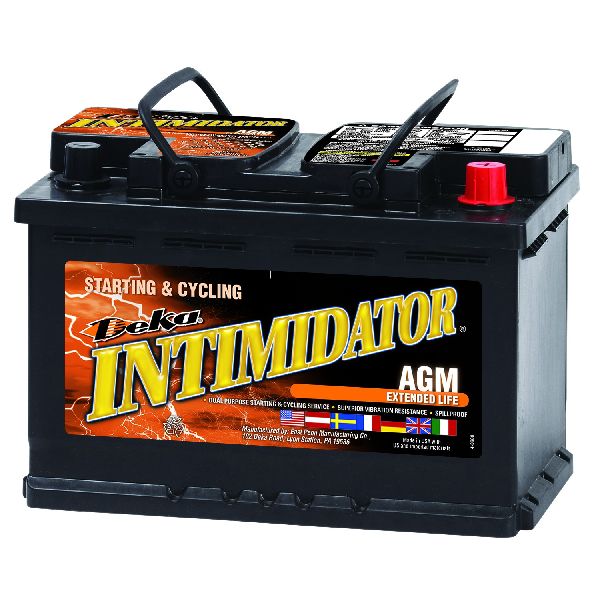
- Weak or Failing Battery 🔴 High Probability → Shop Vehicle Battery Modern vehicle electronics are highly sensitive to low voltage, which can disrupt module communication before the car even fails to crank. This is the most common and easiest-to-fix cause.
How to confirm: Test the battery voltage with a multimeter. A healthy, fully charged battery should read at least 12.6 volts with the engine off. Have the battery load-tested at an auto parts store, as a battery can show good voltage but fail under load.
Typical fix: Recharge or replace the battery. Ensure terminals are clean and tight.
Est. part cost: $150-$300 - Corroded or Loose Ground Wires 🟡 Medium Probability Poor ground connections create electrical resistance, which can interfere with the sensitive digital signals on the CAN bus network. Key ground points in the engine bay are known to cause issues on Ford platforms.
How to confirm: Visually inspect all major chassis and engine ground straps for corrosion or looseness. A common area to check is the main ground connection near the battery and on the firewall. Use a multimeter to check for voltage drop between the battery negative post and the chassis/engine block; it should be less than 0.2 volts.
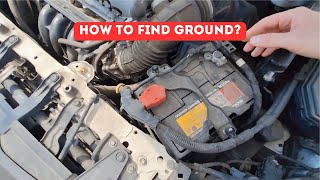
Typical fix: Remove the ground connection, clean all contact surfaces to bare metal 🎬 See how to locate and clean your car's ground cables., and re-secure it tightly. Apply a dielectric grease to prevent future corrosion.
Est. part cost: $1-$10 - Damaged CAN Bus Wiring 🟡 Medium Probability Wiring harnesses can be damaged by vibrations, chafing against other components, or rodent activity, causing a short or open circuit in the network. A known chafe point on some Fords is the harness in the driver's side wheel well or near the parking brake pedal.
How to confirm: Visually inspect the wiring harnesses leading to the PCM, TCM, and ABS modules for any signs of damage, fraying, or melting. A professional would use a multimeter to check for 60 ohms of resistance across the CAN High and CAN Low pins at the OBD-II port (with the battery disconnected).
Typical fix: Repair the damaged section of the wire. This may involve soldering, using butt connectors, and heat shrink tubing.
Est. part cost: $10-$50 - Faulty Transmission Control Module (TCM) ⚪ Low Probability → Shop Transmission Assembly Some Ford models have known issues with their TCMs. A failing TCM can broadcast corrupt data or short out the entire CAN bus network, causing other modules to lose communication with the PCM. This is more common on models with the DPS6 transmission, which is not the primary automatic (6F35) in the Fusion, but TCM failure is still a possibility.
How to confirm: This is difficult without an advanced scan tool. A professional would attempt to communicate with each module individually. If all modules except the TCM respond, or if communication is restored when the TCM is disconnected, the TCM is the likely culprit.
Typical fix: Replace the Transmission Control Module. This often requires programming to the specific vehicle.
Est. part cost: $400-$900
Rare But Worth Checking
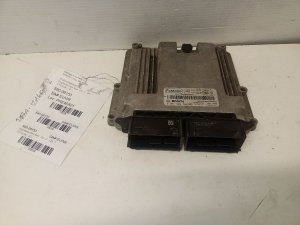
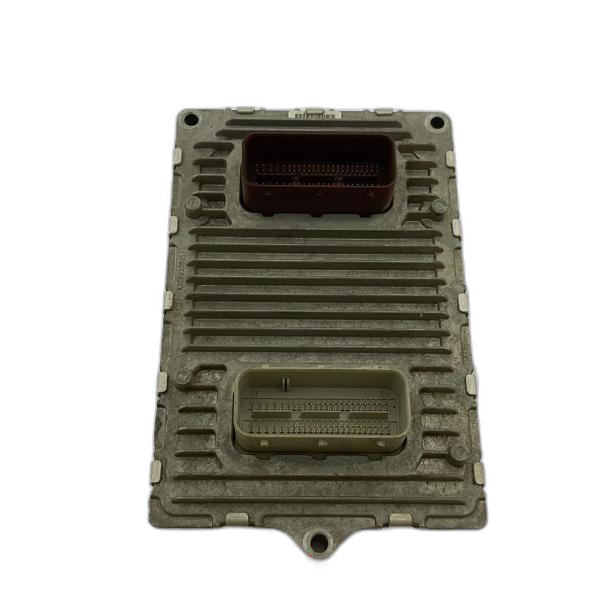
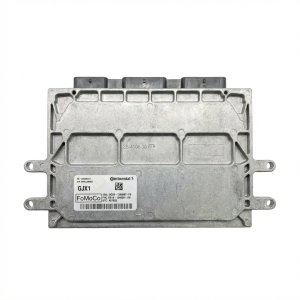
- Faulty Powertrain Control Module (PCM): → Shop Engine Control Module (ECM) While this is the module named in the code, the PCM itself is one of the least likely components to fail. All other possibilities, especially power, ground, and wiring issues, should be exhausted before condemning the PCM.
- Blown Fuse: A blown fuse for the PCM, TCM, or another critical module can cause a loss of communication. Check the fuse boxes in the engine bay (Battery Junction Box) and inside the cabin (Body Control Module).
- Aftermarket Device Interference: Poorly installed remote starters, alarms, or OBD-II plug-in devices (like insurance trackers) can interfere with the CAN bus and cause communication codes.
Technical Service Bulletins (TSBs) & Recalls
Manufacturer records for other Ford models highlight how U0100 often interacts with other systems. For instance, Bulletin #SSM 54333 notes that vehicles may exhibit a no crank/no start condition with multiple warning indicators and DTC U0100 stored in the ABS, ACM, and power steering control modules. Similarly, Bulletin #SSM 54574 describes a "Service Immediately" message on the instrument panel with U0100 stored in the ABS module, requiring specific technical instructions to correct.
Diagnosis Steps
- Check Battery Health: Ensure the battery has a full charge (12.6V+) and clean, tight terminals. Have it load tested. A weak battery is a primary cause of communication codes.
- Scan for All Codes: Use a quality OBD-II scanner that can read codes from all vehicle modules (PCM, TCM, ABS, BCM, etc.), not just the generic engine codes. Note all 'U' codes present.
- Inspect Fuses: Check all fuses related to the PCM, TCM, and Body Control Module (BCM) in both the engine bay and passenger compartment fuse panels.
- Inspect Ground Connections: Visually inspect and verify the integrity of the main battery ground, engine block grounds, and chassis grounds (especially near the battery and on the firewall). Clean any corrosion found.
- Inspect Wiring Harness: Carefully inspect the wiring harnesses connected to the PCM and TCM for any visible signs of damage, chafing, or corrosion in the connectors. Pay close attention to harnesses in the driver's side wheel well and near the parking brake pedal.
- Check CAN Bus Resistance: (Advanced) With the battery disconnected, measure the resistance between Pin 6 🎬 Watch: Advanced CAN bus diagnosis for multiple module communication issues. (CAN-H) and Pin 14 (CAN-L) on the OBD-II port. A healthy network should read approximately 60 ohms. Readings of 120 ohms suggest a break in the circuit or a missing termination resistor, while 0 ohms indicates a short between the two lines.
- Isolate Modules: (Professional) If the network resistance is incorrect or the issue persists, a technician will disconnect modules one by one from the CAN bus to see which one restores communication to the network. The last module disconnected is likely the faulty one.
Parts You'll Likely Need
- Battery — A weak or failing battery is the most common cause of network communication faults on modern vehicles.
Trusted brands: Motorcraft, Interstate, DieHard
OEM price range: $180-$250
Aftermarket price range: $150-$220 - Powertrain Control Module (PCM) — In rare cases, the PCM itself can fail internally, causing a total loss of communication. This is a last resort after all other causes are ruled out.
Trusted brands: Motorcraft
OEM price range: $700-$1200
Aftermarket price range: $400-$800 - Transmission Control Module (TCM) — A faulty TCM can bring down the entire communication network. This is a known issue on some Ford platforms.
Related Codes That Often Appear With This One
- U0101 — This code means 'Lost Communication with TCM'. If the TCM is the source of the network failure or the entire network is down, you will often see both U0100 and U0101 together.
- U0121 — This code means 'Lost Communication with ABS Control Module'. It can appear alongside U0100 if the network bus is down, preventing multiple modules from communicating.
- U0073 — This code means 'Control Module Communication Bus “A” Off'. This indicates a general CAN bus failure, which is the underlying cause of the U0100 code. Seeing this code points more strongly to a wiring or network-wide problem rather than a single module failure.
Mechanic-Grade Diagnostic Values
- HS-CAN Bus Resistance — expected: 54-66 Ohms (ideally 60 Ohms). Failure: A reading of ~120 Ohms indicates an open circuit or one of the two terminating resistors is offline. A reading near 0 Ohms indicates a short between the CAN High and CAN Low wires.
- HS-CAN Bus Voltage (Key On, Engine Off) — expected: CAN High (Pin 6) should be ~2.7V. CAN Low (Pin 14) should be ~2.3V. Both voltages are relative to chassis ground.. Failure: A line stuck near 0V or 5V, or no differential voltage between the two lines, indicates a fault.
- Ground Point Voltage Drop — expected: < 0.2 Volts (200 mV). Failure: A reading higher than 200mV indicates excessive resistance in the ground circuit, which can disrupt module communication.
Scan Tool Commands That Help
- Ford IDS (or equivalent high-level scanner): Network Test / Self Test — This is the first step with a professional scan tool. It polls all modules on the network and provides a list of which modules are communicating and which are not, helping to quickly identify the scope of the failure.
- Ford IDS (or equivalent high-level scanner): Programmable Module Installation (PMI) — This function is required when replacing a major control module like the PCM, BCM, or TCM. It reads the configuration data (As-Built Data) from the old module and writes it to the new one, ensuring all vehicle-specific settings are correct. If the old module is dead, the data must be retrieved from Ford's servers.
- Ford IDS (or equivalent high-level scanner): Module Reprogramming (Re-flash) — Used if a Technical Service Bulletin (TSB) indicates that a known software bug is causing the communication issue. This updates the module's internal software without replacing the hardware.
Wiring & Ground Locations
- G108 — Left rear of the engine compartment, on the cowl.. This ground point serves the Gateway Module (which directs CAN bus traffic) and the Data Link Connector (DLC), making it a critical point of failure for network communication.
- G103 — Right rear of the engine compartment.. Provides a ground path for the Powertrain Control Module (PCM). A poor connection here can directly cause the PCM to go offline.
- G101 / G102 — Left front of the engine compartment.. These ground points are also associated with the PCM and other critical engine components.
- C175B — The main, large electrical connector on the Powertrain Control Module (PCM).. This is the primary data and power interface for the PCM. Pins 49 and 50 are critical ground connections, while other pins carry power and CAN signals. Corrosion or backed-out pins in this connector are a common cause of failure.
- Body Control Module (BCM) — Located behind the glove compartment area.. The BCM is a central module in the network. It has multiple fuses in both the under-hood and hidden fuse panels that, if blown, can cause network-wide communication issues.
Real Owner Repair Stories
- fordfusionforum.com user (2014 Ford Fusion SE 1.5T) — Car would not start, multiple warning lights on the dash, odometer showed dashes, 'No Key Detected' message.
❌ Tried (didn't work) Replacing the battery, Checking all fuses, Checking main ground straps
✅ What actually fixed it The ABS module had failed and was shorting out the entire CAN bus network. Disconnecting the main electrical connector to the ABS module allowed the car to start and run, although with ABS/Traction Control warnings. Replacing the ABS module and having it programmed resolved all issues.
Documented NHTSA Reports
- An owner reported in NHTSA ODI #11669147 that their vehicle experienced power loss, mechanical noise, and diagnostic codes including P0014, P0303, and U0100.
- According to NHTSA ODI #11704877, an owner experienced steering issues while turning and parking; when the ignition was on with the engine off, multiple communication fault codes appeared, including U0100, U0131, U0140, and U0151.
- NHTSA ODI #11644872 describes an illuminated malfunction indicator lamp with DTCs U0100, U0401, P166B, P1753, P0929, and P0919, referencing manufacturer bulletin SSM 49157.
OEM Part Supersession History
ES7Z-12A650-JD, ES7Z-12A650-JE→ES7Z-12A650-JF— Internal revisions and software updates by the manufacturer.
Heads up: These parts are specific to engine and emissions packages. Using a PCM from a different engine will result in a no-start or severe running issues. Programming via PMI is always required.
Model Year Variations Within This Range
- 2017-2020 (Facelift): The 2017 facelift introduced SYNC 3 and updated module hardware and software. While the fundamental causes of U0100 remain the same (power, ground, wiring), the specific part numbers for modules like the PCM, TCM, and BCM may differ from the 2013-2016 models. When replacing modules, it is critical to use a part number specific to the post-facelift years.
Diagnostic Flowchart
Other Known Issues on This Vehicle
Issues unrelated to this code that are worth knowing about as an owner of this generation:
- 1.5L EcoBoost Coolant Intrusion 🔴 High — Common on 2014-2019 models with the 1.5L engine. Can occur at various mileages. (Ref: TSB 19-2139, TSB 22-2134)
- Shifter Cable Bushing Failure 🔴 High — Widespread on 2013-2016 models, leading to vehicle rollaway risk. (Ref: Recall 18S20, 22S43)
- Steering Gear Motor Bolt Corrosion 🔴 High — Affects 2013-2016 models primarily in salt-belt regions, causing loss of power steering. (Ref: Recall 19S26)
- Swollen Lug Nuts 🟡 Low — Very common across many Ford models of this era. The two-piece design swells, making wheel removal difficult.
- EVAP Purge Valve Failure 🟠 Medium — Common failure, especially on EcoBoost models. Leads to rough idle and difficulty starting after refueling.
Used vs. New Parts: Buying Guide for This Vehicle
When a used part is the smart pick: A used part can be a cost-effective choice for modules like the ABS module or even the BCM, provided the part number is an exact match. For major components like the PCM or TCM, a used part is only viable if you have access to a Ford IDS scan tool and the expertise to perform a Programmable Module Installation (PMI) to load your vehicle's specific 'As-Built' data.
Donor-vehicle mileage cap: roughly under 100000 miles for the part to have meaningful remaining life.
What to inspect on the donor part:
- Verify the part number on the used module EXACTLY matches the original. Suffix letters matter.
- Inspect the connector pins for any corrosion, discoloration, or damage.
- If possible, get the VIN of the donor car to check for any history of electrical issues or floods.
- Buy from a reputable salvage yard that offers a short warranty or return period in case the module is dead on arrival.
OEM-only on this vehicle (don't cheap out):
- Powertrain Control Module (PCM)
- Transmission Control Module (TCM)
Aftermarket brands forum-validated for this vehicle:
- Cardone (Remanufactured PCMs/ECMs)
- Flagship One (Remanufactured and programmed PCMs)
Brands owners have reported issues with on this vehicle:
- Unbranded, 'plug-and-play' modules sold on auction sites without a requirement to provide your VIN for programming should be avoided. They are unlikely to work correctly.
Real Owner Stories
Aggregated from forums and TSBs cited above. Mileages and costs reflect what owners reported in those sources.
2015 Ford Fusion
Symptoms: Steering lock-up and multiple warning lights appearing on the dashboard.
What fixed it: The issue was attributed to the failure described in recall 19S26 regarding corroded steering gear motor bolts.
Source hint: Reddit - r/FordFusion
2013-2020 Ford Fusion
Symptoms: Multiple warning lights such as Service Advancetrac and Hill Start Assist unavailable, accompanied by a no-start condition.
What fixed it: The issue is often resolved by replacing a weak battery or repairing a wiring issue.
Source hint: 2GFusions.net
Related OBD-II Codes
Frequently Asked Questions
Can a steering issue on my 2015 Ford Fusion cause the U0100 communication code and multiple warning lights?
My 2013 Fusion won't start and the odometer shows dashes. Is my PCM dead?
Is there a specific wiring area I should check for damage on my Fusion?
Could a transmission problem be causing my U0100 code?
What is the most common cause for 'Service AdvanceTrac' and U0100 on the 2GFusions forum?
Helpful Videos
Used OEM Parts in Stock
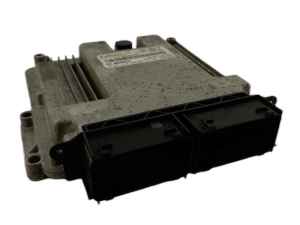
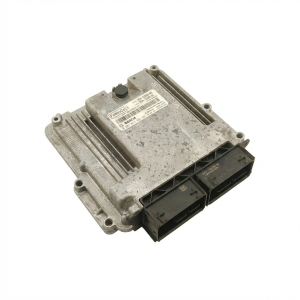
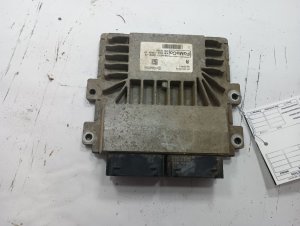
New Aftermarket Parts Available



The information in this article is provided for general reference and educational purposes only. Vehicle specifications, procedures, and part compatibility can vary by production date, trim level, and region. Always consult your vehicle's factory service manual and verify part numbers before purchasing or performing repairs. Safety-critical components such as airbags, seat belts, and braking systems should be installed by a qualified professional.
- Ford Fusion:
- 🧭 Diagnostic Flowchart
- 🎬 Helpful Videos
- 🛍️ Shop This Part
- What's Unique About the 2013-2020 Ford Fusion
- Symptoms You May Notice
- Most Likely Causes
- Rare But Worth Checking
- Technical Service Bulletins (TSBs) & Recalls
- Diagnosis Steps
- Parts You'll Likely Need
- Related Codes That Often Appear With This One
- Mechanic-Grade Diagnostic Values
- Scan Tool Commands That Help
- Wiring & Ground Locations
- Real Owner Repair Stories
- Documented NHTSA Reports
- OEM Part Supersession History
- Model Year Variations Within This Range
- Other Known Issues on This Vehicle
- Used vs. New Parts: Buying Guide for This Vehicle
- Real Owner Stories
- 2015 Ford Fusion
- 2013-2020 Ford Fusion
- Related OBD-II Codes
- Frequently Asked Questions
- 🎟️ Get 5% Off