

U0100 on 2010-2015 Hyundai Tucson: Lost Communication With ECM Causes and Fixes
This code means the Engine Control Module (ECM) has stopped communicating. The most common causes are a weak battery, poor ground connections, or damaged wiring. A faulty ECM is also possible but less frequent. Start by testing the battery (should be 12.6V) and checking all engine bay grounds before suspecting expensive components.
- U0100 is a serious code indicating a communication failure with the main engine computer; do not drive the vehicle.
- Always start diagnosis with the simplest and most common causes: the battery and ground connections. Verify battery voltage is at least 12.6V at rest and stays above 10V during cranking.
- A faulty ECM is a possible but expensive and less common cause. It should only be replaced after all wiring, power, and ground circuits have been proven to be good.
- Other modules on the CAN network, or even aftermarket accessories, can disrupt communication and trigger this code.
What's Unique About the 2010-2015 Hyundai Tucson
On the 2010-2015 Tucson (also known as the ix35), this code can specifically be triggered by the 4-Wheel Drive (4WD) control module if it fails to receive expected signals, such as the accelerator pedal position (APS), from the main engine computer (ECM). This highlights the interconnected nature of the Tucson's control systems, where a communication breakdown can affect powertrain and drivetrain components simultaneously.
Symptoms You May Notice
- Check Engine Light is on (can be solid or flashing)
- Engine will not start or is hard to start
- Engine stalls intermittently or while driving
- Transmission may not shift correctly or may be stuck in 'limp mode'
- Other warning lights (ABS, Traction Control, 4WD) may illuminate simultaneously
- Loss of throttle response
- Instrument cluster gauges may not work or drop to zero
- Reduced fuel economy
- Replacing the ECM without first thoroughly checking battery voltage (static and during crank), all main ground connections, and all related wiring. A simple electrical issue is far more common than a failed computer.
Most Likely Causes
- Weak or Faulty Battery / Poor Ground Connections 🔴 High Probability → Shop Vehicle Battery Modern vehicles are highly sensitive to voltage. Low battery voltage is a very common cause of communication faults. Ground straps from the engine/transmission to the chassis can also corrode, creating a poor ground path that disrupts module communication.
How to confirm: Test the battery voltage with a multimeter; it should be at least 12.6V with the engine off and should not drop below 10V while cranking. Inspect battery terminals for corrosion. Locate and inspect the main engine-to-chassis and transmission-to-chassis ground straps for tightness and corrosion.
Typical fix: Recharge or replace the battery. Clean or replace corroded battery terminals. Remove, clean, and securely re-fasten ground straps.
Est. part cost: $10-$300 - Damaged Wiring or Connectors for the ECM/CAN Bus 🟡 Medium Probability Vibrations, moisture, or previous repairs can lead to chafed wires or corroded pins. Specific real-world examples include rodent damage to harnesses, water intrusion into connectors from rain or high-pressure car washes, and chafing on engine brackets.
How to confirm: Visually inspect the wiring harness going to the Engine Control Module for any signs of damage, chafing, or corrosion. Unplug the ECM connectors (with the battery disconnected) and check for bent, loose, or corroded pins. Pay close attention to areas where the harness may rub against other components.
Typical fix: Repair the damaged section of the wiring harness. Clean corroded pins with electrical contact cleaner or replace the affected connector.
Est. part cost: $20-$200 - Faulty Engine Control Module (ECM) ⚪ Low Probability → Shop Engine Control Module (ECM) Internal failure of the ECM due to electrical surges, water damage, or component age can cause it to stop communicating. This is less common than wiring or power supply issues.
How to confirm: This is typically diagnosed by exclusion. If all power, ground, and CAN bus wiring to the ECM test good, the module itself is the likely culprit. An advanced scan tool may show the ECM as 'offline' and be unable to communicate with it.
Typical fix: Replace the ECM. The new module must be programmed to the vehicle's VIN and immobilizer system by a dealer or a qualified shop with the correct tools.
Est. part cost: $600-$1200
Rare But Worth Checking
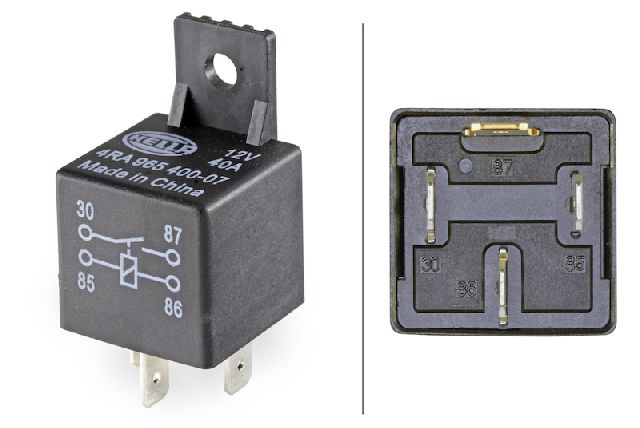
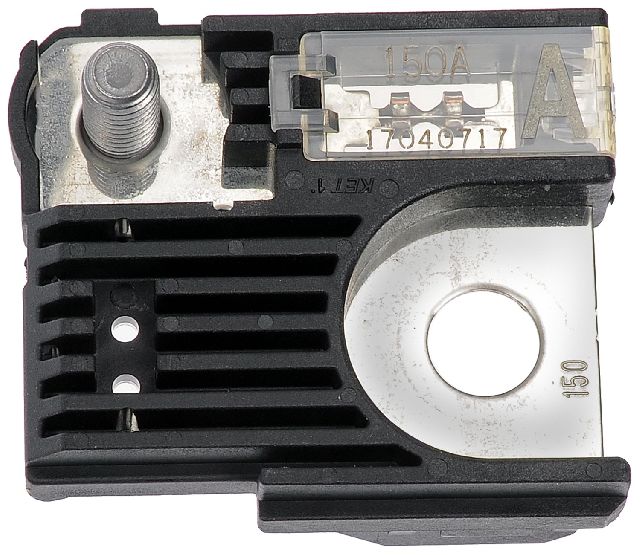
- Blown Fuse: A blown fuse that supplies power to the ECM will prevent it from turning on and communicating. Always check the fuses labeled 'ECM', 'ECU', or 'Engine' in the fuse boxes.
- Faulty Module on the CAN Network: A different module on the network (e.g., ABS module, instrument cluster, Occupant Restraint Controller) can short out internally and disrupt all CAN bus communication, causing a U0100 code even if the ECM is good. This can be diagnosed by systematically unplugging other modules to see if communication with the ECM is restored.
- Faulty Aftermarket Accessory: Improperly installed aftermarket stereos, remote starters, or even plug-in OBD-II devices can interfere with the CAN bus network and cause communication errors.
Diagnosis Steps
- Check Battery Health: Start with the simplest cause. Test the battery voltage; it should read ~12.6V with the engine off. Then, test it while cranking the engine; it should not drop below 10.0V. Ensure terminals are clean and tight.
- Inspect Fuses: Check all fuses related to the ECM, PCM, and engine controls in both the engine bay and interior fuse panels.
- Visual Inspection & Ground Check: Thoroughly inspect the ECM wiring harness for visible damage. Critically, locate the main engine-to-chassis and transmission-to-chassis ground straps. Unbolt them, clean the contact surfaces to bare metal, and re-tighten securely.
- Scan for Codes: Use an advanced scan tool to see which other modules are reporting a loss of communication. If many modules are offline, it points to a network-wide issue rather than just a faulty ECM.
- Check for Power and Ground at the ECM: Using a vehicle-specific wiring diagram and a multimeter, confirm that the ECM is receiving proper battery voltage and has a solid ground connection at its connector pins (resistance to ground should be < 0.1 ohms).
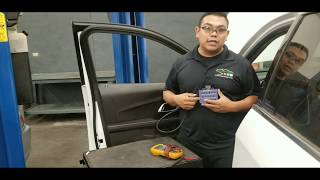
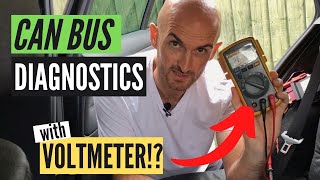
- Test the CAN Bus: With the battery disconnected, measure the resistance between the CAN High (Pin 6) and CAN Low (Pin 14) pins at the OBD-II port. A healthy network should read approximately 60 ohms. Readings of 120 ohms suggest a missing terminating resistor 🎬 Watch: How to test a CAN bus network with a meter or an open circuit, while 0 ohms indicates a short between the two lines.
- (Advanced) Scope the CAN Signal: Using an oscilloscope, check the CAN lines at the OBD-II port with the ignition on. Both lines should idle around 2.5V. During communication, CAN High should swing up to ~3.5V and CAN Low should swing down to ~1.5V in a clean, mirrored pattern. A flat line or noisy signal points to a network problem.
- Isolate Modules: If a network fault is suspected, begin unplugging other modules on the CAN bus (like the ABS module or instrument cluster) one by one to see if the 60-ohm resistance returns or the signal on the scope cleans up. This can isolate a faulty module that is bringing down the network.
- Condemn the ECM: If all wiring, power, grounds, and the CAN network itself test good, the ECM is the most likely point of failure.
Parts You'll Likely Need
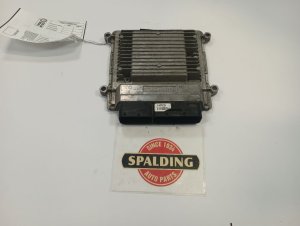
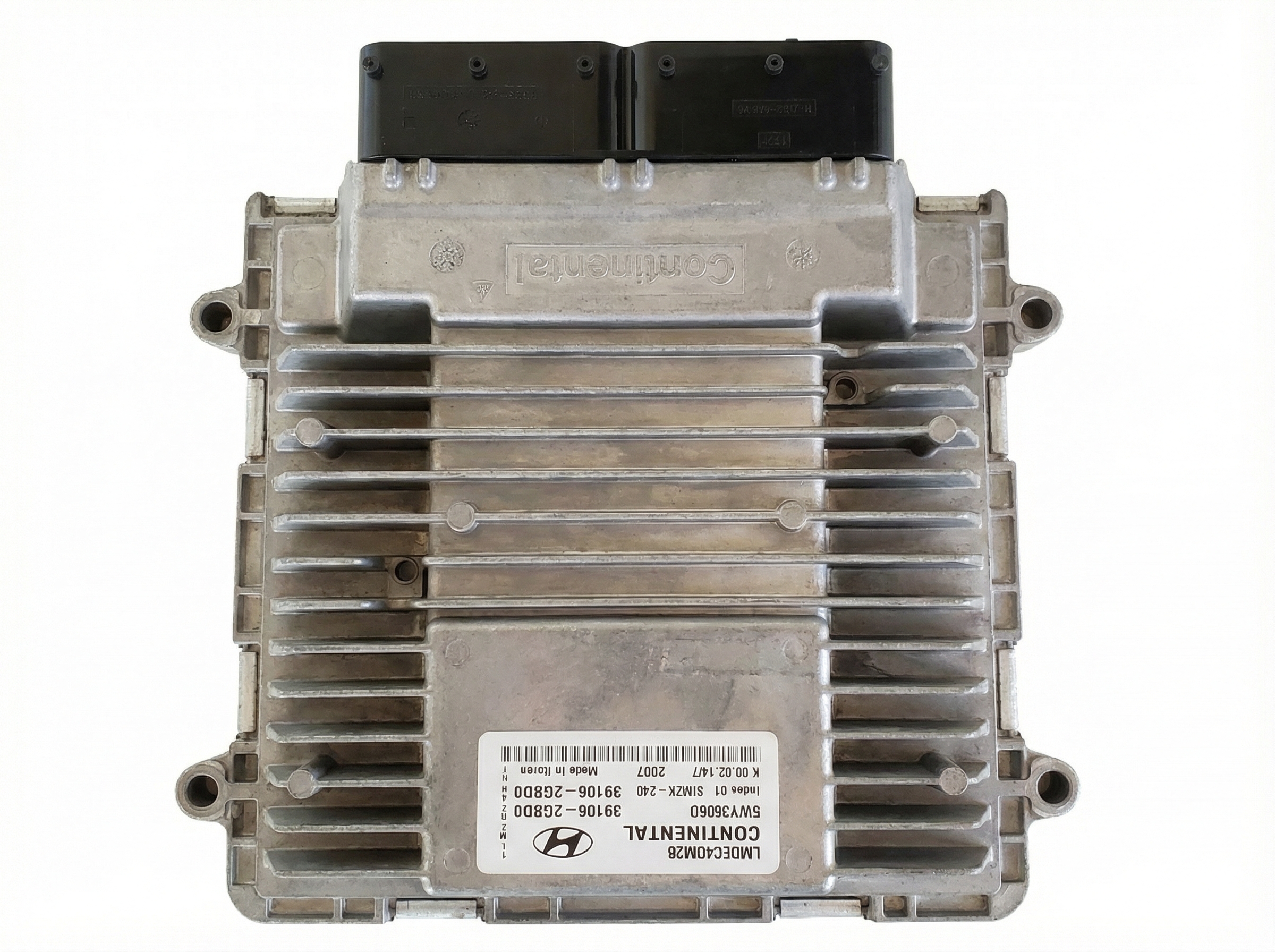
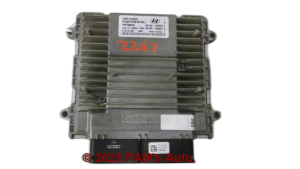
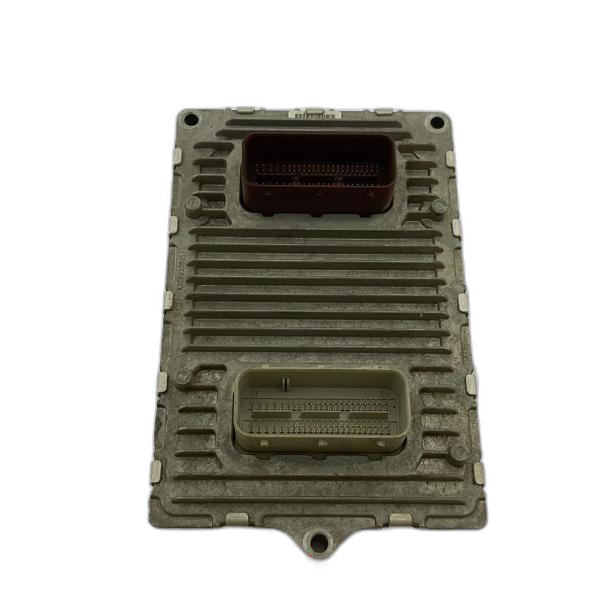
- Engine Control Module (ECM)
(OEM #Varies, e.g., 39106-2G803, 39136-2G801, 39136-2G820)— If all wiring and power sources are good, the ECM itself has likely failed internally and is the ultimate cause of the communication loss. Must be programmed to the vehicle.
Trusted brands: Hyundai (OEM)
OEM price range: $800-$1200
Aftermarket price range: $400-$800 (Remanufactured) - Battery — A weak or failing battery is a frequent and often overlooked cause of network communication codes like U0100 due to low voltage.
Trusted brands: Bosch, Duralast, Interstate
OEM price range: $200-$350
Aftermarket price range: $150-$250 - Engine Ground Strap
(OEM #e.g., 91860-D3510, 91860-D3520)— The main ground connection between the engine/transmission and the chassis can corrode or break, causing unstable power to modules and triggering communication faults.
Trusted brands: Hyundai (OEM)
OEM price range: $25-$60
Aftermarket price range: $10-$30
Related Codes That Often Appear With This One
- U0101 — Lost Communication with TCM. The TCM and ECM are on the same high-speed CAN network. A network-wide failure will often cause both codes to appear together.
- U0121 — Lost Communication with ABS Control Module. Like the TCM, the ABS module is on the same network, and a general communication failure will log codes for multiple modules.
- P0562 — System Voltage Low. This code often accompanies U0100 and strongly points to a failing battery or charging system as the root cause of the communication failure.
Platform-Specific Known Issues
- 4WD ECU Trigger: On AWD models, the 4WD Electronic Control Unit monitors signals from the ECM, such as the Accelerator Pedal Position (APS). If the 4WD ECU loses this signal due to a CAN bus interruption, it can be the module that logs the U0100 fault code.
Mechanic-Grade Diagnostic Values
- CAN Bus Resistance — expected: ~60 Ohms. Failure: 120 Ohms indicates an open circuit or missing terminating resistor. 0 Ohms indicates a short between CAN High and CAN Low lines.
- CAN Bus Voltage (Key On) — expected: ~2.5V on both CAN High and CAN Low lines at idle. Failure: A flat line or voltages outside the 2.5V-3.5V (High) and 1.5V-2.5V (Low) range during communication indicate a network fault.
- ECM Power Ground Pins to Chassis Ground — expected: < 0.1 Ohms. Failure: Higher resistance indicates a poor ground connection, a very common cause for communication issues.
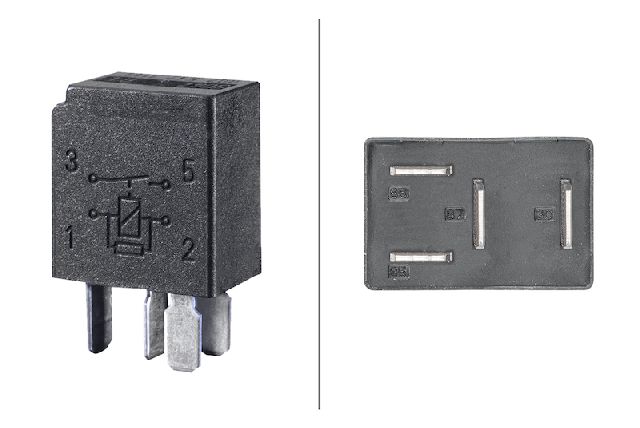
- ECM Switched Power (Key On) — expected: Battery Voltage (~12.6V). Failure: Low or no voltage indicates a problem with the main relay, fuse, or wiring supplying power to the ECM.
Scan Tool Commands That Help
- Hyundai GDS (Global Diagnostic System): Resetting Adaptive Values — After replacing an ECM or troubleshooting a performance issue that may be related to learned values. This function, found under 'Vehicle S/W Management', can clear learned engine parameters and force the new ECM to start fresh. This can sometimes resolve communication issues if they are software-related.
Wiring & Ground Locations
- Engine Control Module (ECM) — In the engine bay, located directly behind the battery. The battery must be removed to access the lower mounting bolts for the ECM bracket.. This is the primary module that has lost communication. Physical access is required to test power, ground, and CAN bus wires directly at the module's connectors.
- Engine Bay Fuse Box — Located in the engine bay, typically near the battery. It contains main fuses for the ECM and other critical components.. A blown 'ECM' or 'ECU' fuse in this box will cause a complete loss of power to the module, resulting in a U0100 code.
- OBD-II Diagnostic Port — Under the driver's side dashboard, to the left of the steering column.. This is the primary access point for scanning codes and testing the CAN bus network resistance and voltage.
- Main Engine/Chassis Ground Points — Key ground points include the strap from the negative battery terminal to the chassis, and straps from the engine block/cylinder head to the chassis.. Corrosion or looseness at these points creates high resistance, destabilizing the entire vehicle electrical system and is a primary cause of module communication failures.
OEM Part Supersession History
39106-2G800, 39106-2G801, 39106-2G802→39106-2G803— Internal revisions and software updates by the manufacturer.
Heads up: While 39106-2G803 is listed as a supersession for earlier parts for the 2010-2012 2.4L AT, it's critical to verify compatibility with the vehicle's VIN. Using an incorrect hardware or software version can lead to communication errors or non-functional features.
Model Year Variations Within This Range
- 2014-2015: For the 2014 model year, Hyundai introduced new engines with Gasoline Direct Injection (GDI). This change included different ECMs and wiring harnesses compared to the 2010-2013 models. The 2014 refresh also brought new projector-type headlights with LED accents and LED taillights, which can have an impact on Body Control Module (BCM) and CAN bus interactions. Therefore, diagnostic procedures and part numbers for the ECM are not always interchangeable between pre-refresh (2010-2013) and post-refresh (2014-2015) models.
Diagnostic Flowchart
Real Owner Stories
Aggregated from forums and TSBs cited above. Mileages and costs reflect what owners reported in those sources.
2011/2012 Hyundai Tucson ix35
Symptoms: The 4WD ECU logged a U0100 code because it stopped receiving signals, such as the Accelerator Pedal Position, from the ECM.
What fixed it: Diagnosed as a CAN bus interruption preventing the ECM from communicating with the 4WD ECU.
Source hint: AutoHex.net
Hyundai Tucson
Symptoms: Codes U0100 and U0115 appeared immediately after installing a new battery.
What fixed it: Determined to be caused by the sensitivity to power supply changes and stored codes from the old, dead battery.
Source hint: Reddit (r/MechanicAdvice)
Hyundai Tucson
Symptoms: U0100 code triggered after driving through water, leading to oxidized wiring connectors.
What fixed it: Repaired oxidized wiring connectors caused by water intrusion.
Source hint: OK.com Forum
Hyundai Tucson
Symptoms: U0100 code triggered after a high-pressure car wash damaged the ECU's seal.
What fixed it: Addressed water intrusion into the ECU due to a damaged seal from the car wash.
Source hint: OK.com Forum
Related OBD-II Codes
Frequently Asked Questions
Why did my 2010-2015 Hyundai Tucson AWD trigger a U0100 code along with a 4WD warning light?
I just replaced the battery in my Tucson and now I have a U0100 code. Is my ECM bad?
Can washing my Hyundai Tucson's engine bay cause a U0100 code?
Where should I check for ground issues on my 2010-2015 Tucson?
Are there any aftermarket accessories that can cause a U0100 code on this vehicle?
Does the Kia Sportage have the same U0100 issues as my Tucson?
Helpful Videos
Used OEM Parts in Stock
New Aftermarket Parts Available

The information in this article is provided for general reference and educational purposes only. Vehicle specifications, procedures, and part compatibility can vary by production date, trim level, and region. Always consult your vehicle's factory service manual and verify part numbers before purchasing or performing repairs. Safety-critical components such as airbags, seat belts, and braking systems should be installed by a qualified professional.
- Hyundai Tucson:
- 🧭 Diagnostic Flowchart
- 🎬 Helpful Videos
- 🛍️ Shop This Part
- What's Unique About the 2010-2015 Hyundai Tucson
- Symptoms You May Notice
- Most Likely Causes
- Rare But Worth Checking
- Diagnosis Steps
- Parts You'll Likely Need
- Related Codes That Often Appear With This One
- Platform-Specific Known Issues
- Mechanic-Grade Diagnostic Values
- Scan Tool Commands That Help
- Wiring & Ground Locations
- OEM Part Supersession History
- Model Year Variations Within This Range
- Real Owner Stories
- 2011/2012 Hyundai Tucson ix35
- Hyundai Tucson
- Hyundai Tucson
- Hyundai Tucson
- Related OBD-II Codes
- Frequently Asked Questions
- 🎟️ Get 5% Off