

U0100 on 2014-2018 Mazda 3: Lost Communication with PCM Causes and Fixes
On a 2014-2018 Mazda 3, code U0100 most often points to a simple electrical issue like a weak or poor-quality battery or a bad ground connection. Before suspecting expensive computers, fully test the battery and inspect all major ground points between the engine, body, and PCM. Owners report the sensitive electronics can be disrupted even by batteries that seem to test 'ok'.
- U0100 is a critical code indicating a communication failure with the main engine computer; do not drive the vehicle.
- Always start diagnosis with the simplest and most common causes: test the battery thoroughly and inspect all major ground connections.
- This is not a DIY-friendly code for deep diagnosis. If a bad battery or loose ground isn't the obvious cause, professional help is needed to test the CAN network.
- On this specific Mazda 3 generation, check for loose connectors behind the glove box and consider the possibility of an infotainment software glitch before suspecting a failed PCM.
What's Unique About the 2014-2018 Mazda 3
The 2014-2018 Mazda 3 (third generation, 'BN') uses a complex CAN bus network for its Skyactiv technologies. While generally reliable, this system is sensitive to low voltage and poor connections. A documented, though not common, failure point on this specific platform is a loose connector in a junction block behind the glovebox, which can cause intermittent network-wide communication loss. Additionally, while a failing Transmission Control Module (TCM) was a very common cause for U0100 on the previous generation Mazda 3, it is less frequent but still possible on these model years and can bring down the entire network.
Symptoms You May Notice
- Check Engine Light is on
- Multiple other warning lights may illuminate simultaneously (e.g., AT, ABS, Traction Control), sometimes referred to as a 'Christmas tree' dash.
- Warning lights may flash on intermittently and then disappear after a restart, leaving only the Check Engine Light on.
- Engine will not crank or start, may just make a 'click' sound.
- Engine stalls intermittently, possibly while driving.
- Harsh or erratic automatic transmission shifting, or being stuck in one gear (limp mode).
- Instrument cluster gauges (like RPM or speedometer) may drop to zero intermittently.
- Vehicle may enter 'limp mode' with severely reduced power.
- A flashing Check Engine light may occur if communication is lost while the engine is under load.
- Replacing the PCM without first verifying battery health, ground integrity, and CAN bus wiring. A PCM is expensive and rarely the root cause.
- Replacing the battery but using a low-quality replacement, which may not solve the problem on these sensitive systems.
Most Likely Causes
- Weak or Failing Battery 🔴 High Probability → Shop Vehicle Battery Modern electronic systems, including the CAN bus, are highly sensitive to voltage. A battery that provides less than 12.4 volts at rest or drops significantly during cranking can disrupt communication between modules. Owners on forums for both the Mazda 3 and CX-5 report that these vehicles are sensitive to battery *quality*, not just voltage. In one case, a new but cheap battery did not solve the issue, while a higher-quality battery did. An original, aging battery is a prime suspect.
How to confirm: Test the battery with a multimeter; it should read at least 12.4V with the engine off. Perform a load test to check its health under stress. Many auto parts stores offer this service for free. If the battery is over 4-5 years old, consider it a primary suspect even if it passes a basic test.
Typical fix: Recharge or replace the battery with a high-quality unit.
Est. part cost: $150-$300 - Corroded or Loose Ground Connections 🟡 Medium Probability Poor grounds are a frequent source of hard-to-diagnose electrical issues. The main PCM ground, battery-to-chassis ground, and engine-to-chassis straps can corrode or loosen, creating high resistance that disrupts module communication. On the 2014 Mazda 3, a ground point on the passenger-side fender brace is known to cause issues when corroded, especially in regions with road salt.
How to confirm: Visually inspect all major ground straps and connection points for tightness and corrosion. Clean any corroded surfaces with a wire brush and ensure a clean, tight metal-to-metal connection. Use a multimeter to check for voltage drop between the battery negative post and the engine block/chassis (should be less than 0.2V with the engine running). A specific test for the passenger-side ground involves checking if warning lights appear when turning on the headlights, which share that ground point.
Typical fix: Clean and tighten ground connections. In some cases, relocating a problematic ground wire to a cleaner chassis point may be necessary.
Est. part cost: $0-$10 - Damaged Wiring or Loose Connectors 🟡 Medium Probability
How to confirm: Visually inspect the wiring harnesses connected to the PCM and other modules for any signs of chafing, rodent damage, or corrosion. A known issue on the 2015 model involves a poor connection at a junction block behind the glove box, which can cause intermittent faults. Water intrusion into harnesses after heavy rain has also been reported as a cause.
Typical fix: Repair the damaged section of the harness or secure the loose connector. This may require professional service.
Est. part cost: $5-$500
Rare But Worth Checking
- Faulty Transmission Control Module (TCM): → Shop Transmission Assembly This was a very common failure on the previous generation (2006-2013) Mazda 3, causing U0100 and U0101 codes. While less common on the 2014-2018 models, a failing TCM can still disrupt the entire CAN bus network. If the battery and grounds are confirmed good, the TCM is a strong next suspect before the PCM itself.
- Infotainment System Software Glitch or Aftermarket Radio: Mazda TSB 09-030/20 reportedly notes that a U0100 code can be stored due to issues with the Mazda Connect infotainment system, though full text of this TSB is not publicly available. A software update for the Connectivity Master Unit (CMU) may be required. Additionally, a user on a forum noted their mechanic suspected their aftermarket radio as a potential cause.
- Failed Powertrain Control Module (PCM): → Shop Engine Control Module (ECM) This is the least likely cause. The PCM is a robust component and should only be suspected after all other possibilities (power, grounds, wiring, and other modules) have been exhaustively ruled out by a professional.
Diagnosis Steps
- Check Battery Health: → Shop Vehicle Battery Start with the simplest cause. Ensure the battery has a static charge of at least 12.4V. Perform a load test. Given the platform's sensitivity, if the battery is over 4 years old, consider it a high-probability cause regardless of the test result.
- Scan for All Codes: Use a quality OBD-II scanner to read codes from all modules, not just the engine. A long list of 'U' codes points to a network-wide failure, while a single U0100 might point closer to the PCM itself.
- Inspect Fuses: Check all fuses related to the PCM, TCM, and other control modules in both the under-hood and interior fuse panels. Also check the fuse for the OBD-II port itself.
- Inspect Power and Ground Connections: Visually inspect and physically check the battery terminals, main engine-to-chassis ground straps, and the PCM ground points for corrosion and tightness. Clean as necessary. Pay special attention to the ground point on the passenger-side fender brace near the headlight, as it is a known trouble spot.
- Check CAN Bus Terminating Resistance: With the battery disconnected, use a multimeter to measure the resistance between Pin 6 (CAN-H) and Pin 14 (CAN-L) on the OBD-II port. A healthy network should read approximately 60 Ohms. A reading of 120 Ohms suggests a break in the circuit or a missing terminating resistor. An open or shorted reading indicates a wiring problem.
- Inspect Wiring and Connectors: Carefully inspect the wiring harness to the PCM for any visible damage. Pay special attention to the junction block behind the glove compartment, as loose connections here have been identified as a cause on this platform.
- Professional Diagnosis: If the steps above do not reveal the issue, the vehicle needs to be taken to a qualified technician. They can use an oscilloscope to analyze the CAN bus signals directly and isolate the faulty module or wiring section.
Parts You'll Likely Need
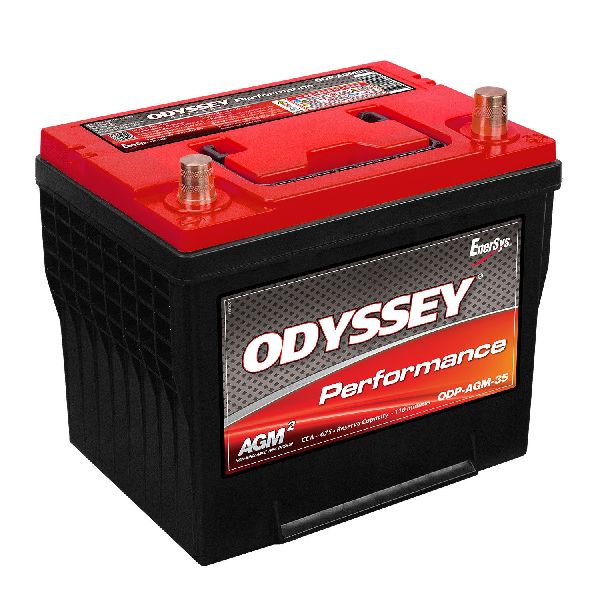
- Battery — A weak, old, or failing battery is the most common trigger for communication codes on modern vehicles.
Trusted brands: Bosch, Interstate, DieHard, Optima
OEM price range: $200-$300
Aftermarket price range: $150-$250 - Powertrain Control Module (PCM)
(OEM #Varies. Examples include PEAB-18-881A, PECX-18-881A, PEDH-18-881. Must match to VIN and vehicle options.)— This is the last-resort replacement part if the module itself has failed internally, after all wiring, power, and ground issues have been ruled out.
Trusted brands: Mazda (OEM)
OEM price range: $800-$1200
Aftermarket price range: $400-$800 (Remanufactured)
Related Codes That Often Appear With This One
- U0101 — Lost Communication with TCM. This often appears with U0100 because the TCM is on the same CAN network and its failure can bring down communication for the PCM as well, or vice-versa.
- U0155 — Lost Communication with Instrument Panel Cluster (IPC). The instrument cluster is another module on the CAN bus that stops receiving data when the PCM is offline.
- U0121 — Lost Communication with ABS Control Module. Like the IPC, the ABS module relies on data from the PCM and will log a communication fault when it goes offline.
Technical Service Bulletins (TSBs) & Recalls
- 09-030/20 - Addresses various audio, navigation, and phone concerns with the Mazda Connect system, and notes that DTC U0100:00 may be stored.
Platform-Specific Known Issues
- A documented case on a 2015 Mazda 3 traced intermittent U0100 and other communication codes to a poor connection at a junction block located behind the glove box.
- Mazda TSB 09-030/20 is said to address U0100 codes caused by the Mazda Connect infotainment system, though the TSB itself is not widely public.
- A Reddit user with a 2016 CX-5 (platform mate) experienced recurring U0100 that was ultimately traced to a faulty aftermarket remote starter that was disrupting the CAN bus network.
Documented NHTSA Reports
- An owner reported in NHTSA ODI #10781946 that their vehicle would come to a complete stop while running on the highway, immobilizing all systems; a scan detected code U0100.
- NHTSA ODI #11196097 describes a situation where an owner had a U0100 code pending with no PCM communication, which was potentially linked to a loose wire from an air bag connector that was not reinstalled properly during assembly.
Mechanic-Grade Diagnostic Values
- CAN Bus Network Resistance — expected: ~60 Ω (Ohms). Failure: A reading of ~120 Ω indicates a missing terminating resistor or a break in a CAN line. A reading significantly less than 60 Ω suggests a short between the CAN lines or a faulty module.
- CAN Bus Idle Voltage — expected: ~2.5V on both CAN-H and CAN-L lines.. Failure: Significant deviation from 2.5V on either line at idle (recessive state) points to a wiring short or a faulty module transceiver.
- CAN Bus Active Voltage (Oscilloscope) — expected: CAN-H should toggle between ~2.5V and ~3.5V. CAN-L should toggle between ~2.5V and ~1.5V.. Failure: A flat line or distorted waveform on either signal indicates a communication failure. If one line is shorted to ground, it will pull the other line's voltage down and corrupt the signal.
- Main Ground Point Resistance — expected: < 0.1 Ω (Ohms). Failure: Higher resistance indicates a poor ground connection, which is a common cause of communication faults.
Scan Tool Commands That Help
- Mazda M-MDS (Dealer) or FORScan (Advanced DIY): Module Configuration (Read/Write Function) — This is required when replacing a control module like the BCM or FBCM. The configuration from the old module must be read and written to the new one. If the old module is unreadable, 'As-Built' data must be used to program the new module.
- FORScan: Full Network Scan / Read All DTCs — Unlike basic scanners, FORScan can communicate with all modules on the network (PCM, TCM, ABS, BCM, etc.). This helps determine if the U0100 code is isolated or part of a network-wide failure, which is critical for diagnosis.
Wiring & Ground Locations
- G01 — Near the left (driver's side) headlight assembly in the engine compartment.. A wiring diagram identifies this as a ground point for the PCM. A poor connection here can directly impact the PCM's operation and ability to communicate.
- Passenger-Side Fender Ground — On the passenger-side fender brace, near the headlight assembly.. This ground point is shared by the headlights and the ABS module. Corrosion here, common in salt-belt regions, can create intermittent electrical issues that manifest as a 'Christmas tree' dash and communication codes when high-current accessories like headlights are turned on.
- Front Body Control Module (FBCM) — Integrated into the main fuse box in the engine compartment.. The FBCM is a major network module. While not the BCM, issues with its connections or internal function can disrupt CAN bus communication.
- Body Control Module (BCM) — Located under the driver's side of the dashboard, behind the kick panel area.. The BCM is a central hub for many vehicle functions and a key node on the CAN bus. A failure or connection issue here can cause widespread communication faults.
Real Owner Repair Stories
- Reddit user on r/MechanicAdvice (2014 Mazda 3 2.0L, high mileage) — Intermittent illumination of brake, key, and traction control warning lights. Headlights would dim simultaneously. The car remained running.
❌ Tried (didn't work) Replacing the battery with a new, high-quality unit., Tightening the battery terminals., Initially cleaning the passenger-side ground point provided only a temporary fix.
✅ What actually fixed it The root cause was a poor ground connection at the passenger-side fender brace, which was corroded by road salt. The owner confirmed the fault by running a temporary ground wire from the headlight/ABS ground cable to a clean spot on the shock tower, which resolved the issue. The final fix was to establish a permanent, clean ground connection, bypassing the corroded original location. - Reddit user on r/mazda (2016 Mazda 3, 125k miles) — Intermittent U0100 code with all dash lights illuminating. Shutting the car off and restarting would clear the dash lights, leaving only the check engine light, which would also disappear after a short time. Car ran fine throughout.
❌ Tried (didn't work) The user was in the process of diagnosing. The first step taken was replacing the battery.
✅ What actually fixed it The outcome was not posted by the user, but the mechanic's primary suspects were the battery or a 7-month-old aftermarket radio installation, highlighting aftermarket accessories as a potential source of CAN bus interference.
Diagnostic Flowchart
Used vs. New Parts: Buying Guide for This Vehicle
When a used part is the smart pick: Used parts like wiring harnesses, connectors, or fuse boxes are a smart choice, as they are not typically wear items and can be sourced from a donor vehicle with no functional difference. A used battery is never recommended.
Donor-vehicle mileage cap: roughly under 80000 miles for the part to have meaningful remaining life.
What to inspect on the donor part:
- For wiring, ensure there is no visible corrosion on pins, no cut wires, and no signs of rodent damage or heat exposure.
- For modules, check that the donor vehicle was not in a flood or had significant collision damage near the module's location.
- Verify the part number on the used module exactly matches the original part to be replaced.
OEM-only on this vehicle (don't cheap out):
- Powertrain Control Module (PCM)
- Body Control Module (BCM)
- Front Body Control Module (FBCM)
Aftermarket brands forum-validated for this vehicle:
- For batteries, brands like Interstate, Bosch, and Optima are frequently recommended by owners for their reliability in these voltage-sensitive vehicles.
Brands owners have reported issues with on this vehicle:
- Avoid generic, low-cost batteries, as owners have reported that they may not provide the stable voltage required by the Mazda 3's electronics, even when new.
- Be cautious with aftermarket remote starters and stereos; if not installed correctly by a professional familiar with CAN bus systems, they are a known source of communication errors.
Real Owner Stories
Aggregated from forums and TSBs cited above. Mileages and costs reflect what owners reported in those sources.
2016 Mazda 3 — 125000 miles
Symptoms: The U0100 code would appear intermittently, causing all dash lights and the check engine light to illuminate. After restarting the car, only the check engine light would remain on for a short time before clearing itself.
What fixed it: The owner's mechanic suggested replacing the battery as the most likely fix.
Source hint: Reddit r/mazda
2016 Mazda CX-5
Symptoms: U0100 code accompanied by a blinking airbag light.
What fixed it: Replacing the battery with a higher-quality unit provided a long-term fix after a cheaper replacement failed to solve the issue.
Source hint: Reddit r/MechanicAdvice thread titled 'u0100_code_mazda_cx5/'
2015 Mazda 3
Symptoms: Intermittent U0100 and other communication codes.
What fixed it: The issue was traced to a poor connection at a junction block located behind the glove box.
Source hint: Documented case on a 2015 Mazda 3
2016 Mazda CX-5
Symptoms: Recurring U0100 code.
What fixed it: A faulty aftermarket remote starter was found to be disrupting the CAN bus network.
Source hint: Reddit user with a 2016 CX-5
Related OBD-II Codes
Frequently Asked Questions
My 2014 Mazda 3's dashboard lights up like a 'Christmas tree' and sometimes it won't start. Is it just the battery?
I heard about a specific bad ground wire on these cars. Where is it?
Could my aftermarket remote starter be causing the U0100 code?
Is there a Technical Service Bulletin (TSB) for the U0100 code on my Mazda 3?
My car is a 2015 CX-5, not a Mazda 3. Is this information still relevant?
The U0100 code appeared after a heavy rainstorm. What's the connection?
I tested my CAN bus resistance at the OBD-II port and got 120 Ohms. What does that mean?
We Have This Part in Stock


The information in this article is provided for general reference and educational purposes only. Vehicle specifications, procedures, and part compatibility can vary by production date, trim level, and region. Always consult your vehicle's factory service manual and verify part numbers before purchasing or performing repairs. Safety-critical components such as airbags, seat belts, and braking systems should be installed by a qualified professional.
- Mazda 3:
- 🧭 Diagnostic Flowchart
- 🛍️ Shop This Part
- What's Unique About the 2014-2018 Mazda 3
- Symptoms You May Notice
- Most Likely Causes
- Rare But Worth Checking
- Diagnosis Steps
- Parts You'll Likely Need
- Related Codes That Often Appear With This One
- Technical Service Bulletins (TSBs) & Recalls
- Platform-Specific Known Issues
- Documented NHTSA Reports
- Mechanic-Grade Diagnostic Values
- Scan Tool Commands That Help
- Wiring & Ground Locations
- Real Owner Repair Stories
- Used vs. New Parts: Buying Guide for This Vehicle
- Real Owner Stories
- 2016 Mazda 3 — 125000 miles
- 2016 Mazda CX-5
- 2015 Mazda 3
- 2016 Mazda CX-5
- Related OBD-II Codes
- Frequently Asked Questions
- 🎟️ Get 5% Off