

U0100 on 2007-2013 Mercedes-Benz S-Class: Lost Communication with ECM Causes and Fixes
On a 2007-2013 S-Class (W221), code U0100 usually means the Engine Control Module (ECM) is offline. The most common causes are water damage in the front electronics box affecting the ECM or Front SAM module, or a weak battery. Expect a complex diagnosis requiring a Mercedes-specific scanner like Xentry to properly identify the non-communicating module.
- U0100 on a W221 S-Class is a critical fault, often causing a no-start or stalling, and should be addressed immediately.
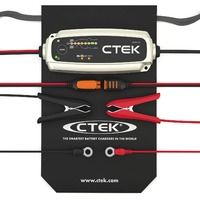
- Before suspecting expensive modules, fully charge and load test the battery. Low voltage is a very common trigger for this code.
- The most probable cause specific to this car is water damage. Thoroughly inspect the Front SAM and ECM in the engine bay for any signs of moisture or corrosion.
- Diagnosis and repair are complex and require a Mercedes-specific scan tool for accurate fault finding and a professional for module programming.
- Proactive maintenance, such as regularly cleaning the cowl and sunroof drains, can prevent the water damage that commonly leads to this code.
What's Unique About the 2007-2013 Mercedes-Benz S-Class
The W221 S-Class is packed with complex electronics that are highly sensitive to both voltage and moisture. Unlike many other vehicles, a leading cause for U0100 on this platform is water intrusion into the front electronics bay, often due to clogged cowl or sunroof drains. This water directly damages the Front Signal Acquisition Module (SAM) or the Engine Control Module (ECM) itself, causing them to fail and lose communication. This makes checking for water damage in the passenger-side engine bay electronics box a critical, platform-specific first step.
Symptoms You May Notice
- Engine will not crank or start.
- Engine stalls intermittently while driving.
- Check Engine Light is illuminated.
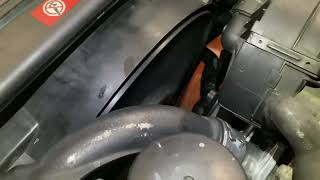
- Cooling fan runs at maximum speed as soon as the ignition is turned on 🎬 See this walkthrough on diagnosing a failed radiator fan (a default failsafe).
- Vehicle enters 'limp mode' with severely reduced engine power.
- Multiple warning messages on the instrument cluster for systems like ESP, ABS, or brakes.
- Transmission may get stuck in one gear or shift harshly.
- Replacing the crankshaft position sensor. While a bad CPS can cause a no-start, it will typically set a specific sensor fault code, not a communication code like U0100.
- Replacing the starter motor. A no-crank condition with U0100 is usually due to the ECM not authorizing the start, not a failed starter. The clicking from the fuse box is often relays trying to activate without proper command.
Most Likely Causes
- Water Damage to Front SAM or ECM 🔴 High Probability The W221's windshield cowl and sunroof drains are known to clog with debris, causing rainwater to overflow into the sealed electronics box in the engine bay, which houses the Front SAM and ECM.
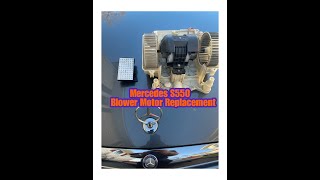
How to confirm: Open the electronics box on the passenger side of the engine bay. Look for any signs of moisture, standing water, or white/green corrosion on the module connectors 🎬 Watch: Accessing the blower motor area where water often collects and circuit boards. A Mercedes-specific scanner will often show no communication with the Front SAM and/or the ME (Motor Electronics) control unit.
Typical fix: The source of the water leak must be found and fixed (e.g., clearing drains, resealing cowl 🎬 Watch: How to find and fix common interior water leaks). The damaged module (SAM or ECM) and any corroded connectors must be replaced. The new module will require SCN coding (programming) to the vehicle.
Est. part cost: $200-$1500 - Weak or Failing Battery 🟡 Medium Probability → Shop Vehicle Battery The complex electronic systems in the S-Class are extremely sensitive to voltage. During engine cranking, a weak battery's voltage can drop below the threshold required for modules to stay online, causing a communication fault.
How to confirm: Test the battery voltage with a multimeter. It should be above 12.4V with the engine off. Perform a load test to check its health. Voltage dropping below 10V while cranking is a strong indicator of a bad battery.
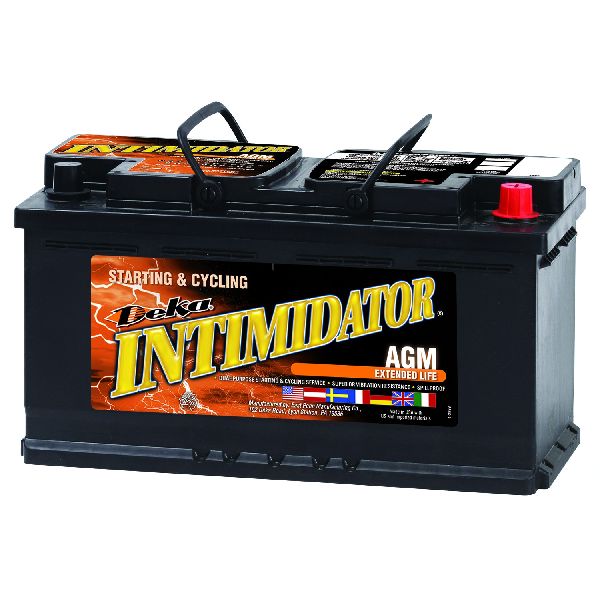
Typical fix: Recharge or replace the main AGM battery. Ensure terminals are clean and tight. This should always be the first check before replacing any expensive modules.
Est. part cost: $200-$400 - Faulty Engine Control Module (ECM) 🟡 Medium Probability → Shop Engine Control Module (ECM) Aside from water damage, the ECM (Bosch ME9.7) can fail internally due to heat cycles, vibration, and age causing cracked solder joints or component failures, such as blown capacitors.
How to confirm: This is typically a diagnosis of exclusion. If the battery is good, all power and ground connections to the ECM are verified, the CAN bus wiring is intact, and there is no water damage, the ECM itself is the likely culprit. A specialist can test the ECM on a bench. A user on MBWorld.org reported a failure from a blown capacitor inside the ECU.
Typical fix: The ECM must be replaced or sent to a specialist for repair. A replacement ECM must be programmed (cloned with original data) or SCN coded to the vehicle's VIN and security information.
Est. part cost: $800-$2050 - CAN Bus Wiring or Connector Fault ⚪ Low Probability
How to confirm: Visually inspect the wiring harnesses to the ECM, Front SAM, and Central Gateway for any signs of damage, chafing, or corrosion. A technician can use a multimeter or oscilloscope to check for proper voltage (approx. 2.5V on each line) and resistance (60 Ohms) on the CAN High and CAN Low circuits.
Typical fix: Repair the damaged section of the wiring harness or replace the corroded connector.
Est. part cost: $50-$300
Rare But Worth Checking
- Faulty Central Gateway Module (CGW/ZGW): The Central Gateway is the main router for all CAN bus traffic. A failure here can prevent communication between networks and trigger a U0100 code. Symptoms often include an inability for a scan tool to communicate with any module. Failed programming attempts can also corrupt the CGW software, leading to communication loss.
- Blown Fuse for Engine Electronics: A blown fuse (check fuse block diagrams for fuses like f53 or f54 in the front SAM) can cut power to the ECM, causing it to go offline. This is often a symptom of another problem (like water causing a short) rather than the root cause.
Diagnosis Steps
- Connect a Mercedes-Benz specific diagnostic tool (like Xentry) to perform a full vehicle scan. Note all modules that are not communicating. A generic OBD-II scanner is insufficient.
- Check and record the battery's state of charge and health. A voltage reading should be taken at rest (should be >12.4V) and during engine cranking (should not drop below 10V).
- Visually inspect the front and rear SAM modules and the ECM for any signs of water intrusion, corrosion, or physical damage. Pay close attention to the electronics box in the engine bay, passenger side.
- Check all relevant fuses for the Engine Control Module and SAM units in the front and rear fuse boxes.
- If no water damage is found and the battery is good, verify that the ECM is receiving proper power and ground at its main connector using a multimeter and wiring diagram.
- Inspect the CAN bus wiring and connectors between the ECM, Front SAM, and Central Gateway for damage or corrosion. Check for 60 ohms of resistance across the CAN high and low pins at the OBD-II port.
- If all wiring, power, and grounds are good, the failure is likely an internal fault in the ECM or Front SAM, requiring replacement or repair.
Parts You'll Likely Need
- Engine Control Module (ECM/ECU)
(OEM #A2731536591, A2731535679 (for S550, VIN specific))— The ECM is a common point of failure, either from internal faults or, more commonly, from water damage on the W221 platform.
Trusted brands: Bosch
OEM price range: $1200-$2050
Aftermarket price range: $600-$1200 (Remanufactured/Cloned) - Front Signal Acquisition Module (SAM)
(OEM #A2219007202 (example, many variations exist))— This module is highly susceptible to water damage due to its location and can cause a loss of power or communication to the ECM.
Trusted brands: Mercedes-Benz OE
OEM price range: $400-$700
Aftermarket price range: $150-$350 (Used/Remanufactured) - AGM Battery — A weak battery is a frequent cause of various electronic communication faults on this vehicle.
Trusted brands: Varta, Bosch, Interstate
OEM price range: $300-$450
Aftermarket price range: $200-$350
Related Codes That Often Appear With This One
- U0101 — Lost Communication with TCM (Transmission Control Module). The TCM and ECM are on the same high-speed CAN bus. A network-wide problem will often cause both codes to appear together.
- Multiple U-codes — If the ECM is offline, many other modules that rely on its data (ABS, ESP, instrument cluster, etc.) will also log communication fault codes.
Platform-Specific Known Issues
- Clogged drains for the windshield cowl and sunroof are a primary failure point leading to water damage in the front electronics box. Regular inspection and cleaning are critical preventative maintenance.
- A forum user on MBWorld.org detailed a U0100 case on a 2007 S550 caused by a blown electrolytic capacitor inside the ECU, which was deemed unrepairable. The replacement part number was A273-153-56-79, costing $2,050 from the dealer. (Source: MBWorld.org Forums, Thread: 'Engine Control Module / Unit (ECM / ECU) Replacement', User experience with 2007 S550 4Matic).
Mechanic-Grade Diagnostic Values
- CAN Bus Network Resistance — expected: ~60 Ohms. Failure: A reading of 120 Ohms indicates one of the two terminating resistors (or the module containing it) is disconnected or has failed. A reading significantly less than 60 Ohms suggests a short circuit between the CAN High and Low lines.
- CAN Bus Voltage (at rest, key on) — expected: CAN High: ~2.5V to 3.5V; CAN Low: ~1.5V to 2.5V (measured to ground).. Failure: Voltages outside these ranges, or a line stuck at 0V or 12V, indicates a short to ground or power.
- ECM Power Supply Voltage (during crank) — expected: Should remain above 10.0V.. Failure: Voltage dropping below 10.0V during engine cranking points to a weak battery or a bad power/ground connection, which can cause modules to drop off the network.
- Bosch ME9.7 ECU Bench Test Pins — expected: Pin 2: Ground, Pins 15 & 16: +12V Power, Pin 41: CAN High, Pin 54: CAN Low. A 120 Ohm resistor should be placed between CAN High and Low for bench communication.. Failure: Inability to communicate on the bench when correctly powered indicates an internal ECU fault.
Hidden / Shadow Codes Worth Checking
- N/A (Status-based): Mercedes' Xentry diagnostic system does not typically use numeric 'shadow codes' for this fault. Instead, it presents a 'Quick Test' log that shows a list of all expected control units. A module that is not communicating, such as the ME (Motor Electronics), will be missing from the list or marked with a status like 'Not Responding' or show a red 'X'. The fault is logged in the Central Gateway (CGW) as a communication event. (see via Mercedes-Benz Xentry/STAR Diagnosis system.)
Scan Tool Commands That Help
- Xentry/STAR Diagnosis: Quick Test — This is the very first step. It performs a network-wide scan and creates a list of all control modules, immediately showing which ones are communicating and which are not. For U0100, the 'ME' (Motor Electronics) module will likely be absent or flagged.
- Xentry/STAR Diagnosis: Actual values (in CGW) — Within the Central Gateway (CGW) module, a technician can monitor the status of the various CAN buses. This can help determine if the entire powertrain CAN (CAN-C) is down or if it's just the ECM that is offline.
- Xentry/STAR Diagnosis: Initial startup / SCN Coding — This is a mandatory procedure after replacing the ECM, Front SAM, or CGW. The function securely programs the new module to the vehicle's VIN, immobilizer system, and specific equipment configuration. Failure to perform this will result in a no-start condition.
Wiring & Ground Locations
- ME 9.7 (ECM) — Located in the sealed electronics box in the engine bay, on the passenger side near the firewall.. This is the module that has lost communication. Its location makes it highly vulnerable to water damage from clogged cowl drains.
- N10/1 (Front SAM) — Also located in the electronics box in the engine bay, alongside the ECM.. The Front SAM controls power distribution to many components, including potentially the ECM. Water damage to the SAM can cut power to the ECM, causing it to go offline and trigger U0100.
- X30/21 — Drivetrain CAN bus distributor (connector block). Located under the driver's seat carpet, near the rear passenger foot vent. Wires are typically blue and white.. This is a central junction for the powertrain CAN bus. Corrosion or a bad connection here can sever communication between the ECM and the rest of the car, directly causing a U0100.
- CAN Bus Access Panel — Under the driver's side dashboard. Contains multiple CAN distributors identifiable by twisted-pair wire groups (e.g., green, brown, yellow).. Provides a centralized point for advanced diagnostics to test multiple CAN buses without accessing individual modules.
Real Owner Repair Stories
- MHH Auto forum user (Mercedes-Benz W221) — Intermittent 'drive to workshop' message without performance change, eventually leading to CAN bus errors.
❌ Tried (didn't work) Initial diagnosis was difficult as the fault was intermittent.
✅ What actually fixed it The problem was resolved by replacing the drivetrain CAN connector (distributor block) located under the driver's seat. - AliExpress customer review (Mercedes-Benz W221) — No-start condition with U0100. Scan showed no communication with transmission (NAG) and shifter (ISM) modules.
❌ Tried (didn't work) Replacing the original ECM with a new (but faulty) aftermarket unit. The replacement ECU was successfully coded using Star Diagnosis but the problem persisted.
✅ What actually fixed it The issue was traced to the replacement ECU itself having an internal short on the CAN bus. Re-installing the original (intermittently failing) ECU allowed the engine to start, proving the 'new' part was defective from the seller. This highlights the risk of low-quality replacement modules.
OEM Part Supersession History
A2731535679→A2731536591, A2739000700 (and others)— Revisions for reliability and component updates.
Heads up: While many ME9.7 part numbers for the M273 engine are physically interchangeable, they are not plug-and-play. The replacement ECU must be either SCN coded by a dealer/specialist or have the full data cloned from the original ECU. Using an ECU from a facelift model (2010+) in a pre-facelift car (2007-2009) without correct programming can cause software conflicts.
Model Year Variations Within This Range
- 2010-2013 (Facelift models): Facelift models have updated electronics and software. When replacing a control module like the ECM or SAM, it is critical to use a part intended for the correct model year range. Attempting to SCN code a pre-facelift module with facelift software (or vice-versa) can fail or cause unpredictable issues with other systems.
Diagnostic Flowchart
Other Known Issues on This Vehicle
Issues unrelated to this code that are worth knowing about as an owner of this generation:
- Airmatic Suspension Failure 🔴 High — Very common. Leaks can develop in the air struts or lines, and the compressor can burn out from overwork. Often manifests as one corner of the car sagging overnight.
- 7G-Tronic (722.9) Transmission Conductor Plate Failure 🔴 High → Shop Transmission Assembly — A common failure, especially in pre-2010 models. The speed sensors on the conductor plate (part of the valve body/TCM) fail, causing harsh shifting, getting stuck in gear, or going into limp mode.
- M272/M273 Intake Manifold Tumble Flap Failure 🟠 Medium — The plastic lever and arms that control the variable intake runners break, causing a loss of power, poor idle, and fault codes (P2004, P2005, P2006). Affects V6 (M272) and V8 (M273) engines.
- M272/M273 Balance Shaft/Idler Gear Wear 🔴 High — Affects earlier engines (approx. before 2009). The balance shaft gear (V6 M272) or an idler gear (V8 M273) wears prematurely, causing timing codes, rattling, and eventually catastrophic engine failure if not addressed.
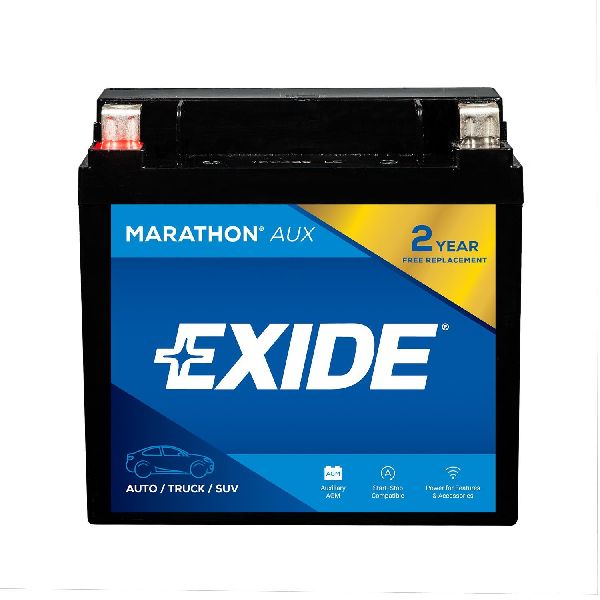
- Auxiliary Battery Failure 🟡 Low → Shop Vehicle Battery — Common issue where the small auxiliary battery fails, causing a 'Visit Workshop' message and potentially affecting features like the electronic gear selector.
Used vs. New Parts: Buying Guide for This Vehicle
When a used part is the smart pick: A used Front SAM (N10/1) is a viable and cost-effective option, provided the part number matches exactly and it comes from a vehicle with no history of water damage. A used ECM is only a smart choice if you are sending it along with your original ECU to a specialized service for data cloning.
Donor-vehicle mileage cap: roughly under 120000 miles for the part to have meaningful remaining life.
What to inspect on the donor part:
- For any used module, demand clear photos showing pristine connectors with no white, green, or blue corrosion.
- Ask for the donor vehicle's VIN to cross-reference its production year and options.
- Avoid parts from flood-damaged vehicles or from regions with heavy road salt usage, as corrosion is the primary enemy.
OEM-only on this vehicle (don't cheap out):
- Engine Control Module (ECM): Due to the complex immobilizer and vehicle-specific SCN coding, a new OEM part or a professionally cloned/remanufactured original Bosch unit are the only reliable options. Avoid cheap, unbranded 'new' ECUs from online marketplaces, as they can be defective.
Aftermarket brands forum-validated for this vehicle:
- Battery: Varta, Bosch (often the OEM supplier)
- ECU Remanufacturing/Cloning Services: The ECU Pro, Flagship One Inc. (FS1)
Brands owners have reported issues with on this vehicle:
- Unbranded 'new' ECUs from non-reputable online sellers. A documented case showed a brand new unit from AliExpress had an internal CAN bus short, causing the exact same symptoms as the part it was meant to replace.
Real Owner Stories
Aggregated from forums and TSBs cited above. Mileages and costs reflect what owners reported in those sources.
2007 S600 W221
Symptoms: Car won't start, dash lights come on but nothing happens when turning the key to position 3; cooling fans start running at full speed; diagnostic tool shows 'communication error' when connecting to ECU.
What fixed it: The owner had sent the ECU for tuning; the communication error occurred upon reinstallation.
Source hint: MBWorld.org Forums - 'Engine Control Module / Unit (ECM / ECU) Replacement'
2007 S550 4Matic
Symptoms: U0100 case caused by an internal component failure within the engine control unit.
What fixed it: Replacement of the ECU (Part Number A273-153-56-79) because a blown electrolytic capacitor inside the unit was deemed unrepairable.
Cost: $2,050-$2,050
Source hint: MBWorld.org Forums, Thread: 'Engine Control Module / Unit (ECM / ECU) Replacement', User experience with 2007 S550 4Matic
Related OBD-II Codes
Frequently Asked Questions
Why does my S-Class cooling fan run at maximum speed as soon as I turn the key?
Can a weak battery really cause a U0100 communication error on a 2007-2013 S-Class?
Where is the most common location for water damage to occur on the W221 S-Class electronics?
What is the estimated cost to replace a failed ECM on a Mercedes S550?
Does the U0100 code on my S-Class require specialized Mercedes software to diagnose?
Is the CL-Class (C216) prone to the same U0100 issues as the S-Class?
Helpful Videos
Used OEM Parts in Stock
New Aftermarket Parts Available


The information in this article is provided for general reference and educational purposes only. Vehicle specifications, procedures, and part compatibility can vary by production date, trim level, and region. Always consult your vehicle's factory service manual and verify part numbers before purchasing or performing repairs. Safety-critical components such as airbags, seat belts, and braking systems should be installed by a qualified professional.
- Mercedes-Benz S-Class:
- 🧭 Diagnostic Flowchart
- 🎬 Helpful Videos
- 🛍️ Shop This Part
- What's Unique About the 2007-2013 Mercedes-Benz S-Class
- Symptoms You May Notice
- Most Likely Causes
- Rare But Worth Checking
- Diagnosis Steps
- Parts You'll Likely Need
- Related Codes That Often Appear With This One
- Platform-Specific Known Issues
- Mechanic-Grade Diagnostic Values
- Hidden / Shadow Codes Worth Checking
- Scan Tool Commands That Help
- Wiring & Ground Locations
- Real Owner Repair Stories
- OEM Part Supersession History
- Model Year Variations Within This Range
- Other Known Issues on This Vehicle
- Used vs. New Parts: Buying Guide for This Vehicle
- Real Owner Stories
- 2007 S600 W221
- 2007 S550 4Matic
- Related OBD-II Codes
- Frequently Asked Questions
- 🎟️ Get 5% Off