

U0100 on 2007-2012 Nissan Sentra: Lost Communication with ECM Fixes
U0100 on a 2007-2012 Sentra means the Engine Control Module (ECM) has stopped communicating. The most common causes are a weak battery, corroded battery terminals, or a bad ground connection. Always check these simple, inexpensive items before suspecting a failed ECM.
- U0100 is a network error. Stop and check the basics first.
- A weak battery is the #1 cause. Test and clean battery connections before buying any parts.
- If you see U0100 with other 'U' codes like U0101, the problem is almost certainly in the shared network wiring or power supply, not the individual modules.
- Do not replace the ECM unless you have professionally verified that it has proper power, ground, and that the CAN network wiring is intact.
- This code indicates a serious problem; the vehicle should not be driven until it is repaired.
What's Unique About the 2007-2012 Nissan Sentra
The 2007-2012 Nissan Sentra (B16 generation) relies heavily on its Controller Area Network (CAN bus) for all systems to function correctly. While U0100 is a generic code, on this platform it's frequently triggered by basic electrical faults. Owners often find the root cause to be something as simple as a weak battery or corrosion on the battery terminals or ground wires, which can disrupt the sensitive electronics. Before condemning the expensive Engine Control Module (ECM), a thorough check of the vehicle's entire electrical foundation is critical. 🎬 Watch: Step-by-step guide to diagnosing Nissan U0100 communication errors. The Intelligent Power Distribution Module (IPDM), which controls power to the ECM relay, is another known weak point that can cause this code.
Symptoms You May Notice
- Check Engine Light is on (may be intermittent)
- Vehicle will not start (no-crank or crank-no-start) 🎬 Watch: How to troubleshoot a no-start condition and the starter relay.
- Engine stalls intermittently or immediately after starting
- Transmission may not shift correctly or may be stuck in one gear (limp mode)
- Multiple warning lights on the dashboard (ABS, Traction Control, etc.)
- Loss of throttle response
- Drastic drop in fuel economy
- All dashboard warning lights illuminate simultaneously
- Replacing the ECM without first verifying its power, ground, and network connections. The ECM is expensive and often not the root cause.
- Replacing other components like the throttle body or MAF sensor when the root cause is a network communication failure.
Most Likely Causes
- Weak or Faulty Battery 🔴 High Probability → Shop Vehicle Battery Modern vehicle modules are sensitive to voltage. A battery that can still crank the engine may not provide the stable 12.4V+ required for communication modules to stay online. Low voltage is a very common trigger for network communication codes like U0100.
How to confirm: Test the battery voltage with a multimeter. A healthy battery should read at least 12.4-12.6 volts with the engine off. Have the battery load-tested at an auto parts store, as voltage alone doesn't guarantee health.
Typical fix: Recharge or replace the battery.
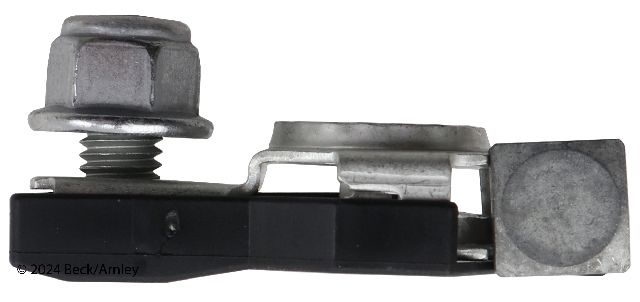
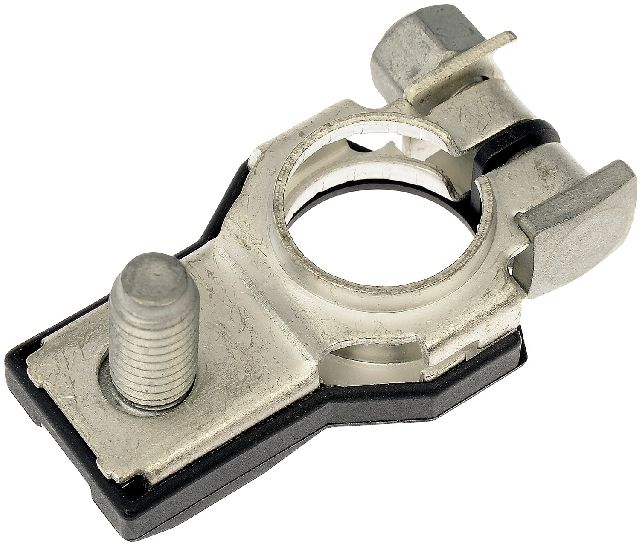
Est. part cost: $100-$250 - Corroded or Loose Battery Terminals / Ground Wires 🔴 High Probability → Shop Vehicle Battery Over time, battery acid and moisture cause corrosion on the terminals and ground connections, creating high resistance that disrupts power flow to the modules. The main ground strap from the battery to the chassis and from the chassis to the engine/transmission are critical points to inspect.
How to confirm: Visually inspect the battery terminals, clamps, and the main ground wire connection to the chassis and engine block. Look for white or greenish buildup, rust, or looseness. Follow the main negative cable from the battery to its connection point on the vehicle body and ensure it is clean and tight.
Typical fix: Disconnect the battery (negative first). Clean the terminals and connectors with a wire brush and a baking soda/water solution. Ensure all connections are tight. Consider adding a supplemental ground wire if connections seem poor.
Est. part cost: $5-$20 for cleaning supplies - Blown Fuses or Faulty ECM Relay 🟡 Medium Probability The ECM has dedicated fuses and a power relay, often located in the IPDM (Intelligent Power Distribution Module). A voltage spike or internal relay failure can cut power to the module, causing it to drop off the network.
How to confirm: Consult the owner's manual or the fuse box cover to locate fuses related to the ECM, ECU, or IGN. Visually inspect them or test for continuity with a multimeter. Check the main fusible links on the positive battery terminal. Locate the ECM relay (often within the IPDM) and test it or swap it with a known good relay of the same type.
Typical fix: Replace the blown fuse with one of the exact same amperage rating. If it blows again, a short circuit must be diagnosed. Replace the faulty relay.
Est. part cost: $1-$30 - CAN Bus Wiring Fault ⚪ Low Probability Wiring can be damaged from previous repairs, accidents, or rodent intrusion, causing an open or short in the network. The CAN harness runs throughout the vehicle, creating multiple potential failure points.
How to confirm: This is an advanced diagnostic step. With the battery disconnected, measure the resistance between the CAN High (Pin 6) and CAN Low (Pin 14) terminals at the OBD-II port. A healthy network should read approximately 60 ohms. Readings of 120 ohms suggest a break in the circuit or a missing terminating resistor, while 0 ohms indicates a short between the CAN wires.
Typical fix: Locate and repair the damaged section of the wiring harness. This often requires tracing wires from the ECM to the OBD-II port and other modules.
Est. part cost: $10-$500 depending on the extent of the damage and labor involved.
Rare But Worth Checking
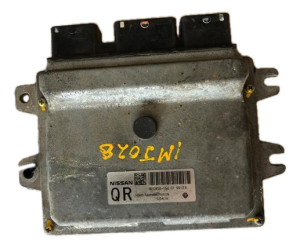
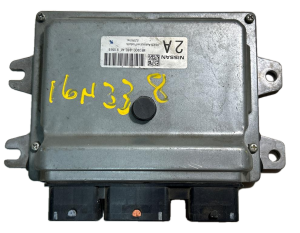
- Failed Engine Control Module (ECM): → Shop Engine Control Module (ECM) This should only be considered after all power, ground, and network wiring has been thoroughly tested and confirmed to be good. The ECM is often misdiagnosed as the problem. An internal failure, such as from a voltage surge or water intrusion, can cause it to stop communicating.
- Faulty IPDM (Intelligent Power Distribution Module): The IPDM houses the ECM relay and fuses. A failure within the IPDM's internal circuit board can cut power to the ECM, mimicking an ECM failure. This is a known issue on several Nissan platforms 🎬 See these expert tips for testing the Nissan IPDM and relays. of this era.
Diagnosis Steps
- Check Battery Health: Start with the simplest cause. Measure battery voltage with the engine off. It should be above 12.4V. Get the battery load tested, even if it seems fine, as it can fail under load.
- Inspect Electrical Connections: Disconnect the battery. Thoroughly clean any corrosion from the battery terminals, cable ends, and chassis ground points. Pay special attention to the main ground strap between the engine/transmission and the chassis.
- Check Fuses and Relays: Inspect all fuses related to the ECM, ignition, and powertrain in the fuse boxes (both in the cabin and engine bay). Pay special attention to any main fusible links on the positive battery terminal and the ECM relay inside the IPDM.
- Scan for All Codes: Use a quality OBD-II scanner that can read codes from all modules (ECM, TCM, BCM, ABS). Note all present codes. If U0100 is accompanied by U0101 or other communication codes, it points strongly to a network-wide issue.
- (Advanced) Check CAN Bus Resistance: Disconnect the negative battery terminal. Using a multimeter, measure the resistance between Pin 6 (CAN-H) and Pin 14 (CAN-L) on the vehicle's OBD-II port. A healthy reading is ~60 Ohms. A reading of ~120 Ohms suggests a break in the circuit or a missing terminating resistor. A reading near 0 Ohms indicates a short between the CAN wires.
- (Advanced) Verify ECM Power and Ground: Using a wiring diagram for your specific vehicle, check for battery voltage at the ECM's power pins and for good continuity to ground at the ECM's ground pins. This step is critical and confirms if the module is receiving the power it needs to operate.
- Isolate the ECM: If all wiring, power, and ground checks are good, the ECM itself may be faulty. At this point, professional diagnosis is highly recommended before replacing the module, as it requires programming.
Parts You'll Likely Need
- Battery — A weak or failing battery is the most common cause of module communication errors.
Trusted brands: Interstate, DieHard, Duralast
OEM price range: $150-$250
Aftermarket price range: $100-$200 - Engine Control Module (ECM)
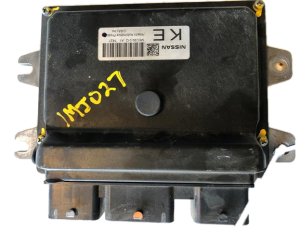
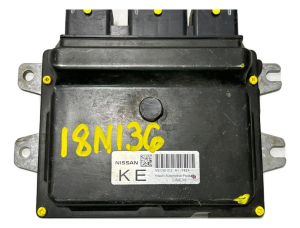
(OEM #23710-ZT94A (Example for 2009 2.0L, part number varies significantly by year, engine, and options, must match original))— This is the last resort after all other possibilities are ruled out. A failed ECM cannot communicate with the rest of the vehicle. Replacement requires programming.
Trusted brands: Hitachi (OEM), Remanufactured OEM (e.g., Flagship One, Go-Parts)
OEM price range: $800-$1200
Aftermarket price range: $300-$600 (Remanufactured)
Related Codes That Often Appear With This One
- U0101 — Lost Communication with TCM. The TCM and ECM are on the same CAN network. A network-wide failure will often set communication codes for multiple modules simultaneously, strongly pointing to a shared problem like power, ground, or the CAN bus itself.
- U1000 — CAN Communication Circuit. This is a Nissan-specific code that often accompanies other U-codes, indicating a general network problem.
Technical Service Bulletins (TSBs) & Recalls
- NTB13-027a - A general Nissan TSB for diagnosing CAN communication issues, which provides a diagnostic flowchart relevant to the U0100 code. It outlines a systematic approach to testing the CAN network, emphasizing checking fuses, connectors, and measuring resistance.
- TSB Bulletin #NTB13047 - Notes that when in "Extended Storage Mode," vehicles can set DTC U0100 if the ignition switch is left in the accessory position for longer than 2 seconds.
Platform-Specific Known Issues
- IPDM Relay Failures: The Intelligent Power Distribution Module (IPDM), located in the engine bay, contains the relay that powers the ECM. Owners on forums like NICOclub have reported that internal failures in the IPDM can cut power to the ECM, mimicking an ECM failure. The original white-colored IPDM units are known to be more prone to failure than the updated black-colored replacement parts.
Mechanic-Grade Diagnostic Values
- CAN Bus Resistance at OBD-II Port (Pins 6 & 14) — expected: ~60 Ohms (with battery disconnected). Failure: A reading of ~120 Ohms indicates an open circuit or one of the two terminating resistors is offline. A reading near 0 Ohms indicates a short between the CAN High and CAN Low wires.
- CAN Bus Voltage to Ground (Key ON) — expected: CAN-H (Pin 6) to Ground: ~2.6V - 2.7V. CAN-L (Pin 14) to Ground: ~2.3V - 2.5V.. Failure: Voltages outside these ranges, or voltages that are stuck high or low, indicate a short to power, short to ground, or a faulty module pulling the bus voltage down.
- Terminating Resistor Resistance — expected: ~120 Ohms. Failure: A reading significantly different from 120 Ohms when measured directly at a known terminating module (like the ECM or IPDM) suggests an internal module fault.
Scan Tool Commands That Help
- Nissan CONSULT or advanced aftermarket (e.g., Autel): CAN Diagnosis Support Monitor — To perform a network-wide test that identifies which specific control modules are not communicating. This helps isolate the fault without having to manually check every module on the bus.
- Nissan CONSULT or advanced aftermarket (e.g., Autel IM600): VIN Registration — This function is required after replacing the ECM. It writes the vehicle's VIN to the new or used module, allowing it to synchronize with the immobilizer system (NATS) and other vehicle components.
- Manual Procedure (No Scan Tool): IPDM E/R Auto Active Test (Self-Test) — To test the outputs of the IPDM without a scan tool. Within 20 seconds of turning the key ON, press the driver's door jamb switch 10 times, then turn the key OFF and back ON. The horn will chirp, and the IPDM will cycle various components like wipers, lights, and the A/C compressor clutch. While this doesn't directly test the ECM communication circuit, it can help verify if the IPDM itself is functional.
Wiring & Ground Locations
- Main Engine/Transmission Ground Strap — Typically connects from the transmission case to the vehicle's chassis/frame rail, often near the battery tray area.. This is a primary ground path for the powertrain. Corrosion or a break here can cause unstable voltage for the ECM and TCM, leading to communication dropouts.
- Battery Negative to Chassis Ground — The main negative battery cable bolts directly to the vehicle body, usually on the strut tower or inner fender near the battery.. This is the master ground for the entire vehicle's electrical system. Any resistance here affects all modules and is a primary cause of network codes.
- IPDM E/R (Intelligent Power Distribution Module Engine Room) — The main underhood fuse/relay box, located in the engine compartment, usually near the battery.. The IPDM contains the ECM power relay and fuses. It also contains one of the CAN bus terminating resistors on some models. A bad connection or internal failure here will cut power or disrupt the network, directly causing a U0100.
- BCM (Body Control Module) — Located behind the glove box.. The BCM is often the location of the second CAN bus terminating resistor. While a BCM failure is less common, a problem with it or its connector can take down the network, leading to a U0100 in other modules.
Real Owner Repair Stories
- Reddit user in r/nissansentra (2013 Nissan Sentra SV (Push Button Start)) — Intermittent no-start. Pressing the start button would result in a single click, but the engine would not crank. Multiple attempts would eventually start the car.
❌ Tried (didn't work) Replaced the battery., Shorting the starter motor confirmed the starter itself was functional.
✅ What actually fixed it The user replaced the entire IPDM with a used part, which initially seemed to help but the problem returned. This suggests the root cause was likely the non-serviceable starter relay located inside the IPDM, and the replacement used part may have had a similar issue. The final fix points towards replacing the IPDM with a known-good or new unit.
Documented NHTSA Reports
- An owner reported in NHTSA ODI #11450973 that their vehicle would not jump start and had no power; a mechanic diagnosed an electrical harness issue with code U0100, and the dealer eventually replaced the IPDM to resolve the issue.
- NHTSA ODI #11537805 describes a situation where a vehicle stopped in traffic with a U0100 ECM/PCM "A" DTC, leading to a safety concern.
OEM Part Supersession History
Various (White-colored IPDM units)→Various (Black-colored IPDM units)— The original white IPDM units were known for internal relay failures, particularly the ECM relay. Nissan updated the part to a more robust black-colored unit.
Heads up: While a used IPDM may fit, there's a risk it has the same internal flaw. It is highly recommended to replace a faulty white IPDM with a new or remanufactured black unit.
Model Year Variations Within This Range
- 2007-2009 (approx.): Early models in this generation featured an orange and black instrument cluster display. Later models (approx. 2010-2012) were updated with a more modern white, red, and black display. This does not directly affect the U0100 diagnosis but indicates a mid-cycle refresh.
Diagnostic Flowchart
Other Known Issues on This Vehicle
Issues unrelated to this code that are worth knowing about as an owner of this generation:
- Premature CVT Transmission Failure 🔴 High → Shop Transmission Assembly — Widespread issue, can occur as early as 60,000 miles. Symptoms include shuddering, hesitation, whining noises, and sudden loss of power. (Ref: Subject of class-action lawsuits, but no universal recall for this generation.)
- Cracked Exhaust Manifold 🟠 Medium — Common as the vehicle ages, often after 80,000 miles. Caused by heat cycles. Results in a loud ticking noise from the engine bay, especially when cold.
- Throttle Body Failure 🟠 Medium → Shop Fuel Injection Throttle Body — A common failure item causing rough/fluctuating idle, poor acceleration, and stalling.
- EVAP System Clogs 🟡 Low — Often presents as difficulty refueling (gas pump clicks off repeatedly). Caused by a clogged EVAP canister vent valve.
- Engine Mount Wear 🟠 Medium — The passenger-side engine mount and torque strut mount are prone to wear, leading to excessive engine vibration felt in the cabin, particularly at idle or in gear.
Used vs. New Parts: Buying Guide for This Vehicle
When a used part is the smart pick: A used IPDM (Intelligent Power Distribution Module) can be a cost-effective option if you can source one from a low-mileage vehicle and verify it is the updated black-colored version, not the failure-prone original white one. Used body parts or minor electrical components with no wear characteristics are also good candidates.
Donor-vehicle mileage cap: roughly under 80000 miles for the part to have meaningful remaining life.
What to inspect on the donor part:
- For an IPDM, ensure it is the black plastic version, not the original white one.
- For an ECM, match the part number exactly. Check the connector pins for any signs of corrosion, water damage, or being bent.
- Inspect the donor vehicle for signs of flood or fire damage. Avoid parts from such vehicles.
- Ask the seller about the return policy in case the part is dead on arrival.
OEM-only on this vehicle (don't cheap out):
- Engine Control Module (ECM): While remanufactured units are available, a used ECM must be reprogrammed (VIN registration and immobilizer sync) by a specialist. Given the labor and programming costs, a new or professionally remanufactured 'plug-and-play' unit with a warranty is often a safer investment.
Aftermarket brands forum-validated for this vehicle:
- Cardone (Remanufactured ECMs)
- Flagship One (Remanufactured and Programmed ECMs)
- Standard Motor Products (Ground Straps)
Brands owners have reported issues with on this vehicle:
- Unbranded, no-name ECMs from online marketplaces without a warranty or programming service should be avoided due to high failure rates and programming incompatibility.
Real Owner Stories
Aggregated from forums and TSBs cited above. Mileages and costs reflect what owners reported in those sources.
2008 Nissan Sentra
Symptoms: Vehicle would not start; U0100 code present.
What fixed it: Found corrosion on the IPDM connector; cleaned the connector and replaced the ECM relay.
Source hint: NICOclub Forums (nicoclub.com) thread for Sentra, Versa, and Rogue models
2010 Nissan Sentra
Symptoms: U0100 and U0101 codes with a no-crank condition.
What fixed it: Cleaned and re-secured a faulty, corroded ground wire located near the transmission.
Source hint: NissanForums.com thread titled '2010 Sentra U0100 and U0101 No Crank'
2007-2012 Nissan Sentra (B16)
Symptoms: Intermittent stalling and U0100 code.
What fixed it: Tightened a loose positive battery terminal clamp that was causing inconsistent voltage.
Source hint: Reddit (r/MechanicAdvice) user with a B16 Sentra
Related OBD-II Codes
Frequently Asked Questions
Is there a specific Nissan technical service bulletin for diagnosing the U0100 code on my Sentra?
My 2008 Sentra won't start and has a U0100 code; could the IPDM be the problem?
I heard there are different versions of the IPDM for the B16 Sentra. Which one is better?
Can a battery that still cranks the engine cause a U0100 communication code in a Nissan Sentra?
Where should I check for ground issues on my 2010 Sentra if I have U0100 and U0101 codes?
What resistance should I see at the OBD-II port to confirm my Sentra's CAN bus is healthy?
Helpful Videos
Used OEM Parts in Stock
New Aftermarket Parts Available



The information in this article is provided for general reference and educational purposes only. Vehicle specifications, procedures, and part compatibility can vary by production date, trim level, and region. Always consult your vehicle's factory service manual and verify part numbers before purchasing or performing repairs. Safety-critical components such as airbags, seat belts, and braking systems should be installed by a qualified professional.
- Nissan Sentra:
- 🧭 Diagnostic Flowchart
- 🎬 Helpful Videos
- 🛍️ Shop This Part
- What's Unique About the 2007-2012 Nissan Sentra
- Symptoms You May Notice
- Most Likely Causes
- Rare But Worth Checking
- Diagnosis Steps
- Parts You'll Likely Need
- Related Codes That Often Appear With This One
- Technical Service Bulletins (TSBs) & Recalls
- Platform-Specific Known Issues
- Mechanic-Grade Diagnostic Values
- Scan Tool Commands That Help
- Wiring & Ground Locations
- Real Owner Repair Stories
- Documented NHTSA Reports
- OEM Part Supersession History
- Model Year Variations Within This Range
- Other Known Issues on This Vehicle
- Used vs. New Parts: Buying Guide for This Vehicle
- Real Owner Stories
- 2008 Nissan Sentra
- 2010 Nissan Sentra
- 2007-2012 Nissan Sentra (B16)
- Related OBD-II Codes
- Frequently Asked Questions
- 🎟️ Get 5% Off