

U0100 on 2008-2009 Pontiac G8: Causes and Fixes for Lost ECM Communication
On a 2008-2009 Pontiac G8, code U0100 is most often caused by poor ground connections or a weak battery before suspecting a failed Engine Control Module (ECM). Check and clean all major engine and chassis grounds first, as this is a common, low-cost fix. Forum users specifically point to grounds on the cylinder heads and chassis rails as frequent culprits.
- Do not immediately assume the ECM has failed. On the 2008-2009 Pontiac G8, U0100 is frequently caused by simpler electrical issues.
- Thoroughly inspect, clean, and tighten all major engine and chassis ground connections as the first diagnostic step.
- Always check the battery's state of charge and all ECM-related fuses before proceeding with more complex diagnostics.
- If the ECM must be replaced, it requires professional programming to link it to your car's VIN and security system.
What's Unique About the 2008-2009 Pontiac G8
The Pontiac G8, based on the Australian Holden Commodore, has a known sensitivity to electrical system integrity. Owners and forum experts frequently point to poor or corroded ground connections as a primary culprit for seemingly complex electronic issues, including communication codes like U0100. 🎬 Watch: A breakdown of the top 5 causes for U0100 codes. Before condemning the expensive ECM, a thorough inspection of the specific ground points on the engine and chassis is a critical, platform-specific first step. A user on GRRRR8.net identified several key ground locations, including G103 (RH front cylinder head to ABS bracket) and G112 (LH rear cylinder head to engine harness), which are crucial for stable module communication.
Symptoms You May Notice
- Engine will not crank or start.
- Engine stalls unexpectedly while driving.
- "Contact Dealer" message appears on the driver information center.
- Multiple warning lights illuminate simultaneously (Check Engine, ABS, Traction Control, etc.).
- Instrument cluster gauges go dead or behave erratically.
- Scan tool cannot establish communication with the ECM.
- Transmission may be stuck in 'limp mode', resulting in harsh shifting.
- Reduced engine power and poor fuel economy.
- Replacing the ECM without first thoroughly checking all power, ground, and fuse circuits. A G8 owner on a forum replaced the ECM only to find the problem persisted, highlighting the need for proper diagnosis.
Most Likely Causes
- Poor or Corroded Ground Connections 🔴 High Probability Forum documentation shows that loose or corroded grounds are a frequent source of varied electrical issues on the G8 platform. A bad ground can interrupt power to the ECM or interfere with network signals. Owners have reported fixing U0100 and other electrical gremlins simply by cleaning and tightening engine and chassis grounds.
How to confirm: Visually inspect and physically check the main ground points for tightness and corrosion. Key locations identified by forum members include G103 (RH front cylinder head to ABS bracket), G112 (LH rear cylinder head to engine harness), and G102 (RH front chassis rail). A multimeter can be used to check for high resistance (more than a few ohms) between the ground point and the negative battery terminal. GM specifies ground resistance should be less than 0.1 ohms.
Typical fix: Remove the ground bolt/nut, clean the terminal and the chassis/engine surface with a wire brush until shiny, and re-secure it tightly. Apply dielectric grease to prevent future corrosion. Some owners add a supplementary ground wire from the cylinder head to the chassis as a preventative measure.
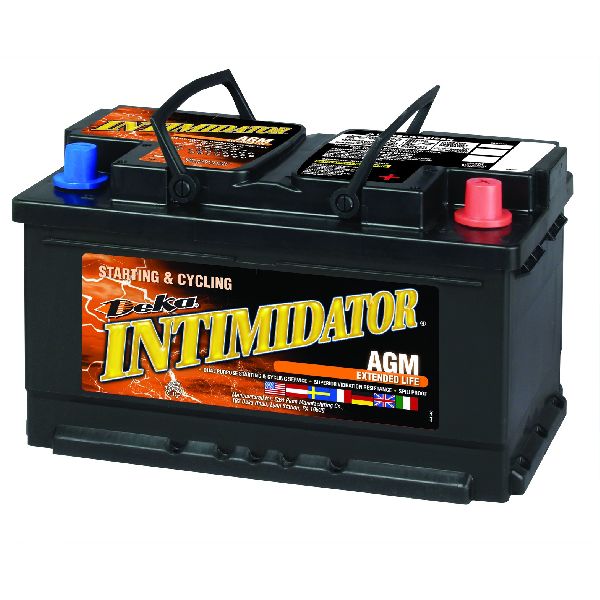
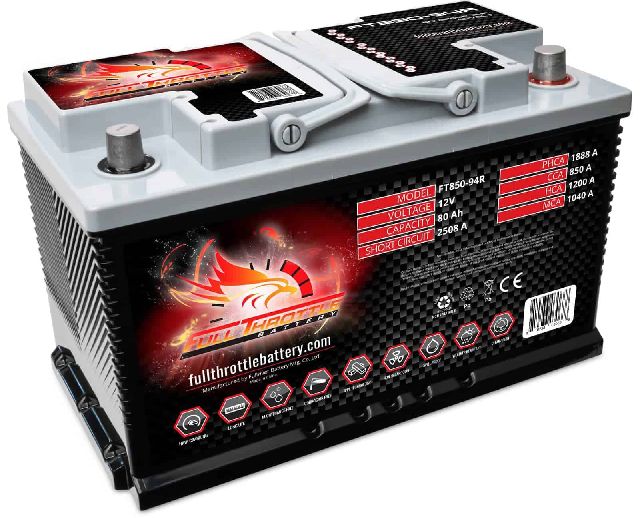
Est. part cost: $0-$20 - Weak or Failing Battery 🟡 Medium Probability → Shop Vehicle Battery Modern control modules are sensitive to voltage. If system voltage drops too low during cranking or operation, modules can shut down and fail to communicate, triggering a U0100 code. This is a common issue across many modern vehicles, not just the G8.
How to confirm: Test the battery with a multimeter. A healthy, fully charged battery should read approximately 12.6 volts with the engine off. A reading below 12.2 volts indicates a discharged or failing battery. Also, test the alternator output, which should be 13.7-14.7 volts with the engine running. A voltage drop below 10V during cranking can trigger communication faults.
Typical fix: Recharge or replace the battery. The G8's battery is located in the trunk on the right side. 🎬 See this walkthrough on G8 battery replacement and common noises.
Est. part cost: $150-$250 - Blown ECM/PCM Fuses 🟡 Medium Probability
How to confirm: Check the underhood fuse box for any fuses related to the ECM, PCM, or IGN (Ignition). For a 2009 G8, key fuses include F15 (ECM 1), F20 (EVN COILS), and F33 (EMISSION 1). Pull the fuses and visually inspect them for a broken filament or check for continuity with a multimeter.
Typical fix: Replace the blown fuse with a new one of the exact same amperage rating. If a fuse blows repeatedly, it indicates an underlying short circuit that must be diagnosed.
Est. part cost: $1-$5 - Damaged Wiring or Connectors ⚪ Low Probability Engine harnesses can be subject to heat, vibration, and chafing over time, which can damage the CAN bus wires or the power/ground wires leading to the ECM. GM issued TSB 08-07-30-021H for other vehicles of the same era, which points to potential terminal fretting and corrosion in harness connectors as a cause for communication loss.
How to confirm: Visually inspect the engine wiring harness, especially around the ECM connectors, for any signs of chafing, melting, or rodent damage. Disconnect the ECM connectors (with the battery disconnected) and check for corroded, bent, or pushed-out pins. Pay close attention to the harness where it may rub against brackets or the engine block.
Typical fix: Repair the damaged section of wire with a new piece of the same gauge wire, using solder and heat shrink for a durable repair. Replace damaged connector pins or pigtails.
Est. part cost: $10-$100 - Failed Engine Control Module (ECM) ⚪ Low Probability → Shop Engine Control Module (ECM)
How to confirm: This is a diagnosis of exclusion. If all power, ground, and CAN bus wiring to the ECM have been tested and confirmed to be good, the module itself is the likely culprit. This requires advanced diagnostics, such as checking for 5V reference at sensors and verifying network activity with an oscilloscope.
Typical fix: Replace the ECM. The new module must be programmed to the vehicle's VIN and security system (immobilizer) by a dealer or a qualified shop with GM programming tools. Several online vendors sell pre-programmed ECMs.
Est. part cost: $300-$700
Rare But Worth Checking
- Faulty Aftermarket Electronics: Improperly installed remote starters, alarms, or performance tuners that tap into the CAN bus wiring can disrupt network communication and cause a U0100 code.
- Faulty Ignition Switch: → Shop Ignition Switch A recall (NHTSA 14V540000, GM recall #14445) was issued because the ignition key could be bumped out of the 'Run' position, shutting off the engine. This sudden loss of power could potentially set communication codes as modules drop offline.
Diagnosis Steps
- Check Battery Health: Ensure the battery is fully charged (12.6V+) and the terminals are clean and tight. A weak battery is a common cause of communication codes.
- Inspect Fuses: Check all fuses related to the ECM/PCM in the underhood fuse block. Specifically check F15, F20, and F33 on a 2009 model. Replace any that are blown.
- Scan for Codes: Use a high-quality OBD-II scanner to see which other modules are reporting a loss of communication. If many modules are offline, it points to a network-wide issue. Note that the module *setting* the U0100 code is not the one that has failed; the fault is with the module that has gone offline (the ECM).
- Inspect Grounds: This is a critical step for the G8. Locate, remove, clean, and re-secure all major ground points. Key locations provided by forum experts include G103 (RH front cylinder head to ABS bracket), G112 (LH rear cylinder head to engine harness), G102 (on the right frame rail), and G104 (near the jump start post).
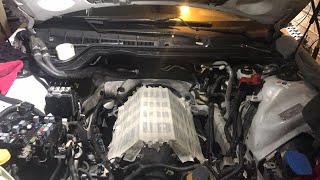
- Inspect ECM Connectors: With the battery disconnected, unplug the ECM connectors. The ECM is located on the right side of the engine compartment. 🎬 Watch: This quick video shows you exactly where the ECU is. Look for any signs of water intrusion, corrosion, or damaged pins.
- Test ECM Power and Ground: Use a multimeter and a wiring diagram to verify that the ECM is receiving constant power, ignition power, and has a solid ground connection at the connector pins. Operating voltage should be between 9-16V.
- Check CAN Bus Resistance: With the battery disconnected, measure the resistance between the CAN High and CAN Low pins at the OBD-II port (Pins 6 and 14). A healthy network should read approximately 60 ohms. A reading of 120 ohms suggests an open circuit or a missing termination resistor, while 0 ohms indicates a short between the two wires.
- Isolate the ECM: If all wiring, power, and grounds are confirmed good, the ECM is the most likely point of failure.
Parts You'll Likely Need
- Engine Control Module (ECM)
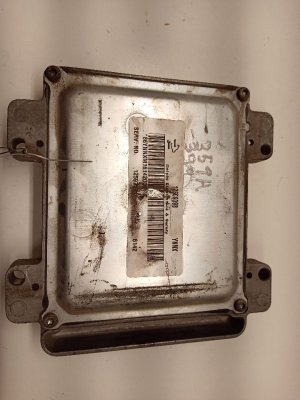
(OEM #12612384 (for 6.0L V8), 92208168 (for 3.6L V6))— This is the part that needs to be replaced if it has failed internally, but only after all other potential causes (power, ground, wiring) have been ruled out.
Trusted brands: ACDelco, General Motors
OEM price range: $400-$700
Aftermarket price range: $250-$500 - Battery — A weak or failing battery can cause low voltage conditions, leading to module communication dropouts.
Related Codes That Often Appear With This One
- U0101 — Lost Communication with Transmission Control Module (TCM). The ECM and TCM are on the same high-speed CAN bus. A network-wide problem will often cause both codes to appear.
- P0700 — Transmission Control System (MIL Request). This code is set by the ECM when the TCM detects a fault and requests the Check Engine Light to be turned on. It often appears with communication codes if the TCM is also affected.
Technical Service Bulletins (TSBs) & Recalls
- NHTSA ID: 14V540000 (GM Recall #14445) - Addresses an issue where the ignition key can be bumped out of the 'run' position, causing a sudden loss of engine power and potentially triggering communication DTCs.
- GM TSB 08-07-30-021H - While not specific to the G8, this TSB for other GM trucks and SUVs of the same era details diagnosis for widespread communication loss (U0100, U0101, etc.) due to wiring harness connector issues, which is relevant context.
Platform-Specific Known Issues
- A known issue on the G8 platform involves a faulty electrical ground at point G102 (RH front chassis rail), which has been documented by an owner to cause the engine to shut off and trigger numerous error codes.
- The ignition switch recall (NHTSA 14V540000) where the key can be inadvertently turned from the 'Run' position can cause a sudden engine stall, which may present with similar symptoms to a communication loss.
Mechanic-Grade Diagnostic Values
- CAN Bus Network Resistance — expected: Approximately 60 Ohms. Failure: 120 Ohms indicates an open circuit or a module/terminating resistor is offline. 0 Ohms indicates a short between the CAN High and CAN Low wires.
- CAN Bus Voltage (Key On, Engine Off) — expected: Approximately 2.5V for both CAN High and CAN Low, relative to ground.. Failure: Significant deviation from 2.5V on either line points to a wiring fault or a faulty module pulling the voltage up or down.
- ECM/Module Operating Voltage — expected: 9V to 16V. Failure: Voltage dropping below 10V during cranking can cause modules to reset or stop communicating.
- ECM Ground Circuit Resistance — expected: Less than 0.1 Ohms. Failure: Higher resistance indicates a poor ground connection, which is a very common cause of this code on the G8.
Scan Tool Commands That Help
- Tech2 / GDS2: Service Programming System (SPS) — This function is required after installing a new or used ECM to program the module with the correct VIN and vehicle software. Without this step, the car will not start due to security mismatches.
- Tech2 / GDS2: Module Status / High Speed CAN Bus Diagnostics — To view a list of all modules on the network and see which ones are actively communicating. This is the primary way to confirm that only the ECM is offline, validating the U0100 code.
- High-End Scan Tool: Key Relearn Procedure — After installing a programmed ECM, a key relearn (or security relearn) procedure is often necessary to sync the existing keys with the new module's immobilizer data. Some pre-programmed modules may not require this.
Wiring & Ground Locations
- G101 / G102 — On the RH (passenger side) front chassis rail in the engine bay.. These are primary chassis grounds for the car's electrical system. Corrosion or looseness here can cause widespread electrical issues.
- G103 — Connects the RH (passenger side) front cylinder head to the ABS bracket.. This is considered a main engine block ground and is critical for the ECM's reference. It is a frequently cited culprit for communication codes on G8 forums.
- G104 — Located on the jump start post on the LH (driver's side) of the engine compartment.. This is a major power distribution and grounding point. A poor connection here affects the entire vehicle's electrical stability.
- G110 — Connects the RH (passenger side) front cylinder head to the engine harness.. This ground is directly related to the engine harness, which contains the power and communication lines for the ECM.
- G112 — Connects the LH (driver's side) rear cylinder head to the engine harness.. Another critical engine-to-harness ground point that ensures a stable ground reference for all engine sensors and the ECM.
- ECM Connectors (X1/X2) — On the ECM, located on the passenger side of the engine compartment.. These are the main data and power interface for the ECM. Checking for pin corrosion, fretting, or pushed-out terminals is a key diagnostic step.
Real Owner Repair Stories
- GRRRR8.net forum user anecdote (Pontiac G8, year not specified) — Intermittent 'Contact Dealer' message on the dash, scan tool showed a no-communication code (like U0100), car would go into limp mode. Shutting down and restarting would sometimes clear the issue temporarily.
❌ Tried (didn't work) Clearing the codes, which would only work temporarily.
✅ What actually fixed it The owner replaced the vehicle's battery. The old battery was several years old and, despite sometimes testing okay, was causing voltage drops that made the control modules lose communication with each other. A new battery completely resolved the intermittent communication faults. - LS1Tech forum user story (2008-2009 Pontiac G8 with manual transmission swap) — A cascade of communication codes including U0100, U0101, U0140, U0155. All dashboard gauges would drop to zero, multiple warning messages appeared ('ABS off', 'Traction Control off', 'Contact Dealer'). The car would drive fine during the event, but would have a no-crank condition if turned off.
❌ Tried (didn't work) Replacing the battery helped temporarily but the issue returned within minutes of driving., Disconnecting the battery for a while would allow the car to restart and run normally for a short period.
✅ What actually fixed it The user diagnosed a failing alternator that was not providing stable voltage to run the vehicle and charge the battery, leading to module drop-out. The thread ends with the user confident this is the cause, which aligns with the symptoms of voltage-sensitive module communication failure.
OEM Part Supersession History
12612384→12612384 (as remanufactured), 12622141 (listed as compatible)— Standard remanufacturing and updates.
Heads up: Applies to 6.0L V8 models. This part number is for a remanufactured assembly and may require a core charge. Must be programmed to the vehicle's VIN.92208168→92208168 (as remanufactured)— Standard remanufacturing and updates.
Heads up: Applies to 3.6L V6 models. Associated with hardware code 12614423. Must be programmed to the vehicle's VIN.
Model Year Variations Within This Range
- 2008-2009: On V8 models (6.0L L76, 6.2L LS3), the Transmission Control Module (TCM) functions are integrated into the Engine Control Module (E38 ECM). On V6 models (3.6L LY7), the TCM is a separate physical module that communicates with the ECM over the CAN bus.
- 2009.5: Some forum users report that the physical location of the ECM was changed for the mid-2009 model year update (known as 2009.5), though it remains in the engine bay. This could affect harness routing slightly.
Diagnostic Flowchart
Used vs. New Parts: Buying Guide for This Vehicle
When a used part is the smart pick: A used or refurbished Engine Control Module (ECM) is a very common and sensible repair strategy for the Pontiac G8. Many online vendors specialize in providing refurbished units that are pre-programmed to your vehicle's VIN, making the repair nearly 'plug-and-play'. This avoids the high cost of a new OEM module and expensive dealer programming.
Donor-vehicle mileage cap: roughly under 150000 miles for the part to have meaningful remaining life.
What to inspect on the donor part:
- Ensure the seller guarantees the part is tested and functional.
- Verify the seller offers VIN programming as part of the service. Without it, the part is useless.
- Check for any visible physical damage, corrosion on the pins, or cracks in the casing.
- Confirm the part number (12612384 for V8, 92208168 for V6) matches your original unit.
OEM-only on this vehicle (don't cheap out):
- For this specific repair, OEM-only is not necessary. The key is the quality of the refurbishment and the accuracy of the VIN programming.
Aftermarket brands forum-validated for this vehicle:
- ACDelco (Remanufactured)
- Flagship One (FS1)
- Solo Auto Electronics
Brands owners have reported issues with on this vehicle:
- Unknown eBay sellers who do not offer VIN programming or a warranty.
Real Owner Stories
Aggregated from forums and TSBs cited above. Mileages and costs reflect what owners reported in those sources.
2008-2009 Pontiac G8
Symptoms: The engine would shut off and trigger numerous error codes.
What fixed it: Fixing a faulty electrical ground at point G102, located on the right-hand front chassis rail.
Source hint: vehicle_specific_issues section of article context
2008-2009 Pontiac G8
Symptoms: U0100 code appeared along with other electrical gremlins.
What fixed it: Simply cleaning and tightening the engine and chassis grounds.
Cost: $0-$20
Source hint: GRRRR8.net forum documentation cited in article context
Related OBD-II Codes
Frequently Asked Questions
Where are the most important grounds to check for a U0100 code on my Pontiac G8?
Could the ignition switch recall on my G8 cause a U0100 code?
My scan tool can't communicate with the ECM. Does this mean the ECM is definitely bad?
What specific fuses should I check first for a U0100 code on a 2009 G8?
If I need to replace the ECM on my G8, can I just install a used one?
My G8 stalled and multiple warning lights came on. Could it just be the battery?
Helpful Videos
Used OEM Parts in Stock
New Aftermarket Parts Available


The information in this article is provided for general reference and educational purposes only. Vehicle specifications, procedures, and part compatibility can vary by production date, trim level, and region. Always consult your vehicle's factory service manual and verify part numbers before purchasing or performing repairs. Safety-critical components such as airbags, seat belts, and braking systems should be installed by a qualified professional.
- Pontiac G8:
- 🧭 Diagnostic Flowchart
- 🎬 Helpful Videos
- 🛍️ Shop This Part
- What's Unique About the 2008-2009 Pontiac G8
- Symptoms You May Notice
- Most Likely Causes
- Rare But Worth Checking
- Diagnosis Steps
- Parts You'll Likely Need
- Related Codes That Often Appear With This One
- Technical Service Bulletins (TSBs) & Recalls
- Platform-Specific Known Issues
- Mechanic-Grade Diagnostic Values
- Scan Tool Commands That Help
- Wiring & Ground Locations
- Real Owner Repair Stories
- OEM Part Supersession History
- Model Year Variations Within This Range
- Used vs. New Parts: Buying Guide for This Vehicle
- Real Owner Stories
- 2008-2009 Pontiac G8
- 2008-2009 Pontiac G8
- Related OBD-II Codes
- Frequently Asked Questions
- 🎟️ Get 5% Off