

U0100 on 2008-2010 Saturn Vue: Lost Communication with ECM Causes and Fixes
On a 2008-2010 Saturn Vue, a U0100 code, especially with a no-crank/no-start symptom, most often points to a failed Engine Control Module (ECM). Before replacing the ECM, always verify its power and ground connections (specifically at pins 20, 19, and 73) and check for issues with the underhood fuse block, another known failure point.
- U0100 on a 2008-2010 Vue, especially with a no-start, strongly suggests a problem with the ECM itself or its power/ground supply.
- Before condemning the expensive ECM, always check the battery, ECM-related fuses, and verify power and ground at the ECM connector with a multimeter.
- The underhood fuse block is another potential culprit due to known internal corrosion issues on this platform.
- Replacing the ECM is not a simple swap; it requires professional programming to match your vehicle's VIN and security system.
What's Unique About the 2008-2010 Saturn Vue
The 2008-2010 Saturn Vue, a rebadged Opel Antara/Chevrolet Captiva, has a higher-than-average rate of ECM failure leading to a U0100 code, particularly in models with the 2.4L engine. On 2.4L models, the ECM is mounted directly to the front of the engine, exposing it to significant heat and vibration, which likely contributes to premature failure. While wiring and battery issues can cause this code on any car, on this specific platform, the ECM itself is a primary suspect, often leading to a dead, no-crank condition. Additionally, the underhood fuse block on these vehicles can develop internal corrosion, creating electrical faults that can cut power to the ECM and mimic a module failure.
Symptoms You May Notice
- Engine will not crank or start (most common).
- Scan tool cannot communicate with the ECM, but may communicate with other modules (TCM, BCM, etc.).
- Check Engine Light is on (though it may be intermittent or fail to illuminate if the ECM is completely dead).
- Multiple other warning lights may appear on the instrument cluster (e.g., ABS, Traction Control).
- PRNDL display on the instrument cluster may be blank or show dashes.
- Cooling fans run constantly when the key is in the 'On' position.
- Engine may stall intermittently if the fault is not constant.
- Reduced engine power or 'limp mode'.
- Replacing the starter when the engine doesn't crank. The no-crank is often due to the ECM not being online to command the starter relay.
- Replacing the fuel pump because it doesn't prime. The ECM must be active to command the fuel pump relay on for a few seconds when the key is turned.
Most Likely Causes
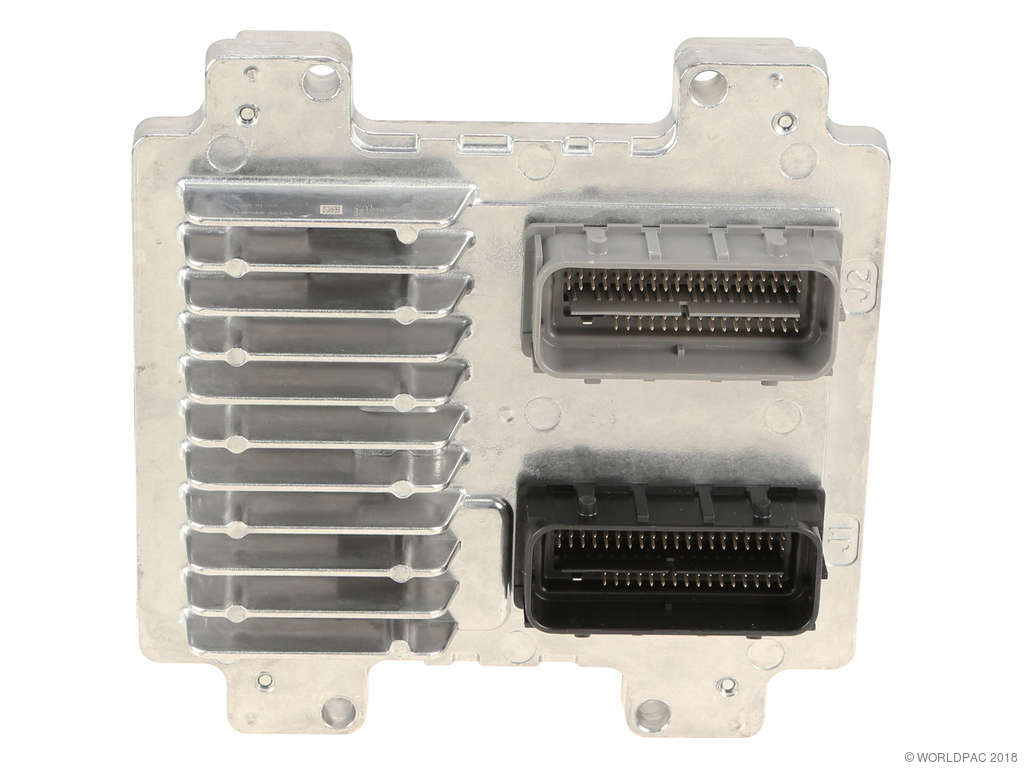
- Failed Engine Control Module (ECM) 🔴 High Probability → Shop Engine Control Module (ECM) Anecdotal evidence from numerous forums and mechanic case studies suggests a high failure rate for the ECM on this platform, particularly with the 2.4L engine where it is mounted in a high-heat, high-vibration area.
How to confirm: After confirming all power (Pin 20 constant, Pin 19 ignition-on) and ground (Pin 73) circuits to the ECM are intact and functioning correctly, the module itself is condemned. A scan tool will show communication with other modules (BCM, TCM) but not the ECM.
Typical fix: Replace the ECM. The new module must be programmed to the vehicle's VIN and security system.
Est. part cost: $200-$500 for a remanufactured unit, $450-$800+ for a new OEM unit if available. - Poor Power or Ground to the ECM 🟡 Medium Probability Loose or corroded ground straps are a common issue. A detailed case study on a 2009 Vue identified specific power and ground pins that must be checked. The main ECM ground is located at the left front top corner of the engine.
How to confirm: Using a multimeter and wiring diagram, check for battery voltage at the ECM's power pins (Pin 20 on connector X1 - constant B+) and ignition voltage (Pin 19 on X1 - key on). Verify continuity to ground on the ground pin (Pin 73 on connector X2). A voltage drop test should show less than 0.5 volts on both power and ground circuits.
Typical fix: Clean or tighten ground connections (e.g., G103, G106). Repair the specific power or ground wire that is open or shorted.
Est. part cost: $0-$25 for wire and connectors. - Faulty Underhood Fuse Block ⚪ Low Probability → Shop Fuse Box These fuse blocks are known to suffer from internal corrosion between their multi-layered circuit boards, causing intermittent and difficult-to-diagnose electrical problems that can cut power to critical modules like the ECM.
How to confirm: Check for power at the ECM-related fuses (e.g., 'ECM/TCM' fuse in the instrument panel box, and Fuse 24 in the underhood box for a 2.4L). A visual inspection of the fuse block's terminals for green or white corrosion is necessary. Tapping on the fuse block while monitoring for symptoms can sometimes reveal an intermittent connection.
Typical fix: Replace the underhood fuse block. It is not considered a repairable component.
Est. part cost: $150-$400 for a new unit. - Weak or Faulty Battery ⚪ Low Probability → Shop Vehicle Battery This is not specific to the Vue, but all modern vehicles are sensitive to low voltage, which can cause communication errors between modules. Voltage sag below 10V during cranking can trigger network faults.
How to confirm: Test the battery with a multimeter. A healthy, charged battery should read approximately 12.6 volts with the engine off. A load test is the most definitive way to confirm battery health.
Typical fix: Recharge or replace the vehicle battery.
Est. part cost: $150-$250
Rare But Worth Checking
- Damaged CAN Bus Wiring: While not the most common cause, physical damage to the twisted pair of GMLAN wires (often from rodents or previous improper repairs) can sever communication to the ECM. A break in this circuit will often result in an OL reading when checking resistance between pins 6 and 14 of the DLC.
Diagnosis Steps
- Verify the battery is fully charged (12.6V) and the terminals are clean and tight.
- Connect a scan tool. Attempt to communicate with the Engine Control Module (ECM). If it fails, attempt to communicate with other modules like the TCM, BCM, and ABS module.
- If other modules communicate but the ECM does not, the problem is isolated to the ECM, its wiring, or its power supply.
- Check all fuses related to the ECM/PCM in both the underhood and interior fuse panels. For the 2.4L, this includes the 15A Fuse 24 in the underhood box and the ECM/TCM fuse in the interior panel.
- With the battery disconnected, measure the resistance between Pin 6 (CAN High) and Pin 14 (CAN Low) on the OBD-II diagnostic port. A healthy network should read approximately 60 Ohms. A reading of 120 Ohms suggests a break in the circuit or a missing terminating resistor (one of which is in the ECM). An OL reading indicates an open circuit.
- Visually inspect the wiring harness leading to the ECM for any signs of damage, chafing, or rodent activity.
- Disconnect the ECM connectors (X1 and X2) and inspect for corrosion, moisture, or bent pins.
- Using a wiring diagram, use a multimeter to verify the ECM is receiving constant battery power (Red/White wire at Pin 20), ignition-on power (Pink wire at Pin 19), and has a solid connection to ground (Black wire at Pin 73).
- If all powers, grounds, fuses, and CAN bus resistance appear correct, the Engine Control Module (ECM) has most likely failed and requires replacement and programming.
Parts You'll Likely Need
- Engine Control Module (ECM)
(OEM #12633238 (For 2.4L Engine, supersedes previous numbers))— This is the most frequent point of failure on the 2008-2010 Vue that causes a U0100 code with a no-start symptom.
Trusted brands: ACDelco (OEM/Remanufactured), Cardone, FS1, Duralast
OEM price range: $450+
Aftermarket price range: $200-$500 - Underhood Fuse Block — A known, though less common, failure point due to internal corrosion that can cut power to the ECM and cause communication faults.
Trusted brands: ACDelco (OEM), Dorman
OEM price range: $300-$450
Aftermarket price range: $150-$300
Related Codes That Often Appear With This One
- U0101 — If the TCM (Transmission Control Module) also loses communication, it may be due to a shared power/ground issue or a problem with the main CAN bus wiring itself, rather than just the ECM.
- U0073 — Stands for 'Control Module Communication Bus A Off'. It often appears with U0100 because it indicates a general failure of the high-speed communication network itself.
- Various B-codes and C-codes — When the ECM goes offline, other modules like the Body Control Module (BCM) or ABS module will log communication loss codes because they are no longer receiving expected data from the engine computer.
Technical Service Bulletins (TSBs) & Recalls
- GM TSB 08-07-30-021H: This bulletin addresses a wide range of communication DTCs (including U0100) on various GM trucks and SUVs from a similar era. While not specific to the Vue, it provides valuable diagnostic direction, pointing to potential issues like poor connections in module connectors, opens/shorts in GMLAN circuits, and faulty data link resistors.
Platform-Specific Known Issues
- ECM Mounting Location on 2.4L Models: On Saturn Vues equipped with the 2.4L Ecotec engine, the ECM is mounted on the front of the engine block. This location subjects the module to constant, significant engine vibration and high temperatures, which is a likely contributor to the high rate of internal electronic failure compared to modules mounted on the firewall or inner fender.
Mechanic-Grade Diagnostic Values
- High-Speed GMLAN Bus Voltage (Key On) — expected: GMLAN High (Pin 6 at DLC): ~2.66V. GMLAN Low (Pin 14 at DLC): ~2.34V. In a recessive state, both lines should be at 2.5V. When transmitting, GMLAN High goes to ~3.5V and GMLAN Low to ~1.5V.. Failure: Voltages stuck high or low, or shorted to ground/power, indicate a wiring or module fault.
- ECM Power Supply Voltage Drop (Closed Circuit) — expected: Less than 0.5 Volts.. Failure: Voltage drop greater than 0.5V on either the power feed (Pin 19, 20) or ground circuit (Pin 73) indicates high resistance in the wiring or connections that must be repaired.
- ECM Power Supply Voltage (Cranking) — expected: Should not drop below 10.0 Volts.. Failure: A voltage drop below 10V during engine cranking can cause modules to reset or lose communication, indicating a weak battery or poor connections.
Scan Tool Commands That Help
- Tech2 / GDS2 (via J2534 device): Replace and Program ECU — This function is required after installing a new or used ECM. It writes the vehicle's VIN to the module and loads the correct software calibrations for the engine and transmission.
- Tech2 / GDS2 (via J2534 device): Module Status / Network Test — This command polls all control modules on the network to see which ones are actively communicating. For a U0100, this test will quickly confirm that the ECM is offline while other modules (BCM, TCM, ABS) are still present.
- Generic Scan Tool: 3x 10-Minute Key On Cycle (Security Relearn) — This is a manual procedure for programming a new key or relearning security after a module replacement if a scan tool is not available. It involves turning the key to 'ON' for 10+ minutes, three consecutive times. This may be necessary after an ECM swap to sync the immobilizer system.
Wiring & Ground Locations
- ECM Connector X1 (Black) — On the Engine Control Module, mounted to the front of the engine on 2.4L models.. This connector contains the main power supply pins. Pin 20 (Red/White) is constant battery voltage, and Pin 19 (Pink) is ignition voltage. Loss of power on these pins will cause the ECM to go offline.
- ECM Connector X2 (Gray) — On the Engine Control Module, next to connector X1.. This connector contains the primary ground for the ECM at Pin 73 (Black wire). A poor connection at this pin is a common cause of U0100.
- G103 / G106 — G103 is on the driver's side strut tower. G106 is on the engine at the left front top corner.. These are major engine and chassis ground points. The ECM's ground wire (from Pin 73) terminates at G106. Corrosion or looseness at these points can cause a floating ground and intermittent communication loss.
- Underhood Fuse Block — On the left (driver's) side of the engine compartment.. This block contains Fuse 24 (15A), which supplies constant battery power to the ECM on 2.4L models. The block itself is a known failure point due to internal corrosion.
- Instrument Panel (IP) Fuse Block — Inside the vehicle, typically accessible from the side of the dashboard or under the steering column.. Contains the 'ECM/TCM' fuse, which supplies ignition power to the ECM.
Real Owner Repair Stories
- YouTube channel 'Advanced Level Auto' (2009 Saturn Vue 2.4L Ecotec) — No crank, no start. Scan tool could not automatically read VIN and failed to communicate with the ECM.
❌ Tried (didn't work) The vehicle was brought to the shop with the suspicion of a bad ECM after another shop had already diagnosed it.
✅ What actually fixed it The technician verified good battery voltage, ignition power at ECM pin 19, and constant power at pin 20. The ground at pin 73 was also confirmed good. With all powers and grounds present but no communication, the ECM was condemned and replaced. The new (used) ECM was programmed using a J2534 pass-thru tool and GM's SPS software, which resolved the no-start condition.
OEM Part Supersession History
12607096, 12630244→12633238 (for 2.4L engine)— Standard part updates for reliability and software calibration improvements.
Heads up: While multiple part numbers may be listed for the 2008-2010 Vue (including 12590032, 12602044, 12603530, 12605843, 12630457), it is critical to match the part number or use a verified superseded number. A module from a different engine (e.g., 3.6L) will not work. Reprogramming with the correct VIN and software is always required.
Model Year Variations Within This Range
- 2008-2009: Some 2008-2009 models were part of GM Special Coverage program 15267 for faulty throttle position sensors, which can cause related drivability issues but is not a direct cause of U0100. This highlights known electronic issues in this specific period.
- 2008-2010 Hybrid Models: The Hybrid models (Green Line) have a more complex electrical system with a 36V intermediate voltage system and a Starter Generator Control Module. While the U0100 diagnostic process for the 12V ECM is similar, additional failure points exist within the hybrid control system that could potentially affect overall network communication.
Diagnostic Flowchart
Used vs. New Parts: Buying Guide for This Vehicle
When a used part is the smart pick: A used ECM from a reputable salvage yard is a viable and cost-effective option, as the primary failure mode is internal electronics rather than wear. However, this only makes sense if you have access to or have budgeted for professional programming, as the part is not 'plug and play'.
Donor-vehicle mileage cap: roughly under 150000 miles for the part to have meaningful remaining life.
What to inspect on the donor part:
- Verify the part number exactly matches your original or a known superseded number.
- Inspect the connectors for any bent, corroded, or burnt pins.
- Choose a donor vehicle that was not involved in a front-end collision or flood.
- Ask for the VIN of the donor vehicle; some programmers may need it as a reference before overwriting with your VIN.
OEM-only on this vehicle (don't cheap out):
- Engine Control Module (ECM): While aftermarket 'remanufactured' units exist, their quality can be inconsistent. A used OEM (ACDelco) unit or a new/reman OEM unit is the safest choice. Programming is required regardless of source.
- Underhood Fuse Block: Due to the risk of internal corrosion, a used fuse block may have the same latent defect as the one being replaced. A new OEM (ACDelco) or a quality aftermarket (Dorman) part is recommended to ensure a lasting repair.
Aftermarket brands forum-validated for this vehicle:
- ACDelco (OEM Remanufactured)
- Cardone (Remanufactured ECMs)
- FS1 (Remanufactured ECMs)
- Dorman (Underhood Fuse Block)
Brands owners have reported issues with on this vehicle:
- Unbranded, no-name ECMs from online marketplaces without a warranty or clear programming instructions should be avoided.
Real Owner Stories
Aggregated from forums and TSBs cited above. Mileages and costs reflect what owners reported in those sources.
2008 Saturn Vue 2.4L
Symptoms: The vehicle would not crank and the scan tool showed no communication with the engine computer, though it could communicate with other modules.
What fixed it: The ECM was replaced after a methodical diagnosis confirmed that all power and ground circuits to the module (specifically Pins 19, 20, and 73) were intact and functioning correctly.
Source hint: youtube_video titled 'SATURN VUE NO CRANK NO COMMUNICATION CASE STUDY by ADVANCED LEVEL AUTO'
Saturn Vue
Symptoms: A 'no crank, no start, not even a click' condition where the diagnostic process leads to a dead end after checking all the basics.
What fixed it: Replaced the ECU. The technician noted this was a common complaint and the only solution after confirming all other possibilities were ruled out.
Source hint: Reddit r/Saturn_Cars thread titled 'No crank, No start, not even a click.'
Related OBD-II Codes
Frequently Asked Questions
Why is my 2009 Saturn Vue with the 2.4L engine more likely to have this U0100 problem?
My scan tool won't connect to the ECM, but it can read the transmission (TCM) and body (BCM) modules. Does this confirm the ECM is bad?
What are the specific power and ground pins I need to test on the ECM for my Vue?
If I buy a replacement ECM, can I just install it myself?
What are the first fuses I should check for a U0100 code?
My cooling fans are running constantly as soon as I turn the key on. Is this related to the U0100 code?
What does a CAN bus resistance reading of 120 Ohms mean when diagnosing U0100?
Used OEM Parts in Stock
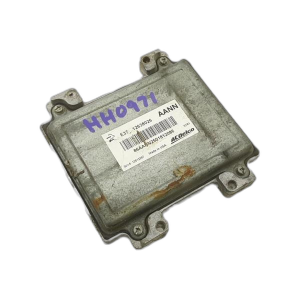
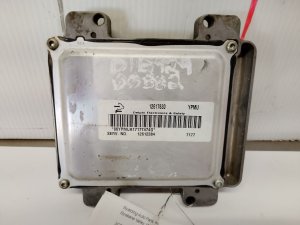
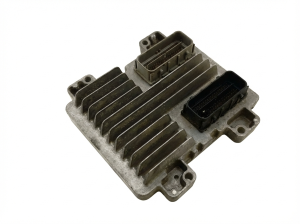
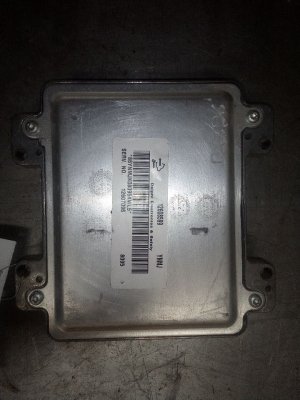
New Aftermarket Parts Available

The information in this article is provided for general reference and educational purposes only. Vehicle specifications, procedures, and part compatibility can vary by production date, trim level, and region. Always consult your vehicle's factory service manual and verify part numbers before purchasing or performing repairs. Safety-critical components such as airbags, seat belts, and braking systems should be installed by a qualified professional.
- Saturn Vue:
- 🧭 Diagnostic Flowchart
- 🛍️ Shop This Part
- What's Unique About the 2008-2010 Saturn Vue
- Symptoms You May Notice
- Most Likely Causes
- Rare But Worth Checking
- Diagnosis Steps
- Parts You'll Likely Need
- Related Codes That Often Appear With This One
- Technical Service Bulletins (TSBs) & Recalls
- Platform-Specific Known Issues
- Mechanic-Grade Diagnostic Values
- Scan Tool Commands That Help
- Wiring & Ground Locations
- Real Owner Repair Stories
- OEM Part Supersession History
- Model Year Variations Within This Range
- Used vs. New Parts: Buying Guide for This Vehicle
- Real Owner Stories
- 2008 Saturn Vue 2.4L
- Saturn Vue
- Related OBD-II Codes
- Frequently Asked Questions
- 🎟️ Get 5% Off