

U0101 on 2008-2014 Cadillac CTS: Lost Communication with TCM Causes and Fixes
This code means the Transmission Control Module (TCM) has stopped communicating with the rest of the car. The most likely cause is not a bad TCM, but a wiring issue at the main transmission connector, a poor ground connection, or low battery voltage. Expect serious shifting problems, a vehicle stuck in 'limp mode', and multiple warning lights on the dash.
- U0101 is a critical code that will severely impact your Cadillac CTS's ability to drive.
- Before assuming the expensive Transmission Control Module (TCM) has failed, thoroughly inspect the battery, grounds, and all wiring going to the transmission.
- The main electrical connector at the transmission is a known weak point; check it carefully for corrosion or damage.
- Due to the complexity of network diagnostics and the need for programming a new module, professional service is strongly recommended for this issue.
What's Unique About the 2008-2014 Cadillac CTS
The second-generation Cadillac CTS shares its network architecture and powertrain components with other GM vehicles of the era. A highly relevant GM Technical Service Bulletin (TSB #PIC4740E, later superseded) for this platform points to the main transmission wiring harness connector (X1) as a common failure point for this code, often due to corrosion or loose terminals. Therefore, on this specific vehicle, electrical connection integrity should be investigated before suspecting the more expensive Transmission Control Module (TCM) itself, which is integrated into the valve body inside the transmission pan (as a TEHCM).
Symptoms You May Notice
- Check Engine Light is on
- Transmission is stuck in one gear (fail-safe or 'limp mode')
- Harsh, erratic, or delayed shifting
- Gear position indicator on the dashboard is blank or incorrect
- Vehicle may not start or may stall unexpectedly
- "Service Stabilitrak" or other warning messages may appear on the dash
- Inability for a scan tool to communicate with the TCM 🎬 Watch: A complete breakdown of the U0101 code and fixes.
- Replacing the Transmission Control Module (TCM) before thoroughly inspecting and testing the wiring harness, connectors, and power/ground circuits. Electrical issues are a more frequent cause of this code than module failure.
Most Likely Causes
- Damaged Wiring or Corroded Connector at Transmission 🔴 High Probability → Shop Transmission Assembly A GM TSB for this platform (#PIC4740E) identifies the main 16-way transmission harness connector (X1) as a frequent source of communication loss due to corrosion, moisture intrusion, or backed-out terminal pins. The harness is also susceptible to heat damage and chafing where it routes over the transmission bell housing.
How to confirm: Visually inspect the main wiring harness and the round, 16-pin connector going to the transmission. Disconnect it by releasing the slide lock and rotating the lever. Check for any green/white corrosion, bent pins, moisture, or transmission fluid contamination. Wiggle the harness while monitoring communication status with a scan tool. A diagnostic video shows that poor pin tension 🎬 Watch: How to diagnose CAN network failures and pin issues. between the male pin on the TCM and the female pin in the connector is a common, hard-to-see failure.
Typical fix: Clean the connector terminals thoroughly with electrical contact cleaner and a small brush. Apply dielectric grease before reconnecting. If terminals are loose or damaged, the connector may need to be repinned or replaced with a pigtail kit. Repair any chafed sections of the wiring harness.
Est. part cost: $10-$150 - Low Battery Voltage or Poor Ground Connection 🟡 Medium Probability → Shop Vehicle Battery Control modules require a stable voltage to communicate. A weak battery, failing alternator, or corroded ground straps can cause intermittent communication faults across the vehicle's network. On this platform, ground G110 (located on the frame rail near the ABS module) is critical for ECM/TCM communication and is a known failure point, sometimes disturbed by aftermarket cold air intake installations.
How to confirm: Test the battery voltage with the engine off (should be >12.4V). Check the charging system voltage with the engine running (should be ~13.7-14.7V). Inspect and clean the main battery terminals and the primary engine/chassis ground straps, especially G110. Perform a voltage drop test on the main power and ground cables 🎬 See how to quickly test your car for ground faults. to find hidden resistance.
Typical fix: Replace a weak battery, repair the charging system, or clean/tighten ground connections. Ensure ground strap connections are free of paint and corrosion.
Est. part cost: $0-$250 - Failed Transmission Control Module (TCM/TEHCM) ⚪ Low Probability → Shop Transmission Assembly While less common than wiring issues, the module itself can fail internally due to heat and vibration. For most CTS models with 6-speed automatic transmissions (like the 6L50), the TCM is integrated into the Transmission Electro-Hydraulic Control Module (TEHCM), which is located inside the transmission oil pan, submerged in fluid.
How to confirm: This is typically diagnosed by exclusion. If power, ground, and CAN bus wiring to the module are all verified to be good, the module itself is the likely point of failure. A professional scan tool will be unable to establish communication with the TCM. You can also check the CAN bus resistance across the two communication pins at the diagnostic port; it should be ~60 ohms. If it's 120 ohms, it often indicates the TCM (which contains a terminating resistor) is offline.
Typical fix: Replace the TCM/TEHCM. This requires draining the fluid, removing the transmission oil pan and filter, and then removing the valve body to access the module. The replacement module must be programmed to the vehicle's VIN using specialized tools like ACDelco's TIS2Web service.
Est. part cost: $400-$900 - Blown TCM Fuse ⚪ Low Probability
How to confirm: Locate the fuse for the Transmission Control Module (TCM) in the vehicle's fuse box(es) (check both underhood and rear trunk panels). Pull the fuse and visually inspect if it is blown. On a 2009 CTS, relevant fuses could be in the rear fuse block, which is prone to water damage.
Typical fix: Replace the blown fuse. If the new fuse blows immediately, it indicates a short circuit in the TCM power supply wiring that must be traced.
Est. part cost: $1-$5
Diagnosis Steps
- Scan for all stored trouble codes in all modules. Note any other 'U' codes, as they point to a network-wide issue. A flood of U-codes suggests a systemic problem like a bad ground or power issue.
- Check the battery. Ensure it is fully charged (>12.4V) and the charging system is working correctly (~13.7-14.7V). Clean the battery terminals.
- Inspect the fuse box(es) for a blown fuse labeled 'TCM', 'TRANS', or similar. Pay close attention to the rear fuse block in the trunk for signs of water intrusion.
- Locate the main electrical connector on the transmission (X1). Disconnect it and carefully inspect for any signs of corrosion, moisture, backed-out pins, or fluid intrusion.
- Inspect the wiring harness leading to the transmission for any signs of chafing, melting, or physical damage, especially where it may contact the exhaust or engine block.
- If a wiring diagram is available, use a multimeter to verify that the TCM is receiving 12V power and has a solid ground connection at its connector pins.
- If power and ground are good, test the CAN bus wires. With the key on, check for proper voltage (CAN High should be ~2.5-3.5V and CAN Low should be ~1.5-2.5V). With the battery disconnected, check for resistance between the two CAN wires at the DLC (~60 ohms is normal, 120 ohms suggests an open circuit or a missing terminating resistor in a module).
- If all wiring, power, and grounds are confirmed to be good, and the CAN bus is intact, the TCM/TEHCM is the most likely culprit.
Parts You'll Likely Need
- Transmission Control Module (TCM/TEHCM)
(OEM #ACDelco 24275873 (2007-2010), ACDelco 24275874 (2011-2016))— This is the part to replace if all wiring, power, and ground circuits are confirmed to be intact. On most models, this is inside the transmission pan and must be programmed after installation.
Trusted brands: ACDelco, Dorman
OEM price range: $600-$900
Aftermarket price range: $400-$700 - Transmission Harness Connector — The external connector is a common failure point due to corrosion or damage and may need to be replaced if cleaning does not restore the connection. Often sold as a pigtail kit.
Trusted brands: ACDelco, Mopar (for pigtail kits)
OEM price range: $50-$150
Aftermarket price range: $25-$75
Related Codes That Often Appear With This One
- U0073 — Control Module Communication Bus 'A' Off. This is a general network code indicating a problem with the high-speed CAN bus, which is the underlying cause of the U0101.
- U0100 — Lost Communication With ECM/PCM. If the entire network is compromised by a wiring issue, communication can be lost with multiple modules simultaneously.
- U0121 — Lost Communication With Anti-Lock Brake System (ABS) Control Module. This often appears with U0101, pointing to a wider network problem rather than an isolated TCM fault.
- U0140 — Lost Communication With Body Control Module (BCM). Like other U-codes, this points to a systemic network fault.
Technical Service Bulletins (TSBs) & Recalls
- GM TSB #08-07-30-021H: While not listing the CTS specifically, it is the primary diagnostic document for this code on GM trucks and SUVs from the same era with the same 6-speed transmissions and network architecture. It details diagnosing multiple communication codes (including U0101) caused by issues at the 16-way transmission connector, chafed harnesses, or a faulty terminating resistor. It is highly relevant.
Platform-Specific Known Issues
- TEHCM Location: → Shop Transmission Valve Body For the 2008-2014 CTS with 6-speed automatic transmissions (6L45, 6L50, 6L80), the TCM is not a separate, easily accessible module. It is integrated into the Transmission Electro-Hydraulic Control Module (TEHCM), which is located inside the transmission, bolted to the valve body. This makes replacement a more involved job requiring removal of the transmission oil pan.
Mechanic-Grade Diagnostic Values
- CAN Bus Resistance (at DLC Pins 6 & 14, battery disconnected) — expected: ~60 Ohms. Failure: A reading of ~120 Ohms indicates an open circuit or that a terminating module (like the TCM) is offline. A reading near 0 Ohms indicates a short between the CAN High and Low wires.
- CAN Bus Voltage (Key On, Engine Off) — expected: CAN High (Pin 6 to Ground): ~2.5-3.5V. CAN Low (Pin 14 to Ground): ~1.5-2.5V. Both should average near 2.5V.. Failure: A line at 0V suggests a short to ground. A line stuck at a higher voltage could indicate a faulty driver in a control module.
- TCM Power Supply Voltage (at TCM connector) — expected: 12.0 - 12.6V (Key On). Failure: Low or no voltage indicates a problem with the fuse, relay, or power supply wire.
- TCM Ground Resistance (at TCM connector) — expected: < 0.5 Ohms. Failure: High resistance indicates a poor ground connection, which can cause intermittent communication.
Scan Tool Commands That Help
- GDS2 / Tech2: Module Status / Device List — This is a primary diagnostic step. The function polls all modules on the network and displays which ones are not communicating. If only the TCM is missing, it points to a more isolated issue; if multiple modules are gone, it suggests a larger network problem.
- GDS2 / Tech2: Service Programming System (SPS) — This function is mandatory after replacing the TCM/TEHCM. It programs the new module with the vehicle's VIN and correct software calibration. The vehicle will not operate correctly without this step.
- GDS2 / Tech2: Service Fast Learn Adapts — After a new TEHCM is programmed, this procedure must be run. It allows the new module to learn the specific hydraulic and mechanical characteristics of the clutches for smooth shifting. Failure to perform this can result in poor shift quality and new DTCs.
Wiring & Ground Locations
- X1 Connector — The main 16-pin round electrical connector on the driver's or passenger's side of the transmission housing.. This is the primary failure point identified in GM TSBs. It carries all power, ground, and communication lines to the TCM. Loose pins, corrosion, or harness chafing here directly causes U0101.
- G110 — On the frame rail near the ABS module, in the engine compartment.. This is a critical ground point for several modules, including the ECM and EBCM, which are essential for network stability. A poor connection here can cause a flood of communication codes. It is notoriously disturbed by aftermarket Cold Air Intake installations.
- Rear Fuse Block — Located in the trunk on the passenger side for the 2008-2014 CTS.. This fuse block supplies power to the TCM. It is known to be susceptible to water damage from leaky trunk seals or sunroof drains, which can cause corrosion and intermittent voltage supply, leading to U0101.
- G401 / G402 — Located in the rear of the vehicle, in the trunk/chassis area.. These are major chassis grounds for rear-body electronics. While less direct, a poor connection here can introduce electrical noise and instability to the entire vehicle network, contributing to intermittent communication faults.
Real Owner Repair Stories
- Reddit user in r/MechanicAdvice (Chevy vehicle with similar GM architecture) — U0101 code, limp mode, hard clunk when shifting into reverse, gear position indicator blank.
❌ Tried (didn't work) Owner had previously replaced the entire transmission for the same issue., Considered various complex wiring problems.
✅ What actually fixed it The positive battery terminal was corroded and needed replacement. This restored stable voltage to all modules, resolving the communication code. - GoTech on YouTube (paraphrased) (Vehicle with U0101) — U0101, no communication with TCM, multiple other network codes.
❌ Tried (didn't work) Initial scope readings on the CAN bus were confusing., Checking the wiring harness splices showed no visible corrosion.
✅ What actually fixed it The issue was poor pin tension on a single pin in the main transmission connector. The female terminal in the connector was not making a secure connection with the male pin on the TCM. The act of back-probing the connector for testing temporarily fixed the connection, revealing the root cause. The final fix was to address the loose pin terminal. - Hummer4x4Offroad forum user (GM Truck with similar wiring architecture) — U0101 and other communication issues.
❌ Tried (didn't work) Initial checks focused on modules and connectors.
✅ What actually fixed it A ground wire within a larger harness bundle had broken inside its insulation. The break was not visible externally. The wire had worn through where the harness was secured by a factory zip tie, causing an intermittent loss of ground to the TCM.
OEM Part Supersession History
24257213, 24041874→24275873— Part has been updated and revised by the manufacturer over time to improve reliability or address known failure modes.
Heads up: While the part numbers have been superseded, the critical factor is programming. A new TEHCM, regardless of part number, must be programmed for the specific vehicle's VIN and calibration. A used module from another vehicle, even with the correct part number, is VIN-locked and generally cannot be reprogrammed by a dealer.
Model Year Variations Within This Range
- 2008-2014: The primary variation is not year-to-year but based on the specific 6-speed transmission installed (6L45, 6L50, 6L80). While the U0101 fault is common across them, the exact TEHCM part number and internal specifics may vary. However, the external diagnostic approach focusing on the X1 connector, grounds, and power supply remains consistent for the entire generation.
Diagnostic Flowchart
Used vs. New Parts: Buying Guide for This Vehicle
When a used part is the smart pick: A used part is a smart choice for external wiring components like the transmission harness connector pigtail. These are not electronically complex and can be visually inspected for quality.
Donor-vehicle mileage cap: roughly under 50000 miles for the part to have meaningful remaining life.
What to inspect on the donor part:
- For connectors: Check for zero corrosion (no green or white powder), intact locking tabs, and no bent or spread pins.
- For harnesses: Ensure the plastic conduit is not brittle or cracked, and there are no signs of melting, chafing, or previous repairs (e.g., electrical tape splices).
OEM-only on this vehicle (don't cheap out):
- Transmission Control Module (TEHCM): This is the strongest recommendation. Used TEHCMs are VIN-locked to the donor vehicle and dealerships cannot reprogram them. While specialized services can 'clone' or 'virginize' them, it adds complexity and risk. A new ACDelco TEHCM is the most reliable path to a successful repair.
Aftermarket brands forum-validated for this vehicle:
- ACDelco (for OEM TEHCM and connectors)
- Dorman (offers replacement connector pigtails and sometimes remanufactured TEHCMs)
Brands owners have reported issues with on this vehicle:
- Unnamed, no-brand TEHCMs from online marketplaces. These often have high failure rates, are improperly remanufactured, or cannot be programmed correctly.
Real Owner Stories
Aggregated from forums and TSBs cited above. Mileages and costs reflect what owners reported in those sources.
Cadillac CTS (General)
Symptoms: The U0101 code is frequently accompanied by a 'Service Stabilitrak' message on the dashboard.
What fixed it: Owners report that the recommended diagnostic path is to thoroughly investigate all wiring and ground connections before condemning the expensive TEHCM, as these are common and cheaper failure points.
Source hint: cadillacforums.com
C6 Corvette (platform mate)
Symptoms: Owner experienced a loss of high-speed GMLAN communications, triggering a U0101 code, and noted the difficulty in accessing the main transmission connector for diagnosis.
What fixed it: The diagnosis, guided by TSB 08-07-30-021H, pointed towards a fault at the 16-way transmission connector, a common issue detailed in the service bulletin.
Source hint: corvetteforum.com/forums/c6-tech-performance/4183887-tsb-08-07-30-021h-loss-of-high-speed-gmlan-communications.html
Related OBD-II Codes
Frequently Asked Questions
Where is the Transmission Control Module (TCM) located on my 2010 Cadillac CTS?
My mechanic wants to replace the TEHCM. Is this a simple part to swap out?
I'm getting a 'Service Stabilitrak' message along with the Check Engine Light. Is this related to the U0101 code?
I want to check the wiring myself. Is there a specific connector that is a known problem on the CTS?
Are there any specific ground connections I should check for a U0101 code?
My scan tool can't communicate with the TCM. Does that guarantee the TCM has failed?
How can I test the communication network myself?
Helpful Videos
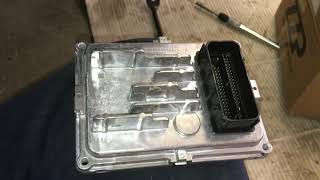
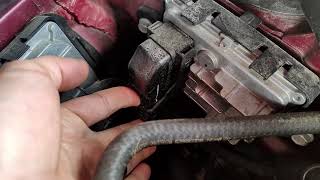
We Have This Part in Stock

The information in this article is provided for general reference and educational purposes only. Vehicle specifications, procedures, and part compatibility can vary by production date, trim level, and region. Always consult your vehicle's factory service manual and verify part numbers before purchasing or performing repairs. Safety-critical components such as airbags, seat belts, and braking systems should be installed by a qualified professional.
- Cadillac CTS:
- 🧭 Diagnostic Flowchart
- 🎬 Helpful Videos
- 🛍️ Shop This Part
- What's Unique About the 2008-2014 Cadillac CTS
- Symptoms You May Notice
- Most Likely Causes
- Diagnosis Steps
- Parts You'll Likely Need
- Related Codes That Often Appear With This One
- Technical Service Bulletins (TSBs) & Recalls
- Platform-Specific Known Issues
- Mechanic-Grade Diagnostic Values
- Scan Tool Commands That Help
- Wiring & Ground Locations
- Real Owner Repair Stories
- OEM Part Supersession History
- Model Year Variations Within This Range
- Used vs. New Parts: Buying Guide for This Vehicle
- Real Owner Stories
- Cadillac CTS (General)
- C6 Corvette (platform mate)
- Related OBD-II Codes
- Frequently Asked Questions
- 🎟️ Get 5% Off