

U0101 on 2006-2010 Hummer H3: Lost Communication With TCM Causes and Fixes
On a 2006-2010 Hummer H3, code U0101 most often points to a wiring issue, such as a corroded connector, damaged harness, or loose pin, preventing the vehicle's computers from talking to the Transmission Control Module (TCM). The factory battery terminals are another known weak point causing this code. Start by inspecting all TCM-related wiring, grounds, and battery connections before suspecting a bad module.
- Code U0101 on a Hummer H3 points to a communication breakdown with the transmission controller, not necessarily a bad transmission.
- Before you consider replacing any expensive modules, thoroughly inspect all related wiring, connectors, and grounds. The problem is most likely there.
- Know your year: 2006-2007 models have an integrated PCM/TCM, while 2008-2010 models have a separate TCM.
- Ensure your battery is healthy and the battery terminals are clean and tight, as low voltage is a common cause of communication faults.
- Due to the complexity of network diagnostics, professional help is recommended if a simple visual inspection doesn't reveal the problem.
What's Unique About the 2006-2010 Hummer H3
For the 2006-2007 Hummer H3, the TCM is integrated within the main Powertrain Control Module (PCM), meaning a single unit controls both engine and transmission functions. From 2008-2010, Hummer switched to a separate, standalone TCM mounted in the engine bay near the firewall on the passenger side. This distinction is critical for diagnosis; on earlier models, a 'TCM' failure is a PCM failure, while on later models, the TCM is a distinct, replaceable part. Owners on forums like Hummer4x4Offroad and Reddit frequently report that wiring issues—not a failed module—are the root cause.
Symptoms You May Notice
- Check Engine Light is on
- Transmission or Stabilitrak/Traction Control failure message on the driver information center
- Transmission is stuck in one gear (often 1st or 2nd/3rd), known as 'limp mode'
- Inability to shift out of Park, requiring manual override of the shift lock solenoid
- Erratic or harsh shifting
- Vehicle may stall or lose power
- Gear indicator on the dashboard may be blank or incorrect
- Replacing the TCM/PCM without first thoroughly inspecting the wiring harness and connectors. Many owners and shops have replaced the module only to find the U0101 code returns because the actual problem was a simple wiring fault, loose connector pin, or bad battery terminal.
Most Likely Causes
- Wiring Harness or Connector Issues 🔴 High Probability As these vehicles age, wiring harnesses become brittle and connectors are susceptible to corrosion from moisture and road salt, a common complaint among H3 owners. Specific forum instances point to chafed wires near the fuse box, loose pins in the main TCM connector, or a broken 12v battery wire in the harness. The female terminals in the main TCM connector can lose tension after being disconnected and reconnected multiple times, leading to a poor connection that standard continuity tests might miss.
How to confirm: Visually inspect the entire wiring harness leading to the TCM for signs of damage, chafing, or corrosion. Disconnect the TCM connector and check for corroded, bent, or loose pins. A 'pin drag test' using a properly sized terminal test probe can confirm if female terminals have lost tension; there should be a slight drag when inserting the probe. Use a multimeter to check for power (Pink and Orange wires) and ground (Black/White wire) at the TCM connector.
Typical fix: Repair the damaged section of wiring or clean/tighten the connector pins. In a documented case, an owner fixed an intermittent U0101 by carefully closing the female sockets on the TCM plug with a 0.7mm probe to ensure a tighter fit.
Est. part cost: $10-$50 for wiring repair supplies - Poor Battery Voltage or Bad Grounds 🟡 Medium Probability → Shop Vehicle Battery The factory battery terminal connectors on the H3 are a known weak point made of cheap metal that can deform, preventing a solid connection. This causes intermittent voltage drops that can make control modules, including the TCM, drop off the communication network. Forum users strongly recommend replacing them as a primary preventative measure for many electrical gremlins.
How to confirm: Test the battery voltage (>12.4V engine off, ~14V engine on). Load test the battery. Inspect all major ground connections (battery to chassis, engine to chassis, and specific ground points like G100, G102, G103, and G105) for corrosion and tightness. Wiggle the battery terminals to see if they are loose even when tightened.
Typical fix: Replace the OEM battery terminals with quality aftermarket units (e.g., Stinger brand). Clean or replace corroded ground straps. Replace a weak or failing battery.
Est. part cost: $20-$250 - Failed Transmission Control Module (TCM) or Powertrain Control Module (PCM) ⚪ Low Probability → Shop Engine Control Module (ECM) While less common than wiring issues, the module itself can fail due to internal component overheating or circuit board failure. For 2006-2007 models, this means the entire PCM is at fault. For 2008-2010 models, it's the separate TCM located near the firewall.
How to confirm: This is a process of elimination. If all wiring, power, and ground checks are confirmed to be good, and the CAN bus resistance is 60 ohms, the module itself is the likely culprit. This often requires a professional diagnosis with a scan tool that can attempt to communicate directly with the module and finds no response.
Typical fix: Replace the faulty module. A new TCM/PCM will require programming to the vehicle's VIN. Some aftermarket suppliers sell 'plug and play' units pre-programmed with your VIN.
Est. part cost: $200-$600 for a remanufactured module
Rare But Worth Checking
- Faulty Ignition Switch: → Shop Ignition Switch
Diagnosis Steps
- Check Battery Health: Ensure the battery is fully charged and the terminals are clean and tight. The H3 is very sensitive to voltage fluctuations, and the OEM terminals are a known failure point.
- Scan for Other Codes: Use an OBD-II scanner to see if other communication (U-prefix) codes are present. Multiple U-codes may point to a wider network problem, as described in GM TSB 08-07-30-021H.
- Inspect Fuses: Check all fuses related to the transmission and TCM/PCM. On a 2009-2010 H3, this includes Fuse #17 (AIR PUMP RLY/TCM) in the underhood fuse block.
- Inspect Wiring and Connectors: Perform a thorough visual inspection of the wiring harness going to the TCM/PCM. Look for any signs of chafing, melting, or corrosion. Pay close attention to the main connector at the module. On 2008-2010 models, the TCM is on the passenger side firewall.
- Verify Power and Ground: Using a multimeter and a wiring diagram, confirm that the TCM/PCM is receiving proper battery voltage (often on a Pink wire) and has a solid ground connection (often a Black/White wire). Check known ground points like G100, G102, G103, and G105 for integrity.
- Check CAN Bus Lines: Disconnect the battery. At the OBD-II port, measure the resistance between Pin 6 (CAN High) and Pin 14 (CAN Low). A healthy network should read approximately 60 ohms. A reading of 120 ohms suggests a break in the circuit or a missing terminating resistor. At the TCM connector, check for 2.5-3.5V on the CAN High line and 1.5-2.5V on the CAN Low line with the key on.
- Diagnose the Module: If all wiring, power, grounds, and CAN bus resistance checks are confirmed to be good, the TCM/PCM itself is the most likely cause of the failure.
Parts You'll Likely Need
- Transmission Control Module (TCM)
(OEM #24252114, 24242391, 24243921, 24235340)— For 2008-2010 models only. This is the part to replace if all wiring and power/ground checks have been completed and are confirmed to be good.
Trusted brands: ACDelco
OEM price range: $300-$500
Aftermarket price range: $200-$400 - Powertrain Control Module (PCM)
(OEM #12606374, 12597521, 19209820, 12602010)— For 2006-2007 models, the TCM is integrated into the PCM. If the module is faulty, the entire PCM must be replaced.
Trusted brands: ACDelco
OEM price range: $400-$600
Aftermarket price range: $250-$450 - Battery Terminal Connectors — The OEM battery terminals are a known failure point on H3s and can cause a variety of electrical and communication faults. Upgrading them is a common and highly recommended preventative measure. 🎬 Watch: How to fix electrical issues by replacing battery terminals
Trusted brands: Stinger, Fastronix
OEM price range: $30-$50
Aftermarket price range: $20-$40
Related Codes That Often Appear With This One
- U0073 - Control Module Communication Bus 'A' Off
- P0700 - Transmission Control System (MIL Request)
- U0100 - Lost Communication with ECM/PCM
- U0121 - Lost Communication With Anti-Lock Brake System (ABS) Control Module
- U0140 - Lost Communication With Body Control Module
Technical Service Bulletins (TSBs) & Recalls
- TSB 08-07-30-021H: This General Motors bulletin addresses 'Loss of High Speed GMLAN Communications' which includes DTC U0101. It points to potential causes like chafed wiring, backed-out terminals in the transmission connector, and corrosion in module connectors. It advises technicians to repair wiring and connectors before replacing any modules.
Platform-Specific Known Issues
- On 2006-2007 models, the TCM is part of the PCM. On 2008-2010 models, the TCM is a separate module located on the passenger side of the engine bay firewall. This is a critical distinction for diagnosis and parts ordering.
- The factory battery terminals are notoriously problematic and can cause intermittent electrical faults that are difficult to trace. Many forum members consider replacing them the number one modification for H3 reliability.
- Owners have reported finding chafed or broken wires in the harness between the fuse box and battery box, which can cause a loss of power to the TCM.
- Loose female pins within the large TCM electrical connector are a known cause of intermittent U0101 faults, often after the connector has been unplugged for other service.
Mechanic-Grade Diagnostic Values
- CAN Bus Network Resistance — expected: ~60 Ω. Failure: A reading of ~120 Ω indicates an open in the circuit or a module/terminating resistor is offline. A reading near 0 Ω indicates a short between the CAN High and CAN Low wires.
- CAN Bus Voltage (Key On, Engine Off) — expected: CAN High: 2.5-3.5 V; CAN Low: 1.5-2.5 V. Failure: Voltages outside these ranges, or a lack of differential voltage, indicates a bus fault.
- TCM Ground Circuit Resistance — expected: < 0.5 Ω. Failure: Higher resistance indicates a poor ground connection, which can cause the module to drop offline.
- TCM Connector Pin Tension — expected: A slight but noticeable drag when a correctly sized terminal test probe is inserted.. Failure: If the probe slides in with no resistance, the female terminal has lost tension and cannot make a reliable connection.
Scan Tool Commands That Help
- Tech2 / GDS2 (or equivalent professional scanner): Module Communication Test / Ping Module — Use this bidirectional command to actively send a request to the TCM. If the tool reports 'No Communication', it confirms the module is offline at that moment, which is essential for diagnosing intermittent faults.
- N/A - Manual Test: CAN Bus Bypass Jump — If multiple modules are setting 'Lost Communication' codes, you can unplug the TCM and use jumper wires to connect the CAN-High-In to the CAN-High-Out and the CAN-Low-In to the CAN-Low-Out wires in the harness connector. If communication is restored to other modules, it proves the external wiring is good and the fault is either the TCM itself or its connector.
Wiring & Ground Locations
- TCM Location (2008-2010) — In the engine bay, on the passenger side, mounted to the firewall.. This is the physical location of the module. Its proximity to heat and the elements makes its harness and connectors primary inspection points.
- G100 / G105 — On the left inner front wheel well, behind the battery.. These are primary chassis ground points for multiple systems in the engine bay. Corrosion or looseness here can cause widespread electrical issues, including module communication failures.
- G102 / G103 — On the lower left side of the engine block.. These are critical engine block grounds. A poor connection here can affect the PCM/ECM and other engine-related modules that share data with the TCM.
- Fuse #17 (Underhood) — In the underhood fuse block, located on the driver's side of the engine bay.. On 2009-2010 models, this fuse is specifically labeled for the TCM. A blown fuse here will cut all power to the module, causing an immediate U0101.
- Sunroof Drain Exits — The front drains exit through grommets in the firewall, behind the dash on both driver and passenger sides.. When these clog, water overflows and can run down into the passenger compartment, potentially soaking the Body Control Module (BCM) behind the passenger kick panel, causing network-wide communication faults.
Real Owner Repair Stories
- YouTube user 'U0101 Code Fix H3 Hummer' (Hummer H3 (year not specified, but has separate TCM, so 2008-2010)) — Intermittent U0101 code, transmission going into limp mode (2nd and 3rd gear only).
❌ Tried (didn't work) Diagnosis by two different auto electricians, Replacing the Transmission Control Module (TCM), Full wiring loom inspection and continuity testing
✅ What actually fixed it The female pins in the main TCM electrical connector had lost tension from being unplugged multiple times. The owner used a 0.7mm probe to carefully tighten the female sockets to ensure a snug fit on the male pins of the TCM. This permanently resolved the code. - Reddit user on r/Hummer (2010 Hummer H3 Alpha, ~170,000 miles) — DTC U0101 (pending), 'Traction Control Failure' message, stuck in 1st gear, shift lock solenoid engaged.
❌ Tried (didn't work) Resetting DTCs with a code reader
✅ What actually fixed it The issue resolved itself temporarily after the owner manually manipulated the shift lock override solenoid and then drove over some bumps. This strongly suggests the root cause was a loose electrical connection that was jostled back into making contact.
"I Checked Everything" — The Actual Cause
- A common failure pattern for U0101 on this vehicle is passing a standard continuity test on the wiring harness, only for the actual problem to be poor pin tension in the female side of the TCM connector. A multimeter probe may make good contact for the test, but the male pin from the module itself does not, causing an intermittent connection under normal vibration and operating conditions. A 'pin drag test' is required to identify this specific mechanical failure of the connector.
When the Usual Fixes Don't Work
- In a well-documented case, the vehicle owner replaced the Transmission Control Module in an attempt to fix an intermittent U0101 code, but the problem persisted. This demonstrates that module replacement is not always the solution. The actual root cause was found to be loose female pins in the TCM's electrical connector, which was fixed by manually re-tensioning the pins for a few dollars in labor, versus hundreds for the unnecessary module.
OEM Part Supersession History
24234503, 24239224→24252114— Standard part revision and consolidation by the manufacturer.
Heads up: These part numbers are generally interchangeable for the specified model years, but programming to the vehicle's VIN is always required.12597521, 19209820→12606374— Standard part revision and updated hardware/software.
Heads up: These are PCM part numbers where the TCM is integrated. They require VIN programming. Using a part from a different engine size will not work.
Model Year Variations Within This Range
- 2006-2007: The Transmission Control Module (TCM) is integrated within the Powertrain Control Module (PCM). A U0101 fault points to an issue with the PCM or its direct connections.
- 2008-2010: The vehicle uses a separate, standalone Transmission Control Module (TCM) located on the passenger-side firewall, making it a distinct component that can be diagnosed and replaced independently of the PCM.
- 2009-2010: The underhood fuse block has a fuse (#17) specifically labeled for the TCM, providing a clear and direct point to check for power supply issues to the module.
Diagnostic Flowchart
Used vs. New Parts: Buying Guide for This Vehicle
When a used part is the smart pick: A used TCM (2008-2010) or PCM (2006-2007) from a reputable automotive recycler is a viable cost-saving option. Complete wiring harnesses are also excellent candidates for used purchase if the original is damaged beyond simple repair.
Donor-vehicle mileage cap: roughly under 150000 miles for the part to have meaningful remaining life.
What to inspect on the donor part:
- Ensure the donor vehicle was not a flood or fire victim.
- Inspect all connector pins on the module for any signs of corrosion, bending, or water marks.
- Verify the plastic housing of the module is not cracked or showing signs of extreme heat exposure.
- For wiring harnesses, check that all connector locking tabs are intact and that there are no unauthorized splices or brittle insulation.
OEM-only on this vehicle (don't cheap out):
- While not strictly required, using an OEM (ACDelco) or a reputable remanufacturer for the TCM/PCM is strongly advised to ensure correct software and hardware compatibility.
Aftermarket brands forum-validated for this vehicle:
- Stinger
- Fastronix (for battery terminal upgrades)
Brands owners have reported issues with on this vehicle:
- Unbranded, 'no-name' electronic modules from online marketplaces should be avoided due to a high likelihood of programming issues, incorrect software, or poor quality control.
Real Owner Stories
Aggregated from forums and TSBs cited above. Mileages and costs reflect what owners reported in those sources.
Hummer H3
Symptoms: Persistent U0101 code that did not resolve even after replacing the Transmission Control Module (TCM).
What fixed it: The problem was ultimately traced to the large electrical connector at the TCM. The fix was to carefully tighten the female pin sockets within the connector using a small probe to ensure a solid electrical connection.
Source hint: YouTube: U0101 Code Fix H3 Hummer
2010 Hummer H3
Symptoms: Vehicle would intermittently go into 'limp mode' and display a traction control failure message. The issue was often triggered by driving over bumps.
What fixed it: While the final repair wasn't stated, diagnosis strongly pointed to a wiring or connection issue as the root cause, rather than a failed TCM, due to the intermittent and bump-sensitive nature of the fault.
Source hint: Reddit: r/Hummer - H3 TCM failure?
Hummer H3
Symptoms: An intermittent U0101 code and loss of power to the TCM.
What fixed it: The owner discovered and repaired chafed and broken wires within the main wiring harness, specifically in the section running between the underhood fuse box and the battery box.
Source hint: vehicle_specific_issues
Related OBD-II Codes
Frequently Asked Questions
I have a 2007 H3 and my friend has a 2009. If we both have a U0101 code, are we looking for the same part?
Could the original factory battery terminals on my H3 really cause a transmission communication code like U0101?
Is there an official GM Technical Service Bulletin (TSB) that relates to the U0101 code on the Hummer H3?
My mechanic wants to replace the TCM immediately. Is that the most likely solution?
I unplugged the main connector to my TCM for inspection, and now the U0101 code is constant. What happened?
Where is the Transmission Control Module (TCM) located on a 2008-2010 Hummer H3?
Helpful Videos
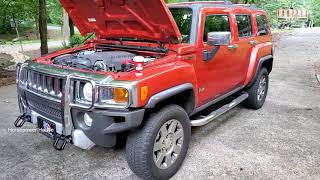
Used OEM Parts in Stock
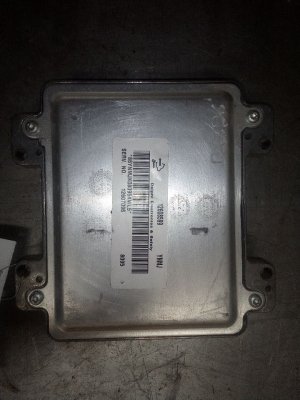
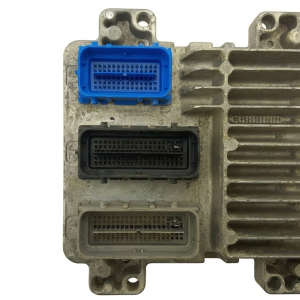
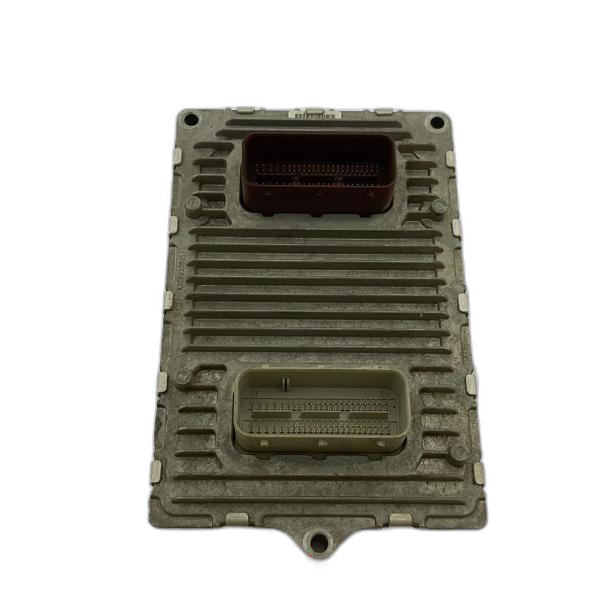
New Aftermarket Parts Available

The information in this article is provided for general reference and educational purposes only. Vehicle specifications, procedures, and part compatibility can vary by production date, trim level, and region. Always consult your vehicle's factory service manual and verify part numbers before purchasing or performing repairs. Safety-critical components such as airbags, seat belts, and braking systems should be installed by a qualified professional.
- Hummer H3:
- 🧭 Diagnostic Flowchart
- 🎬 Helpful Videos
- 🛍️ Shop This Part
- What's Unique About the 2006-2010 Hummer H3
- Symptoms You May Notice
- Most Likely Causes
- Rare But Worth Checking
- Diagnosis Steps
- Parts You'll Likely Need
- Related Codes That Often Appear With This One
- Technical Service Bulletins (TSBs) & Recalls
- Platform-Specific Known Issues
- Mechanic-Grade Diagnostic Values
- Scan Tool Commands That Help
- Wiring & Ground Locations
- Real Owner Repair Stories
- "I Checked Everything" — The Actual Cause
- When the Usual Fixes Don't Work
- OEM Part Supersession History
- Model Year Variations Within This Range
- Used vs. New Parts: Buying Guide for This Vehicle
- Real Owner Stories
- Hummer H3
- 2010 Hummer H3
- Hummer H3
- Related OBD-II Codes
- Frequently Asked Questions
- 🎟️ Get 5% Off