

U0101 on 2007-2012 Mazda 6: Lost Communication With TCM Causes and Fixes
On a 2007-2012 Mazda 6, code U0101 means the Transmission Control Module (TCM) has gone offline. This is most often due to an internal failure of the TCM itself, but can also be caused by wiring or power supply issues. Expect the car to be in 'limp mode,' stuck in one gear, with the 'AT' light flashing.
- U0101 on a 2007-2012 Mazda 6 means the Transmission Control Module (TCM) has lost communication.
- Your vehicle will go into 'limp mode' with a flashing 'AT' light and is not safe to drive long distances.
- Unlike a Mazda 3, the TCM in a Mazda 6 is inside the car, so failure is less likely to be from heat. Check fuses, grounds, and wiring before replacing the module.
- If wiring and power are good, the TCM itself is the most likely failed part. A replacement will need to be programmed to your car's VIN.
What's Unique About the 2007-2012 Mazda 6
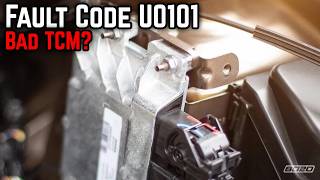
Unlike the Mazda 3 from the same era, where the TCM is known to fail from heat due to its location on the transmission case, the 2007-2012 Mazda 6 has its TCM located inside the cabin. It is typically found behind the passenger-side kick panel or above the glove box, protected from the extreme heat and vibration of the engine bay. This means that while TCM failure is still a primary cause of U0101, it's not due to the same design flaw as the Mazda 3. Therefore, other causes like wiring, connector corrosion, or power supply issues should be carefully considered before condemning the module.
Symptoms You May Notice
- Automatic Transmission (AT) warning light is illuminated or flashing.
- Check Engine Light is on.
- Transmission is stuck in one gear (fail-safe or 'limp mode').
- Harsh, clunking, or delayed gear engagement, especially when shifting into Drive or Reverse.
- Inability to shift out of Park or Neutral.
- Gear position indicator on the dashboard may be blank or incorrect.
- Multiple other warning lights may appear simultaneously (e.g., TPMS, SCBS) as other systems lose data from the TCM.
- The vehicle may randomly change gears without warning while driving, creating significant safety concerns (NHTSA ODI #10443803).
- Replacing the entire transmission. U0101 is an electrical communication code, not a mechanical failure. The transmission itself is usually mechanically sound.
- Replacing transmission solenoids or fluid. While these can fix other shifting problems, they will not resolve a communication fault code.
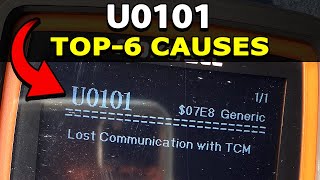
- Assuming the TCM is bad without testing power, ground, and CAN bus wiring first. A simple wiring or fuse issue can mimic a failed module. 🎬 Watch: Top 6 causes of the U0101 fault code
Most Likely Causes
- Internal Failure of the Transmission Control Module (TCM) 🔴 High Probability → Shop Transmission Assembly While better protected from heat than in other Mazda models, electronic components can fail over time due to age, electrical stress, or manufacturing defects. This remains the most cited cause after ruling out simpler electrical issues.
How to confirm: After confirming the TCM has proper 12V power, a solid ground, and intact CAN bus wiring (checking for ~60 ohms resistance between CAN_H and CAN_L pins), the module itself is condemned. A professional scan tool will be unable to establish communication with the TCM.
Typical fix: Replace the Transmission Control Module. The new or remanufactured module must be programmed or configured to the vehicle's VIN.
Est. part cost: $250-$700 - Damaged Wiring or Poor Connection 🟡 Medium Probability The wiring harness leading to the in-cabin TCM can be susceptible to damage from water intrusion (especially if there are windshield leaks), chafing against sharp metal brackets under the dash, or corrosion at the connector pins.
How to confirm: Visually inspect the TCM connector and harness for any signs of corrosion, water stains, or physical damage. Unplug the connector and check for bent or backed-out pins. Perform a continuity and resistance check on the power, ground, and CAN bus wires between the TCM and a known good point (like the OBD-II port or PCM connector) using a multimeter and a wiring diagram.
Typical fix: Repair the damaged section of the wiring harness, clean the corroded connector pins with an electronics cleaner, or replace the affected connector.
Est. part cost: $10-$150 - Loss of Power or Ground to the TCM ⚪ Low Probability Fuses can degrade and fail with age. Ground points can become corroded over time, leading to high resistance and intermittent electrical problems.
How to confirm: Check the fuse dedicated to the TCM in the vehicle's fuse box (consult the owner's manual for the specific fuse). Use a multimeter to verify that the TCM connector is receiving a stable 12V+ power supply with the key on and has a solid connection to chassis ground (less than 0.5 ohms resistance). A test light can also be used to confirm power and ground.
Typical fix: Replace the blown fuse or repair the faulty power/ground circuit. Clean any corroded ground points to bare metal and re-secure.
Est. part cost: $1-$20
Rare But Worth Checking
- Low Battery Voltage or Failing Alternator: → Shop Alternator Control modules can behave erratically or fail to communicate if system voltage is unstable or drops below a critical threshold (typically ~10.5V). Always check the battery and charging system health before diving into complex diagnostics.
Diagnosis Steps
- Scan for Codes: Use an OBD-II scanner capable of reading manufacturer-specific codes. Confirm U0101 is the primary code. Note any other 'U' codes present in other modules (like ABS or BCM), as this can point to a network-wide issue.
- Check Battery and Fuses: Ensure the battery voltage is above 12.4V and that the charging system is working correctly (13.5-14.5V with engine running). Locate and inspect the fuse for the TCM. Test the fuse with a multimeter, as visual inspection can be misleading.
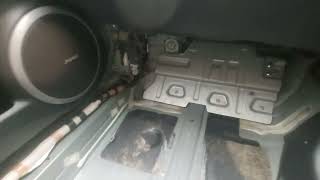
- Locate the TCM: On the 2007-2012 Mazda 6, the TCM is inside the cabin, typically behind the passenger side kick panel or above the glove box, near the main ECU. 🎬 Watch: Locate your Mazda 6 TCM, ECU, and BCM
- Inspect Connector and Wiring: Disconnect the battery. Unplug the TCM connector and inspect for corrosion, bent pins, or moisture. Check the nearby harness for any visible damage, chafing, or poorly executed prior repairs.
- Test Power and Ground: Reconnect the battery and turn the ignition on. Use a multimeter to verify there is a steady 12V+ power supply and a good ground connection at the appropriate pins on the TCM connector (refer to a wiring diagram for pinout). A reading of less than 0.5 ohms to chassis ground is ideal.
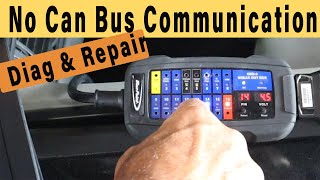
- Test CAN Bus Wires: Disconnect the battery again. Check the resistance between the two CAN bus wires (CAN_H and CAN_L) at the TCM connector. It should be around 60 ohms. If it's 120 ohms, one of the two terminating resistors on the network is not being seen. If it's near 0 ohms, the wires are shorted together. This is an advanced step that confirms the integrity of the communication circuit. 🎬 Watch: How to test a CAN bus network with a multimeter
- Condemn the TCM: If power, ground, and the CAN bus wiring all test good, the TCM has likely failed internally and requires replacement or repair.
Parts You'll Likely Need
- Transmission Control Module (TCM)
(OEM #L519-18-9E1D)— This is the most common point of failure for the U0101 code after electrical connections are verified. This specific part number is cited for the 2009-2010 Mazda 6.
Trusted brands: Mazda (OEM), Flagship One (Remanufactured), UpFix (Remanufacturing Service), Module Mechanics (Remanufactured), ECU Maverick (Repair Service)
OEM price range: $700-$900
Aftermarket price range: $250-$500 (Remanufactured or Repair Service)
Related Codes That Often Appear With This One
- U0100 — This is a similar code for 'Lost Communication with ECM/PCM'. If both appear, it can indicate a more widespread network problem affecting multiple modules, not just the TCM.
- P07xx — Other transmission-related codes may be stored in the PCM as a result of the lost communication, but they are symptoms of the U0101, not the root cause.
- U0073 — Control Module Communication Bus 'A' Off. This is a general CAN bus failure code that often accompanies specific module communication loss codes like U0101.
Platform-Specific Known Issues
- Confusion with Mazda 3 TCM Location: Many online resources and videos discuss U0101 on Mazda vehicles, but focus on the Mazda 3, where the TCM is mounted directly to the transmission and fails from heat. It is critical for a 2007-2012 Mazda 6 owner to know their TCM is located inside the cabin, which changes the diagnostic approach away from heat-related failure as the primary suspect.
- Intermittent Failure: An owner on a Car Talk forum with a similar Mazda platform experienced intermittent U0101 issues where the car would go into limp mode and then return to normal shifting. This intermittent behavior often points towards a wiring issue, a poor connection, or a failing module that hasn't died completely yet, making diagnosis more challenging.
Mechanic-Grade Diagnostic Values
- CAN Bus Network Resistance — expected: ~60 Ω (Ohms) between CAN_H and CAN_L pins at the DLC or module connector with battery disconnected.. Failure: A reading of ~120 Ω indicates an open circuit or one of the terminating resistors is offline. A reading near 0 Ω indicates a short between the CAN_H and CAN_L wires.
- CAN High Voltage (Key On) — expected: ~2.6V to 3.5V between CAN_H pin and chassis ground.. Failure: Significant deviation from this range, or voltage matching battery/ground, indicates a short or open circuit.
- CAN Low Voltage (Key On) — expected: ~1.5V to 2.4V between CAN_L pin and chassis ground.. Failure: Significant deviation from this range, or voltage matching battery/ground, indicates a short or open circuit.
- TCM Ground Connection Resistance — expected: Less than 0.5 Ω between the TCM ground pin(s) and a clean chassis ground point.. Failure: Higher resistance indicates a poor ground connection, which can cause the module to drop offline intermittently.
Scan Tool Commands That Help
- Mazda IDS (Integrated Diagnostic System): Self Test (All CMDTCs) — To retrieve codes from all modules simultaneously. This helps determine if other modules are also reporting a loss of communication with the TCM, confirming a network-wide issue versus an isolated one.
- Mazda IDS (Integrated Diagnostic System): Module Programming — This function is required after installing a new or used TCM to configure it to the vehicle's specific VIN and options. Failure to program the module will result in it not functioning.
- Mazda IDS (Integrated Diagnostic System) or equivalent J2534 device: TCM Update/Re-flash — To install the latest firmware from Mazda onto the TCM. Sometimes, communication issues can be resolved by a software update if a known bug is present. The IDS can check if a newer calibration is available.
Wiring & Ground Locations
- TCM Location — Inside the cabin, behind the passenger-side kick panel, typically mounted just above the Engine Control Unit (ECU).. This is the primary component in the U0101 fault. Its in-cabin location protects it from engine heat but makes it susceptible to water leaks from the windshield or chafed wiring under the dash.
- G2 / G7 / G15 (Ground Points) — A wiring diagram for a Mazda 6 shows multiple ground points located under the lower left side of the dash. Other common engine bay grounds are on the passenger motor mount and near the starter.. The TCM relies on a solid chassis ground to function. A corroded or loose ground point in the dash area can cause intermittent power loss to the module, triggering a U0101 code.
- Data Link Connector (DLC) — Under the driver's side dashboard, used to connect a scan tool.. This is the most accessible point to test the CAN bus network resistance (~60 Ω) and voltages, providing a quick health check of the entire communication system before accessing the TCM itself.
OEM Part Supersession History
L519-18-9E1B→L519-18-9E1C, then L519-18-9E1D— Standard part revision and improvement by the manufacturer.
Heads up: The latest version, L519-18-9E1D, is the correct replacement for the 2009-2010 Mazda 6 with the 2.5L engine. Using an older revision may not have the latest software fixes.
Diagnostic Flowchart
Other Known Issues on This Vehicle
Issues unrelated to this code that are worth knowing about as an owner of this generation:
- Melting / Sticky Dashboard 🟠 Medium — Very common, especially in vehicles exposed to high heat and humidity. The dashboard surface degrades, becoming sticky and shiny, which can cause a dangerous glare on the windshield. (Ref: Mazda issued a warranty extension program (SSP A0) to cover replacement for 10 years with no mileage limit for this specific condition.)
- Variable Valve Timing (VVT) Actuator Noise / Failure 🔴 High — Common on the 2.5L L5-VE engine, particularly at cold startup. A rattling or grinding noise for a few seconds after starting is the primary symptom. Failure can lead to timing chain issues. (Ref: Mazda issued TSB 01-012/15 (and earlier versions) for a similar issue on other models with the L-series engine, though not specifically citing the Mazda 6 GH, the problem is widely documented by owners.)
- Whining Noise from Automatic Transaxle 🟠 Medium — Some vehicles may develop a whining noise from the automatic transaxle that increases with vehicle speed due to a damaged bearing. (Ref: Mazda TSB 05-005/15 addresses this issue, noting a modification was made in later production units. Repair involves replacing the transaxle assembly.)
- Power Steering Rack Noises 🟡 Low — Some owners report knocking or clunking noises from the steering system, sometimes attributed to issues with the pinion gear in the steering rack.
Used vs. New Parts: Buying Guide for This Vehicle
When a used part is the smart pick: A used TCM from a reputable salvage yard can be a cost-effective option if the original has failed and is out of warranty. Given the high cost of a new OEM module, a used part can save hundreds of dollars.
Donor-vehicle mileage cap: roughly under 120000 miles for the part to have meaningful remaining life.
What to inspect on the donor part:
- Match the part number EXACTLY (e.g., L519-18-9E1D).
- Inspect the connector pins for any signs of corrosion, moisture, or damage.
- Ensure the donor vehicle was not involved in a flood or front-end collision that could have damaged the module.
- Obtain the VIN of the donor vehicle if possible, as it may be needed for programming.
OEM-only on this vehicle (don't cheap out):
- Transmission Control Module (TCM) - While remanufactured units are available, a new OEM or a used OEM part are the most common reliable fixes. The critical factor is programming.
Aftermarket brands forum-validated for this vehicle:
- Flagship One (Remanufactured/Programmed)
- UpFix (Repair Service)
Brands owners have reported issues with on this vehicle:
- Unknown eBay/Amazon sellers offering 'unlocked' or 'plug-and-play' modules without requiring a VIN for programming. These often do not work as programming is almost always necessary.
Real Owner Stories
Aggregated from forums and TSBs cited above. Mileages and costs reflect what owners reported in those sources.
2010 Mazda 3 (Platform Mate)
Symptoms: Intermittent U0101 issues where the car would go into limp mode and then return to normal shifting.
What fixed it: Extensive troubleshooting of wiring vs. module failure, including checking voltages and resistance to identify if the issue was a poor connection or a failing module.
Source hint: Car Talk Community - 'U0101 Lost Communication with TCM'
Documented NHTSA Reports
Mazda Platform Communication Issues
An owner reported that there were no warning lights before the transmission malfunctioned, but a subsequent test revealed code U0101 for lost communication with the TCM (NHTSA ODI #11556887).
Another report describes a dashboard light appearing alongside code U0101, explicitly identified as a lost communication fault with the Transmission Control Module (NHTSA ODI #11171737).
One owner correctly predicted the fault would be U0101 after experiencing communication issues, which was later confirmed during a code scan (NHTSA ODI #11388410).
NHTSA ODI #10443803 describes a failing computer causing the vehicle to randomly change gears without warning, which resulted in the U0101 error code when plugged in.
Related OBD-II Codes
Frequently Asked Questions
Where is the TCM located on my 2007-2012 Mazda 6? I've seen videos saying it's on top of the transmission.
My dashboard is becoming sticky and shiny; is this related to the U0101 code?
Can a blown fuse cause a 'Lost Communication with TCM' error on this model?
I hear a whining noise from the transaxle that gets louder with speed. Is this a TCM failure?
What should the resistance be when testing the CAN bus wires for the TCM?
My car is stuck in one gear and won't shift out of Park. Is this a symptom of U0101?
Helpful Videos

We Have This Part in Stock

The information in this article is provided for general reference and educational purposes only. Vehicle specifications, procedures, and part compatibility can vary by production date, trim level, and region. Always consult your vehicle's factory service manual and verify part numbers before purchasing or performing repairs. Safety-critical components such as airbags, seat belts, and braking systems should be installed by a qualified professional.
- Mazda 6:
- 🧭 Diagnostic Flowchart
- 🎬 Helpful Videos
- 🛍️ Shop This Part
- What's Unique About the 2007-2012 Mazda 6
- Symptoms You May Notice
- Most Likely Causes
- Rare But Worth Checking
- Diagnosis Steps
- Parts You'll Likely Need
- Related Codes That Often Appear With This One
- Platform-Specific Known Issues
- Mechanic-Grade Diagnostic Values
- Scan Tool Commands That Help
- Wiring & Ground Locations
- OEM Part Supersession History
- Other Known Issues on This Vehicle
- Used vs. New Parts: Buying Guide for This Vehicle
- Real Owner Stories
- 2010 Mazda 3 (Platform Mate)
- Documented NHTSA Reports
- Mazda Platform Communication Issues
- Related OBD-II Codes
- Frequently Asked Questions
- 🎟️ Get 5% Off