

U0140 on 2014 Chevrolet Corvette: Lost BCM Communication Causes and Fixes
On a 2014 Corvette, code U0140 is almost always caused by a poor electrical connection, not a failed Body Control Module (BCM). The most likely fix is inspecting and reseating the BCM connectors in the passenger footwell, which is often a no-cost repair. A weak battery or a wiring issue cited in a GM TSB are other common culprits.
- Before any other action, check the BCM connectors in the passenger footwell. This is the most likely and cheapest fix.
- Do not immediately assume the BCM has failed. Wiring, connector, and battery issues are far more probable causes for a U0140 code on this vehicle.
- A weak or dying battery can cause network communication errors; always ensure the battery and charging system are healthy.
- Reference GM TSB #08-07-30-021H, as it details known wiring problems that lead to this code.
- If the BCM does need to be replaced, it requires professional programming to function with your car's specific VIN and options.
What's Unique About the 2014-2014 Chevrolet Corvette
For the C7 Corvette, the U0140 code is notorious for pointing to a simple physical connection problem rather than a complex module failure. The Body Control Module (BCM) is located in the passenger footwell, and its main electrical connectors can be knocked loose by a passenger's feet, leading to a host of bizarre electrical issues. This is a widely reported owner experience on forums like CorvetteForum. GM also issued a specific Technical Service Bulletin (TSB #08-07-30-021H) that includes the 2014 Corvette, highlighting known wiring harness problems that can cause this exact code, making a wiring or connector check the absolute first step in any diagnosis.
Symptoms You May Notice
- Multiple warning lights on the dashboard, such as 'Service Active Handling' or 'Service ABS'.
- Intermittent no-start or no-crank condition.
- Engine stalling while driving.
- Instrument panel gauges fluctuating wildly or going completely dead.
- Power door locks cycling on their own.
- Exterior or interior lights flickering, staying on, or not working at all.
- Transmission shifting incorrectly or defaulting to a single gear.
- Radio or infotainment screen malfunctioning or going black.
- OBD-II scan tool cannot communicate with the vehicle or specific modules.
- Key fob not detected or remote functions failing. 🎬 See this video for more common bad BCM symptoms.
- Replacing the Body Control Module (BCM) without first checking connectors, battery voltage, and grounds. This is an expensive and often unnecessary repair, as the issue is frequently a simple connection problem.
Most Likely Causes
- Poor Connection at the Body Control Module (BCM) 🔴 High Probability → Shop Body Control Module The BCM is located in the passenger footwell, and its connectors are susceptible to being kicked or disturbed, causing a loose connection. This is a widely reported issue on Corvette forums where owners describe fixing a car with myriad electrical gremlins simply by pushing the connectors back in.
How to confirm: Visually inspect the BCM connectors, which are located behind the carpet in the passenger footwell. Check if the large connectors (often blue and gray) are fully seated. Wiggling the connectors while observing system behavior can sometimes confirm an intermittent connection.
Typical fix: Disconnect the negative battery terminal. 🎬 Watch: A quick guide on how to reset your BCM. Unplug the BCM connectors, inspect for any bent or corroded pins, clean with electrical contact cleaner, and securely plug them back in until the locking tabs click. Applying a small amount of dielectric grease can help prevent future corrosion and moisture intrusion.
Est. part cost: $0-$20 - Weak Battery or Poor Battery/Ground Connections 🟡 Medium Probability → Shop Vehicle Battery Control modules are highly sensitive to voltage. The Corvette's complex electrical system can easily exhibit network errors if system voltage drops below the required threshold (around 12.4V at rest). A weak battery is a very common trigger for various 'U' codes on this platform.
How to confirm: Use a multimeter to test the battery voltage at rest; it should be 12.4V or higher. Perform a load test. Inspect battery terminals for corrosion and ensure they are tight. Check the main chassis ground straps (especially the one near the battery in the rear compartment and engine grounds) for corrosion and tightness.
Typical fix: Clean the battery terminals and ground connection points thoroughly with a wire brush. If the battery is old or fails a load test, replace it. Many owners recommend using a battery tender if the car is not driven daily. - Wiring Harness Fault (per TSB #08-07-30-021H) 🟡 Medium Probability GM identified common failure points in the high-speed GMLAN wiring. The TSB specifically mentions issues like chafed wires or backed-out terminals in the 16-way transmission harness connector as a cause for U0140. Other known problem areas include harnesses near the firewall and under the driver's door sill plate. According to TSB Bulletin #08-07-30-021H, this fault can also lead to chime operation issues, various illuminated warning lamps, and a transmission that may not shift.
How to confirm: A thorough visual inspection of the wiring harnesses is required, focusing on the areas mentioned in the TSB, such as the engine harness and the main connector at the transmission. This may require lifting the vehicle for access. Check for chafing, pinching, or signs of rodent damage.
Typical fix: Repair any chafed or broken wires using solder and heat-shrink tubing. If a terminal has backed out of a connector, it needs to be properly reseated and the connector lock secured. Corroded connectors should be cleaned or replaced.
Rare But Worth Checking
- Faulty Body Control Module (BCM): → Shop Body Control Module While possible, this is far less common than connection or wiring issues. The BCM should only be suspected after all other causes have been exhaustively ruled out. A replacement BCM is expensive and must be programmed to the vehicle's VIN by a dealer or qualified shop.
- Aftermarket Device Interference: Improperly installed aftermarket alarms, remote starters, or audio equipment tied into the vehicle's data network can disrupt communication and trigger U-codes. These devices can introduce noise or draw excessive power, causing modules to drop offline.
- Water Intrusion: Though less common on the C7 than its predecessor, clogged cowl or A/C evaporator drains can lead to water leaking into the passenger footwell, directly onto the BCM and its connectors, causing corrosion and short circuits.
Diagnosis Steps
- Read all stored DTCs from all modules with a professional scan tool. Note which modules are setting the U0140 code and which are not communicating at all.
- Check the battery. Ensure it has a static voltage of at least 12.4V and that the terminals and main ground straps are clean and tight. Perform a load test.
- Disconnect the negative battery terminal.
- Access the Body Control Module (BCM) located in the passenger footwell by pulling back the carpet.
- Carefully disconnect the electrical connectors from the BCM (typically blue, gray, and black). Inspect the pins and sockets for any signs of corrosion, moisture, bent pins, or physical damage.
- Clean the connector pins with electrical contact cleaner and ensure they are dry. Use a terminal pick to gently check for proper pin tension.
- Securely reconnect the connectors to the BCM, making sure they click into place. Ensure the wiring harness isn't strained.
- If the issue persists, inspect the wiring harnesses as described in TSB #08-07-30-021H, paying close attention to the transmission connector and any areas where the harness may rub against the chassis or engine components.
- With the battery disconnected, check CAN bus resistance. Using a multimeter, measure the resistance between Pin 6 (CAN High) and Pin 14 (CAN Low) at the OBD-II port. A healthy network should read approximately 60 ohms. A reading of 120 ohms suggests a missing termination resistor or a break in the circuit.
- Only consider replacing the BCM after all other possibilities have been eliminated. A new BCM will require programming by a dealership or a properly equipped independent shop.
Parts You'll Likely Need
- Body Control Module
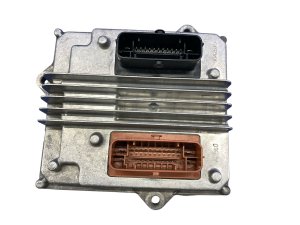
(OEM #13594769, 13594692)— This part is only needed in the rare case of an internal module failure, after all wiring and connection issues have been ruled out. It is the 'brain' for the car's body electronics. Superseded by several other part numbers. Always verify with VIN.
Trusted brands: ACDelco (Genuine GM)
OEM price range: $400-$600
Aftermarket price range: $250-$450 - Electrical Contact Cleaner — Used for cleaning corroded or dirty pins on the BCM and other harness connectors, which is a very common fix for this code.
Related Codes That Often Appear With This One
- U0073 — This is a general code for 'Control Module Communication Bus 'A' Off'. It often appears alongside U0140 because when a major module like the BCM goes offline, it can bring down the entire communication network.
- U0100 — This code means 'Lost Communication With ECM/PCM'. It can be set in other modules if the BCM, which can act as a gateway, fails and disrupts the network path to the engine computer.
- U0101 — This code means 'Lost Communication with TCM'. Similar to U0100, the BCM's failure can interrupt communication with the Transmission Control Module, causing this code to appear.
- U2107 — This is a manufacturer-specific code that further defines the U0140, often indicating a short or open in the communication circuit with the BCM, providing a more specific diagnostic clue.
Technical Service Bulletins (TSBs) & Recalls
- GM TSB #08-07-30-021H: Addresses loss of high-speed GMLAN communications and lists U0140 as a possible DTC. It points to repairing terminals in the transmission harness connector and other wiring issues as the primary fix. This bulletin notes that symptoms may include various IP warning lamps being illuminated and the transmission failing to shift.
Platform-Specific Known Issues
- The location of the BCM in the passenger footwell makes it uniquely vulnerable to having its connectors kicked or dislodged by a passenger, a common source of U0140 on the C7 Corvette.
Mechanic-Grade Diagnostic Values
- High-Speed GMLAN Bus Resistance — expected: Approximately 60 ohms (± 5 ohms) when measured between Pin 6 and Pin 14 of the DLC with the battery disconnected.. Failure: A reading of ~120 ohms indicates an open circuit or a missing terminating resistor (one in the ECM, one in the BCM). A reading near 0 ohms indicates a short between the CAN high and low wires.
- High-Speed GMLAN Bus Voltage (Key On, Engine Off) — expected: CAN High (Pin 6 at DLC) should be ~2.5V to 3.5V. CAN Low (Pin 14 at DLC) should be ~1.5V to 2.5V. Both wires will show ~2.5V at rest and mirror each other during communication.. Failure: Voltages that are stuck high, low, or do not show opposite fluctuations indicate a bus fault, short to power, or short to ground.
- BCM Ground Circuit Resistance — expected: < 0.1 Ω when measured from the BCM ground pin(s) to a clean chassis ground point.. Failure: Higher resistance indicates a corroded or loose ground connection, which is a common cause of module communication issues.
- BCM Power Supply Voltage — expected: 12.2V - 12.8V at the BCM power input pin with the ignition on.. Failure: Voltage below 12.2V suggests a problem with the battery, charging system, or the power supply circuit to the BCM.
Hidden / Shadow Codes Worth Checking
- U0140 SYMxx: GM uses 'symptom bytes' (e.g., SYM00 for 'No Communication') to provide more specific details about the nature of the communication failure. These codes offer technician-level insight beyond the generic U-code. (see via A dealer-level scan tool like the GM GDS2 or a high-end professional scanner is required to view these symptom bytes.)
Scan Tool Commands That Help
- GDS2 (GM Global Diagnostic System 2): Module Status / Network Topology — To get a visual map of all control modules on the network. This will clearly show which modules are actively communicating and which ones (like the BCM) are offline, confirming the source of the U0140 code.
- GDS2 (GM Global Diagnostic System 2): Setup SDM Primary Key in BCM — This function is required after replacing the BCM to synchronize it with the airbag system's Supplemental Deployment Module (SDM). Failure to do so may result in an airbag warning light.
- GDS2 (GM Global Diagnostic System 2): BCM Programming/Setup — When a new BCM is installed, it must be programmed with the vehicle's specific VIN and configuration data. This function downloads the correct software and settings to the new module.
Wiring & Ground Locations
- BCM Connectors (X1, X3, X4, etc.) — Located behind the carpet on the passenger side toe board/footwell.. These are the main data and power connectors for the BCM. They are physically vulnerable to being kicked or disturbed, leading to a loose connection that is the most common cause of U0140 on this vehicle.
- GMLAN Terminating Resistors — There are two 120-ohm resistors in the high-speed CAN circuit. One is internal to the Engine Control Module (ECM) and the other is internal to the Body Control Module (BCM).. These resistors are at the physical ends of the bus and are required for signal integrity. If the BCM loses power or has an internal fault, its resistor is removed from the circuit, changing the total bus resistance from 60 ohms to 120 ohms and causing communication errors.
- G202 — Under the front of the passenger's door sill plate.. This is a primary chassis ground point in the vicinity of the BCM. A poor connection here can cause a voltage drop and intermittent BCM operation.
- G302 / G303 — G302 is under the rear of the passenger's door sill. G303 is the main engine block ground stud where the negative battery cable connects.. These are major ground points for the vehicle's electrical system. High resistance at these locations can cause system-wide low voltage conditions, triggering communication codes like U0140.
Real Owner Repair Stories
- CorvetteForum user (2015 C7 Corvette) — Car had lights and flashers, but no dash screen, no infotainment screen, and would not enter ignition mode after a battery replacement.
❌ Tried (didn't work) Initial battery installation.
✅ What actually fixed it The user had failed to properly connect the small black ground wire that attaches to the main negative battery cable terminal. Securing this small wire restored all functions. This highlights the sensitivity of the C7's electrical system to all ground connections, even seemingly minor ones.
OEM Part Supersession History
13580690→13594692, 13594769, 13593214, 13591519, 13594768— Standard part evolution, incorporating hardware and software updates for improved reliability.
Heads up: While multiple part numbers may be listed as replacements, it is critical to verify the correct, most current part number with the vehicle's VIN. All replacements require programming by a dealer or a specialist with GDS2 software.
Diagnostic Flowchart
Other Known Issues on This Vehicle
Issues unrelated to this code that are worth knowing about as an owner of this generation:
- Cracked/Bent Wheels (Grand Sport/Z06) 🔴 High — Very common on Grand Sport and Z06 models, less so on Stingray. Can occur at low mileage. Subject of multiple lawsuits and a limited reimbursement program from GM. (Ref: GM Special Reimbursement Program (not a recall))
- Torque Tube Bearing/Coupler Failure 🔴 High — A known C7 issue where heat from the exhaust cooks the rubber couplers and bearings inside the torque tube, causing noise, vibration, and eventual failure. More common on cars that spend time in V4 mode (automatics).
- Infotainment Screen Delamination/Flicker/Failure 🟠 Medium — Common on 2014 models. Issues range from screen flickering (often a loose cable), to delamination causing 'ghost touches', to total screen failure. (Ref: TSB #17-NA-025 (for software issues), other TSBs exist for flickering.)
- A6/A8 Automatic Transmission Issues 🟠 Medium → Shop Transmission Assembly — The 2014 model used the 6-speed (6L80) which had some reports of torque converter issues. The later 8-speed (8L90, from 2015) was more problematic, known for shuddering, hard shifts, and torque converter failures, leading to a class-action lawsuit. (Ref: Multiple TSBs issued, particularly for the 8-speed, often involving fluid flushes.)
- Engine Belt Tensioner Failure 🟡 Low — The main serpentine belt tensioner has a small internal shock absorber that is known to fail and leak fluid, leading to belt noise or slippage.
Used vs. New Parts: Buying Guide for This Vehicle
When a used part is the smart pick: A used BCM can be a cost-effective option IF purchased from a reputable vendor that offers a 'cloning' service. They transfer your original BCM's data (VIN, key info, options) to the used unit, making it plug-and-play and avoiding expensive dealer programming. Buying a random used BCM without this service is not recommended as it will not work.
Donor-vehicle mileage cap: roughly under 80000 miles for the part to have meaningful remaining life.
What to inspect on the donor part:
- Ensure the seller guarantees the part is tested and functional.
- Inspect the connectors on the used module for any signs of corrosion, bent pins, or physical damage.
- Verify the part number matches one of the compatible numbers for your vehicle, even if it will be cloned.
- Confirm the vendor provides a warranty on both the part and the programming service.
OEM-only on this vehicle (don't cheap out):
- Body Control Module (BCM) - While used parts with cloning are an option, new parts should always be Genuine GM/ACDelco. Avoid no-name aftermarket BCMs, as they are likely to have software incompatibility and premature failure issues.
Brands owners have reported issues with on this vehicle:
- Generic or unbranded BCMs found on marketplaces like eBay or Amazon without a clear programming service or warranty.
Real Owner Stories
Aggregated from forums and TSBs cited above. Mileages and costs reflect what owners reported in those sources.
2014 Chevrolet Corvette
Symptoms: Multiple electrical gremlins including dashboard warning lights and communication errors.
What fixed it: Reseating the BCM connectors in the passenger footwell. The owner pushed the large blue and gray connectors back in until the locking tabs clicked.
Source hint: CorvetteForum.com thread titled 'U0140 Lost Communication with BCM'
2014 Chevrolet Corvette
Symptoms: Loss of high-speed GMLAN communications and U0140 code present.
What fixed it: Repairing backed-out terminals in the 16-way transmission harness connector as specified in the technical service bulletin.
Source hint: GM TSB #08-07-30-021H
Related OBD-II Codes
Frequently Asked Questions
Where is the Body Control Module (BCM) located on my C7 Corvette, and why does it cause U0140?
Does GM TSB #08-07-30-021H apply to my U0140 communication issue?
Can a low battery cause 'Service Active Handling' and U0140 on a 2014 Corvette?
How can I check if my BCM connection is the problem without tools?
Is there a specific resistance test for the communication network on this vehicle?
Helpful Videos

We Have This Part in Stock

The information in this article is provided for general reference and educational purposes only. Vehicle specifications, procedures, and part compatibility can vary by production date, trim level, and region. Always consult your vehicle's factory service manual and verify part numbers before purchasing or performing repairs. Safety-critical components such as airbags, seat belts, and braking systems should be installed by a qualified professional.
- Chevrolet Corvette:
- 🧭 Diagnostic Flowchart
- 🎬 Helpful Videos
- 🛍️ Shop This Part
- What's Unique About the 2014-2014 Chevrolet Corvette
- Symptoms You May Notice
- Most Likely Causes
- Rare But Worth Checking
- Diagnosis Steps
- Parts You'll Likely Need
- Related Codes That Often Appear With This One
- Technical Service Bulletins (TSBs) & Recalls
- Platform-Specific Known Issues
- Mechanic-Grade Diagnostic Values
- Hidden / Shadow Codes Worth Checking
- Scan Tool Commands That Help
- Wiring & Ground Locations
- Real Owner Repair Stories
- OEM Part Supersession History
- Other Known Issues on This Vehicle
- Used vs. New Parts: Buying Guide for This Vehicle
- Real Owner Stories
- 2014 Chevrolet Corvette
- 2014 Chevrolet Corvette
- Related OBD-II Codes
- Frequently Asked Questions
- 🎟️ Get 5% Off