

U0140 on 2019-2023 Ford Ranger: Lost Communication With Body Control Module Causes and Fixes
This code means the Body Control Module (BCM) has stopped communicating with other computers in the truck. The most common causes are low battery voltage, poor ground connections, or improperly installed aftermarket accessories like trailer brake controllers. Before replacing the expensive BCM, check all related fuses (especially F23 and F26 in the passenger compartment fuse panel) and have the battery and charging system tested.
- U0140 means the Body Control Module (BCM) is offline.
- Before suspecting a bad BCM, always test the battery, charging system, and check all related fuses.
- A very common cause on Rangers is improperly wired aftermarket accessories like lights or trailer harnesses.
- Diagnosis and repair of this code are complex and best left to a professional, as BCM replacement requires dealer-level programming.
- Check for corroded grounds and damaged wiring, especially if the truck has been modified or driven in harsh conditions.
What's Unique About the 2019-2023 Ford Ranger
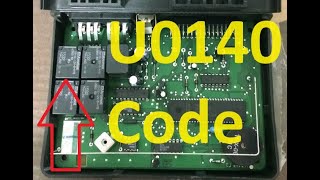
On the Ford Ranger T6 platform, the BCM is known to be sensitive to electrical changes. A very common trigger for U0140 and related electrical issues is the incorrect installation of aftermarket accessories, such as trailer brake controllers, auxiliary lighting, or audio systems. These accessories, if not wired correctly with relays and independent power sources, can overload BCM circuits or introduce electrical noise onto the data network, causing software corruption or module shutdown. 🎬 Watch: Understanding the causes and fixes for the U0140 code. While no specific TSBs for U0140 on the Ranger were found, platform mate vehicles like the Ford Bronco have known issues with loose BCM connectors from the factory, and F-150s have documented problems with chafed wiring harnesses and corroded grounds that also cause this code, making those areas important to inspect. Manufacturer service bulletin SSM 50789 notes that on related Ford truck platforms, DTC U0140:82 can sometimes be stored in the trailer module (TRM) due to software parameters in the gateway module (GWM) following a TRM update.
Symptoms You May Notice
- Inoperative power windows, door locks, or mirrors.
- Headlights, taillights, or interior lights not working, staying on, or flickering.
- Windshield wipers behaving erratically or not working at all.
- Remote key fob not working.
- Vehicle will not start, or cranks but won't start (if the anti-theft system is affected).
- Multiple warning lights on the instrument cluster, such as for ABS, traction control, or airbags.
- Parasitic battery drain that kills the battery overnight.
- "Stop/Start System Fault" message on the dash.
- Instrument cluster going blank or resetting intermittently.
- Replacing the battery without testing the alternator, only for the new battery to die and the problem to return.
- Replacing individual components that the BCM controls (like a headlight assembly or window motor) when the root cause is the BCM not commanding them to work.
- Immediately replacing the BCM without first thoroughly checking for bad grounds, blown fuses, or parasitic draws from aftermarket accessories.
Most Likely Causes
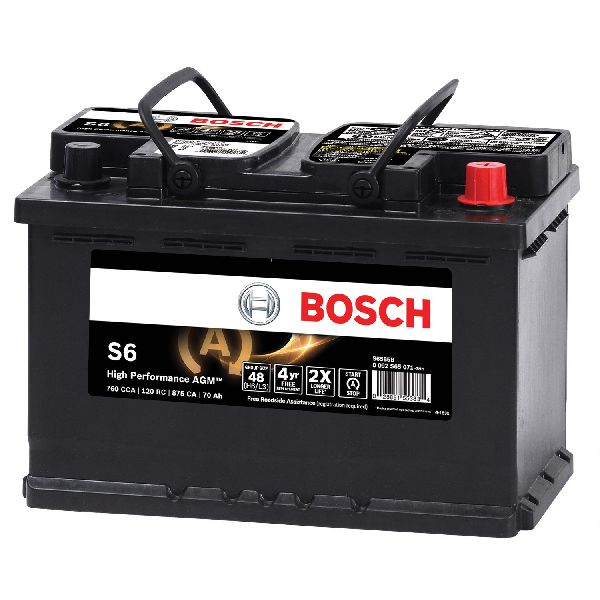
- Low Battery Voltage or Charging System Fault 🔴 High Probability → Shop Vehicle Battery Modern vehicle modules, including the Ranger's BCM, are highly sensitive to voltage. A weak battery or failing alternator can cause modules to drop off the network unexpectedly during startup or operation, triggering communication codes.
How to confirm: Test the battery with a digital multimeter or an electronic battery tester. A healthy, fully charged battery should read approximately 12.6V with the engine off. With the engine running, the alternator should be charging at 13.7V to 14.7V. Many auto parts stores will test your battery and alternator for free.
Typical fix: Recharge or replace the battery. If the charging voltage is low, the alternator likely needs replacement.
Est. part cost: $150-$400 - Improperly Installed Aftermarket Accessories 🔴 High Probability Trucks are frequently modified. Tapping power for accessories like light bars, aftermarket stereos, or trailer wiring directly from BCM-controlled circuits is a very common cause of BCM failure or software corruption on this platform. Rangers not equipped with the factory tow package lack the dedicated wiring for a trailer brake controller, making incorrect splicing into BCM circuits more likely.
How to confirm: Inspect the vehicle for any non-factory wiring. Look for wires spliced into harnesses near the BCM, fuse box, or lighting circuits. A common culprit is an aftermarket trailer brake controller. 🎬 See common installation issues with Ranger aftermarket brake controllers. Temporarily disconnect any aftermarket controllers or devices to see if the fault clears.
Typical fix: Remove the improperly installed accessory and repair the factory wiring. Re-install the accessory correctly using an independent fused circuit with a relay, or use a dedicated trailer wiring module. In some cases, the BCM software may need to be professionally reflashed if the incorrect wiring caused data corruption.
Est. part cost: $0-$50 (for relays/wiring) - Poor BCM Power or Ground Connection 🟡 Medium Probability While no single ground point is famously problematic on the Ranger, grounds located on the frame, inner fenders, or behind kick panels are always susceptible to corrosion or loosening over time, which can interrupt power to the BCM.
How to confirm: Locate the BCM behind the driver's side knee bolster panel. Inspect its main electrical connectors for looseness, corrosion, or backed-out pins. Locate and inspect the main body and battery ground connections for tightness and corrosion. A known ground point designator for older Rangers is G200, located behind the left (driver's side) kick panel, a common area for grounds on newer models as well.
Typical fix: Clean corroded ground points down to bare metal and secure the connection tightly. Apply a dielectric grease to prevent future corrosion. Reseat or repair the BCM connector pins as needed.
Est. part cost: $5-$20 - Blown Fuse 🟡 Medium Probability
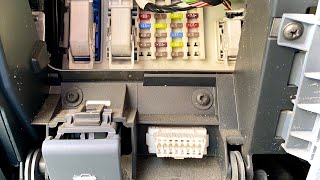
How to confirm: Check the owner's manual or a fuse diagram to identify all fuses related to the Body Control Module. In the 2019-2023 Ranger, key fuses are in the passenger compartment fuse panel (behind the cover below the steering column). 🎬 Watch: How to find your Ranger's cabin fuses and BCM. Specifically check fuses F23 (10A) and F26 (20A), which are listed for the Body Control Module. Visually inspect each fuse and test for continuity with a multimeter.
Typical fix: Replace the blown fuse. If the fuse blows again immediately, it indicates a short circuit in the wiring or within a component controlled by the BCM that requires further diagnosis.
Est. part cost: $1-$10
Rare But Worth Checking
- Chafed or Damaged Wiring Harness: Though less common than a bad ground, a wiring harness can get damaged. On similar Ford trucks, wiring in the A-pillar, door sills, or where the harness passes through the firewall can chafe and short out, causing network communication loss. Inspect harnesses for damage where they pass through the firewall or near sharp metal edges.
- Internal BCM Failure: If all wiring, power, grounds, and network tests are confirmed to be good, the BCM itself may have failed internally. This can be due to component failure from vibration, moisture intrusion, or non-repairable software corruption. This is a last-resort diagnosis after all other possibilities are exhausted.
- Loose BCM Connector: On the platform-mate Ford Bronco, a known issue involves the main BCM connector not being fully seated at the factory. This can cause intermittent electrical problems that worsen over time, eventually leading to a U0140 code. It is worth checking that all connectors to the Ranger's BCM are fully clipped and secured.
- Module Software Conflicts: According to TSB Bulletin #TSB 25-2071, some Ford vehicles may exhibit U0140 stored in the gear shift module (GSM) due to software issues within the GSM itself.
Diagnosis Steps
- Check Battery Health: Ensure the battery voltage is above 12.4V with the engine off. Start the engine and verify the alternator is charging between 13.7V and 14.7V. A weak battery is a primary cause of random communication codes.
- Scan for All Codes: Use a high-quality OBD-II scanner capable of reading Ford-specific codes from all modules (not just the PCM). Note all 'U' codes present and which modules are reporting them. A tool like FORScan is highly recommended.
- Inspect Fuses: Check all fuses related to the BCM. For the 2019-2023 Ranger, focus on the passenger compartment fuse panel. Specifically inspect fuse F23 (10A) and F26 (20A).
- Audit Aftermarket Accessories: Carefully inspect for any aftermarket wiring for lights, stereos, alarms, or trailer connections. Disconnect these devices one by one to see if communication is restored.
- Inspect BCM Connections and Grounds: Locate the BCM behind the driver's side knee bolster panel, to the left of the steering column. Disconnect its connectors (with the battery disconnected) and inspect for any signs of water intrusion, corrosion, or damaged pins. Trace and clean the main chassis ground connections, especially the one behind the driver's side kick panel.
- Perform a Parasitic Draw Test: If the battery dies overnight, perform a parasitic draw test. If the draw is high (over 50mA), pull fuses one by one. If pulling a BCM-related fuse causes the draw to drop, it points towards a faulty BCM or a short in one of its circuits.
- Check CAN Bus Network (Professional): If the basics don't solve the issue, a technician will measure the resistance between Pin 6 (CAN-H) and Pin 14 (CAN-L) at the OBD-II port. A healthy network should read approximately 60 Ω. A reading of 120 Ω suggests a break in the network or a failed terminating resistor. An oscilloscope can be used to check for a clean digital signal, with CAN-H switching to ~3.5V and CAN-L switching to ~1.5V.
Parts You'll Likely Need
- Body Control Module (BCM)
- Battery
- Fuses
Related Codes That Often Appear With This One
- U3000 — This code indicates an internal electronic failure within a control module. If you see U3000 along with U0140, it's a strong sign the BCM itself has a hardware or severe software fault.
- U0100 — Lost Communication with ECM/PCM. Seeing this with U0140 can point to a larger network problem, like a damaged main CAN bus wire or a faulty gateway module, that is affecting multiple computers.
- U0155 — Lost Communication with Instrument Panel Cluster (IPC). Because the BCM and IPC are in constant communication, seeing both codes often points to a shared wiring or network issue rather than two separate module failures.
- P0884 — TCM Power Input Signal Intermittent. On the Ranger5G forums, a user reported this code alongside U0140, which was ultimately traced to a faulty BCM causing widespread communication and power issues.
Platform-Specific Known Issues
- The BCM on this platform is known to be sensitive to software corruption caused by improperly wired aftermarket accessories, particularly those spliced into lighting circuits.
- While not a formal recall, internal failure of the BCM is common enough that several companies offer specific repair and cloning services for Ford Ranger BCMs.
Mechanic-Grade Diagnostic Values
- CAN Bus Network Resistance — expected: ~60 Ω (measured between Pin 6 and Pin 14 of the OBD-II port with battery disconnected). Failure: A reading of ~120 Ω indicates an open circuit or a single failed terminating resistor. A reading near 0 Ω indicates a short between the CAN High and CAN Low wires.
- BCM Power Supply Voltage — expected: 12.2V - 12.8V (measured at the BCM power input pin with ignition on). Failure: Voltage significantly below 12.2V indicates a power supply issue upstream of the BCM.
- BCM Ground Resistance — expected: < 0.1 Ω (measured between the BCM ground pin and a clean chassis ground point). Failure: Resistance higher than 0.1 Ω indicates a poor ground connection that can cause module malfunction.
- CAN Bus Voltage (Active) — expected: CAN High (e.g., Pin 10 on C2280B) switches to ~3.5V; CAN Low (e.g., Pin 9 on C2280B) switches to ~1.5V. Both idle near 2.5V.. Failure: Voltages that are stuck high, low, or do not show clean switching on an oscilloscope indicate network interference, shorts, or an open circuit.
Hidden / Shadow Codes Worth Checking
- U0140:87-0A: The ':87' is a Failure Type Code (FTC) indicating 'Missing Message'. This means a specific module expected a message from the BCM but did not receive it. The '-0A' is an occurrence counter in hexadecimal (10 occurrences in decimal), tracking how many times the fault has happened. (see via This extended code is visible with advanced diagnostic tools that can read Ford-specific DTCs, such as FORScan or the dealer's Integrated Diagnostic System (IDS).)
Scan Tool Commands That Help
- FORScan / Ford IDS: BCM Self-Test — Use this command to have the BCM check its own internal circuits and outputs. A failure here strongly points to an internal BCM fault, assuming power and ground are good.
- FORScan / Ford IDS: Network Test — This function pings all modules on the network and reports which ones are communicating. This is the first step to see if the BCM is truly offline or if only certain modules can't hear it.
- FORScan / Ford IDS: BCM Programming / As-Built Configuration — This is required after installing a new BCM. The vehicle's specific configuration data (known as 'As-Built' data) must be loaded into the new module for it to function correctly and for the vehicle to start.
Wiring & Ground Locations
- BCM (Body Control Module) — Behind the driver's side knee bolster panel, to the left of the steering column.. This is the module that has lost communication. Physical inspection for loose connectors, water damage, or wiring issues starts here.
- C2280B — One of the main multi-pin connectors at the BCM.. This connector contains the High-Speed CAN bus wires. Pin 10 (WH-BU wire) is HS-CAN High, and Pin 9 (WH wire) is HS-CAN Low. These are the exact pins to test for network voltage and resistance.
- G200 — Commonly located behind the left (driver's side) kick panel.. This is a major chassis ground point. While data is for an older Ranger, its location is consistent for many vehicles. A loose or corroded G200 can interrupt the ground supply for multiple modules, including the BCM, causing communication faults.
- OBD-II Data Link Connector — Under the driver's side dashboard, near the steering column.. Pin 6 (CAN High) and Pin 14 (CAN Low) are used to perform a network-wide resistance test (~60 Ω) without having to access individual modules.
Real Owner Repair Stories
- Ranger5G.com Forum (2019+ Ford Ranger XL (without factory tow package)) — Owner was looking to install a trailer brake controller and discovered the wiring was not present.
✅ What actually fixed it The forum discussion clarified that on Rangers without the factory tow package or Co-pilot 360, the 4-wire pigtail for a brake controller is missing from the driver's kick panel. Attempting to splice into other BCM wires without using a proper trailer module and performing a BCM reprogram is a direct cause of electrical faults and communication codes like U0140. The fix is to use a dedicated trailer wiring harness/module that doesn't interfere with the BCM or to have the factory Trailer Module (TRM) and wiring installed and the BCM configured to recognize it. - NHTSA ODI #11693477 — An owner of a related Ford model reported using an OBD-II scanner and finding U0140:00-08 indicating BCM missing communication, alongside an APIM private communication network malfunction.
- NHTSA ODI #11715107 — A report describes a vehicle exhibiting U0140 "Lost communication with body control module" in conjunction with U0155, P25B0 fuel level sensor defects, and Ethernet failures with the instrument panel cluster.
"I Checked Everything" — The Actual Cause
- On a similar Ford platform (F-150), a vehicle presented with intermittent network codes and loss of power steering assist. Static tests in the shop (like continuity and resistance checks) all passed. The actual cause was found to be a section of the CAN bus wiring harness under the battery tray that had chafed through its insulation. When the truck hit a bump, the wire would momentarily short to the chassis, crashing the network. The fault was only present during dynamic vehicle movement, making it impossible to find with standard static tests. This highlights the need to physically inspect harness routing near sharp edges or areas of vibration.
OEM Part Supersession History
JU5Z-15604-BP→JU5Z-15604-CR— Part revision or update by manufacturer.ju5z15604aa→JU5Z-15604-CR— Part revision or update by manufacturer.ju5z15604q→JU5Z-15604-BA— Part revision or update by manufacturer.HU5T-15604-CEE→Unknown— This is an engineering part number, often found on the part itself, corresponding to a service part number.
Heads up: Always cross-reference the engineering number to the correct, current service part number for ordering.
Model Year Variations Within This Range
- 2019-2023: Models without the factory 'Trailer Tow Package' or 'Co-Pilot 360' do not have the 4-wire blunt-cut harness in the driver's kick panel for adding a trailer brake controller. This significantly changes the installation procedure for a brake controller and increases the risk of improper wiring causing a U0140 code if an installer taps into the wrong BCM circuits.
Diagnostic Flowchart
Other Known Issues on This Vehicle
Issues unrelated to this code that are worth knowing about as an owner of this generation:
- 10R80 Transmission Erratic Shifting 🟠 Medium → Shop Transmission Assembly — Common, especially on 2019-2020 models. Manifests as harsh/jerky shifts, clunks, or hesitation. Often occurs at low speeds or from a stop. (Ref: Software updates (reflashing the TCM) are a common fix. In some cases, requires valve body or CDF drum service.)
- Driveshaft/Pinion Angle Vibration 🟠 Medium — Some owners report a shudder or vibration when accelerating from a stop or at highway speeds. (Ref: TSB 23-2078 (supersedes 22-2051) addresses this by providing a procedure to adjust the rear axle pinion angle using shims.)
- Faulty DPFE/EGR Pressure Sensor 🟡 Low — A sensor (variously called DPFE or EGR pressure feedback sensor) can fail due to moisture, causing bucking, surging, or a feeling of transmission slip, particularly on slow take-offs. (Ref: No specific TSB, but it is a widely discussed owner fix in forums and YouTube videos. The part is relatively inexpensive and easy to replace.)
- SYNC 3 Infotainment Glitches 🟡 Low — Includes issues like a blank screen, unresponsiveness, or connectivity problems with Apple CarPlay/Android Auto. Fairly common across many Ford models with this system. (Ref: Various software updates have been released to address stability. TSB 23-2307 is related to SYNC 3 issues across multiple Ford vehicles, including the Ranger.)
- Oil Leaks from Turbocharged Engine 🟡 Low — Some owners have reported oil leaks, which is a potential issue for many modern turbocharged engines. (Ref: TSB SSM 52335 provides general diagnostic guidance for oil leaks on 2015-2024 Ford turbocharged engines.)
Used vs. New Parts: Buying Guide for This Vehicle
When a used part is the smart pick: For this repair, using a used part is almost never a smart choice for the Body Control Module itself. However, related components that may be tested during diagnosis, such as fuses, relays, or connector pigtails, are perfectly acceptable to source from a donor vehicle.
Donor-vehicle mileage cap: roughly under 100000 miles for the part to have meaningful remaining life.
What to inspect on the donor part:
- For any used electrical part, inspect for zero signs of water damage, corrosion, or rust on connectors and pins.
- Ensure the donor vehicle does not have a salvage title due to flood or fire.
- Verify the connector pigtail has sufficient wire length for splicing if needed.
OEM-only on this vehicle (don't cheap out):
- Body Control Module (BCM): The BCM is the primary part that should only be purchased new from an OEM source. Used BCMs are typically VIN-locked to the original vehicle and cannot be reprogrammed to work in a different truck, which is required for the anti-theft system (PATS) and vehicle-specific functions.
Aftermarket brands forum-validated for this vehicle:
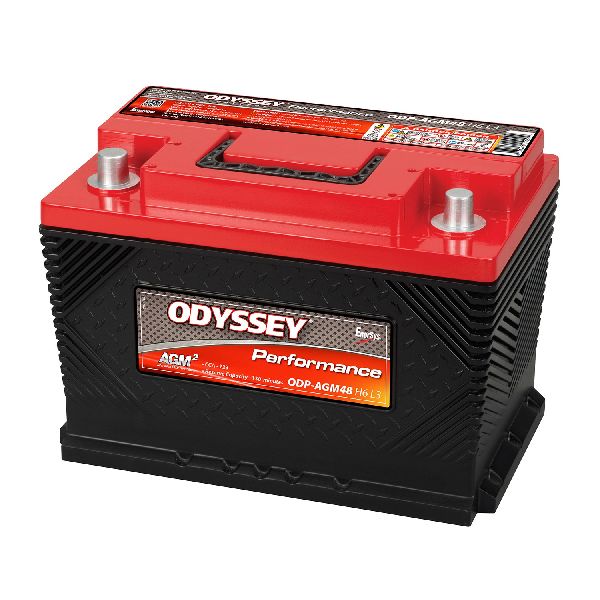
- For the BCM itself, no aftermarket brands are recommended; use genuine Ford/Motorcraft parts. For a replacement battery, brands like Motorcraft, Odyssey, or other reputable AGM battery manufacturers are good choices.
Brands owners have reported issues with on this vehicle:
- Avoid unbranded, generic BCMs sold on auction sites. These often fail to program correctly or have a very short lifespan.
Real Owner Stories
Aggregated from forums and TSBs cited above. Mileages and costs reflect what owners reported in those sources.
2020 Ford Ranger
Symptoms: The owner experienced a 'nightmarish' BCM failure involving multiple electrical symptoms and a difficult diagnostic process at the dealership.
What fixed it: Diagnosis of a bad BCM, though the source notes a difficult customer experience during the replacement process.
Source hint: https://www.ranger5g.com/forum/threads/bad-bcm-or-so-im-told-and-a-nightmarish-customer-experience.12803/
2021-2024 Ford Bronco
Symptoms: Intermittent electrical failures and potential stalling or loss of electrical accessories.
What fixed it: Securing a loose BCM connector or performing a software reflash per recall 24S24.
Source hint: Vehicle specific issues section citing Ford Bronco platform mate and recall 24S24
Ford Escape Hybrid
Symptoms: A dealership service team spent five days with a vehicle that had a massive list of communication codes, including U0131, U0100, U0140, and U0155.
What fixed it: The service team eventually cleared the extensive list of codes as part of the diagnostic process (NHTSA ODI #11330875).
Related OBD-II Codes
Frequently Asked Questions
Where is the Body Control Module (BCM) located on my 2019-2023 Ford Ranger?
Which fuses should I check for a U0140 code on my Ranger?
Could my aftermarket trailer brake controller be causing the U0140 code?
Is there a specific ground point I should check for BCM communication issues?
Does the Ford Bronco share this BCM issue with the Ranger?
Can changing my tire size cause a U0140 communication fault?
Helpful Videos
Used OEM Parts in Stock
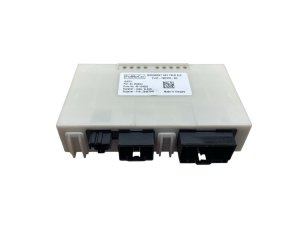
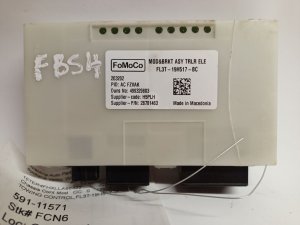
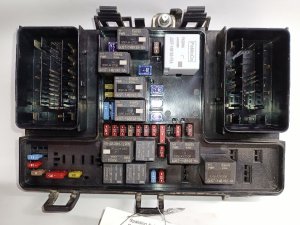
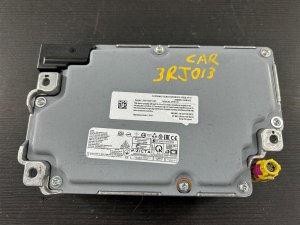
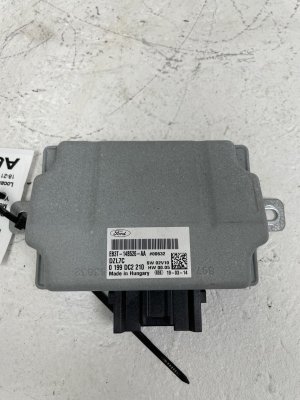
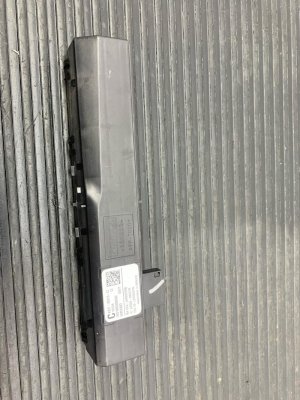
New Aftermarket Parts Available
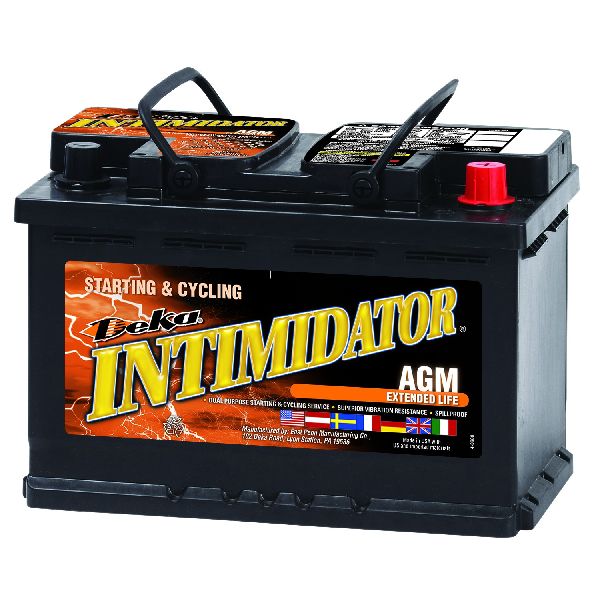
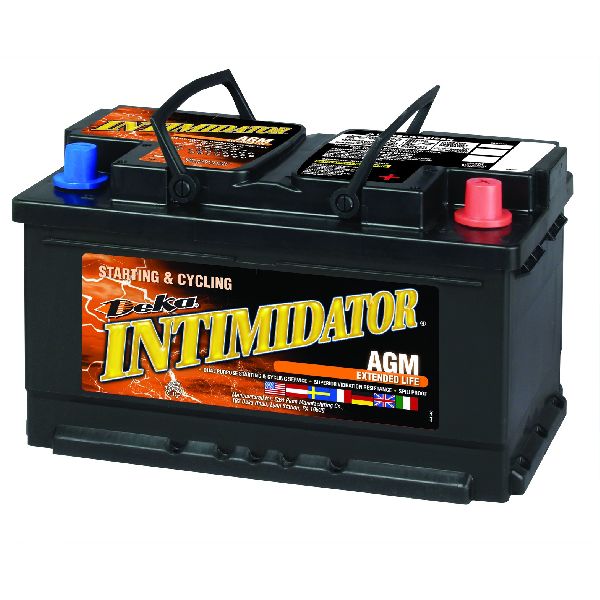


The information in this article is provided for general reference and educational purposes only. Vehicle specifications, procedures, and part compatibility can vary by production date, trim level, and region. Always consult your vehicle's factory service manual and verify part numbers before purchasing or performing repairs. Safety-critical components such as airbags, seat belts, and braking systems should be installed by a qualified professional.
- Ford Ranger:
- 🧭 Diagnostic Flowchart
- 🎬 Helpful Videos
- 🛍️ Shop This Part
- What's Unique About the 2019-2023 Ford Ranger
- Symptoms You May Notice
- Most Likely Causes
- Rare But Worth Checking
- Diagnosis Steps
- Parts You'll Likely Need
- Related Codes That Often Appear With This One
- Platform-Specific Known Issues
- Mechanic-Grade Diagnostic Values
- Hidden / Shadow Codes Worth Checking
- Scan Tool Commands That Help
- Wiring & Ground Locations
- Real Owner Repair Stories
- "I Checked Everything" — The Actual Cause
- OEM Part Supersession History
- Model Year Variations Within This Range
- Other Known Issues on This Vehicle
- Used vs. New Parts: Buying Guide for This Vehicle
- Real Owner Stories
- 2020 Ford Ranger
- 2021-2024 Ford Bronco
- Ford Escape Hybrid
- Related OBD-II Codes
- Frequently Asked Questions
- 🎟️ Get 5% Off