

U0140 on 2014-2018 Kia Forte: Lost Communication With Body Control Module Causes and Fixes
This code means the Body Control Module (BCM) has stopped communicating with other computers in the car. The most common causes are simple electrical issues like a weak battery, blown fuses, or a bad ground connection. Before suspecting a costly BCM failure, always check these basic items first.
- U0140 on a 2014-2018 Forte means the Body Control Module is offline.
- Always start diagnostics with the easiest and most common causes: battery health, fuses, and ground connections.
- Do not immediately assume the BCM has failed; it is more often a problem with the power or wiring going to it.
- Driving with this code is not recommended, as safety-critical items like headlights and wipers can fail unexpectedly.
- Due to the complexity of network diagnostics, professional service is highly recommended if the basic checks do not resolve the issue.
What's Unique About the 2014-2018 Kia Forte
The 2014-2018 Kia Forte (second generation, YD) does not have a widely documented, platform-specific pattern of failure that causes code U0140, unlike some other Kia models that have recalls for similar issues. The causes are typically rooted in general electrical and network principles rather than a known design flaw. The Body Control Module on this Forte is generally located behind the center console area or integrated into the driver-side interior fuse box (Smart Junction Box), which requires some interior trim removal to access for inspection.
Symptoms You May Notice
- Power windows, door locks, or mirrors stop working
- Interior or exterior lights behave erratically or fail completely
- Wipers do not function
- Vehicle will not start, or only starts intermittently (crank-no-start) 🎬 See how to diagnose an intermittent no-start
- Multiple warning lights illuminated on the dashboard (e.g., ABS, Traction Control, Airbag)
- Key fob or keyless entry system is inoperative
- Parasitic battery drain, causing a dead battery overnight
- Replacing the BCM without first verifying its power and ground connections. Many expensive modules are replaced when the actual fault was a simple blown fuse, a corroded ground wire, or a weak battery.
Most Likely Causes
- Weak Battery or Poor Connections 🔴 High Probability → Shop Vehicle Battery All modern vehicles are sensitive to low voltage. A battery below 12.4 volts or with corroded terminals can easily cause communication modules to drop offline intermittently, triggering U-codes. 🎬 Watch: How to fix a U0140 code
How to confirm: Test the battery voltage with a multimeter. It should read at least 12.4V with the engine off and 13.7-14.7V while running. Ensure battery terminals are clean and tight. An intermittent no-start that is resolved by a jump-start often points to a battery or connection issue.
Typical fix: Charge or replace the battery. Clean the battery terminals and cable ends thoroughly.
Est. part cost: $150-$250 - Blown BCM-Related Fuses 🟡 Medium Probability
How to confirm: Inspect all fuses in both the interior (driver's side dash) and engine bay fuse boxes. Check any fuses labeled 'BCM', 'Module', 'SJB' (Smart Junction Box), or 'Memory'.
Typical fix: Replace any blown fuses with new ones of the exact same amperage.
Est. part cost: $1-$10 - Poor BCM Ground Connection 🟡 Medium Probability
How to confirm: Locate the BCM's main ground wire (typically a black wire bolted to the chassis). Use a multimeter to check for resistance between the ground pin on the BCM connector and a known good chassis ground. The reading should be less than 1 ohm. One common DIY fix involves adding a redundant ground wire.
Typical fix: Clean the ground point connection of any paint or corrosion and tighten the bolt securely.
Est. part cost: $0-$5 - Damaged Wiring or Corroded Connector ⚪ Low Probability
How to confirm: Visually inspect the wiring harness leading to the BCM for any signs of chafing, cuts, or rodent damage. Disconnect the BCM connectors (with the battery disconnected) and check for any green or white corrosion on the pins.
Typical fix: Repair the damaged section of wire. Clean corroded connectors with an electrical contact cleaner and a small brush. Apply dielectric grease before reconnecting.
Est. part cost: $10-$100 - Faulty Body Control Module (BCM) ⚪ Low Probability → Shop Body Control Module
How to confirm: This is confirmed by exclusion. If all power, ground, and CAN bus wiring to the module are verified to be good, but the module still does not communicate with a scan tool, the BCM itself has likely failed internally.
Typical fix: Replace the Body Control Module. The new module will require programming by a Kia dealership or a qualified shop with the appropriate software to match the vehicle's VIN and options.
Est. part cost: $200-$500
Rare But Worth Checking
- Faulty Aftermarket Accessory: Poorly installed remote starters, alarms, or stereo systems that are tapped into the vehicle's CAN bus wiring can create electrical noise and disrupt communication, causing a U0140 code.
- Another Failing Module on the Network: Rarely, a different module (like the ABS or instrument cluster) can fail in a way that it floods the CAN bus with bad data, preventing the BCM from communicating. This requires advanced diagnostics, such as unplugging modules one by one, to isolate the faulty component.
- BCM Software Glitch: Occasionally, the BCM's internal software can become corrupted or have a bug that causes communication loss. Kia has issued TSBs for other models to update BCM/IBU software to fix various electrical issues, including anti-theft logic and remote start compatibility, indicating that software fixes are a known repair path.
Diagnosis Steps
- Read All Fault Codes: Use a quality OBD-II scanner to check for any other 'U' codes that may be present. This can help determine if the communication loss is isolated to the BCM or is a network-wide problem.
- Check Battery Health: Verify the battery has a static charge of at least 12.4 volts and that the terminals are clean and tight. A weak battery is a very common cause.
- Inspect All Fuses: Carefully check all fuses related to the BCM, body electronics, and modules in both the interior and engine compartment fuse panels. Pay attention to fuses labeled 'BCM', 'Module', and 'Memory'.
- Inspect BCM and Connectors: Disconnect the battery. Access the BCM (located behind the center console area or as part of the interior fuse panel) and visually inspect its connectors for corrosion, moisture, or loose pins.
- Verify BCM Power and Ground: Reconnect the battery. With the ignition on, use a multimeter to test the power supply pins at the BCM connector (should show battery voltage) and the ground pins (should show less than 1 ohm of resistance to the chassis).
- Check CAN Bus Resistance: Disconnect the battery again. At the OBD-II port, measure the resistance between Pin 6 (CAN High) and Pin 14 (CAN Low). A healthy network should read approximately 60 ohms. A reading of 120 ohms suggests a break in the wiring or a missing termination resistor, while a reading near 0 ohms indicates a short circuit.
- Isolate the Module: If all wiring, power, and grounds are confirmed to be good, and a professional scan tool cannot communicate with the BCM, the module itself is the most likely point of failure.
Parts You'll Likely Need
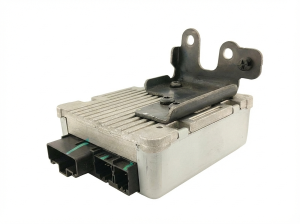
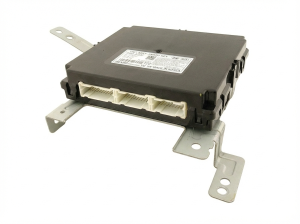
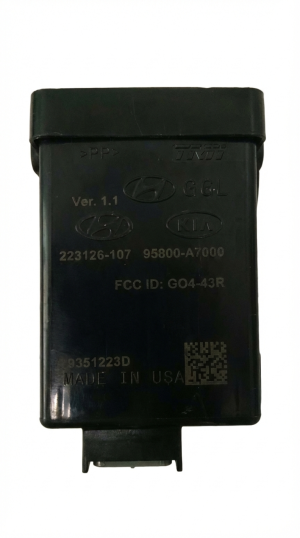
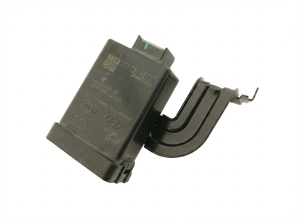
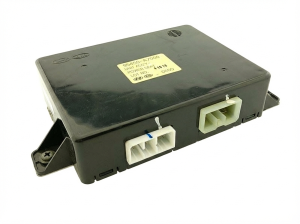
- Body Control Module (BCM)
(OEM #95400-A7100, 95400-A7640, 95400-A7630)— If all power, ground, and network wiring tests pass, the internal circuitry of the BCM is the likely cause of the communication loss. Part number varies by features like keyless entry, central locking, etc.
Trusted brands: Kia (OEM)
OEM price range: $300-$500
Aftermarket price range: $200-$400
Related Codes That Often Appear With This One
- U0100 — Lost Communication with ECM/PCM. This and other U-codes often appear alongside U0140, indicating a wider network communication problem.
- U0155 — Lost Communication With Instrument Panel Cluster Control Module. The instrument cluster is another key module on the CAN bus, and network-wide issues will often cause multiple communication codes.
- U0073 — Control Module Communication Bus 'A' Off. This code points directly to a general failure on the primary CAN bus, which would explain why the BCM cannot communicate.
Technical Service Bulletins (TSBs) & Recalls
- TSB CHA074: Details the replacement procedure for the MDPS (Motor Driven Power Steering) flexible coupling, a common failure on the 2014 Forte (YD) that causes steering noise and play.
Mechanic-Grade Diagnostic Values
- CAN Bus Network Resistance — expected: Approximately 60 Ω. Failure: A reading of 120 Ω indicates an open circuit or a missing terminating resistor. A reading near 0 Ω indicates a short between the CAN High and CAN Low wires. A reading of ~40 Ω may indicate a third, improper terminating resistor on the network.
- CAN Bus Voltage to Ground — expected: CAN High (Pin 6): ~2.6V. CAN Low (Pin 14): ~2.4V.. Failure: Voltages that are the same (e.g., both 2.5V) can indicate a short between the wires. Voltages at 0V can indicate a short to ground.
- BCM Ground Circuit Resistance — expected: Less than 1.0 Ω (ideally < 0.1 Ω). Failure: A reading higher than 1.0 Ω indicates a poor ground connection, which can cause module communication issues.
- BCM Operating Voltage — expected: 9V to 16V. Failure: A voltage supply below 9V can cause the module to shut down or behave erratically.
Scan Tool Commands That Help
- Kia GDS (Global Diagnostic System): BCM Diagnosis / Actuation Test — To verify if the GDS can communicate with the BCM and to command specific outputs (like lights, locks) to test the BCM's functionality directly.
- Kia GDS (Global Diagnostic System): Transmitter Code Registration — This function is mandatory after replacing the BCM to program the existing key fobs to the new module. Without this step, the keyless entry and possibly the immobilizer will not work.
- Kia GDS (Global Diagnostic System): Vehicle S/W Management — Used for special functions like writing the VIN to a new module or resetting adaptive values. This may be required depending on the specific replacement BCM used.
Wiring & Ground Locations
- Body Control Module (BCM) — Located behind the center console area, accessible after removing the heater/AC control unit and the center lower cover.. This is the module that has lost communication. Physical access is required to test its power, ground, and network connections, and to inspect for corrosion or damage.
- Data Link Connector (DLC) — Under the driver's side dashboard, standard 16-pin OBD-II port.. This is the primary non-invasive test point for the entire CAN network. Pin 6 (CAN-H) and Pin 14 (CAN-L) are used to measure network resistance and voltage.
- BCM Ground Point — Bolted to the metal chassis structure in the vicinity of the BCM, behind the center console.. A loose or corroded ground is a high-probability cause for communication loss. Verifying this connection has less than 1 ohm of resistance to the chassis is a critical diagnostic step.
OEM Part Supersession History
95400A7xxx (e.g., 95400A7640, 95400A7DH0)→Varies— Applies to pre-facelift models.
Heads up: These parts are for the 2014-2016 Forte. They are likely incompatible with 2017-2018 models which use different part number series.95400Bxxxx (e.g., 95400-B0221, 95400-B0720)→Varies— Applies to post-facelift models.
Heads up: These parts are for the 2017-2018 Forte. They are likely incompatible with 2014-2016 models. Part number must be matched exactly to the original unit.
Model Year Variations Within This Range
- 2014-2016 vs 2017-2018: The Body Control Module part numbers are different for the pre-facelift (2014-2016) and post-facelift (2017-2018) models. For example, early models use 95400-A7xxx series part numbers, while later models use 95400-Bxxxx series. The modules are not interchangeable, and the exact part number from the original unit must be used for replacement.
Diagnostic Flowchart
Other Known Issues on This Vehicle
Issues unrelated to this code that are worth knowing about as an owner of this generation:
- Engine Failure and Excessive Oil Consumption 🔴 High — Widespread issue, particularly in 1.8L and 2.0L Nu engines from 2014-2015 models, leading to class-action lawsuits and recalls. Can occur at various mileages. (Ref: Recalls SC210 / 21V260000 for 2017-2018 2.0L engines due to oil pump failure risk. Recall 20V750 for potential engine compartment fires in 2012-2015 models.)
- MDPS Steering Coupler Failure 🟠 Medium — Very common. The flexible rubber coupler in the Motor Driven Power Steering (MDPS) column disintegrates over time, causing a clicking or knocking noise when turning the wheel and excessive play in the steering. (Ref: TSB CHA074 provides a repair procedure for the 2014 Forte (YD). While not a recall for the Forte, Hyundai recalled the sister model Elantra for the same part.)
- Brake Light Switch Failure 🟡 Low → Shop Brake Light Switch — Common on 2012-2014 models. The stopper pad for the brake light switch deteriorates, which can cause brake lights to stay on, the shifter to be movable without pressing the brake, and potential starting issues. (Ref: Recall 15V015000)
- Airbag Control Unit (ACU) Malfunction 🔴 High — Affects 2017-2018 models. The ACU cover can contact a memory chip, causing damage that may deactivate the airbags. (Ref: Recall 22V031000 / 21V260000)
Used vs. New Parts: Buying Guide for This Vehicle
When a used part is the smart pick: A used BCM is a viable cost-saving option, but only if the correct procedures are followed. It is not a simple plug-and-play repair. It makes sense if you have access to a dealership or a well-equipped automotive locksmith who can perform the necessary programming, or if you plan to use a 'cloning' service.
Donor-vehicle mileage cap: roughly under 150000 miles for the part to have meaningful remaining life.
What to inspect on the donor part:
- EXACT part number match. Do not deviate.
- Check for any signs of water damage or corrosion on the casing and especially on the connector pins.
- Source the part from a vehicle that was not involved in a flood or fire.
- Obtain the VIN of the donor vehicle if possible to cross-reference its original options.
OEM-only on this vehicle (don't cheap out):
- Body Control Module (BCM) - While used OEM is an option, no reliable aftermarket BCMs are available. The choice is between new OEM, used OEM, or a remanufactured/cloned OEM unit.
Brands owners have reported issues with on this vehicle:
- Avoid any non-OEM, 'new' aftermarket BCMs from unknown brands, as they are unlikely to integrate with the vehicle's specific software and immobilizer system.
Real Owner Stories
Aggregated from forums and TSBs cited above. Mileages and costs reflect what owners reported in those sources.
2014-2018 Kia Forte
Symptoms: The CAN bus wires shorted to ground, triggering code U0073 and causing communication failure across the network.
What fixed it: Found the wiring harness routed behind the radio was rubbing against a metal dash frame bracket; repaired the chafed wires and re-secured the harness.
Source hint: forteforums.com report cited in owner_reports
2017 Kia Forte
Symptoms: Intermittent no-start condition where all electronics work but the car sometimes requires a jump.
What fixed it: This behavior is consistent with a failing battery or poor connection, which is a primary cause of the U0140 code.
Source hint: https://www.reddit.com/r/AskAMechanic/comments/18t5h5s/2017_kia_forte_wont_start/
Related OBD-II Codes
Frequently Asked Questions
My 2017 Kia Forte sometimes won't start unless I jump it, but the electronics seem fine. Could this be related to U0140?
Is there a TSB for steering issues on the 2014 Kia Forte that might be confused with electrical codes?
Could a problem with my brake lights cause starting issues on my 2013-2014 Forte?
I have a 2018 Forte; is there a recall that affects the electronic modules?
Where is the Body Control Module located on the 2014-2018 Forte if I need to check the connectors?
My 2015 Forte has a 1.8L engine and is consuming oil; could this trigger a U0140 code?
Helpful Videos
We Have This Part in Stock

The information in this article is provided for general reference and educational purposes only. Vehicle specifications, procedures, and part compatibility can vary by production date, trim level, and region. Always consult your vehicle's factory service manual and verify part numbers before purchasing or performing repairs. Safety-critical components such as airbags, seat belts, and braking systems should be installed by a qualified professional.
- Kia Forte:
- 🧭 Diagnostic Flowchart
- 🎬 Helpful Videos
- 🛍️ Shop This Part
- What's Unique About the 2014-2018 Kia Forte
- Symptoms You May Notice
- Most Likely Causes
- Rare But Worth Checking
- Diagnosis Steps
- Parts You'll Likely Need
- Related Codes That Often Appear With This One
- Technical Service Bulletins (TSBs) & Recalls
- Mechanic-Grade Diagnostic Values
- Scan Tool Commands That Help
- Wiring & Ground Locations
- OEM Part Supersession History
- Model Year Variations Within This Range
- Other Known Issues on This Vehicle
- Used vs. New Parts: Buying Guide for This Vehicle
- Real Owner Stories
- 2014-2018 Kia Forte
- 2017 Kia Forte
- Related OBD-II Codes
- Frequently Asked Questions
- 🎟️ Get 5% Off