

U0140 on 2014-2019 Kia Soul: Lost Communication With Body Control Module Causes and Fixes
U0140 on a 2014-2019 Kia Soul means the Body Control Module (BCM) has stopped communicating. This often causes widespread electrical issues like non-working lights, locks, and windows, and can sometimes cause a no-start condition. Before suspecting a bad BCM, check for a weak battery, poor ground connections, and blown fuses, as these are common, inexpensive fixes that frequently cause communication codes.
- U0140 means the Body Control Module (BCM) is offline.
- Always check the simplest and cheapest things first: battery health, terminal connections, and all related fuses.
- Symptoms are widespread and electrical, affecting lights, locks, windows, and potentially causing a no-start condition.
- The BCM is located behind the glove box on the 2014-2019 Soul.
- If the BCM needs to be replaced, it is not a simple plug-and-play part; it requires professional programming to your vehicle.
What's Unique About the 2014-2019 Kia Soul
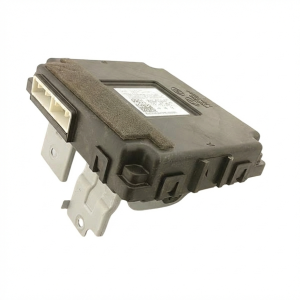
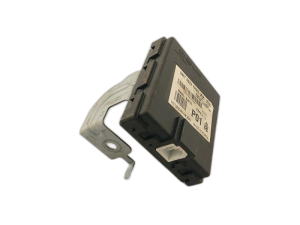
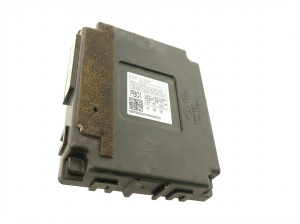
For the second-generation (2014-2019) Kia Soul, the U0140 code requires a traditional diagnostic approach starting with the basics: power, grounds, and fuses. The Body Control Module (BCM) is located behind the glove box. A critical point for this platform is correctly identifying the BCM part number if replacement is needed. Part numbers changed during the generation, and airbag control modules (part numbers starting with '95910') are frequently mislabeled as BCMs in online catalogs. An actual BCM will have a different part number, such as 95400-B2270 or 95400-B2B03. Any replacement BCM, new or used, will require programming by a dealer or qualified shop with appropriate tools to function correctly.
Symptoms You May Notice
- Check Engine Light is on
- Multiple other warning lights may be illuminated (ABS, Traction Control, etc.)
- Power windows, door locks, or mirrors not working
- Interior or exterior lights malfunctioning (staying on, not turning on, or flickering)
- Headlights appearing dim, which may brighten when revving the engine if a weak battery is the cause
- Wipers operating erratically or not at all
- Remote key fob not working
- Vehicle will not start or cranks but does not start
- Issues with the radio or infotainment display
- Horn not working
- Replacing individual components like window motors or light bulbs when the root cause is the BCM not sending the command to activate them.
- Immediately replacing the BCM without first verifying proper power, ground, and fuse integrity.
Most Likely Causes
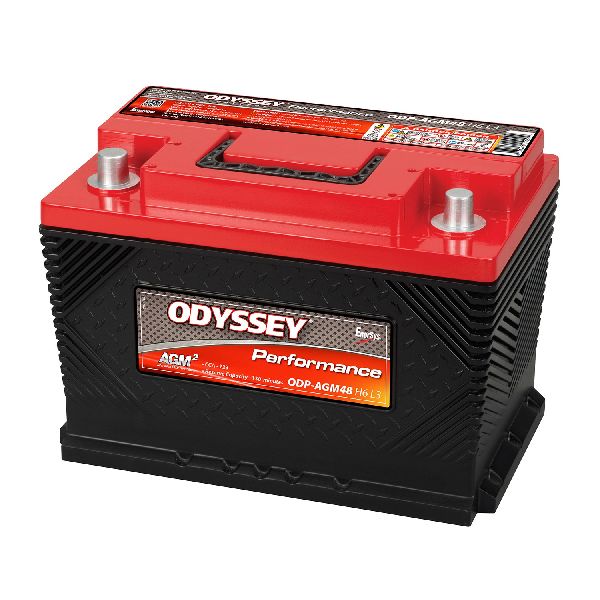
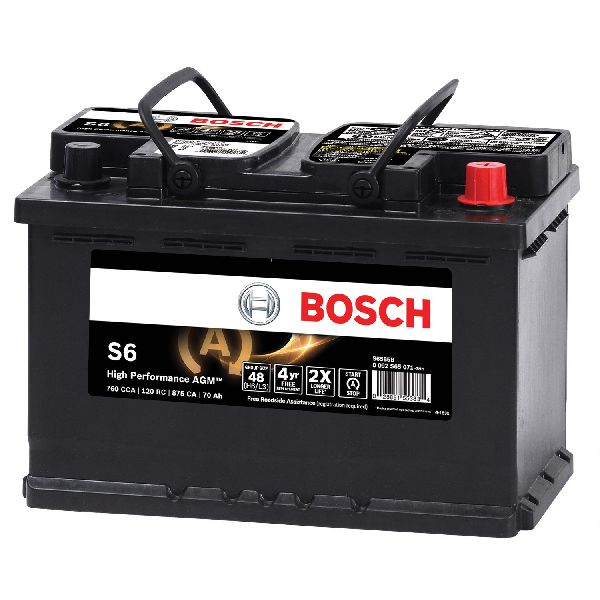
- Weak or Failing Battery / Poor Connections 🔴 High Probability → Shop Vehicle Battery Modern vehicle modules are highly sensitive to voltage. Low voltage from a weak battery or corroded/loose terminals can cause modules to drop off the communication network, triggering U-codes.
How to confirm: Test the battery voltage with a multimeter; it should be above 12.4V with the engine off. Check battery terminals for whitish or greenish corrosion and ensure they are tight. Many auto parts stores will test the battery and charging system for free.
Typical fix: Clean battery terminals and cable ends with a wire brush. Charge or replace the battery if it fails a load test.
Est. part cost: $150-$250 - Blown Fuses 🟡 Medium Probability
How to confirm: Inspect all fuses related to the BCM, often labeled 'BCM', 'Module', or 'Memory' in both the interior and engine bay fuse panels. Use a fuse tester or multimeter to check for continuity. A visual check is not always reliable.
Typical fix: Replace the blown fuse with a new one of the exact same amperage. If the fuse blows again immediately, a short circuit exists that needs to be diagnosed.
Est. part cost: $1-$10 - Faulty Ground Connection 🟡 Medium Probability
How to confirm: Locate the main body and BCM ground points (referencing a service manual is best). Check that the connections are clean, free of corrosion, and tight. A common ground point to check is near the battery or on the inner fender.
Typical fix: Disconnect, clean the contact surfaces with a wire brush until shiny, and re-secure the ground strap or wire. Applying dielectric grease can prevent future corrosion.
Est. part cost: $0-$5 - Damaged Wiring or Connectors ⚪ Low Probability Rodents are known to chew on the soy-based wire coatings used in some modern cars, causing shorts and open circuits.
How to confirm: Visually inspect the wiring harness leading to the BCM (located behind the glove box) for any signs of chafing, rodent damage, or corrosion. Check that the connectors are fully seated and the pins are not bent or corroded. This may require a multimeter to check for continuity or shorts in the CAN bus wires.
Typical fix: Repair the damaged section of wire or replace the faulty connector. This can be a complex task best left to a professional.
Est. part cost: $10-$500 - Failed Body Control Module (BCM) ⚪ Low Probability → Shop Body Control Module
How to confirm: This is typically the last resort after all other possibilities (power, ground, wiring) have been ruled out. A professional diagnosis with a high-end scan tool is needed to confirm the BCM is truly offline and not responding to queries from other modules.
Typical fix: Replace the Body Control Module. The new module must be programmed to the vehicle's VIN and specific configuration by a dealer or a well-equipped independent shop.
Est. part cost: $200-$500
Rare But Worth Checking
- Aftermarket Device Interference:
Diagnosis Steps
- Scan for All Codes: Use a high-quality OBD-II scanner that can access all vehicle modules (BCM, ABS, etc.), not just the engine computer. Note all 'U' codes and any other codes present.
- Check Battery Health: Visually inspect the battery terminals for corrosion. Measure the battery voltage (should be >12.4V). Perform a load test to ensure the battery is healthy under load, as a weak battery is a primary cause of communication faults.
- Inspect Fuses: Check all fuses related to the BCM in both the interior and under-hood fuse boxes. Pay attention to fuses labeled 'BCM', 'Module', or 'Memory'. Use a multimeter for accuracy.
- Inspect BCM and Grounds: Access the BCM behind the glove box. Check that its connectors are secure and show no signs of corrosion or water damage. Locate and inspect the main chassis grounds for tightness and corrosion.
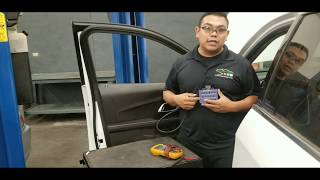
- Check CAN Bus Network: This is an advanced step. With the battery disconnected, measure the resistance between pins 6 (CAN High) and 14 (CAN Low) on the OBD-II port. 🎬 Watch: How to test a CAN bus network with a multimeter A healthy network should read approximately 60 ohms. Readings of 120 ohms suggest an open circuit or a single terminating resistor issue, while 0 ohms indicates a short circuit.
- Professional Diagnosis: If the steps above do not identify the issue, the vehicle should be taken to a professional. They can perform advanced network diagnostics, check for software updates, and confirm if the BCM itself has failed before ordering an expensive replacement.
Parts You'll Likely Need
- Body Control Module (BCM)
(OEM #95400-B2570 (2014-15), 95400-B2B00 (2014-16), 95400-B2B03 (2018), 95400-B2270 (2017-19). Always verify by VIN.)— This is the part that needs to be replaced if it has failed internally, after all other power, ground, and wiring issues have been ruled out.
Trusted brands: Kia (Genuine)
OEM price range: $250-$500
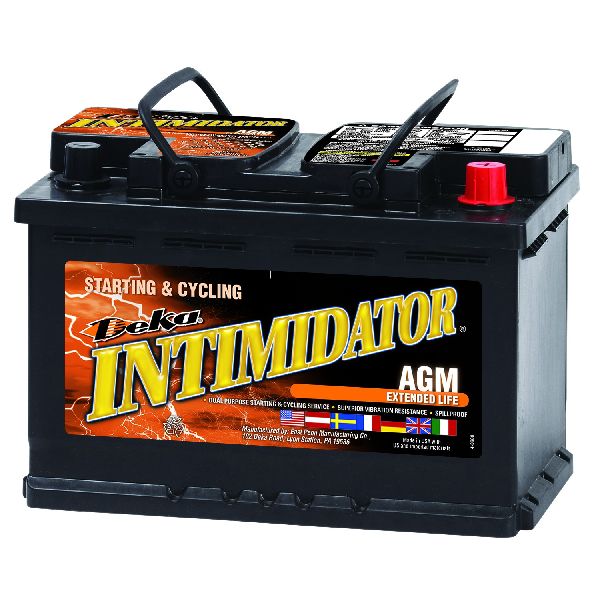
Aftermarket price range: $100-$300 (Used/Remanufactured) - Vehicle Battery — A weak or failing battery is a very common cause of communication codes in modern vehicles.
Trusted brands: Bosch, Interstate, DieHard
OEM price range: $200-$300
Aftermarket price range: $150-$250
Related Codes That Often Appear With This One
- U0073 — Control Module Communication Bus 'A' Off. This is a general network failure code that often appears with specific module communication loss codes like U0140, suggesting a wider network problem.
- U0100 — Lost Communication with ECM/PCM. If this code is present, it points towards a more severe network issue or a power/ground problem affecting multiple critical modules.
Platform-Specific Known Issues
- BCM Failure After Battery Issues: → Shop Vehicle Battery Some owners report that BCM communication issues and the U0140 code appear immediately after jump-starting the vehicle or replacing the battery. This highlights the module's sensitivity to voltage spikes or incorrect voltage, reinforcing the need to check the battery and charging system first.
Mechanic-Grade Diagnostic Values
- CAN Bus Network Resistance — expected: ~60 Ω. Failure: A reading of ~120 Ω indicates an open circuit or a missing terminating resistor. A reading near 0 Ω indicates a short between CAN High and CAN Low wires.
- CAN Bus Idle Voltage — expected: CAN High ≈ 2.5V, CAN Low ≈ 2.5V. Failure: Voltages that are stuck high (near battery voltage) or low (near 0V) indicate a short to power or ground on that line.
- CAN Bus Active Voltage — expected: CAN High rises to ~3.5V, CAN Low falls to ~1.5V. Failure: Lack of voltage differential or distorted waveforms on an oscilloscope points to network interference or a faulty module transceiver.
- BCM Ground Resistance — expected: < 0.1 Ω. Failure: Higher resistance indicates a poor ground connection, which can cause the module to malfunction and drop off the network.
Hidden / Shadow Codes Worth Checking
- No Subtype Information / Missing Message: While not a hidden code in itself, dealer-level scan tools may provide subtype information for a U-code. For example, a Ford system might show U0140:87 for 'Missing Message'. This confirms the code was set because a supervising module timed out waiting for a required signal from the BCM, rather than due to an electrical fault on the bus. Kia's GDS may provide similar context. (see via Kia GDS (Global Diagnostic System) or other high-end professional scan tools with manufacturer-specific software.)
Scan Tool Commands That Help
- Kia GDS (Global Diagnostic System): Vehicle S/W Management — This function is used for 'Variant Coding' after installing a new or used BCM. It tells the module which options the vehicle is equipped with (e.g., smart key, sunroof, etc.). Failure to perform variant coding can lead to features not working.
- Kia GDS (Global Diagnostic System): Reset Adaptive Values — After replacing a module or fixing a related issue, this command can be used to clear any learned adjustments within the control unit, returning it to factory defaults.
- Kia GDS (Global Diagnostic System): Actuation Test — Allows the technician to command the BCM to activate specific outputs (e.g., turn on headlights, lock doors). If the command works, it proves the BCM, wiring, and component are likely good, pointing towards a switch or input problem. If it fails, it helps isolate the fault to the BCM or its output circuit.
- Kia GDS (Global Diagnostic System): Immobilizer / Key Registration — This is a mandatory procedure after replacing the BCM. The vehicle's keys must be re-registered to the new BCM to disable the anti-theft system and allow the engine to start.
Wiring & Ground Locations
- BCM Location — Located behind the glove box compartment.. This is the primary module for the U0140 code. Physical inspection for loose connectors, corrosion, or water damage is a key first step after checking fuses.
- C-CAN Junction Connector — Typically located behind the driver's side kick panel or lower dash trim.. This connector acts as a splice pack where CAN bus wires from several modules join together. A poor pin connection or corrosion in this single connector can take multiple modules offline, causing U0073 and U0140 codes.
- IP Junction Block — The main interior fuse panel, located on the driver's side of the dashboard.. This is not just a fuse holder; it's a central hub for many electrical circuits. CAN bus wires pass through its large connectors. A loose connector or internal fault in this block can cause widespread communication issues.
- Main Chassis Grounds — Key ground points are on the inner fender near the battery, on the engine block, and under the dashboard near the A-pillars.. A single loose or corroded main ground can create an unstable voltage reference for multiple modules, causing intermittent communication codes that are difficult to trace.
"I Checked Everything" — The Actual Cause
- In network diagnostics, the equivalent of a 'smoke test clean' scenario is when all basic checks (battery, fuses, visual wiring inspection) pass, but the fault persists. In one documented case on a different vehicle, persistent CAN bus communication codes with incorrect bus voltages were traced back to a poor ground connection on the Transmission Control Module (TCM). Even though the BCM was reporting errors, the root cause was the TCM's bad ground disrupting the entire network. The fix was to run a new, dedicated ground wire for the TCM, which stabilized the network voltage and resolved all communication codes. This highlights the importance of checking powers and grounds on ALL modules on the network, not just the one that has logged a code.
OEM Part Supersession History
95400-B2570→N/A— Part for specific model years.
Heads up: Listed for 2014-2016 models. Always match the part number from the original unit in the vehicle.95400-B2B00→N/A— Part for specific model years.
Heads up: Listed for 2014-2016 models. Do not install in a 2017+ vehicle.Various→Various— Model Year Facelift
Heads up: BCM part numbers changed for the 2017-2019 facelift models. A part from a 2014-2016 Soul is not compatible with a 2017-2019 Soul, and vice-versa. It is critical to match the exact part number from the module being replaced.
Model Year Variations Within This Range
- 2017-2019: The Kia Soul received a significant facelift for the 2017 model year. This included revised front and rear bumpers, new headlight designs, and updated interior options like new infotainment systems. A 1.6L Turbo engine option was also added. These changes often coincide with updates to wiring, connectors, and module part numbers, making it critical to use parts specific to the 2017-2019 range if your car is a post-facelift model.
Diagnostic Flowchart
Other Known Issues on This Vehicle
Issues unrelated to this code that are worth knowing about as an owner of this generation:
- Engine Failure, Knocking, and Fires (1.6L & 2.0L GDI) 🔴 High — Widespread, particularly in 2014-2016 models. Can occur at various mileages, often preceded by knocking noises or high oil consumption. (Ref: Multiple recalls including SC176 and a safety campaign involving a Knock Sensor Detection System (KSDS) software update.)
- Excessive Oil Consumption (GDI Engines) 🟠 Medium — Common across the generation, especially with the 1.6L and 2.0L GDI engines. Owners report needing to add a quart of oil every 1,000 miles. (Ref: NHTSA has investigated this issue, and Kia has internal procedures for consumption tests, which may lead to engine replacement under certain conditions.)
- Steering Coupler Disintegration 🟠 Medium — A very common issue where the flexible rubber coupler in the steering column degrades, causing a clicking or clunking noise when turning the wheel, and excessive play. (Ref: While not a formal recall for all models, it's a widely recognized failure. The part itself is inexpensive, but labor can be involved.)
- Catalytic Converter Failure 🟠 Medium — Often a consequence of the high oil consumption or engine issues, leading to code P0420. High exhaust gas temperatures can also damage the converter. (Ref: Recall SC176 included provisions to replace the catalytic converter if it was damaged by the primary engine defect.)
- Vehicle Theft Vulnerability (without push-button start) 🔴 High — Affects models with a traditional key ignition, which lack an engine immobilizer. This became a widely publicized issue. (Ref: Kia has offered software updates and steering wheel locks to address this vulnerability.)
Used vs. New Parts: Buying Guide for This Vehicle
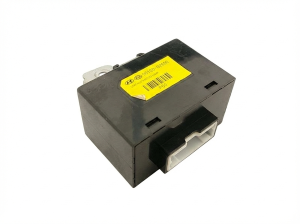
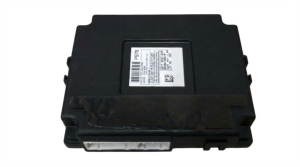
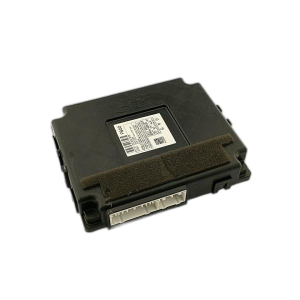
When a used part is the smart pick: For the Body Control Module (BCM), purchasing a used OEM part from a reputable salvage yard is a very smart and cost-effective choice. New aftermarket BCMs are not common for this vehicle, so the choice is between a new Kia part and a used Kia part. A used module can save hundreds of dollars.
Donor-vehicle mileage cap: roughly under 120000 miles for the part to have meaningful remaining life.
What to inspect on the donor part:
- Match the OEM part number EXACTLY. Do not buy based on vehicle year alone. Physically inspect your old BCM to get the number.
- Inspect the used module's connectors for any signs of corrosion, bent pins, or water damage.
- Ensure the salvage yard offers a warranty or return policy in case the unit is defective.
- Confirm the donor vehicle's options if possible (e.g., smart key vs. conventional key), as this can affect BCM compatibility.
OEM-only on this vehicle (don't cheap out):
- Body Control Module (BCM)
Brands owners have reported issues with on this vehicle:
- No specific brands are mentioned, but caution is advised for any non-OEM electronic modules due to potential quality and compatibility issues.
Real Owner Stories
Aggregated from forums and TSBs cited above. Mileages and costs reflect what owners reported in those sources.
2014 Kia Soul
Symptoms: The vehicle would not start and the dashboard lights were described as looking like a 'Christmas tree' with multiple warning indicators illuminated.
What fixed it: The dealer diagnosed a failed Body Control Module (BCM). The repair required replacing the module and programming it to the vehicle's VIN.
Source hint: kiasoulforums.com Thread: '2014 Kia Soul Won't Start, Multiple Warning Lights'
2014-2019 Kia Soul
Symptoms: BCM communication issues and the U0140 code appeared immediately after the owner performed a battery replacement or jump-started the vehicle.
What fixed it: Verification of the battery and charging system health; the module is noted for extreme sensitivity to voltage spikes during battery service.
Source hint: reddit.com/r/KiaSoulClub
Related OBD-II Codes
Frequently Asked Questions
Why did my 2014 Kia Soul dash light up like a 'Christmas tree' with multiple warning lights?
Can a weak battery really cause a U0140 code on my Kia Soul?
Where is the Body Control Module located on the 2014-2019 Kia Soul if I need to inspect the wiring?
My headlights dim and then brighten when I rev the engine; is this related to the U0140 code?
Are there any recalls for the 2014-2016 Kia Soul that I should be aware of while diagnosing electrical issues?
Helpful Videos
Used OEM Parts in Stock
New Aftermarket Parts Available



The information in this article is provided for general reference and educational purposes only. Vehicle specifications, procedures, and part compatibility can vary by production date, trim level, and region. Always consult your vehicle's factory service manual and verify part numbers before purchasing or performing repairs. Safety-critical components such as airbags, seat belts, and braking systems should be installed by a qualified professional.
- Kia Soul:
- 🧭 Diagnostic Flowchart
- 🎬 Helpful Videos
- 🛍️ Shop This Part
- What's Unique About the 2014-2019 Kia Soul
- Symptoms You May Notice
- Most Likely Causes
- Rare But Worth Checking
- Diagnosis Steps
- Parts You'll Likely Need
- Related Codes That Often Appear With This One
- Platform-Specific Known Issues
- Mechanic-Grade Diagnostic Values
- Hidden / Shadow Codes Worth Checking
- Scan Tool Commands That Help
- Wiring & Ground Locations
- "I Checked Everything" — The Actual Cause
- OEM Part Supersession History
- Model Year Variations Within This Range
- Other Known Issues on This Vehicle
- Used vs. New Parts: Buying Guide for This Vehicle
- Real Owner Stories
- 2014 Kia Soul
- 2014-2019 Kia Soul
- Related OBD-II Codes
- Frequently Asked Questions
- 🎟️ Get 5% Off