

U0141 on 2006-2021 Hyundai Tucson: Lost Communication With Body Control Module Fixes
This code means the Body Control Module (BCM) has stopped communicating. The most common causes are simple electrical issues like a weak battery or a blown fuse. A major recall for the ABS module on 2016-2021 models can cause electrical shorts and network codes, so its status should be checked. Before suspecting a failed BCM, always check the battery, fuses, and recall history first.
- U0141 means the Body Control Module (BCM) is offline.
- Always check the simplest things first: battery health and fuses related to the BCM are the most common culprits.
- Symptoms will be obvious electrical problems: lights, locks, and windows acting up or not working at all.
- Do not replace the BCM unless you have professionally confirmed it has proper power and ground but still won't communicate.
- A replacement BCM will likely require programming by a dealer or a well-equipped independent shop.
What's Unique About the 2006-2021 Hyundai Tucson
For the 2006-2021 Hyundai Tucson, while many U0141 causes are typical, the platform has a critical issue that owners must be aware of: Hyundai Recall 195 (NHTSA 20V-520). This recall addresses a defect in the Anti-Lock Brake System (ABS) module on 2016-2021 models where internal corrosion can cause an electrical short. This short can disrupt the entire CAN bus network, triggering communication codes like U0141, and poses a significant fire risk even with the vehicle turned off. Therefore, diagnosis on affected model years must include verifying the status and completion of this recall, as a faulty ABS module is a known cause of widespread electrical problems on this platform.
Generation note: The 2006-2021 model years span four generations of the Hyundai Tucson: 1st Gen (JM, 2006-2009), 2nd Gen (LM, 2010-2015), 3rd Gen (TL, 2016-2021), and the start of the 4th Gen (NX4, 2021). While the meaning of the code is the same, the BCM location, fuse designations, and wiring differ. For the 3rd Gen (TL), the BCM is located behind the dash/radio, making access more involved. The 3rd and 4th generations are subject to specific electrical recalls and TSBs (like the ABS fire risk and CCU updates) that are highly relevant to this code.
Symptoms You May Notice
- Malfunctioning or completely dead interior lights (dome, map lights).
- Power windows and door locks not working from switches or key fob.
- Headlights, taillights, or turn signals behaving erratically or not turning on.
- Instrument cluster gauges dropping to zero or warning lights flickering randomly.
- Vehicle failing to start or stalling, as the BCM can be part of the immobilizer system.
- Security system faults or false alarms.
- Air conditioning (A/C) system not functioning, as it may rely on BCM inputs.
- Replacing the BCM before checking the battery, fuses, and ground connections. These simple electrical issues are far more common and cheaper to fix.
- On 2016-2021 models, overlooking the faulty ABS module as the root cause of the network communication failure.
Most Likely Causes
- Low Battery Voltage or Failing Alternator 🔴 High Probability → Shop Vehicle Battery Modern electronic modules like the BCM are sensitive to voltage drops. A weak battery (below 12.4V) is a leading cause of intermittent communication failures across all modern vehicles, including the Tucson.
How to confirm: Test the battery voltage with a multimeter. A healthy, resting battery should be at or above 12.4V. Check the voltage with the engine running; it should be between 13.5V and 14.5V, indicating a healthy alternator.
Typical fix: Charge or replace the vehicle's battery. If the alternator is faulty, it will need to be replaced.
Est. part cost: $120-$250 - Blown Fuse for the BCM 🟡 Medium Probability
How to confirm: Locate the interior and engine bay fuse boxes. On 2016-2021 (TL) models, the interior fuse box is on the driver's side dash. Check the owner's manual to identify all fuses related to 'BCM', 'Body', or 'Module'. For example, on a 2017 Tucson, the 'MODULE6' fuse may be for the BCM. Visually inspect the identified fuses or test them for continuity with a multimeter.
Typical fix: Replace the blown fuse with a new one of the *exact same amperage rating*. If the fuse blows again, it indicates a short circuit that needs further diagnosis.
Est. part cost: $1-$10 - Faulty ABS Module (2016-2021 Models) 🟡 Medium Probability A widespread recall (NHTSA 20V-520 / Hyundai Recall 195) was issued for this generation due to the ABS module's tendency to corrode internally and cause an electrical short. This short can disrupt CAN bus communication and trigger U0141.
How to confirm: Check the vehicle's VIN for open recalls on the NHTSA or Hyundai website. A professional scan tool may show the ABS module is offline. The recall fix involved replacing a 40-amp fuse with a 25-amp version and a software update.
Typical fix: Have a Hyundai dealer perform the recall service. If the module has already failed, it will need to be replaced, which is covered under the recall campaign.
Est. part cost: $0 if covered by recall - Poor Ground Connection 🟡 Medium Probability
How to confirm: Locate the main ground points for the BCM. On 2nd Gen (LM) models, grounds GM02 and GM03 are located at the center of the dash. Inspect the connection for looseness, corrosion, or paint/dirt interfering with the contact. Test resistance between the BCM ground wire and the chassis; it should be near zero ohms.
Typical fix: Clean the ground connection point and wire terminal with a wire brush until shiny bare metal is exposed. Securely re-fasten the connection and apply a protective coating.
Est. part cost: $0-$5 - Damaged Wiring or Corroded Connector ⚪ Low Probability Water intrusion or chafing can damage the BCM harness. On some models, the BCM is located behind the center console, where spills or leaks could potentially reach connectors. 🎬 See this video on locating and removing the BCM
How to confirm: Visually inspect the wiring harness and connectors going to the BCM for any signs of damage, chafing, or corrosion. Pay close attention to areas where the harness passes through the firewall or near sharp metal edges. Gently wiggle the connector and harness with the key on to see if it triggers the symptoms.
Typical fix: Repair the damaged section of wire or clean/replace the corroded connector. Apply dielectric grease to protect the connection.
Est. part cost: $10-$100 - Faulty Body Control Module (BCM) ⚪ Low Probability → Shop Body Control Module
How to confirm: This should be the last step after all other possibilities (power, ground, fuses, wiring, and other modules like the ABS) have been exhaustively ruled out. A professional-grade scan tool can attempt to communicate directly with the BCM. If power and ground are verified at the BCM connector but it still won't communicate, the module itself has likely failed.
Typical fix: Replace the Body Control Module. 🎬 Watch: How to replace the BCM on 2009-2015 models The new module will need to be programmed to the vehicle's specific VIN and configuration, which often requires dealer-level tools like Hyundai GDS.
Est. part cost: $650-$950
Diagnosis Steps
- Check Battery Health: Ensure the battery is fully charged (at least 12.4V) and the charging system is working correctly (13.5V-14.5V when running).
- Check for Recalls: Enter the vehicle's VIN on the NHTSA website to check for open recalls, especially Recall 195/NHTSA 20V-520 for the ABS module on 2016-2021 models.
- Inspect Fuses: Check all fuses related to the BCM, interior electronics, and modules in both the interior and engine compartment fuse panels. Look for fuses labeled 'Module', 'BCM', 'Memory', etc.
- Scan for All Codes: Use an OBD-II scanner to check for any other 'U' codes in other modules. If many modules are offline, it points to a network-wide issue. If only the BCM is offline, the problem is closer to the module itself.
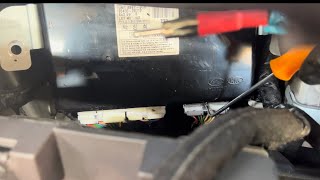
- Visual Inspection: Inspect the BCM's connectors and nearby wiring for visible signs of corrosion, water intrusion, or physical damage. The BCM on the 3rd Gen (TL) is behind the radio.
- Check Power and Ground at the BCM: Using a multimeter and a wiring diagram, confirm that the BCM is receiving proper battery voltage and has a solid ground connection at its connector.
- Test CAN Bus Network: (Advanced) With the battery disconnected, measure the resistance between the CAN High and CAN Low pins (Pins 6 and 14) at the OBD-II port. It should be approximately 60 ohms. A reading of 120 ohms suggests a missing termination resistor or a break in the circuit.
- Isolate the BCM: If all power, ground, and network tests are good, and the ABS module recall is not a factor, the BCM itself is the most likely culprit.
Parts You'll Likely Need
- Battery — A weak or failing battery is the most common cause of intermittent communication codes in modern vehicles.
Trusted brands: Bosch, ACDelco, Interstate
OEM price range: $200-$350
Aftermarket price range: $120-$250 - Body Control Module (BCM)
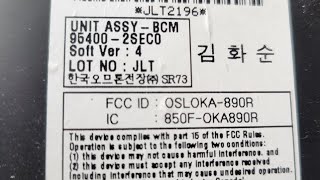
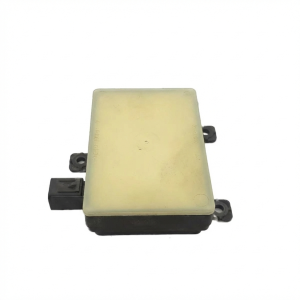
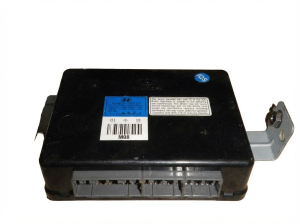
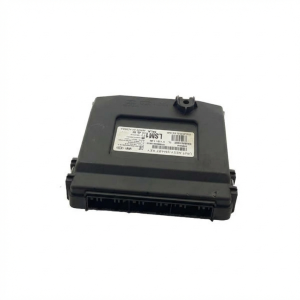
(OEM #Varies by generation, e.g., 95400-2SEB0 (2014), 95400-D3640 (2015-2018), 95400-N7031 (2021-2023))— This is the part to replace only after all other diagnostic steps have been completed and ruled out. It requires programming.
Trusted brands: Genuine Hyundai (OEM)
OEM price range: $200-$400
Aftermarket price range: $150-$300 (Remanufactured)
Related Codes That Often Appear With This One
- U0073 — Control Module Communication Bus 'A' Off. This indicates the entire data bus is down, which is a more severe network fault than just losing the BCM.
- U0100 — Lost Communication with ECM/PCM. If the network is disrupted, communication can be lost with multiple modules.
- U0155 — Lost Communication With Instrument Panel Cluster (IPC) Control Module. The IPC is another key module on the CAN bus, and its failure to communicate often accompanies a BCM issue.
- U-codes related to ABS/ESC — If the ABS module is the source of the electrical short (common on 2016-2021 models), it will often be accompanied by other communication codes pointing to the ABS/ESC system.
Technical Service Bulletins (TSBs) & Recalls
- TSB 25-01-021H: For 4th Gen (NX4) Tucson models, this TSB provides a software update for the Central Communication Unit (CCU) to correct logic that could cause battery discharge, demonstrating Hyundai's use of software fixes for module-related power issues.
- TSB 16-01-035: Issued for 2016 Tucson models to reprogram the Transmission Control Module (TCM) to address hesitation from a stop, highlighting a history of electrical logic issues in the vehicle's control modules.
Platform-Specific Known Issues
- Recall 195 (NHTSA 20V-520): Affects 2016-2021 Tucson models for a potential electrical short in the ABS module which could lead to a fire. This short is a known cause of CAN bus network disruption and can trigger U0141. The fix involves replacing a fuse and updating software. Owners were advised to park outside until the repair was made.
Mechanic-Grade Diagnostic Values
- CAN Bus Resistance — expected: Approximately 60 ohms. Failure: A reading of 120 ohms indicates a break in the circuit or a missing termination resistor. A reading near 0 ohms indicates a short between the CAN High and CAN Low wires.
- CAN Bus Voltage (Key On, Engine Off) — expected: CAN High (Pin 6 to Ground): ~2.6V to 3.0V. CAN Low (Pin 14 to Ground): ~2.4V to 2.0V.. Failure: Voltages that are static at 2.5V with no fluctuation suggest the bus is idle or a module is not communicating. Voltages shorted to ground (0V) or power (~12V) indicate a wiring fault.
- BCM Ground Resistance — expected: Below 1.0 ohm. Failure: Higher resistance indicates a poor ground connection, which can cause intermittent module operation.
Scan Tool Commands That Help
- Hyundai GDS (Global Diagnostic System): Current Data — To view live input/output data from the BCM, such as switch status (door locks, lights, wipers). This helps verify if the BCM is receiving commands correctly even if the output device isn't working.
- Hyundai GDS (Global Diagnostic System): Actuation Test — To command the BCM to activate specific outputs (e.g., turn on headlights, lock doors). If the command works via the scan tool but not the physical switch, it helps isolate the problem to the switch or its input circuit.
- Hyundai GDS (Global Diagnostic System): Vehicle S/W Management — This function is used for programming and configuring a new or used BCM to the vehicle. It is required after BCM replacement to sync the VIN and immobilizer data.
Wiring & Ground Locations
- BCM Location (2010-2015, LM) — Behind the center fascia/radio stack, mounted vertically.. Access requires removing the radio and center console trim, which is labor-intensive for visual inspection and testing of connectors.
- BCM Location (2016-2021, TL) — Behind the radio, in the right-hand side of the dash.. Similar to the previous generation, accessing the BCM for testing power, ground, and CAN signals requires significant dash disassembly.
- Grounds GM02, GM03 (2012, LM) — Located at the center of the dash.. These are primary ground points for the BCM and other dash components. A loose or corroded connection here can cause a U0141 code and other electrical issues.
- CAN Bus Terminating Resistors — There are two 120-ohm resistors in the CAN network. One is typically located within the Engine Control Module (ECM), and the other can be in the Instrument Cluster, ABS module, or BCM itself, depending on the year and configuration.. The network requires two terminating resistors to function. If a module containing one of these resistors fails or is disconnected, the total network resistance will change from 60 ohms to 120 ohms, causing communication failures like U0141.
OEM Part Supersession History
95400-D3600→N/A— Part variation based on options.
Heads up: This BCM is for 3rd Gen (TL) Tucson models WITHOUT a heated steering wheel and with a folding key (not keyless ignition). It is not interchangeable with other BCMs.95400-D3640→N/A— Part variation based on options.
Heads up: This BCM is for 3rd Gen (TL) Tucson models WITH a heated steering wheel and keyless ignition. It is not interchangeable with other BCMs. Always match the OEM part number exactly when sourcing a replacement.
Model Year Variations Within This Range
- 2010-2015 (LM Generation): The BCM is located behind the center fascia and requires removal of the radio and A/C controls for access. Ground points are designated GM02/GM03 at the center dash.
- 2016-2021 (TL Generation): This generation is subject to the critical ABS module recall (NHTSA 20V-520) which is a known cause of U0141. The BCM is also behind the radio but has different part numbers based on options like heated steering wheel and keyless start (e.g., 95400-D3600 vs 95400-D3640).
Diagnostic Flowchart
Other Known Issues on This Vehicle
Issues unrelated to this code that are worth knowing about as an owner of this generation:
- Theta II Engine Failure 🔴 High — Widespread across 2011-2019 models with 2.0L & 2.4L GDI engines. Failure often occurs between 60,000 and 120,000 miles due to connecting rod bearing wear. (Ref: Multiple recalls (e.g., NHTSA 20V746) and a major class-action lawsuit led to extended/lifetime warranties and a Knock Sensor Detection System (KSDS) software update.)
- ABS Module Electrical Short / Fire Risk 🔴 High — Common on 2016-2021 models. The defect can cause a fire even when the vehicle is parked and turned off. (Ref: Hyundai Recall 195 (NHTSA 20V-520) was issued to replace a fuse and update software to mitigate the risk.)
- 7-Speed Dual-Clutch Transmission (DCT) Hesitation and Shudder 🟠 Medium — Very common on 2016-2017 models equipped with the 1.6L Turbo engine. Symptoms include hesitation from a stop, jerky shifts, and shuddering. (Ref: TSB 16-01-035 was released to reprogram the Transmission Control Module (TCM) to improve clutch engagement logic.)
- Excessive Oil Consumption 🟠 Medium — Frequently reported on models with the Theta II engine, often as a precursor to engine knocking and failure. (Ref: Often addressed as part of the broader Theta II engine failure investigations and warranty extensions.)
Used vs. New Parts: Buying Guide for This Vehicle
When a used part is the smart pick: A used BCM from a reputable salvage yard is a very cost-effective option, often saving 50-80% compared to a new OEM part. It makes sense if you have access to a dealership or a well-equipped independent shop/locksmith who can perform the necessary programming. The key is to factor the programming cost into the total repair cost.
Donor-vehicle mileage cap: roughly under 120000 miles for the part to have meaningful remaining life.
What to inspect on the donor part:
- Exact OEM Part Number Match: Do not rely on vehicle compatibility lists. The part number on the used module MUST exactly match the number on your original BCM.
- No signs of water damage: Inspect the case and connectors for any corrosion, water lines, or mineral deposits.
- Reputable seller with a warranty: Buy from a seller that offers at least a 30-day warranty in case the module is dead on arrival.
OEM-only on this vehicle (don't cheap out):
- Body Control Module (BCM): While used OEM is an option, avoid new aftermarket (non-remanufactured) BCMs. They often have software and compatibility issues. The choice is between new Genuine Hyundai, used Genuine Hyundai, or a professional cloning/reman service.
Aftermarket brands forum-validated for this vehicle:
- Karmanauto (Cloning Service): Services exist that can clone the data from your original BCM to a used donor unit. This makes the replacement BCM plug-and-play, avoiding the need for dealer programming.
Brands owners have reported issues with on this vehicle:
- Unknown/no-name brands from online marketplaces. BCMs are complex, VIN-specific modules and cheap knock-offs are highly likely to fail or be incompatible.
Real Owner Stories
Aggregated from forums and TSBs cited above. Mileages and costs reflect what owners reported in those sources.
2016-2021 Hyundai Tucson
Symptoms: Potential electrical short in the ABS module leading to CAN bus network disruption; owners were advised to park outside due to fire risk.
What fixed it: Hyundai dealer performed Recall 195, which involved replacing a 40-amp fuse with a 25-amp version and performing a software update.
Cost: $0-$0
Source hint: Recall 195 (NHTSA 20V-520)
Hyundai Tucson (Generation unspecified)
Symptoms: The A/C system stopped working in conjunction with the U0141 code appearing.
What fixed it: Diagnosis of the BCM as the failure point for comfort features.
Source hint: Reddit r/AskAMechanic: U0141 easy fix or complicated? What's the issue? A/c has stopped working too
Related OBD-II Codes
Frequently Asked Questions
Is there a recall for the 2016-2021 Hyundai Tucson that could cause the U0141 code?
Where is the Body Control Module (BCM) located on a 2nd Generation (LM) Tucson?
Can a low battery cause communication codes like U0141 in my Tucson?
Which fuse should I check for BCM issues on a 2017 Tucson?
My 2016 Tucson hesitates from a stop; is this related to the BCM?
Does the 4th Gen (NX4) Tucson have any known issues with module power?
Helpful Videos
We Have This Part in Stock

The information in this article is provided for general reference and educational purposes only. Vehicle specifications, procedures, and part compatibility can vary by production date, trim level, and region. Always consult your vehicle's factory service manual and verify part numbers before purchasing or performing repairs. Safety-critical components such as airbags, seat belts, and braking systems should be installed by a qualified professional.
- Hyundai Tucson:
- 🧭 Diagnostic Flowchart
- 🎬 Helpful Videos
- 🛍️ Shop This Part
- What's Unique About the 2006-2021 Hyundai Tucson
- Symptoms You May Notice
- Most Likely Causes
- Diagnosis Steps
- Parts You'll Likely Need
- Related Codes That Often Appear With This One
- Technical Service Bulletins (TSBs) & Recalls
- Platform-Specific Known Issues
- Mechanic-Grade Diagnostic Values
- Scan Tool Commands That Help
- Wiring & Ground Locations
- OEM Part Supersession History
- Model Year Variations Within This Range
- Other Known Issues on This Vehicle
- Used vs. New Parts: Buying Guide for This Vehicle
- Real Owner Stories
- 2016-2021 Hyundai Tucson
- Hyundai Tucson (Generation unspecified)
- Related OBD-II Codes
- Frequently Asked Questions
- 🎟️ Get 5% Off