

U1000 on 2004-2011 Audi A6: Causes and Fixes for CAN Bus Communication Failure
On a 2004-2011 Audi A6, code U1000 almost always points to a CAN bus communication failure caused by water damage to control modules in the passenger footwell. Check for clogged plenum drains under the battery first; this is a very common and well-documented issue. Soaking of the Convenience Control Module is the most frequent outcome.
- U1000 on a 2004-2011 A6 is a network communication error, not a single part failure.
- The most likely cause by far is water damage from clogged drains under the battery. Check for wet carpets immediately.
- Diagnosis is complex and requires an advanced scan tool. Do not replace parts without a proper diagnosis.
- Regularly cleaning the plenum drains in the engine bay is the most effective preventative maintenance to avoid this costly repair.
- If you replace the battery, it must be coded to the car's computer system.
What's Unique About the 2004-2011 Audi A6
The C6 generation Audi A6 (2004-2011) is uniquely prone to this code due to a design vulnerability. The plenum drains, located under the battery and cowl cover in the engine bay, are susceptible to clogging with leaves and debris. When they clog, rainwater floods the plenum chamber and overflows into the passenger-side cabin, soaking control modules located under the carpet. The most commonly damaged module is the Comfort/Convenience Control Module (CCM), located in a plastic box on the passenger floor. This water damage is the most frequent cause of network failures and the U1000 code on this specific vehicle.
Generation note: This year range covers the entire C6 generation of the Audi A6 (2004-2011). The platform had a facelift for the 2009 model year, but the fundamental design of the plenum drains and the location of interior electronics remained similar, making all years within this range susceptible to the same water ingress issues.
Symptoms You May Notice
- Multiple warning lights on the instrument cluster (Check Engine, ABS, Airbag, ESP, etc.)
- Electrical systems not working (e.g., power windows, central locking, interior lights, keyless entry).
- MMI (Multi Media Interface) or radio may not function, often showing a black screen.
- Transmission may enter a 'limp mode' or fail to shift correctly.
- Parking brake malfunction warnings.
- Vehicle may not start, or the key may get stuck in the ignition.
- Sloshing sound of water from the dashboard or floor area.
- Replacing a single control module without first confirming it is the source of the network failure. The U1000 code indicates a network problem, and any single non-communicating module could be a symptom, not the cause.
- Replacing the battery without checking for water ingress first. While a bad battery can cause this code, on the A6 C6 it is much more likely to be a secondary issue or a misdiagnosis for the more common water damage problem.
Most Likely Causes
- Water Ingress from Clogged Plenum Drains 🔴 High Probability The drains under the battery and cowl are poorly positioned and easily blocked by leaves and debris, causing water to overflow directly into the cabin. This water pools in the passenger footwell, submerging the Comfort/Convenience Control Module (CCM) and other electronics like the Bose amplifier if equipped.
How to confirm: Check for dampness or standing water in the front and rear passenger-side footwells. Open the hood, remove the battery cover and plastic cowl, and inspect the plenum chamber for standing water or blockages. Pouring water into the plenum should result in a steady stream draining under the car near the transmission; if it pools, the drains are clogged.
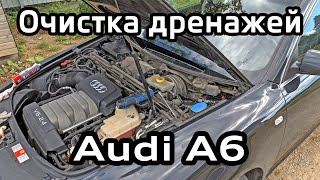
Typical fix: Unclog the plenum drains, which may require removing the rubber grommets entirely to prevent future clogs. 🎬 Watch: How to clear blocked drain holes Remove the vehicle's carpet and seats to dry the floor pan completely. Disconnect, open, and inspect all affected modules (especially the CCM) and connectors for corrosion. Often the module's circuit board is visibly damaged and must be replaced.
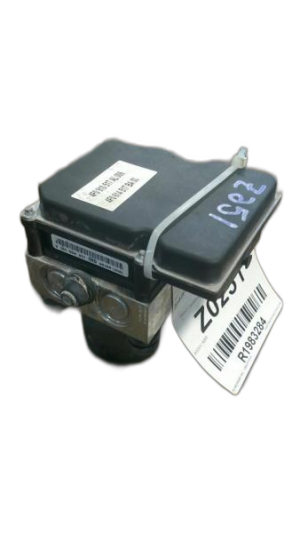
Est. part cost: $0-$1000+ - Faulty Control Module 🟡 Medium Probability Aside from water damage, modules can fail internally. The ABS module, in particular, can short out and bring down the entire CAN network, causing various warning lights. The CAN Gateway module itself can also fail, though this is less common.
How to confirm: Using an advanced scan tool like VCDS, perform a gateway scan to see which modules are not communicating. A technician can then disconnect suspect modules one by one; if communication returns after disconnecting a specific module, that module is the fault. For MMI issues, an optical loop bypass tool can be used to isolate a faulty module on the MOST bus.
Typical fix: Replace the faulty control module. The new module will require programming (component protection removal) to the vehicle using specialized dealer tools or qualified independent shop tools.
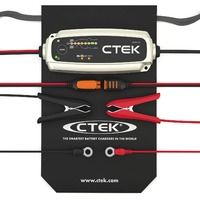
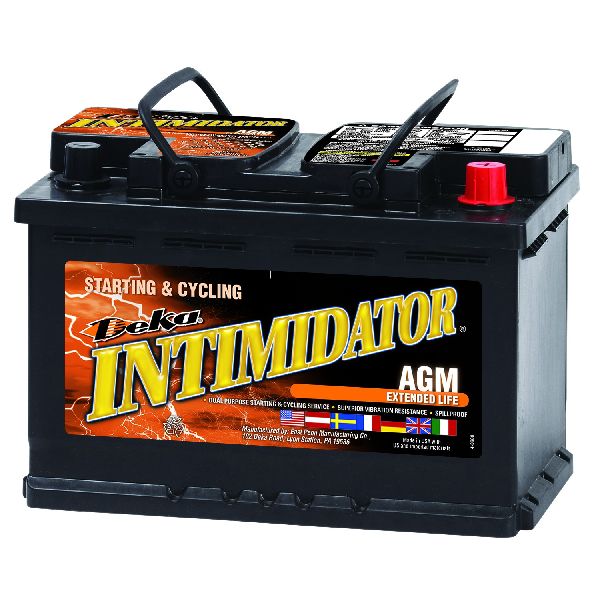
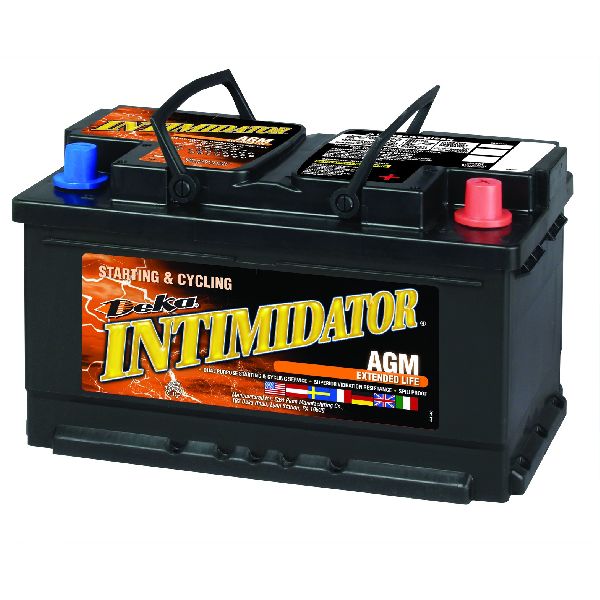
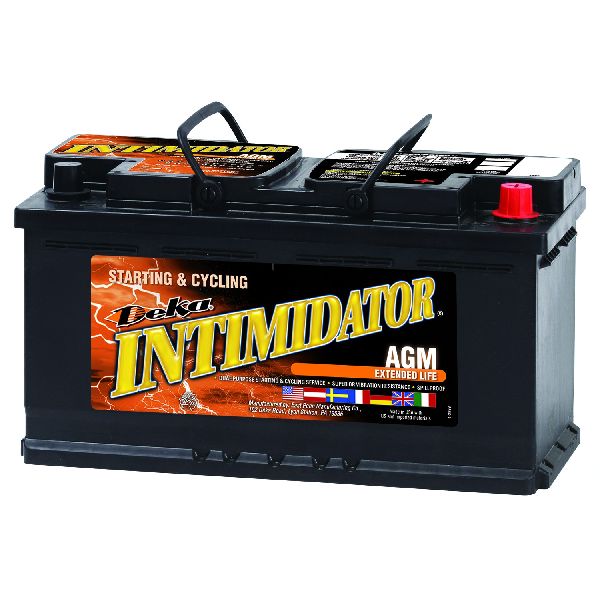
Est. part cost: $200-$1500 - Weak or Failing Battery ⚪ Low Probability → Shop Vehicle Battery These vehicles have complex electrical systems with a Battery Management Module that is sensitive to voltage. A battery that drops below a certain voltage during startup can cause random communication faults between modules, sometimes even after the battery has been replaced but not correctly coded.
How to confirm: Test the battery with a digital multimeter or a dedicated battery tester. A healthy, resting battery should be at approximately 12.6 volts. Check the voltage while cranking; if it drops below 10.5V, the battery is weak. Check that the battery has been correctly coded to the car with VCDS.
Typical fix: Replace the vehicle battery. The new battery must be 'coded' to the vehicle's Battery Management System using a scan tool like VCDS, inputting the new battery's part number, serial number, and manufacturer.
Est. part cost: $150-$350 - Damaged Wiring or Poor Ground Connection ⚪ Low Probability While less common than water damage, wiring for the CAN bus (typically twisted orange/black and orange/brown wires) can become chafed or corroded, especially in the footwell area after a water leak has been repaired but the wiring was not properly inspected.
How to confirm: Visually inspect the wiring harnesses leading to non-communicating modules, especially under the passenger carpet. Check main chassis ground points for corrosion or looseness. A multimeter can be used to check for continuity on the CAN High and Low lines.
Typical fix: Repair the damaged section of the wiring harness and protect it from future damage. Clean and tighten any corroded ground connections.
Est. part cost: $5-$200
Rare But Worth Checking
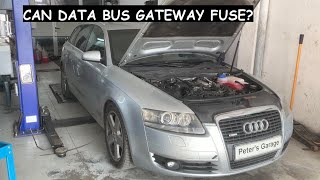
- Faulty CAN Gateway Module: The Gateway Module (J533) is the central hub for all CAN bus traffic. It is located behind the glove box. While robust, it can fail. Diagnosis involves checking its fuses first (Fuse F15 in fascia panel 1 and F20 in fascia panel 2) 🎬 See this gateway module fuse location guide and then its power, ground, and individual bus lines with an oscilloscope.
- Improperly Installed Aftermarket Electronics: An aftermarket stereo, alarm, or remote start system that is improperly tapped into the vehicle's wiring can introduce interference or shorts on the CAN bus, causing a U1000 code.
Diagnosis Steps
- Check for Water: Before anything else, pull back the passenger-side carpet (front and rear) and check for any signs of moisture, corrosion, or a saturated foam block under the carpet.
- Inspect Plenum Drains: Open the hood, remove the plastic cowl cover. Inspect the area under the battery and on the driver's side for standing water or debris. Clear any blockages found. Some owners recommend removing the rubber drain valves entirely.
- Scan the Vehicle: Use an Audi-compatible scan tool (like VCDS by Ross-Tech) to perform a full system scan and run the Optical Bus Diagnostics test from the Gateway module. Note all stored fault codes and which modules are listed as 'Cannot be reached' or have an 'Optical ERROR'.
- Check Battery and Fuses: Test the battery's voltage and health. Inspect fuses in the panels on both sides of the dashboard and in the trunk. Specifically check fuses for the CAN Gateway (J533) and any non-communicating modules.
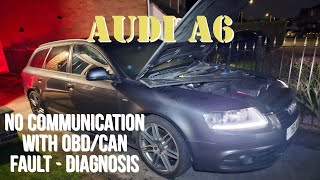
- Measure CAN Bus Resistance: With the battery disconnected, use a multimeter to measure the resistance between Pin 6 (CAN-High) and Pin 14 (CAN-Low) on the OBD-II port. A healthy network should read approximately 60 Ohms. A reading of 120 Ohms suggests a break in the circuit or a missing terminating resistor. 🎬 Watch: Diagnosing an Audi CAN bus communication fault A reading near 0 Ohms indicates a short circuit.
- Isolate the Faulty Module: If the network is down, begin disconnecting modules one at a time, starting with those known to be problematic (e.g., ABS, or any module located in a wet area like the CCM). After disconnecting each one, re-check for communication. When communication is restored, the last module disconnected is the culprit. For optical bus faults, use a fiber optic loop bypass adapter to isolate the faulty component.
- Inspect Wiring: If a module is not the cause, the final step is a detailed inspection of the CAN bus wiring harness (twisted orange pairs) for shorts, opens, or corrosion, which requires wiring diagrams and advanced electrical testing.
Parts You'll Likely Need
- Comfort/Convenience Control Module (CCM)
(OEM #4F0907289E, 4F0907289F, 4F0959794A)— This is the most common part to fail due to water damage from clogged plenum drains, as it is located on the passenger floor. Part number varies by vehicle options and year.
Trusted brands: Genuine Audi - ABS Control Module — Can fail internally (even without water damage) and short the CAN bus, causing widespread communication faults.
Trusted brands: Bosch (OEM), ATE - Vehicle Battery — A weak or improperly coded battery can cause low voltage conditions that lead to random communication errors across the network.
Trusted brands: Varta, Banner, Bosch
Related Codes That Often Appear With This One
- U01xx (e.g., U0101, U0121, U0146) — These codes specify which module has lost communication (e.g., U0101 - Lost Communication with TCM, U0121 - Lost Communication with ABS Control Module). They are more specific and help pinpoint the problem area on the network.
- P0562 — This code means 'System Voltage Low' and often appears alongside U-codes when a weak battery is the underlying cause of the communication failures.
- 00384 — This is a VAG-specific fault code for 'Optical Databus Open Circuit'. It often appears with MMI failures and points to a break in the fiber optic MOST loop, which can be caused by a faulty module (like the radio or amp) or water damage.
Technical Service Bulletins (TSBs) & Recalls
- TSB 60-08-13 / 2012952/2: Addresses water leaks from a kinked A-pillar sunroof drain tube on 2005-2006 models, which can also cause water in the footwells.
Platform-Specific Known Issues
- Plenum Drain Location: The primary drain is located under the battery tray, and a secondary one is on the driver's side of the plenum chamber. Accessing them requires removing the plastic cowl panel at the base of the windshield.
- Comfort Module Location: The Comfort/Convenience Control Module (CCM) is located in a black plastic box under the front passenger's carpet and foam padding, making it the first victim of water ingress from the plenum.
- Battery Coding Requirement: → Shop Vehicle Battery When replacing the battery, the new one must be coded to the Battery Regulation Control Module (J519) using a tool like VCDS. Failure to do so can lead to improper charging and persistent electrical faults.
Mechanic-Grade Diagnostic Values
- CAN Bus Network Resistance — expected: Approximately 60 Ω (Ohms). Failure: A reading of ~120 Ω indicates an open circuit or a single terminating resistor is offline. A reading near 0 Ω indicates a short between CAN High and CAN Low lines.
- MOST Bus (Optical) Integrity Check — expected: Visible red light from the output port of a module when the input cable is connected and the system is awake.. Failure: No light emerging from a module's output port indicates that module is faulty or not receiving power, breaking the optical loop.
Hidden / Shadow Codes Worth Checking
- 00470 - Combination comfort Databus in Single Wire: This VAG-specific code is a goldmine. It means the Comfort CAN bus (which controls windows, locks, seats, etc.) has lost one of its two wires and is operating in a degraded, one-wire mode. It often points to a wiring break or a fault in a module on that bus, like the Comfort Control Module (J393). (see via VCDS by Ross-Tech or other VAG-compatible advanced scan tools. A generic OBD-II reader will likely not see this code.)
- 01330 - Central Control Module for Central Convenience (J393): This fault code specifically points to an issue with the Comfort Control Module itself, often with sub-faults like 'No Communication' or 'Defective'. This is a primary code to look for when U1000 is present, especially if water ingress is suspected. (see via VCDS by Ross-Tech or other VAG-compatible advanced scan tools.)
- 00288 - Steering Column Lock Actuator (N360); Defective: This code points to a failure in the steering column lock module (J518). A failing J518 can disrupt the CAN bus and cause no-start conditions along with communication DTCs. (see via VCDS by Ross-Tech, found in the '05-Acc/Start Auth.' module.)
Scan Tool Commands That Help
- VCDS (VAG-COM): Gateway Installation List — This is the first and most important step. Accessing module '19-CAN Gateway' and viewing the Installation List shows which modules are communicating ('OK') and which have errors or are unreachable. This creates a map of the network failure.
- VCDS (VAG-COM): Optical Bus Diagnostics — If MMI or sound system issues are present, this function in VCDS tests the integrity of the fiber-optic MOST loop. It reports which modules are electrically and optically OK, helping to pinpoint the exact location of a break in the ring.
- ODIS (Dealer Tool) / Specialized Aftermarket Tools: Component Protection Removal — This is NOT a diagnostic command, but a mandatory procedure after replacing most control modules (MMI, Amplifier, Gateway, Comfort Module, etc.) on this platform. A used or new module will have limited functionality until its 'Component Protection' is adapted to the vehicle's VIN online. Failure to do this will result in the part not working correctly, even if it's brand new.
Wiring & Ground Locations
- Passenger Footwell Ground Cluster — Under the passenger side carpet, near the A-pillar. There are several ground wires bolted to a single stud on the chassis.. This is the primary ground location for several modules in the passenger compartment. After a water leak from clogged plenum drains, this ground stud is highly susceptible to corrosion, causing high resistance and intermittent network faults.
- Ground Point 607 — In the plenum chamber (the area under the windshield cowl), next to the brake servo.. This ground is in the direct path of water when the plenum drains clog. Corrosion here can affect various engine and body control modules before water even enters the cabin.
- CAN Bus Wiring — Throughout the vehicle, identifiable as twisted pairs of wires.. Different CAN buses use different color codes. Drivetrain CAN is typically Orange/Black and Orange/Brown. Comfort/Convenience CAN is often Orange/Green and Orange/Brown. Knowing the colors helps trace the correct bus when diagnosing a fault in a specific system (e.g., MMI vs. Transmission).
- OBD-II Port Pins — At the diagnostic port under the driver's side dashboard.. Pin 6 is CAN-High and Pin 14 is CAN-Low. These are the pins used to measure the 60 Ohm resistance of the main diagnostic CAN bus.
Real Owner Repair Stories
- AudiWorld Forum User (2007 Audi A6 C6) — No MMI, radio, or satnav function after the trunk area was found to be very damp.
❌ Tried (didn't work) Drying out the trunk area.
✅ What actually fixed it A VCDS scan using the Optical Bus Diagnostics showed an error for the '47-Sound System'. The user bypassed the amplifier (Bose amp in the trunk) with a fiber optic loop, which restored function to the rest of the MMI system (though with no sound). The final fix was replacing the water-damaged amplifier. - AudiWorld Forum User (Audi A6 C6) — Christmas tree dash lights, ABS and traction control deactivated, incessant beeping.
❌ Tried (didn't work) Dealer quoted $3600 for a new ABS module.
✅ What actually fixed it The owner sent the original ABS control module to a third-party repair service (cheap-abs.com mentioned) who repaired the internal electronics for $300. The repaired module was reinstalled, solving all the issues. This confirms that an internal failure of the ABS module can bring down the CAN bus, and that repair services are a viable alternative to replacement. - MHH Auto Forum User (Audi A6 C6) — Component Protection active on multiple modules (instrument cluster, sound system, KESSY/BCM) after attempting to swap the steering column unit.
❌ Tried (didn't work) Attempting to adapt with FVDI (an aftermarket tool)., Swapping the CAN gateway., Using ODIS online failed with an error.
✅ What actually fixed it The discussion points to the complexity of Component Protection. The fix requires either having the dealer perform the adaptation online with ODIS, or a highly specialized independent with the right tools and knowledge to adapt the modules. In some cases, it was suggested that the memory dump from the original car's gateway would be needed to resolve the CP on a replacement module.
Documented NHTSA Reports
- NHTSA ODI #10681194: An owner reported a U1000 code and identified it as a ground harness problem. They attempted to clean the battery terminals on both sides to resolve the communication failure.
- NHTSA ODI #10171770: A report describes a vehicle that lost ignition input and stalled, with a scan check revealing codes U1000, U1016, U1152, B1372, and U1088. The issue was resolved by replacing the ignition switch.
- NHTSA ODI #11461728: A complaint notes that U1000 can indicate a lost communication with the TCM. In this instance, the TCM was reported to overheat because of its location directly on the transmission, under the battery box.
- NHTSA ODI #10970695: A technician noted a CAN system diagnosis failure where the instrument cluster could not communicate or retrieve mileage, resulting in a U1000 code and requiring a BCM failure retest after cluster replacement.
- NHTSA ODI #11727548: A report mentions a systemic U1000 "Electrical Network Jam" caused by an obsolete or unconfigured 2G TCU, which resulted in critical failures including disabled airbags.
OEM Part Supersession History
4F0 907 289 / 4F0 910 289 (and revisions)→Multiple revisions exist (e.g., ending in B, E, G, H, J, K, L).— Hardware updates and software fixes throughout the C6 production run.
Heads up: This is the Comfort Control Module (J393). It is critical to match the part number and revision as closely as possible. Using a module with the wrong hardware/software version can result in features (like keyless entry, power seats, etc.) not working. ALL replacements, new or used, will require Component Protection removal by a dealer or specialist to function fully.
Model Year Variations Within This Range
- 2004-2008 (Pre-Facelift) vs. 2009-2011 (Facelift): The primary electronic difference is the upgrade from MMI 2G High to MMI 3G. This changed the modules on the MOST (optical) bus, including the Radio, Navigation, and CAN Gateway (J533) itself. While the U1000 fault causes are similar (water ingress), the specific modules that could fail and break the optical loop are different. Diagnosis for MMI issues must account for whether the car is a 2G or 3G system.
- Later models (approx. 2009+): Later models using the UDS diagnostic protocol may not have 'Measuring Blocks (08)' available in VCDS for the CAN Gateway. Instead, technicians must use 'Advanced Measuring Values' to see live data, which can be confusing for those accustomed to the older system.
Diagnostic Flowchart
Other Known Issues on This Vehicle
Issues unrelated to this code that are worth knowing about as an owner of this generation:
- Carbon Buildup on Intake Valves (FSI Engines) 🔴 High — Common on 3.2L and 4.2L FSI engines, often noticeable after 50,000 miles. Symptoms include rough cold starts, misfires, and loss of performance. (Ref: TSB 2019948 / 01-23-41 (2014753/12) addresses cleaning procedures and updated ECU software to change valve overlap timing to mitigate future buildup.)
- Timing Chain Tensioner Failure 🔴 High — Affects V6 and V8 engines. A characteristic rattle from the rear of the engine on startup is the primary symptom. Failure can be catastrophic and is an engine-out repair if the lower tensioners fail.
- MMI System Failures 🟠 Medium — The MMI screen can go black or buttons can become unresponsive. This is often caused by a failure in the MOST (optical) bus loop, frequently due to water damage to a module in the trunk (like the amplifier) or a software glitch after a battery replacement.
- Excessive Oil Consumption 🟠 Medium — Particularly noted on the 2.0T and some V10 engines, but can affect others. Often attributed to piston ring design. Owners may need to add oil between scheduled changes.
- Sunroof Drain Leaks 🟠 Medium — The four sunroof drains can clog or the tubes can kink, causing water to leak into the headliner and down the A-pillars into the footwells, leading to electrical issues. (Ref: TSB 60-08-13 (2012952/2) was issued for early C6 models (2005-2006) to revise a drain tube that was prone to kinking.)
Used vs. New Parts: Buying Guide for This Vehicle
When a used part is the smart pick: For most failed control modules (Comfort Module, Amplifier, Radio, ABS Module), a used part is a cost-effective option, BUT ONLY if you have a plan for Component Protection removal. The cost savings on the part can be significant compared to a new OEM part.
Donor-vehicle mileage cap: roughly under 150000 miles for the part to have meaningful remaining life.
What to inspect on the donor part:
- Ask for a guarantee the donor car was NOT a flood vehicle. This is the #1 risk.
- Visually inspect the module's casing for any signs of being opened, water stains, or corrosion on the pins.
- Source from a reputable auto recycler that offers a warranty, even if it's just 30 days, to ensure the part is electronically sound.
OEM-only on this vehicle (don't cheap out):
- CAN Gateway (J533): While used is possible, a new gateway from the dealer is often recommended to ensure it has the latest software and is guaranteed to be compatible, avoiding complex coding and CP issues.
- Steering Column Lock Module (J518): Due to its integration with the vehicle's immobilizer and security, this is a part where using a new OEM component is highly advised to avoid significant programming headaches.
Aftermarket brands forum-validated for this vehicle:
- For ABS module failures, repair services like ModuleMaster, XeMODeX, or Cheap-ABS are highly regarded in forums. They repair the original unit, which avoids the need for coding or Component Protection removal.
Brands owners have reported issues with on this vehicle:
- Be wary of no-name, ultra-cheap electronic modules from online marketplaces. They often have incorrect software, fail quickly, or cannot be properly coded to the vehicle.
Real Owner Stories
Aggregated from forums and TSBs cited above. Mileages and costs reflect what owners reported in those sources.
2006 Audi A6
Symptoms: Water in the passenger footwell and electrical issues.
What fixed it: Drying out the area and identifying the source of the leak as the plenum drains or sunroof drains.
Source hint: audizine.com thread titled 'Water in passenger footwell- What to do'
2004-2011 Audi A6 (C6 Platform)
Symptoms: Water pooling in the rear footwell.
What fixed it: Clearing blockages in the plenum drains.
Source hint: pistonheads.com topic 'plenum drain blockage as the cause for rear footwell water'
2004-2011 Audi A6 (C6 Platform)
Symptoms: Multiple communication errors across various modules visible during a system scan.
What fixed it: Using VCDS to perform a full system scan and Optical Bus Diagnostics to identify 'Cannot be reached' modules.
Source hint: forums.ross-tech.com thread 'Example of VCDS scan showing multiple communication errors on a C6 A6'
Related OBD-II Codes
Frequently Asked Questions
I have a 2005 Audi A6 with water in the footwell; does TSB 60-08-13 apply to my vehicle?
Where is the Comfort/Convenience Control Module (CCM) located on the 2004-2011 Audi A6?
Can I just swap in a new battery myself to fix communication errors?
How can I tell if my plenum drains are blocked without taking the car apart?
Why is my MMI screen black and my ABS light on at the same time?
Where exactly are the plenum drains that I need to clean?
Helpful Videos

Used OEM Parts in Stock
New Aftermarket Parts Available


The information in this article is provided for general reference and educational purposes only. Vehicle specifications, procedures, and part compatibility can vary by production date, trim level, and region. Always consult your vehicle's factory service manual and verify part numbers before purchasing or performing repairs. Safety-critical components such as airbags, seat belts, and braking systems should be installed by a qualified professional.
- Audi A6:
- 🧭 Diagnostic Flowchart
- 🎬 Helpful Videos
- 🛍️ Shop This Part
- What's Unique About the 2004-2011 Audi A6
- Symptoms You May Notice
- Most Likely Causes
- Rare But Worth Checking
- Diagnosis Steps
- Parts You'll Likely Need
- Related Codes That Often Appear With This One
- Technical Service Bulletins (TSBs) & Recalls
- Platform-Specific Known Issues
- Mechanic-Grade Diagnostic Values
- Hidden / Shadow Codes Worth Checking
- Scan Tool Commands That Help
- Wiring & Ground Locations
- Real Owner Repair Stories
- Documented NHTSA Reports
- OEM Part Supersession History
- Model Year Variations Within This Range
- Other Known Issues on This Vehicle
- Used vs. New Parts: Buying Guide for This Vehicle
- Real Owner Stories
- 2006 Audi A6
- 2004-2011 Audi A6 (C6 Platform)
- 2004-2011 Audi A6 (C6 Platform)
- Related OBD-II Codes
- Frequently Asked Questions
- 🎟️ Get 5% Off