

U1000 Code on 2021-2022 Nissan Rogue: Understanding CAN Communication Failure
On a 2021-2022 Nissan Rogue, a U1000 code almost always points to a basic electrical issue. Before suspecting expensive computers, check for a weak battery or corroded ground wires, as these are the most common and cheapest fixes. Many owners report premature battery failure on this specific model, making it a primary suspect.
- U1000 means there is a communication failure between computers on your Rogue.
- Do not rush to replace expensive modules. Start by testing your battery and cleaning all main ground connections.
- This specific Rogue generation (T33) is excluded from Nissan's main CAN diagnostic guides, making troubleshooting potentially more complex than on older models.
- Because of the diagnostic complexity, this code often requires professional service with Nissan-specific tools to avoid expensive misdiagnoses.
- If you experience other strange electrical issues, especially after heavy rain, a water leak could be the underlying cause.
What's Unique About the 2021-2022 Nissan Rogue
The 2021-2022 Nissan Rogue belongs to the T33 generation. What's unique is that this specific model is explicitly excluded from Nissan's primary technical service bulletins (TSBs) for diagnosing CAN communication codes like U1000 (notably, TSB NTB13-027C). This means technicians can't use the standardized diagnostic flowchart available for most other Nissan models and must instead rely on the vehicle's specific Electronic Service Manual (ESM). This suggests the network architecture or diagnostic procedure for the T33 Rogue differs from its predecessors, requiring a more model-specific approach.
Symptoms You May Notice
- Check Engine Light is on
- Multiple, seemingly unrelated warning lights appearing on the dash, especially in cold weather
- Intermittent failure of electronic systems (e.g., infotainment screen freezing, backup camera not working)
- Engine performance issues like hesitation or stalling
- Vehicle may not start, sometimes with a 'push brake pedal to start' message but no crank.
- Automatic Emergency Braking (AEB) or cruise control warning lights may appear
- Replacing the Engine Control Module (ECM) or Body Control Module (BCM) without first verifying battery health, ground integrity, and CAN bus wiring. A U1000 code usually means the module setting the code is working correctly but has lost communication with another module.
Most Likely Causes
- Weak or Failing Battery 🔴 High Probability → Shop Vehicle Battery The T33 Rogue is highly sensitive to voltage, and a drop during startup is a very common trigger for communication codes. Numerous owner forums and Reddit threads for the 2021+ Rogue specifically mention premature battery failure, with some needing replacements in as little as one to two years. This makes the battery the number one suspect.
How to confirm: Test the battery with a digital multimeter or a load tester. A healthy, resting battery should be at approximately 12.6 volts. Voltage should not drop below 10 volts during cranking. A dealership test on a one-year-old 2021 Rogue showed a battery rated for 750 CCA testing at only 425 CCA, triggering a low voltage code.
Typical fix: Replace the vehicle's 12V battery. Ensure the new battery meets or exceeds OEM specifications, particularly if it is an EFB (Enhanced Flooded Battery) or AGM (Absorbed Glass Mat) type.
Est. part cost: $200-$370 - Poor Ground Connections 🔴 High Probability Corroded or loose ground straps are a well-documented weak point on many Nissan vehicles, leading to intermittent electrical faults. The main ground points to check are the negative battery terminal itself, the cable's connection to the chassis, and the engine block ground strap.
How to confirm: Visually inspect the main ground straps connected to the engine block, chassis, and the negative battery terminal. Look for any signs of corrosion (green or white powder), looseness, or fraying. The main interior ground points are often located on the large steel cross-member behind the dashboard.
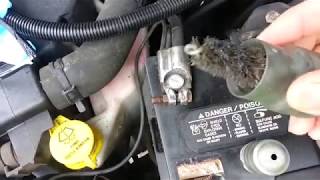
Typical fix: Disconnect the battery. Unbolt the ground connections, clean all contact points (cable end and chassis/engine block) with a wire brush until they are shiny, and securely retighten. Apply dielectric grease to prevent future corrosion. 🎬 See how to clean and repair vehicle ground connections
Est. part cost: $1-$10 - Damaged CAN Bus Wiring Harness 🟡 Medium Probability The CAN wiring can be damaged by rodents, abrasion against other components, or corrosion from moisture. Rodent damage is a frequent, though unpredictable, cause of wiring faults. In some cases, as noted in NHTSA ODI #11489161, a burning smell from the ECM connector and fans running on high can indicate a severe failure in the communication circuit requiring module replacement.
How to confirm: Visually inspect visible sections of the wiring harness for any signs of chewing, chafing, or corrosion. A professional would use a multimeter to check for continuity and resistance on the CAN High and CAN Low wires at the OBD-II port.
Typical fix: Repair the specific section of damaged wiring. This is often a job for a professional due to the complexity of accessing and repairing the harness.
Est. part cost: $5-$50 for supplies, but labor can be significant.
Rare But Worth Checking
- Water Intrusion Causing Corrosion: Nissan has a TSB (NTB21-097B) for 2021-2023 Rogues concerning water leaks from the windshield or roof area. The leak is caused by a faulty front clip for the roof rail or roof side molding. This moisture can seep into connectors or splice packs in the A-pillar or headliner, causing corrosion and network communication failures.
- Faulty Control Module: While possible, a control module (like the ECM, BCM, or TCM) is less likely to be the cause than a wiring or power supply issue. A module should only be replaced after all wiring, power, and ground checks have been exhaustively performed. A faulty Intelligent Power Distribution Module (IPDM) can also be a cause on some Nissans. Manufacturer Bulletin #NTB10066A emphasizes that when a module reports a U1000 code, it is typically operating normally but simply cannot communicate.
- Aftermarket Device Interference: Poorly installed aftermarket accessories, such as remote starters, alarms, or dashcams that tap into the vehicle's wiring, can interfere with the CAN bus and cause communication codes. If you have any such devices, they should be professionally inspected or temporarily disconnected to see if the code clears.
Diagnosis Steps
- Read All Codes: Use a quality OBD-II scanner that can access all modules (ECM, BCM, TCM, ABS, etc.). Note any other 'U' codes, as they can help identify the failing module or circuit.
- Check Battery Health & Terminals: This is the most critical first step. Test the battery voltage at rest (~12.6V) and during engine cranking (should stay above 10V). Clean and tighten the battery terminals, even if they look clean. Many owners report premature battery failure on this model.
- Inspect Main Grounds: Follow the negative battery cable to its connection points on the chassis and engine block. Unbolt, clean these points with a wire brush until shiny, and retighten securely.
- Visual Wiring Inspection: Look for any obvious signs of damage to the wiring harnesses in the engine bay, especially for signs of rodent damage (chewing) or chafing against other parts.
- Check Fuses: Inspect fuses related to the various control modules (ECM, BCM, TCM, etc.) in both the interior and under-hood fuse boxes.
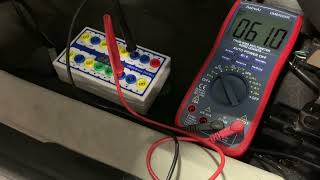
- (Advanced) Check CAN Bus Resistance: Disconnect the battery. At the OBD-II port, measure the resistance between Pin 6 (CAN High) and Pin 14 (CAN Low). A healthy network should read approximately 60 ohms. A reading of 120 ohms indicates an open circuit or a problem with a terminating resistor. A reading near 0 ohms indicates a short circuit. 🎬 Watch: How to test CAN bus resistance with a multimeter
- (Professional) Isolate Modules: If the resistance is incorrect, a technician will disconnect modules one by one from the CAN bus to identify which one is causing the fault or where the wiring break is located. This requires knowledge of the vehicle's specific network topology from the ESM.
Parts You'll Likely Need
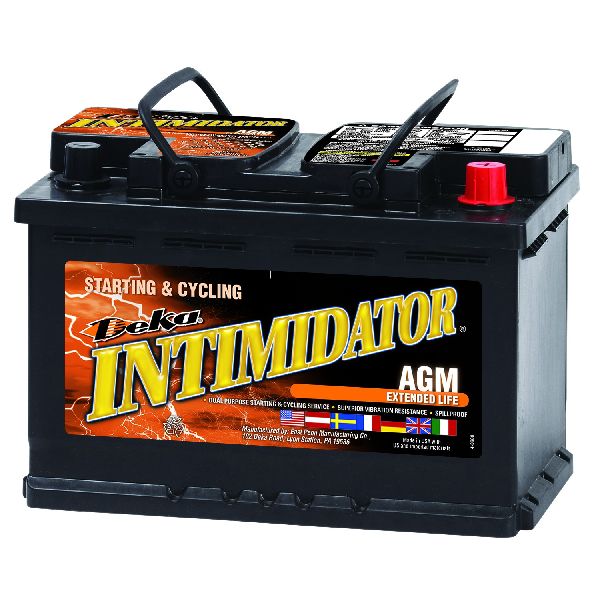
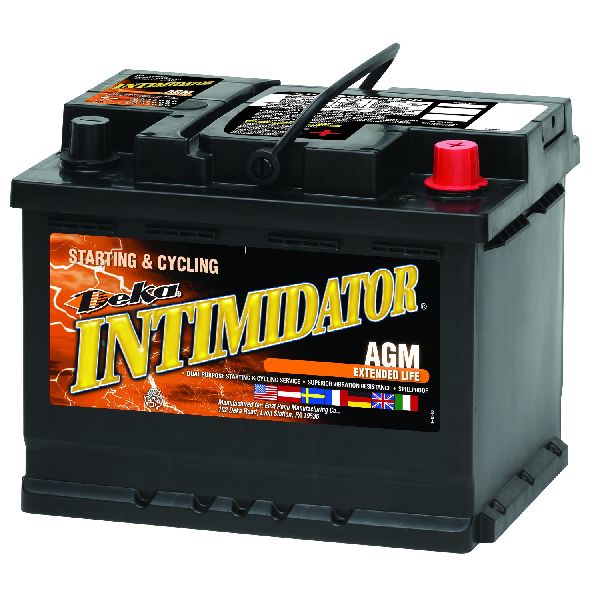
- 12V Automotive Battery
(OEM #24410-6RA0A)— Low system voltage from a weak or failing battery is the most frequent trigger for the U1000 code on modern, electronically-dense vehicles. The 2021-2022 Rogue is noted by owners for having batteries that fail prematurely.
Trusted brands: Nissan OEM, DieHard, Duralast, Optima
OEM price range: $250-$350
Aftermarket price range: $200-$370
Related Codes That Often Appear With This One
- U0xxx — Other U-codes (like U0100, U0140, etc.) may be present and can help pinpoint which specific module is losing communication.
- C1A16 / C2582 — These codes relate to the Intelligent Cruise Control (ICC) or Automatic Emergency Braking (AEB) system. A communication failure on the CAN bus can often disable these systems, causing these codes to appear alongside U1000.
- P0725 — This code, related to the engine speed signal, has been reported alongside U1000 in cases involving transmission communication failures (NHTSA ODI #10789867).
Technical Service Bulletins (TSBs) & Recalls
- NTB13-027C: Notes that the 2021-2022 Rogue (T33) is an exception to its standardized CAN diagnostic flowchart.
- NTB10-066B: Also excludes the 2021-2022 Rogue (T33) from its CAN diagnostic tips.
- NTB21-097B: Details a water leak from the front roof rail/molding clip on 2021-2023 models, which can lead to corrosion in A-pillar wiring.
- NTB13106E: Notes that a DTC U1000 for the Around View Monitor (AVM) control unit could be present if audio volume is inconsistent or the equalizer is improperly adjusted.
- NTB10066A: Provides service information for communication codes U1000, U1001, U1002, and U1010, advising technicians to always diagnose communication codes first.
Platform-Specific Known Issues
- This model (T33) is explicitly excluded from Nissan's primary TSBs for CAN system diagnosis (NTB13-027C), requiring technicians to use the base service manual, which can complicate troubleshooting compared to other Nissan models.
- Some 2021-2023 Rogues are subject to TSB NTB21-097B for water leaks around the windshield/roof due to a faulty roof rail clip, which can lead to various electrical issues if moisture reaches critical wiring or connectors in the A-pillar.
- Widespread owner reports of premature battery failure, often within 1-3 years of service, making the battery a primary suspect for any electrical fault code.
- NHTSA ODI #11694408 highlights a known manufacturer issue where a U1000 code may require a BCM reprogram or IPDM replacement to resolve a no-start condition.
Mechanic-Grade Diagnostic Values
- CAN Bus Network Resistance — expected: ~60 Ohms. Failure: A reading of ~120 Ohms indicates an open circuit or missing terminating resistor. A reading near 0 Ohms indicates a short between CAN High and Low wires. A reading of ~40-45 Ohms may indicate an unwanted third terminating resistor or a failing module transceiver.
- CAN Bus Voltage (Static) — expected: CAN High (Pin 6) and CAN Low (Pin 14) should both be ~2.5V relative to a good chassis ground.. Failure: Significant deviation from 2.5V on either line with the key on and engine off suggests a wiring short to power or ground, or a faulty module pulling the voltage.
- CAN Bus Voltage (Dynamic) — expected: CAN High toggles to ~3.5V and CAN Low toggles to ~1.5V during active communication.. Failure: A flat line, missing toggles, or a noisy/deformed waveform indicates a network problem. An oscilloscope is required for this measurement.
- Roof Rail Bolt Torque — expected: 9-10 N·m (80-88 in-lb). Failure: Incorrect torque could lead to sealing issues or damage to the roof rail components.
Hidden / Shadow Codes Worth Checking
- U1001: Missing ECM CAN communications related to the OBD2 system. More specific than a general U1000. (see via Advanced scan tool like Nissan CONSULT. Defined in TSB NTB13-027C.)
- U1010: Indicates the module itself has internal issues with its CAN controller, rather than just a communication line fault. (see via Advanced scan tool like Nissan CONSULT. Defined in TSB NTB13-027C.)
Scan Tool Commands That Help
- Nissan CONSULT-II / CONSULT-III: CAN Diagnosis Support Monitor — This is the primary starting point for a U1000 diagnosis. It actively polls all modules on the network and displays a list of which ones are communicating ('OK') and which are not ('NG' - No Good), immediately identifying the source of the communication loss.
- Nissan CONSULT-III: BCM Configuration / Key Registration — This is mandatory when replacing the Body Control Module (BCM). The new module must be programmed with the vehicle's specific configuration *before* the keys are registered to it; performing these steps out of order can lock the configuration.
Wiring & Ground Locations
- A-Pillar Harness Connectors — Inside the driver and passenger side A-pillars, running down towards the kick panel and dash area.. This area is highly susceptible to water damage from the roof rail leak described in TSB NTB21-097B. Corrosion on these connectors can directly cause an open or short on the CAN bus lines, triggering a U1000 code.
- Main Engine/Chassis Ground Strap — A braided metal strap connecting the engine block to the vehicle's chassis/frame, often near a motor mount or the firewall.. A corroded or loose main ground strap creates high resistance, forcing electrical current to find alternative paths. This can cause floating voltages and intermittent voltage drops that disrupt CAN communication between modules, especially during high-load events like starting the engine.
- BCM Ground Connection — Typically grounded to the large metal cross-car beam located behind the dashboard.. The Body Control Module is a central hub for multiple vehicle networks. A poor ground specific to the BCM can cause it to drop off the network or send corrupt data, leading to a U1000 code and widespread, seemingly random electrical issues.
Real Owner Repair Stories
- Reddit user in r/NissanRogue (2022 Rogue SV, 46,000 miles) — Water leaking into the cabin from the A-pillar area during car washes.
❌ Tried (didn't work) Initial dealer visit where they 'water test' but failed to find the leak.
✅ What actually fixed it The problem was identified as the known issue from TSB NTB21-097B. The fix involves removing the roof rails, replacing the front mounting clip, and applying automotive-grade sealant around the mounting hole to prevent future leaks. - Reddit user in r/AskMechanics (Nissan vehicle (model not specified, but principle is universal)) — No-start condition, pulling U1000 code indicating a communication error between the ECU and BCM.
❌ Tried (didn't work) Replacing various parts without a clear diagnosis.
✅ What actually fixed it The owner discovered a completely disconnected BCM ground wire in the interior that had been cut and taped off. Reconnecting this ground was a key step. The diagnosis was complicated by a poorly installed aftermarket LoJack system, highlighting the risk of aftermarket wiring modifications. - Reddit user in r/NissanRogue (Nissan Rogue (year not specified)) — Intermittent no-start condition. Would start with a jump, but not with a recently replaced battery.
❌ Tried (didn't work) Having the battery replaced without cleaning the terminals.
✅ What actually fixed it The negative battery terminal had hidden corrosion that was preventing a solid connection. Thoroughly cleaning the terminal and the post with a wire brush restored the connection and resolved the starting issue. - NHTSA ODI #10789867 — An owner reported a hazardous condition where the vehicle required a transmission replacement after finding codes P0725 and U1000 stored in the system.
OEM Part Supersession History
284B2-6RA2A→284B2-6RA3A— Standard part revision by the manufacturer.
Heads up: A replacement BCM (new or used) is non-functional until it is programmed to the specific vehicle's VIN and options using Nissan's CONSULT software. Part numbers must be an exact match or a verified supersession.
Model Year Variations Within This Range
- 2021-2024: Body Control Modules (BCM) and some wiring harnesses are specific to the vehicle's country of origin (US-built vs. Japan-built). A vehicle's VIN starting with 'J' indicates it was made in Japan and requires Japan-specific parts. This is critical for compatibility.
Diagnostic Flowchart
Other Known Issues on This Vehicle
Issues unrelated to this code that are worth knowing about as an owner of this generation:
- Premature Engine Failure (1.5L VC-Turbo) 🔴 High — Affects a significant number of 2021-2024 models, leading to multiple recalls. Failures can occur at various mileages. (Ref: NHTSA Campaign 25V437000 (and subsequent actions) address engine bearing failures that can cause engine seizure.)
- Water Leak from Roof/A-Pillar 🟠 Medium — Common issue on 2021-2023 models, typically noticed as water stains on the headliner or A-pillar trim. (Ref: Nissan TSB NTB21-097B provides a fix by replacing a faulty roof rail clip and adding sealant.)
- Infotainment System Reboots / Black Screen 🟡 Low — Affects some 2021-2022 models, causing the rearview camera to be inoperative when the screen reboots. (Ref: Nissan Recall R22A5 (and others like R22C1) address the issue with a software update.)
- Premature Battery Failure 🟠 Medium → Shop Vehicle Battery — Widely reported by owners of 2021+ models, with batteries often failing in 1-3 years, much shorter than expected.
- Rear Seat Belt Retractor Failure 🔴 High — Affects certain 2021-2022 vehicles where rear seat belts may not retract properly. (Ref: Safety recall issued; seat belt assemblies may need replacement.)
Used vs. New Parts: Buying Guide for This Vehicle
When a used part is the smart pick: A used wiring harness can be a cost-effective choice if the original is damaged by corrosion or rodents. However, it must be an exact part number match and meticulously inspected.
Donor-vehicle mileage cap: roughly under 100000 miles for the part to have meaningful remaining life.
What to inspect on the donor part:
- For a wiring harness, ensure all connectors are intact with no broken clips or bent pins.
- Check for any signs of corrosion (green/white powder) inside connectors.
- Inspect the full length of the harness for cuts, chafing, or signs of previous, non-factory repairs (e.g., excessive electrical tape, butt connectors).
- Verify all plastic mounting clips and grommets are present and unbroken.
OEM-only on this vehicle (don't cheap out):
- Body Control Module (BCM): Due to the absolute requirement for VIN-specific programming with Nissan's proprietary software, using anything other than a new or used OEM module is extremely risky.
Aftermarket brands forum-validated for this vehicle:
- For the battery, which is the most common fix, brands like DieHard, Duralast, and Optima are reputable alternatives to the Nissan OEM battery.
Brands owners have reported issues with on this vehicle:
- No specific brands are consistently reported as poor, but extreme caution is advised for any aftermarket electronic modules. The primary issue stems from poorly installed aftermarket accessories (remote starters, alarms) rather than specific brands of replacement parts.
Real Owner Stories
Aggregated from forums and TSBs cited above. Mileages and costs reflect what owners reported in those sources.
2021 Nissan Rogue
Symptoms: The battery was killed by leaving the doors open for an hour; afterwards, the battery would not hold a charge. The owner noted that these vehicles 'absolutely destroy batteries'.
What fixed it: Replacement of the 12V battery.
Source hint: Reddit r/NissanRogue - Thread '2021 Rogue battery not holding a charge'
2021 Nissan Rogue — ~12000 miles
Symptoms: The owner needed a new battery when the car was less than a year old, and then experienced issues with the replacement battery just one year later.
What fixed it: Replacement of the 12V battery.
Source hint: Reddit r/NissanRogue - Thread '2021 battery issues'
2021 Nissan Rogue
Symptoms: Vehicle displayed a 'push brake pedal to start' message but would not crank. A dealership test showed the battery, rated for 750 CCA, was only producing 425 CCA.
What fixed it: Replacement of the 12V battery with one meeting OEM specifications.
Source hint: Article Context - common_causes (Weak or Failing Battery)
Related OBD-II Codes
Frequently Asked Questions
Does the common Nissan CAN diagnostic TSB NTB13-027C apply to my 2021 Rogue?
Could a water leak be causing the U1000 code in my 2022 Rogue?
My 2021 Rogue won't start and says 'push brake pedal to start' even though I am. Is this related to U1000?
How can I check if my ground connections are causing this code?
Is the 1.5L VC-Turbo engine failure related to the U1000 code?
Helpful Videos

We Have This Part in Stock


The information in this article is provided for general reference and educational purposes only. Vehicle specifications, procedures, and part compatibility can vary by production date, trim level, and region. Always consult your vehicle's factory service manual and verify part numbers before purchasing or performing repairs. Safety-critical components such as airbags, seat belts, and braking systems should be installed by a qualified professional.
- Nissan Rogue:
- 🧭 Diagnostic Flowchart
- 🎬 Helpful Videos
- 🛍️ Shop This Part
- What's Unique About the 2021-2022 Nissan Rogue
- Symptoms You May Notice
- Most Likely Causes
- Rare But Worth Checking
- Diagnosis Steps
- Parts You'll Likely Need
- Related Codes That Often Appear With This One
- Technical Service Bulletins (TSBs) & Recalls
- Platform-Specific Known Issues
- Mechanic-Grade Diagnostic Values
- Hidden / Shadow Codes Worth Checking
- Scan Tool Commands That Help
- Wiring & Ground Locations
- Real Owner Repair Stories
- OEM Part Supersession History
- Model Year Variations Within This Range
- Other Known Issues on This Vehicle
- Used vs. New Parts: Buying Guide for This Vehicle
- Real Owner Stories
- 2021 Nissan Rogue
- 2021 Nissan Rogue — ~12000 miles
- 2021 Nissan Rogue
- Related OBD-II Codes
- Frequently Asked Questions
- 🎟️ Get 5% Off