

U1500 on 2015-2017 Chrysler 200: LIN Bus and Module Communication Faults Explained
This code means a module, often the Steering Column Control Module (SCCM), has stopped communicating with the Body Control Module (BCM). The most common causes are a weak battery or a software glitch requiring a 'Proxy Alignment' procedure. A faulty SCCM is also a possibility.
- Code U1500 means a module has stopped talking to the car's main computer, often due to a weak battery.
- The most common symptoms are a flashing odometer and non-working buttons on the steering wheel.
- Before replacing any parts, fully charge and load-test your battery. A new battery is a common fix.
- If a new battery doesn't solve it, the car may need a 'Proxy Alignment,' a software reset that a shop or advanced DIYer can perform.
- If the problem is a faulty part, it is most likely the Steering Column Control Module (clockspring assembly).
What's Unique About the 2015-2017 Chrysler 200
The second-generation Chrysler 200 is known for its complex and sometimes sensitive electrical architecture based on a Fiat platform. Many seemingly unrelated issues, from a no-start condition to non-functional radio controls, can be traced back to module communication problems. A low battery voltage event (like a dying or disconnected battery) can easily cause a module to lose its configuration, triggering a U1500 code. This requires a special dealership procedure called a 'Proxy Configuration Alignment' to restore communication, which is indicated by a flashing odometer.
Symptoms You May Notice
- Check Engine Light is on
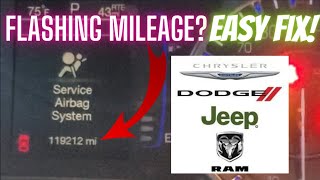
- Flashing odometer mileage (a key sign of a proxy alignment issue)
- Malfunction of steering wheel-mounted controls (cruise control, radio buttons)
- Turn signals not working or behaving erratically
- Windshield wipers not working
- Warning messages on the instrument cluster like 'Service Airbag System'
- No-start condition in some cases
- Radio or Uconnect system malfunctions
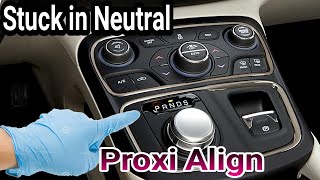
- Car may get stuck in Neutral after a battery replacement until a proxy alignment is performed 🎬 Watch: Troubleshooting a no-start condition stuck in neutral
- Replacing the Body Control Module (BCM) first. The BCM is the 'master' module that reports the code, but it's rarely the cause of the failure. The problem is almost always with a 'slave' module, the wiring to it, or the overall vehicle configuration (proxy).
- Replacing the instrument cluster for a flashing odometer without first attempting a proxy alignment. The flashing indicates a configuration mismatch, not necessarily a faulty cluster. 🎬 Watch: How to fix a flashing odometer on Chrysler vehicles
Most Likely Causes
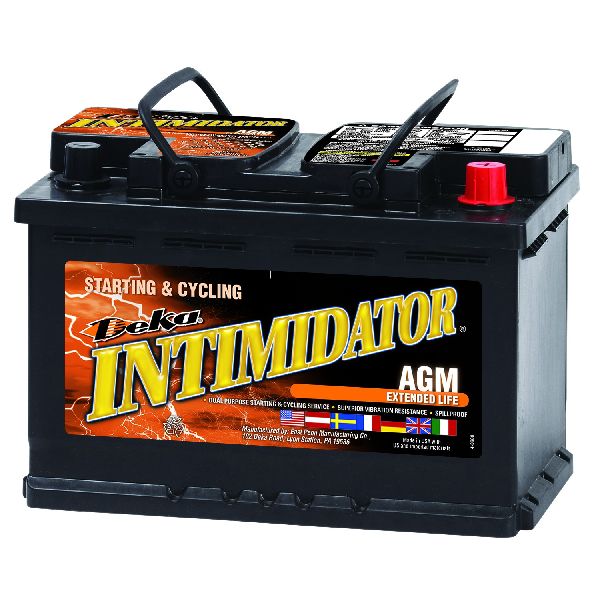
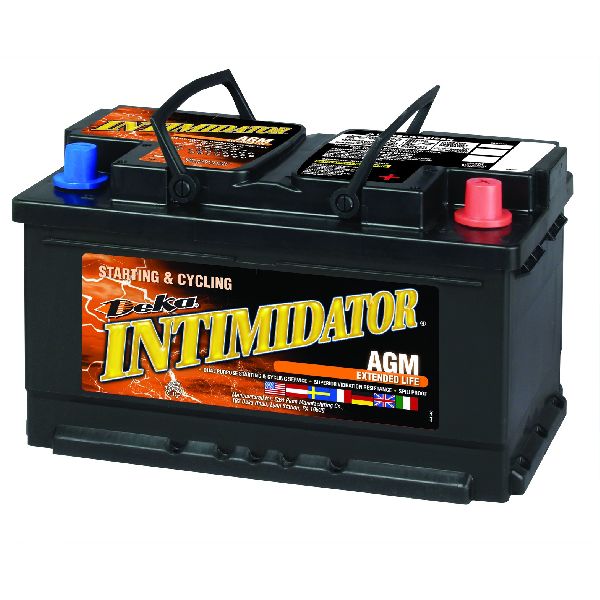
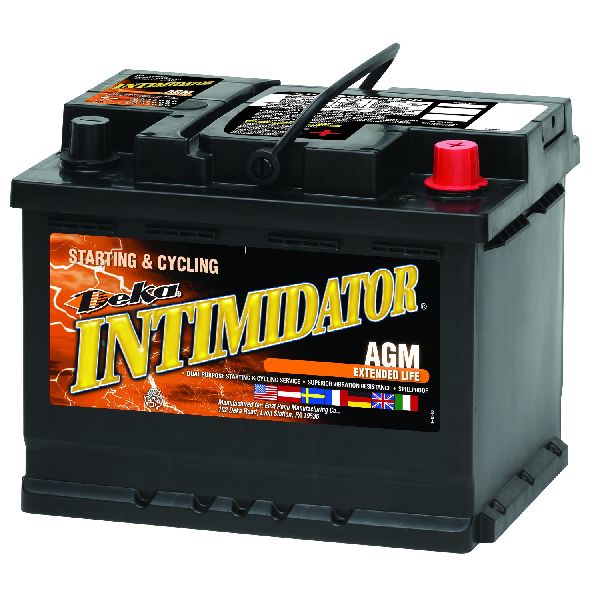
- Low Battery Voltage / Disconnected Battery 🔴 High Probability → Shop Vehicle Battery This platform's modules are very sensitive to voltage fluctuations. A weak or failing battery, or even just disconnecting it for service, can cause modules to lose their configuration and stop communicating correctly with the BCM. An AGM (Absorbent Glass Mat) battery is typically required and using a standard flooded battery can cause issues.
How to confirm: Test the battery voltage with a multimeter. A healthy, resting AGM battery should be at 12.6-12.8 volts. Have the battery load-tested at an auto parts store to check its true health. The issue often appears immediately after the battery has died or been replaced.
Typical fix: If the battery is weak or incorrect, it must be replaced with a new AGM battery of the correct specification. After replacement, clear the codes. If symptoms persist (like a flashing odometer), a Proxy Alignment procedure is needed.
Est. part cost: $180-$280 - Lost Configuration / Proxy Alignment Needed 🔴 High Probability These vehicles use a 'proxy' system where all modules must be registered in a central configuration stored in the BCM. A voltage drop, replacing a module (like a radio or door module), or even a software glitch can cause a mismatch, leading to communication loss.
How to confirm: The most obvious symptom is a flashing odometer. A high-end bidirectional scan tool will show a 'Proxy Configuration Mismatch' or similar error and will have the special function to perform the alignment. DIY-friendly tools like AlfaOBD and certain Autel or Launch models can perform this function.
Typical fix: Perform a Proxy Configuration Alignment using a compatible scan tool. This restores the master configuration to all modules. This is often a dealer/specialty shop repair, but has become more accessible for advanced DIYers. 🎬 See this guide on performing a budget-friendly proxy alignment
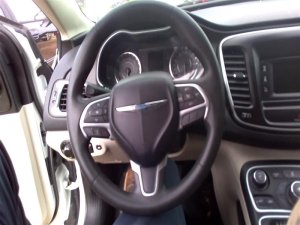
Est. part cost: $0 (if you have the tool), $120-$250 (shop labor) - Failed Steering Column Control Module (SCCM) 🟡 Medium Probability → Shop Steering Column The SCCM, which includes the clockspring and switches for turn signals and wipers, is a key slave module on a LIN bus in this vehicle. It's a complex part that is subject to constant wear from turning the steering wheel, leading to internal connection failures.
How to confirm: A professional scan tool is needed to communicate directly with the BCM and see which specific LIN bus module is being reported as 'not communicating'. If the SCCM is flagged and the battery/wiring are good, the module itself is the likely culprit. Often accompanied by codes like U0429.
Typical fix: Replacement of the Steering Column Control Module/Clockspring assembly. After replacement, a Proxy Alignment is required to integrate the new module into the vehicle's network.
Est. part cost: $200-$450 - Wiring Issue (Short/Open) ⚪ Low Probability The LIN bus uses a single wire for communication. This wire runs through connectors and harnesses that can be damaged or corrode over time, particularly in the steering column area or where harnesses pass through the firewall or door jambs.
How to confirm: Visually inspect the wiring harness going to the steering column and BCM. Check for continuity and shorts to power/ground on the LIN bus wire. Based on wiring diagrams, this wire is often Orange/Dark Blue or a similar color. Unplugging the slave module and checking for a reference voltage (typically 7-12V) on the LIN wire from the master (BCM) can confirm the integrity of the wire.
Typical fix: Repair the damaged section of the wire or clean/replace the affected connector.
Est. part cost: $5-$50
Diagnosis Steps
- Check for Obvious Symptoms: Note if the odometer is flashing. This immediately and strongly points to a proxy alignment issue.
- Scan for All Codes: Use a scan tool capable of reading manufacturer-specific 'U' and 'B' codes from all modules. Note which module is reporting the U1500 code (usually the BCM) and look for 'configuration mismatch' or 'lost communication with...' codes.
- Check Battery Health: Test the battery voltage. It should be above 12.6V at rest. Have the battery professionally load-tested, as these cars are extremely sensitive to a weak battery. Ensure it is the correct AGM type.
- Attempt a Hard Reset: Disconnect the negative battery terminal for 30 minutes. This can sometimes reset a glitching module. Be aware this may trigger the need for a proxy alignment if one wasn't already needed.
- Perform Proxy Alignment: If you have a capable scan tool (like AlfaOBD, Autel, Launch), run the 'Proxy Configuration Alignment' procedure. This is found under the Body Control Module (BCM) special functions. If this fixes the flashing odometer and clears the code, the root cause was likely a temporary glitch or a past low-voltage event.
- Isolate the Faulty Module: If the alignment fails or the code returns, use the scan tool to identify which specific LIN bus device is not communicating or 'not configured'. Common culprits are the SCCM, Driver Door Module (DDM), or even an aftermarket radio.
- Inspect Wiring: Disconnect the battery. Access the connectors for the suspect module (e.g., SCCM) and the BCM. Inspect for corrosion or damage. Check the specific LIN bus wire (e.g., Orange/Dark Blue for the SCCM) for continuity and for shorts to power or ground.
- Replace the Suspect Module: If the battery is good, the wiring is intact, and a specific module is identified as the fault, replacement is the next step. The SCCM is the most common hardware failure.
- Final Proxy Alignment: After replacing ANY module (SCCM, radio, door module, etc.), a Proxy Alignment MUST be performed to integrate the new part into the vehicle's network.
Parts You'll Likely Need
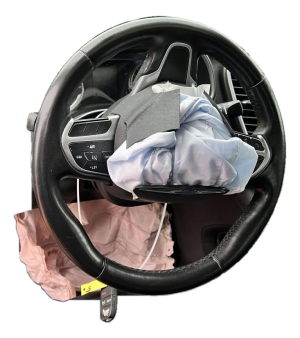
- Steering Column Control Module / Clockspring
(OEM #68166372AC)— This is the most common hardware failure that causes a U1500 code on this vehicle, as it is a primary slave module on a LIN bus network and contains many moving parts. This part number supersedes 68166372AB.
Trusted brands: Mopar
OEM price range: $400-$500
Aftermarket price range: $150-$300 - Automotive Battery (AGM) — A weak or incorrect type of battery is a primary cause of random module communication faults on the Chrysler 200. An AGM battery is required due to the high electronic load.
Trusted brands: Duralast Platinum AGM, DieHard Platinum AGM, Interstate MTX
OEM price range: $200-$250
Aftermarket price range: $180-$280
Related Codes That Often Appear With This One
- U0429 — Implausible Data Received From Steering Column Control Module. This code often appears with U1500 and points more directly at the SCCM as the source of the problem.
- B2204 — ECU Configuration Mismatch. This code is a direct indicator that a proxy alignment is needed and is often the root cause of the flashing odometer symptom.
- B162C — Left/Right Control Pod Switch Stuck. This indicates a fault in the steering wheel buttons, which are part of the SCCM assembly, further implicating the SCCM.
Technical Service Bulletins (TSBs) & Recalls
- TSB 08-053-16: Addresses software enhancements for the 8.4" Uconnect (RA3/RA4) radios, fixing a wide range of issues from HVAC sync problems to network connection loss.
- Recall S55 / NHTSA 16V-529: Addresses a terminal crimping issue on the transmission sensor cluster harness that could cause the vehicle to lose propulsion or shift to neutral unexpectedly.
Platform-Specific Known Issues
- A recall (Chrysler number S59) was issued for some 2016 models for improperly torqued chassis fasteners, which is unrelated but highlights manufacturing issues.
- A large electrical system recall (S55 / NHTSA 16V-529) was issued for a wiring harness issue that could cause the 9-speed transmission to unexpectedly shift to neutral.
- TSB 08-053-16 addresses numerous software glitches with the RA3/RA4 Uconnect radio systems, including screen issues and connectivity problems, which can sometimes cause communication faults on the network.
Mechanic-Grade Diagnostic Values
- LIN Bus 'at rest' voltage (slave module unplugged) — expected: 7-12 Volts DC. Failure: 0V indicates an open or short to ground in the wiring from the master module (BCM). Voltage significantly lower than 7V could indicate a wiring issue or a problem with the BCM.
- LIN Bus communicating voltage (measured with DVOM) — expected: Toggling voltage, may read as an average around 7-9V on a standard DVOM.. Failure: A steady 12V indicates no communication from the slave module. A steady low voltage (near 0V) indicates the slave module is stuck pulling the bus low or a short to ground.
- LIN Bus communicating voltage (measured with oscilloscope or 'peak min/max' DMM) — expected: Voltage toggling between approximately 1V (dominant) and 12V (recessive).. Failure: A flat line at 12V or 0V, or signals that do not reach both the high and low thresholds, indicate a communication problem.
Scan Tool Commands That Help
- AlfaOBD: Proxy Alignment Procedure — This is the primary fix when the odometer is flashing. It is used to re-synchronize the vehicle's module configuration after a battery disconnect, module replacement, or software glitch. The path is typically: 'Body Computer' -> 'Active Diagnostics' -> 'Proxy alignment procedure'.
- AlfaOBD: Proxy configuration backup/restore — Before attempting any configuration changes or a proxy alignment, it is critical to back up the existing proxy configuration. If the alignment fails or causes other issues, this allows you to restore the original configuration. The path is: 'Body Computer' -> 'Active Diagnostics' -> 'Proxy tools' -> 'Backup proxy configuration'.
- wiTECH (Dealer Tool): Proxy Configuration Alignment — This is the dealership equivalent of the AlfaOBD function. It is found under 'Guided Diagnostics' and is required after any module replacement to make the new part communicate with the vehicle network.
- High-End Bidirectional Scanners (Autel, Launch): Proxy Alignment / ECU Configuration — Many professional-grade aftermarket scanners have added this function under the BCM's 'Special Functions' menu. It performs the same task as the AlfaOBD and wiTECH tools.
Wiring & Ground Locations
- SCCM LIN Bus Wire — In the wiring harness connector for the Steering Column Control Module (SCCM).. This specific wire provides the communication link between the BCM (master) and the SCCM (slave). A break or short in this single wire will cause the SCCM to stop communicating, triggering a U1500. A wiring diagram indicates this wire is often Orange/Dark Blue (OR/DB).
- BCM Ground — The Body Control Module has several ground points. A primary ground location for the chassis is often found under the driver's side dash or kick panel, sometimes designated as G909 or similar. Specific diagrams for the 2015-2017 model should be consulted for exact placement.. While a bad ground at the BCM is less common than a slave module or wiring issue, a poor ground can cause a host of communication problems, including setting U-codes. It can lead to incorrect voltage readings and unstable module operation.
Real Owner Repair Stories
- Reddit r/CarAV (2012 Chrysler 200 (similar architecture)) — Check engine light, traction control light, and a flood of 'loss of communication' codes for multiple modules (ECM/PCM, ABS, Steering Angle Sensor, etc.) after installing an aftermarket radio.
❌ Tried (didn't work) The user was driving with the codes active, assuming it was unrelated to the radio install.
✅ What actually fixed it The implied fix, based on the problem description, is the installation of a proper CAN bus/steering wheel control adapter (like a PAC or Axxess unit). The aftermarket radio was installed without the necessary interface module, causing the data network to crash and modules to lose communication. Reinstalling the factory radio or adding the correct adapter would resolve the issue.
OEM Part Supersession History
68166372AB→68166372AC— Revision of the Steering Column Control Module (SCCM). This is a common practice to address reliability improvements or minor manufacturing changes.
Heads up: The parts are interchangeable, but 68166372AC should be used for all repairs. A Proxy Alignment is required after installing either part.
Diagnostic Flowchart
Other Known Issues on This Vehicle
Issues unrelated to this code that are worth knowing about as an owner of this generation:
- Harsh Shifting / Failure of 9-Speed ZF Transmission 🔴 High — Very common on 2015 models. Less frequent on 2016-2017 but still prevalent. Can occur at any mileage. (Ref: Recall S55 / NHTSA 16V-529 for wiring harness issues; multiple software update TSBs also exist.)
- Excessive Oil Consumption (2.4L Tigershark Engine) 🔴 High — Common on 2015-2016 models. Owners report consuming a quart of oil every 1,000-2,000 miles, which can lead to engine stalling or failure if not monitored. (Ref: Class-action lawsuits have been filed regarding this issue due to alleged piston ring defects.)
- Engine Stalling While Driving 🔴 High — Reported on both 2.4L and 3.6L engines. Can be caused by low oil (2.4L), transmission faults, or other electrical issues.
- Leaking Oil Filter Housing (3.6L Pentastar Engine) 🟠 Medium — The plastic oil filter housing, located in the engine valley, is prone to cracking from heat cycles, causing significant oil leaks. Typically occurs after 60,000 miles.
- Random Deployment of Active Head Restraints (AHR) 🟠 Medium — A plastic bracket inside the headrest can become brittle and break, causing the AHR to deploy without a collision. Affects 2011-2017 models. (Ref: Subject of a class-action lawsuit.)
Used vs. New Parts: Buying Guide for This Vehicle
When a used part is the smart pick: A used part is generally not recommended for the most common failure, the Steering Column Control Module (SCCM), because it contains the clockspring which is a wear item. However, for other potential slave modules like a door control module or a factory radio (if reinstalling to fix an issue), a used part is a viable and cost-effective option.
Donor-vehicle mileage cap: roughly under 80000 miles for the part to have meaningful remaining life.
What to inspect on the donor part:
- For any electronic module, ensure the part number matches exactly.
- Check for any signs of water damage or corrosion on the connectors.
- When buying a used radio, try to get the VIN of the donor car, as you may need it to obtain an anti-theft code from the dealer.
- For an SCCM, inspect the ribbon cables if visible; any creases or damage are red flags.
OEM-only on this vehicle (don't cheap out):
- Steering Column Control Module (SCCM): While aftermarket options exist, the OEM Mopar part has the highest likelihood of long-term success. Given the labor involved and the requirement for proxy alignment, using a lower-quality part is a significant risk.
Aftermarket brands forum-validated for this vehicle:
- For scan tools: AlfaOBD (software) with an OBDLink MX+ adapter is the community-validated DIY choice.
- For batteries: Interstate (MTX-series), DieHard (Platinum AGM), and Duralast (Platinum AGM) are reputable brands for the required AGM battery.
Brands owners have reported issues with on this vehicle:
- Cheap, no-name SCCM/clockspring assemblies from online marketplaces often fail prematurely or are dead on arrival.
Real Owner Stories
Aggregated from forums and TSBs cited above. Mileages and costs reflect what owners reported in those sources.
2015-2017 Chrysler 200
Symptoms: The odometer started flashing after the battery died.
What fixed it: A Proxy Alignment was successfully performed using a budget-friendly ThinkDiag scanner, which resolved the flashing odometer and cleared the codes.
Source hint: Chrysler 200 Proxy Alignment on a Budget - YouTube
2016 Chrysler 200
Symptoms: The mileage on the odometer was flashing.
What fixed it: A mechanic used a Launch scanner to perform a proxy alignment. The scan tool identified an unconfigured door module as the cause of the communication issue.
Source hint: Dodge Chrysler Jeep FLASHING Mileage odometer speedometer FIX! - YouTube
Related OBD-II Codes
Frequently Asked Questions
My 2016 Chrysler 200's odometer is flashing. What does that mean?
I just replaced the battery in my Chrysler 200 and now it's stuck in Neutral and the check engine light is on. What happened?
What kind of battery does my 2015-2017 Chrysler 200 require?
Can I perform a Proxy Alignment myself to fix the U1500 code?
My turn signals, wipers, and cruise control all stopped working at once. Is this related to the U1500 code?
My Uconnect radio has been glitchy. Could it be causing the U1500 code?
Helpful Videos
Used OEM Parts in Stock
New Aftermarket Parts Available


The information in this article is provided for general reference and educational purposes only. Vehicle specifications, procedures, and part compatibility can vary by production date, trim level, and region. Always consult your vehicle's factory service manual and verify part numbers before purchasing or performing repairs. Safety-critical components such as airbags, seat belts, and braking systems should be installed by a qualified professional.
- Chrysler 200:
- 🧭 Diagnostic Flowchart
- 🎬 Helpful Videos
- 🛍️ Shop This Part
- What's Unique About the 2015-2017 Chrysler 200
- Symptoms You May Notice
- Most Likely Causes
- Diagnosis Steps
- Parts You'll Likely Need
- Related Codes That Often Appear With This One
- Technical Service Bulletins (TSBs) & Recalls
- Platform-Specific Known Issues
- Mechanic-Grade Diagnostic Values
- Scan Tool Commands That Help
- Wiring & Ground Locations
- Real Owner Repair Stories
- OEM Part Supersession History
- Other Known Issues on This Vehicle
- Used vs. New Parts: Buying Guide for This Vehicle
- Real Owner Stories
- 2015-2017 Chrysler 200
- 2016 Chrysler 200
- Related OBD-II Codes
- Frequently Asked Questions
- 🎟️ Get 5% Off