

U2101 on 2020-2023 Ford Mustang: Control Module Configuration Incompatible Fixes
This code means a control module, most often the Body Control Module (BCM), is not programmed for your car. It commonly appears after a module is replaced or after the software is updated, such as during recall 23C35. The fix is not a new part, but a software reprogramming that requires a Ford dealer or a specialized shop with Ford's FDRS/IDS tools.
- U2101 is a software programming issue, not a broken part. Do not replace modules unless reprogramming fails.
- This code is a known potential side-effect of the software update for Ford Recall 23C35 on 2020-2023 Mustangs.
- The fix requires a trip to a Ford dealer or a well-equipped independent shop with the proper diagnostic and programming tools (FDRS/IDS).
- If the code appeared after a collision repair, it means the replacement module was not programmed to your car's VIN.
- Always diagnose and fix U2101 before chasing any other 'Lost Communication' (U-prefix) codes.
What's Unique About the 2020-2023 Ford Mustang
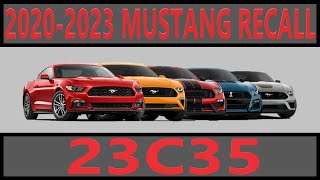
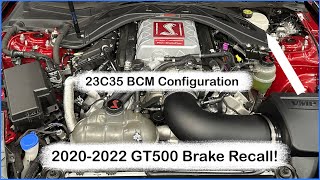
For the 2020-2023 Mustang, this code is officially documented by Ford in relation to the Body Control Module (BCM). Ford issued Compliance Recall 23C35 for these vehicles 🎬 Watch: Overview of the Ford Mustang brake recall 23C35 to fix a problem with the brake fluid warning light. The service procedure for this recall specifically notes that code U2101 (and U2100) may appear after the BCM software is updated. Ford updated the recall procedure to instruct technicians on how to perform a subsequent 'Programmable Module Installation' (PMI) to resolve it, confirming this is a known side effect of the update. Ford also released SSM 52430 acknowledging that configuration failures could occur when programming the BCM for this specific recall. Additionally, manufacturer service bulletin SSM 49690 warns technicians that installing a new module prior to starting a scan tool session may result in incomplete module configuration and trigger DTC U2101.
Symptoms You May Notice
- Airbag warning light illuminated
- ABS and Traction Control warning lights on
- Check engine light or wrench light on
- Features controlled by the BCM may fail, such as remote keyless entry, interior/exterior lighting, or 'key not detected' warnings.
- Advanced Driver Assistance Systems (ADAS) like collision warning may be inoperative
- Inability to clear the code with a basic OBD-II scanner
- Constantly flashing dome or overhead lights.
- Loss of communication messages from other modules on the network (U-codes).
- Replacing the module a second time. The problem is almost always software programming, not a defective part. Replacing the part again without programming it will not fix the issue.
- Chasing 'Lost Communication' codes first. U2101 is the root cause of other modules being unable to communicate. Resolving the configuration incompatibility will typically clear the associated U-codes.
Most Likely Causes
- Body Control Module (BCM) Reprogramming Issue After Recall 23C35 🔴 High Probability → Shop Body Control Module Ford Recall 23C35 involves a BCM software update for the brake fluid light. The service procedure was officially updated to include steps for fixing U2101 if it appears after the update, indicating this is a known and common possibility. SSM 52430 was also issued to address configuration failures during this specific recall.
How to confirm: Check the vehicle's service history in Ford's OASIS system to see if recall 23C35 was recently performed. A Ford dealer or a shop with Ford's IDS/FDRS tool can confirm the BCM is the module setting the code.
Typical fix: Perform a 'Programmable Module Installation' (PMI) on the BCM using the Ford diagnostic tool (IDS or FDRS), as outlined in the updated recall documentation. This restores the correct 'As-Built' configuration.
Est. part cost: $0 - Incorrectly Installed Replacement Module 🟡 Medium Probability This is a common issue on modern Fords after collision repairs where a module (e.g., ABS, RCM/Airbag, BCM) is replaced with a new or used part but not programmed. The new module's configuration does not match the vehicle's factory setup.
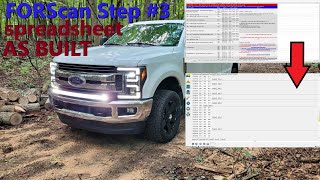
How to confirm: Use a high-level scan tool (like FORScan or IDS/FDRS) to identify which module is logging the code. 🎬 Watch: How to load factory As-Built data using FORScan Check the vehicle's repair history for recent module replacements. The module's stored VIN will not match the vehicle's VIN.
Typical fix: Program the replacement module with the vehicle's correct 'As-Built' data using a Ford-specific diagnostic tool. Note that many dealers will not program a used module, potentially requiring a new one. A PATS (Passive Anti-Theft System) parameter reset is also required to sync the new module with the PCM and keys.
Est. part cost: $0 if programming works, or the cost of a new module if a used one was installed and cannot be programmed.
Rare But Worth Checking
- Internal Module Failure: While rare, the module itself can fail internally, causing its configuration data to become corrupt. This should only be considered after reprogramming attempts have failed and all wiring has been checked.
- Failed Over-The-Air (OTA) Update: A failed or interrupted Ford Power-Up software update could potentially corrupt a module's configuration, leading to this code. Owners have reported various electronic issues after OTA updates, making this a plausible, though less common, cause. In related Ford platforms, TSB 24-2167 notes that U2101:00 can occur in the ABS module immediately after a coordinated module software update.
Diagnosis Steps
- Connect a high-level scan tool capable of reading manufacturer-specific codes from all modules (e.g., Ford IDS/FDRS or FORScan).
- Scan the entire vehicle network for DTCs and identify which module is reporting code U2101. On this platform, the BCM is the most likely candidate.
- Check the vehicle service history for recent module replacements or software updates, specifically recall 23C35.
- Using the scan tool, initiate the 'Programmable Module Installation' (PMI) or 'Module Configuration' procedure for the affected module.
- This process involves connecting to Ford's servers to download the vehicle's unique 'As-Built' data and writing it to the module.
- Follow the on-screen prompts from the diagnostic tool precisely. This may include cycling the ignition multiple times.
- If a new module was installed, a PATS (Passive Anti-Theft System) parameter reset may also be required. This involves a 10-minute security wait and requires at least two programmed keys.
- After the procedure, clear all DTCs and cycle the ignition, then re-scan to confirm U2101 does not return.
- If reprogramming fails, verify the module is the correct part number for the vehicle's VIN. If a used module was installed, it may need to be replaced with a new one, as some used modules cannot be reprogrammed by dealer tools. Manufacturer bulletin SSM 54052 notes that software/hardware incompatibility can cause PMI to fail and store U2101.
Parts You'll Likely Need
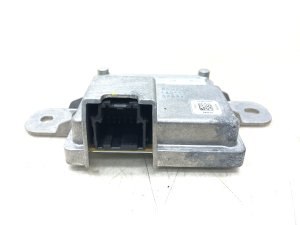
- Body Control Module (BCM)
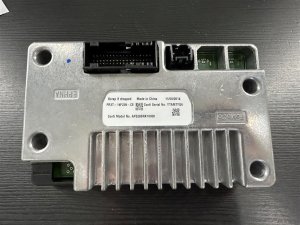
(OEM #Varies by VIN and options. Examples: LR3T-14B476-A_, MR3T-14B476-A_ (The first four characters denote the vehicle and year, the middle section is the base part, and the suffix indicates revision/features). Always verify with a dealer using the VIN.)— This is the module most frequently implicated by Ford's own recall documentation (23C35) for the 2020-2023 Mustang. However, the fix is typically reprogramming, not replacement, unless the module itself has failed.
Trusted brands: Motorcraft
OEM price range: $500-$800
Aftermarket price range: Not generally available
Related Codes That Often Appear With This One
- U2100 — U2100 ('Control Module Configuration Not Complete') and U2101 often appear together as they both relate to module configuration errors. Ford's recall 23C35 explicitly mentions both codes occurring after the initial software flash.
- U01xx-U05xx (Lost Communication Codes) — When a module is not configured correctly (U2101), other modules on the network cannot communicate with it, leading to various 'Lost Communication With...' codes (e.g., U0121 - Lost Communication with ABS). The U2101 code should always be diagnosed and fixed first.
- U3002 — This code indicates a VIN mismatch between modules. It directly supports the diagnosis of an improperly programmed replacement module, which is a primary cause of U2101.
Technical Service Bulletins (TSBs) & Recalls
- Recall 23C35 / NHTSA 23V-779: 'Brake System Warning Indicator May Not Illuminate'. The updated service procedure directly addresses the potential for U2101 to be set in the BCM and provides the fix.
- SSM 52430: Specifically acknowledges that some 2020-2023 Mustang vehicles may exhibit a configuration failure when a technician attempts to program the BCM as part of the 23C35 recall procedure.
- SSM 49690: Notes that installing a new module prior to starting a scan tool session may result in incomplete module configuration with DTCs U2100, U2101 and/or U2200.
- TSB 24-2167: Describes instances where a coordinated module software update can trigger U2101:00 in the ABS module.
- SSM 54052: Reports that software and hardware incompatibility can cause a module to fail PMI and store U2101.
Platform-Specific Known Issues
- Compliance Recall 23C35: Affects 186,993 2020-2023 Mustangs for a faulty brake fluid level indicator. The service procedure to update the BCM software can itself trigger code U2101, requiring a secondary reprogramming step (PMI) to resolve it.
Mechanic-Grade Diagnostic Values
- CAN Bus Network Resistance — expected: Approximately 60 Ohms between CAN_H and CAN_L pins (e.g., Pins 6 and 14 at the OBD-II port) with the battery disconnected.. Failure: A reading of ~120 Ohms indicates one of the two termination resistors is missing or the circuit is open. A reading of ~40 Ohms could indicate an unusual configuration or an extra resistor on the bus.
- CAN High (HS-CAN) Voltage — expected: Approximately 2.5V in a recessive state (no communication) and rises to ~3.5V in a dominant state (transmitting data).. Failure: Voltage that is stuck high, stuck low, or does not switch between ~2.5V and ~3.5V indicates a bus or module fault.
- CAN Low (HS-CAN) Voltage — expected: Approximately 2.5V in a recessive state (no communication) and drops to ~1.5V in a dominant state (transmitting data).. Failure: Voltage that is stuck high, stuck low, or does not switch between ~2.5V and ~1.5V indicates a bus or module fault.
- Battery State of Charge (SOC) Before Programming — expected: Must be 50% or higher before initiating a module programming event with FDRS.. Failure: SOC below 50% can cause programming to fail and potentially corrupt the module. The vehicle may require a new battery if it cannot achieve 50% SOC.
Hidden / Shadow Codes Worth Checking
- U2101:00-0A / U2101:00-2F / U2101:00-AB: These are not hidden codes but Failure Type Bytes (FTBs) or status bytes that provide extra context. The ':00' indicates no specific subtype information is available for the configuration incompatibility. The suffix (e.g., -0A, -2F, -AB) indicates the status of the DTC at the time of the scan, such as 'DTC Present at Time of Request' or 'Invalid'. Another FTB, '0x05', specifically points to 'System Programming Failures' which can be resolved by configuring or programming the module. (see via A professional scan tool like Ford IDS/FDRS or an advanced tool like FORScan will display these full codes with status bytes.)
Scan Tool Commands That Help
- Ford IDS / FDRS: Programmable Module Installation (PMI) — This is the primary function used when a new module is installed. It attempts to copy the configuration from the old module and write it to the new one. If the old module is unavailable, it will pull As-Built data from Ford's servers.
- Ford IDS / FDRS: Module Configuration — Used to re-configure an existing module that has incorrect settings, such as after the 23C35 recall update. The technician may be prompted to answer 'NO' to the question 'Were you sent here to obtain part numbers from another procedure?' to force a reconfiguration.
- Ford IDS / FDRS: As-Built — This function allows for manual entry or modification of the vehicle's As-Built data (the hexadecimal code defining its features). This is a last resort if PMI or Module Configuration fails, or for custom modifications.
- FORScan: Module Configuration (As-Built format) — Allows advanced DIY users to directly read and write the hexadecimal As-Built data to a module like the BCM. This can be used to program a used module or restore a backup after a failed update, but carries significant risk if done incorrectly. FORScan cannot update the module's firmware (strategy), only its configuration data.
- Ford FDRS: Reset Battery Monitor Sensor Learned Values — This should be performed if the battery state of charge is low before a programming event and the battery needs to be charged or replaced. It ensures the system correctly recognizes the battery's state.
Wiring & Ground Locations
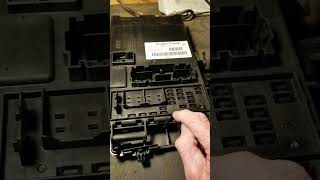
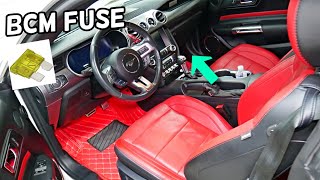
- Body Control Module (BCM) / Smart Junction Box (SJB) — Located in the passenger side footwell, behind the kick panel. It is integrated with the interior fuse box.. This is the module most commonly affected by U2101 on this platform. Water ingress in this area from a bad seal can corrode connectors leading to the BCM, causing communication faults that can mimic configuration errors. A poor ground connection to the BCM can also cause data corruption.
- CAN Bus Termination Resistors — The HS-CAN bus has two 120-Ohm termination resistors. They are not standalone components but are located inside control modules at the physical ends of the network, typically the PCM and the Instrument Panel Cluster (IPC) or BCM.. While a resistor failure is not a common cause for U2101, a network that is not properly terminated (reading 120 Ohms instead of 60 Ohms) will have signal reflections that can corrupt data and cause communication errors across all modules.
- OBD-II Data Link Connector (DLC) — Under the driver's side dashboard.. Pins 6 (CAN-H) and 14 (CAN-L) for the High-Speed CAN bus are accessible here for diagnostic measurements, such as checking network resistance and voltage. The Medium-Speed CAN bus is on different pins.
Real Owner Repair Stories
- Mustang6G.com Forum User (2016 Mustang GT Premium 5.0) — Key fobs stopped working. Car would only start if the fob was placed in the backup slot in the cup holder. Could not lock/unlock doors remotely.
❌ Tried (didn't work) Replacing the Remote Transceiver Module (RTM).
✅ What actually fixed it The owner suspected a faulty BCM and sourced a used one. However, upon inspection, the actual cause was found. A large multi-pin connector near the BCM had two pins that had corroded and snapped off due to previous water ingress in the passenger footwell. Repairing the connector and pins resolved the issue without needing to program the used BCM. - Ford F150 Forum User (similar Ford architecture) (Ford F-150 with lightning strike damage) — Persistent U2101:55-8A in the ABS module after replacing and programming multiple modules.
❌ Tried (didn't work) Programming two different ABS modules using FORScan., Replacing 3 of 4 wheel speed sensors., Manually checking all As-Built data values with FORScan.
✅ What actually fixed it The user took the truck to a Ford dealership. The dealer stated that a used ABS module could not be reprogrammed with their IDS tool and that a new module was required. The final resolution confirmed by another user in a similar situation was that the dealer's IDS tool would not reprogram the used module, implying a new module was the only path forward at the dealership.
Documented NHTSA Reports
- An owner reported in NHTSA ODI #11581420 that their vehicle exhibited U2101 alongside several other communication codes (U0121, U0140, U0256) and a strange warning chime that sounded without any dashboard lights illuminating.
- NHTSA ODI #10694215 describes a situation where a vehicle exhibited U2101 and C1B00, resulting in the steering wheel failing to return to the center position when turning, which led to a recommendation for a steering rack replacement.
OEM Part Supersession History
9R3Z-15604-B→9R3Z-15604-F— Revision update for the Smart Junction Box (BCM) on an older generation Mustang.
Heads up: This is an example from an older platform illustrating the part number convention. The suffix is critical for compatibility. A part with a suffix 'BA' cannot replace one with 'AB'. Always verify the latest part number for your specific VIN with a Ford dealer, as these change frequently.
Model Year Variations Within This Range
- 2020-2023: The 2020-2023 range is relatively stable electronically as it's part of the S550 facelift. However, the prevalence of Ford Power-Up Over-The-Air (OTA) updates increased during these years. A failed OTA update is a potential cause for module corruption that is more likely on later models (2022-2023) that received more frequent update pushes.
Diagnostic Flowchart
Other Known Issues on This Vehicle
Issues unrelated to this code that are worth knowing about as an owner of this generation:
- 10R80 Automatic Transmission Harsh/Delayed Shifting 🟠 Medium → Shop Transmission Assembly — Common complaint across multiple model years. Can occur at various mileages. Issues with the CDF clutch drum sleeve were a known failure point, reportedly improved in 2023+ models. (Ref: TSB 23-2350, TSB 24-2254, and others supersede previous versions, addressing harsh shifts, delays, and related DTCs through software updates or internal component replacement.)
- Digital Instrument Cluster Blanking/Flickering 🟡 Low → Shop Instrument Cluster — Sporadic reports from owners of the optional 12-inch digital cluster going blank intermittently while driving, or displaying odd messages. Often resolves on its own but can be a recurring annoyance. (Ref: Ford has issued TSBs for software updates to address cluster issues on some model years. In some cases, owners report needing a full cluster replacement under warranty.)
- 5.0L V8 Engine "Typewriter" Tick 🟡 Low — A light, rhythmic ticking noise often heard at idle, particularly after the engine warms up. It is very common on the 5.0L Coyote engine. (Ref: TSB 20-2023 states this noise is a normal operating characteristic of the engine and that no repairs should be attempted as it has no effect on durability or function.)
- Active Exhaust Valve Rattle/Failure 🟠 Medium — Owners report rattling noises from the exhaust or valves getting stuck, leading to a change in exhaust note or error messages. This is a common issue for vehicles equipped with the active exhaust option. (Ref: TSB 23-2132 and TSB 22-2282 address various concerns with the active exhaust system, often leading to replacement of the exhaust mufflers/valves.)
Used vs. New Parts: Buying Guide for This Vehicle
When a used part is the smart pick: A used BCM can be a cost-effective option IF you or your chosen independent shop have the expertise and tools (like FORScan with an extended license) to perform As-Built data programming. It is a high-risk, high-reward choice, as many Ford dealerships will refuse to or cannot program a used module with their standard IDS/FDRS procedure.
Donor-vehicle mileage cap: roughly under 100000 miles for the part to have meaningful remaining life.
What to inspect on the donor part:
- Verify the part number, including the suffix, matches the original part exactly or is a known compatible supersession.
- Source the part from a vehicle with the same model year and trim level (e.g., Premium, Convertible) to ensure feature compatibility.
- Inspect connectors for any signs of corrosion, bent pins, or water damage. Avoid parts from flood-damaged vehicles.
- Obtain the VIN of the donor vehicle if possible. This allows you to look up its original As-Built data online, which can be a helpful reference.
OEM-only on this vehicle (don't cheap out):
- Body Control Module (BCM) is strongly recommended to be OEM (Motorcraft), whether new or used. Aftermarket BCMs are not generally available or trusted for this application.
Aftermarket brands forum-validated for this vehicle:
- Not applicable for the BCM itself. The repair involves OEM parts and software.
Brands owners have reported issues with on this vehicle:
- Avoid any non-OEM/unbranded electronic control modules for this repair.
Real Owner Stories
Aggregated from forums and TSBs cited above. Mileages and costs reflect what owners reported in those sources.
2017 Ford Mustang GT350
Symptoms: Non-functional key fobs, a 'key not detected' message, and constantly flashing overhead/dome lights.
What fixed it: Correcting the As-Built configuration in the BCM using a diagnostic tool.
Source hint: Mustang6G.com: error with remote door openings and no key detected
2019 Ford Mustang GT
Symptoms: A cascade of U-codes (U0121, U0212, U1012) and a flashing dashboard after a SYNC update at the dealership.
What fixed it: Identifying a CAN bus communication issue likely caused by a module firmware overwrite.
Source hint: Mustang6G.com: BCM codes HELP!!
2020-2023 Ford Mustang
Symptoms: U2101 code appearing specifically during or after the BCM software update for the brake fluid level indicator.
What fixed it: Performing a 'Programmable Module Installation' (PMI) on the BCM as outlined in the updated 23C35 recall documentation and SSM 52430.
Source hint: Recall 23C35 / NHTSA 23V-779
Related OBD-II Codes
Frequently Asked Questions
Why did my 2020-2023 Mustang throw code U2101 immediately after having the brake fluid recall (23C35) performed?
Can I clear the U2101 code on my Mustang with a standard handheld OBD-II scanner?
I replaced a module after a collision and now have U2101; why won't it go away?
Will a used Body Control Module work to fix my Mustang, or do I need a new one?
Does the U2101 code affect my Mustang's safety features like airbags or collision warning?
Is there a specific TSB for the 'typewriter tick' on my 5.0L Mustang engine?
Helpful Videos

We Have This Part in Stock

The information in this article is provided for general reference and educational purposes only. Vehicle specifications, procedures, and part compatibility can vary by production date, trim level, and region. Always consult your vehicle's factory service manual and verify part numbers before purchasing or performing repairs. Safety-critical components such as airbags, seat belts, and braking systems should be installed by a qualified professional.
- Ford Mustang:
- 🧭 Diagnostic Flowchart
- 🎬 Helpful Videos
- 🛍️ Shop This Part
- What's Unique About the 2020-2023 Ford Mustang
- Symptoms You May Notice
- Most Likely Causes
- Rare But Worth Checking
- Diagnosis Steps
- Parts You'll Likely Need
- Related Codes That Often Appear With This One
- Technical Service Bulletins (TSBs) & Recalls
- Platform-Specific Known Issues
- Mechanic-Grade Diagnostic Values
- Hidden / Shadow Codes Worth Checking
- Scan Tool Commands That Help
- Wiring & Ground Locations
- Real Owner Repair Stories
- Documented NHTSA Reports
- OEM Part Supersession History
- Model Year Variations Within This Range
- Other Known Issues on This Vehicle
- Used vs. New Parts: Buying Guide for This Vehicle
- Real Owner Stories
- 2017 Ford Mustang GT350
- 2019 Ford Mustang GT
- 2020-2023 Ford Mustang
- Related OBD-II Codes
- Frequently Asked Questions
- 🎟️ Get 5% Off