

U2101 on 2015-2019 Hyundai Sonata: Control Module Incompatible Causes and Fixes
Code U2101 on a 2015-2019 Sonata means a major electronic module is not programmed for your car's VIN. This almost always happens after a module like the ECM, ABS module, or Smart Junction Box was replaced. The fix is not another part, but professional programming using a Hyundai-specific tool, costing $100-$250.
- U2101 is a programming issue, not a broken part. Do not replace the module again; it needs to be electronically configured to your car.
- This code almost always appears after a major electronic module has been replaced.
- A fix requires a trip to a Hyundai dealer or a specialized independent shop with advanced programming tools.
- Always check for recent repairs first when you see this code. It provides the most important clue.
- Address U2101 before chasing any other 'Lost Communication' (U0xxx) codes, as the configuration error is likely causing them.
What's Unique About the 2015-2019 Hyundai Sonata
For the 2015-2019 (LF generation) Sonata, this code is not a common, recurring fault caused by a specific failing part. Instead, it almost exclusively appears after a DIY or improper professional repair where a major control module was replaced. Modules like the Smart Junction Box (SJB)—which was subject to a recall for a software update—the ABS Control Module, and the Engine Control Module (ECM) are not 'plug-and-play'. They must be electronically configured to the car, a process called 'variant coding', and failing to do so is the primary trigger for U2101 on this platform.
Symptoms You May Notice
- Check Engine Light is on
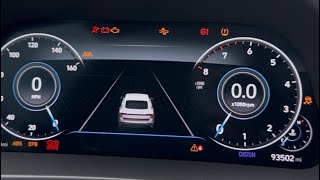
- Multiple warning lights on the dashboard 🎬 See what a Sonata dashboard looks like with multiple warning lights. (e.g., ABS, Airbag, EPS, Traction Control)
- Features controlled by the misconfigured module do not work (e.g., turn signals if the Smart Junction Box is the cause, ABS disabled if the ABS module is the cause)
- Vehicle will not start (cranks but won't fire if the ECM/immobilizer is the issue)
- Transmission may be stuck in one gear or shift harshly ('limp mode')
- Inability to clear the code with a basic scanner
- Flashing MIL (Malfunction Indicator Lamp) if the issue is related to an ECM update for knock sensor detection
- Replacing the control module a second time. The code is almost always due to a lack of programming, not a defective replacement part. Replacing it again without programming will not solve the issue.
- Chasing 'Lost Communication' codes (U0100, etc.). These codes are symptoms, not the cause. The U2101 code indicates the root problem is the misconfigured module, which must be addressed first.
Most Likely Causes
- Replaced Control Module Not Programmed 🔴 High Probability Modern vehicles, including the Sonata, have numerous modules tied to the VIN for security and feature configuration. Swapping modules between cars (even identical models) or installing a new one without programming is a common repair error that will immediately set this code.
How to confirm: Use a professional bidirectional scan tool to identify which module is logging the U2101 code. Ask the vehicle owner about any recent repairs or module replacements (e.g., ECM, Smart Junction Box, ABS module, Airbag module). The code almost always appears immediately after such a repair.
Typical fix: The module that was replaced must be professionally programmed with the correct 'As-Built' data for the vehicle's VIN using a Hyundai GDS or equivalent J-2534 pass-thru tool. This is often called 'variant coding'.
Est. part cost: $0 - Incorrect Part Number Module Installed 🟡 Medium Probability With many trim levels and options available for the Sonata, it's possible to install a module from a different trim (e.g., a BCM from a car with a heated windshield into one without). Even if the plug fits, the internal hardware is incompatible, causing a U2101 code.
How to confirm: Physically inspect the part number on the installed module and verify it is the correct OEM part for the vehicle's specific VIN and trim level. Cross-reference with a Hyundai parts catalog.
Typical fix: Replace the incorrect module with the correct part number for the vehicle, followed by mandatory programming.
Est. part cost: $250-$800 - CAN Bus Network Wiring Issue ⚪ Low Probability Wiring can be damaged during accidents, by rodents, or from corrosion, though it's less common than a programming issue for this specific code.
How to confirm: If no modules have been replaced, perform a visual inspection of wiring harnesses to major modules. Use a multimeter to check for continuity and resistance on the CAN High and CAN Low circuits at the DLC and the suspect module connector.
Typical fix: Repair the damaged section of the wiring harness or clean/replace the corroded connector.
Est. part cost: $5-$50
Rare But Worth Checking
- Faulty Control Module: While rare, it's possible for a module to fail internally in a way that corrupts its own configuration data, causing it to broadcast incorrect information and set a U2101. This should only be considered after ruling out programming and wiring issues. The presence of a U3000 code alongside U2101 would point towards an internal module failure.
- Low or Unstable Battery Voltage: → Shop Vehicle Battery A failing battery or alternator can cause unpredictable behavior in electronic modules, sometimes leading to communication and configuration codes. Always ensure the battery and charging system are healthy before diagnosing network faults. A weak battery is a known cause of no-start issues in Sonatas.
Diagnosis Steps
- Connect a professional-grade bidirectional scan tool capable of reading manufacturer-specific codes from all modules.
- Perform a full network scan to see which module is reporting the U2101 code and which other modules are reporting 'lost communication' codes.
- Question the vehicle owner about any recent repairs. Has any electronic module (ECM, BCM/SJB, ABS, SRS) been replaced recently?
- If a module has been replaced, the cause is almost certainly a lack of programming. The vehicle must be taken to a dealer or qualified shop for 'variant coding' or 'module setup'.
- If no modules have been replaced, check the battery and charging system to ensure voltage is stable and above 12.4V.
- If the battery is healthy, locate the module that is setting the U2101 code. Verify the part number on the module is correct for the vehicle's VIN and options. Visually inspect its connectors and nearby wiring for damage, corrosion, or looseness.
- Using a wiring diagram, check for proper power and ground at the module's connector.
- If power and ground are good, check the CAN bus circuit. Measure resistance between CAN High (Pin 6) and CAN Low (Pin 14) at the OBD-II port (with battery disconnected). It should be approximately 60 ohms. 🎬 Watch: A step-by-step guide to testing CAN BUS resistance with a multimeter. If it's 120 ohms, there's a break in the circuit or a missing terminating resistor. If it's near 0 ohms, there's a short between the CAN lines.
- If wiring, power, and ground are all confirmed good, and programming fails or is not possible, the module itself may be internally faulty and require replacement (followed by mandatory programming).
Parts You'll Likely Need
- Module Programming Service — This is not a physical part, but the required labor to configure a replaced module. This is the most common 'fix' for a U2101 code.
OEM price range: $125-$250
Aftermarket price range: $100-$200 - Smart Junction Box (SJB) / Body Control Module (BCM)
(OEM #95400-C1500, 95400-C2720, 95400-C2220 (Varies by options))— The SJB/BCM controls many body functions and was subject to a software-related recall. If it is replaced and not programmed, it is a likely cause of U2101.
Trusted brands: Hyundai OE
OEM price range: $400-$600
Aftermarket price range: $250-$450 - ABS Control Module
(OEM #58920-C2210 (2018-2019 example))— The ABS module is another critical network component that requires VIN programming upon replacement. An improperly configured ABS module will disable ABS/Traction Control and set a U2101.
Trusted brands: Hyundai OE, Bosch
OEM price range: $500-$800
Aftermarket price range: $300-$550 - Engine Control Module (ECM) — The ECM is the main engine computer and is tied to the immobilizer. If replaced without programming, the car will not start and will set communication faults like U2101.
Trusted brands: Hyundai OE, Bosch
OEM price range: $600-$900
Aftermarket price range: $300-$500
Related Codes That Often Appear With This One
- U0100-U0500 — These are 'Lost Communication' codes. When a module is improperly configured (U2101), other modules on the network cannot talk to it, so they log various 'lost communication' codes (e.g., U0101 - Lost Communication with TCM, U0121 - Lost Communication with ABS). U2101 is the root cause that must be fixed first.
- U2100 — This code for 'Control Module Configuration Not Programmed' is a close relative. U2100 means the module is 'blank' or unconfigured, while U2101 means it has a configuration, but it's the 'wrong' one for the vehicle. They often appear together after an improper module installation.
Technical Service Bulletins (TSBs) & Recalls
- 21-01-071H (Recall 210): Addresses a software update for the Smart Junction Box on 2015-2017 models for incorrect turn signal operation. While not directly for U2101, it shows that the SJB is a complex, programmable module that could cause this code if improperly replaced.
Platform-Specific Known Issues
- Recall 210 (TSB 21-01-071H) was issued for 2015-2017 Sonatas to update the software on the Smart Junction Box (SJB) due to faulty turn signal logic, which could cause the signal to activate in the opposite direction intended. While not directly a U2101 cause, it highlights the complexity and update requirements of the SJB on this platform.
Mechanic-Grade Diagnostic Values
- C-CAN (High-Speed) Bus Resistance — expected: ~60 Ω. Failure: 120 Ω indicates an open circuit or one missing terminating resistor. ~0 Ω indicates a short between CAN High and CAN Low lines.
- C-CAN (High-Speed) Voltage, Key On — expected: CAN High (Pin 6 to Ground): ~2.5V to 3.5V. CAN Low (Pin 14 to Ground): ~1.5V to 2.5V.. Failure: Voltages stuck at 0V, 5V, or 12V, or not mirroring each other (one high, one low) indicate a short to power or ground on the bus.
- B-CAN (Low-Speed) Voltage, Key On — expected: CAN Low: ~4.8V to 5.0V. CAN High: ~0V to 0.2V.. Failure: Significant deviation from these values. Note that B-CAN voltages are inverted compared to C-CAN; the 'Low' line has high voltage and the 'High' line has low voltage at rest.
Scan Tool Commands That Help
- Hyundai GDS (Global Diagnostic System): Variant Coding — This is the primary function used to resolve a U2101 code. After installing a new or used module (like an ABS unit, SJB, or SRS module), this function is used to write the vehicle's VIN and specific configuration data to the module, allowing it to communicate correctly on the network.
- Hyundai GDS: ECU Upgrade — Used to flash updated firmware to a control module. This was the required procedure for Recall 210, which updated the Smart Junction Box (SJB) software. This is different from variant coding but is another critical programming function.
Wiring & Ground Locations
- Smart Junction Box (SJB) / BCM — Located behind the driver's side of the dashboard, integrated into the interior fuse panel.. The SJB is a central communication hub and a common source of U2101 if replaced without programming. It controls numerous body functions and communicates on both C-CAN and B-CAN networks.
- GE02, GE03, GE04 — These are chassis ground points located in the engine bay and under the dashboard. For example, GE02 is often found on the left side of the engine compartment near the strut tower.. A corroded or loose ground connection for a major module (like the ECM or SJB) can cause communication failures and network codes like U2101. Schematics show these grounds are critical for the ESC (ABS) module, PCM, and BCM.
- Front Bumper Harness Connector — Located in the front of the engine bay, connecting the main harness to components in the front bumper (e.g., radar sensor, parking sensors).. This connector carries CAN bus wiring for ADAS components. If disconnected or damaged (often during front-end collision repair), it can break the CAN circuit, resulting in a 120-ohm reading and widespread communication faults, mimicking a module failure.
Real Owner Repair Stories
- YouTube user 'Riaz Pathan Auto Technician' (2015 Hyundai Sonata) — No gear shift, parking lights not working, power steering light on and steering is hard, no RPM or temperature gauge reading. Multiple communication codes.
❌ Tried (didn't work) Initial diagnosis showed widespread communication loss.
✅ What actually fixed it The technician measured 121 ohms on the CAN bus, indicating a break in the network. The fault was traced to a disconnected harness connector for the front bumper, which carries CAN bus wiring. Reconnecting the harness restored the 60-ohm reading and resolved all symptoms.
Model Year Variations Within This Range
- 2018-2019: The 2018 model year marked a significant mid-cycle refresh for the Sonata. While engines largely carried over, the optional 2.0T received a new 8-speed automatic transmission. More importantly for U-codes, the refresh introduced new electronic features like additional ADAS functions (Lane Keep Assist), a new center stack, and updated Blue Link telematics. This means modules like the BCM, ABS, and forward-facing camera may have different part numbers and software compared to 2015-2017 models, making cross-year swaps highly problematic.
Diagnostic Flowchart
Other Known Issues on This Vehicle
Issues unrelated to this code that are worth knowing about as an owner of this generation:
- Theta II Engine Failure 🔴 High — Most prevalent in early 2015-2016 models with the 2.4L GDI and 2.0L Turbo engines. Manufacturing debris could block oil passages, leading to connecting rod bearing failure and catastrophic engine seizure. (Ref: Multiple recalls and a class-action lawsuit led to Hyundai offering a Knock Sensor Detection System (KSDS) software update (TSB 21-01-023H-2) and lifetime warranty coverage for the engine's short block for this specific failure.)
- Excessive Oil Consumption 🟠 Medium — Common across GDI engines in this generation, often appearing between 80,000 and 200,000 km. Caused by carbon buildup on piston oil control rings. (Ref: TSB 23-EM-007H outlines an official 'Combustion Chamber Cleaning' procedure. Dealers perform an oil consumption test, and if it fails (burns more than 1 quart per 1,000 miles), this cleaning may be performed under warranty.)
- Faulty Trunk Latch 🟡 Low — Widespread enough to trigger a major recall. The latch pawl could be damaged by high temperatures, preventing the trunk from opening, including with the internal emergency release. (Ref: Recall 208 (NHTSA Campaign Number 21V623000) was issued for 2017-2018 Sonatas to replace the trunk latch base assembly.)
- SJB Software Glitch (Turn Signals) 🟠 Medium — Affected 2015-2017 models, where the turn signal could intermittently activate in the opposite direction of the driver's input. (Ref: Recall 210 (TSB 21-01-071H) was issued to perform a software update on the Smart Junction Box (SJB) to correct the logic.)
- Detaching Panoramic Sunroof Panel 🔴 High — A bonding issue with the wind deflector could cause the panoramic sunroof glass panel to detach while driving. Affected 2015-2016 models. (Ref: Recall 142 (NHTSA Campaign Number 16V190000) was issued to re-secure the sunroof panel.)
Used vs. New Parts: Buying Guide for This Vehicle
When a used part is the smart pick: A used control module (ECM, SJB, ABS) can be a cost-effective option, but ONLY if you have a confirmed plan for programming. It makes sense if you have access to a shop with Hyundai GDS or a specialist who can 'clone' the data from your old module to the used one.
Donor-vehicle mileage cap: roughly under 120000 miles for the part to have meaningful remaining life.
What to inspect on the donor part:
- Match the OEM part number EXACTLY. Do not rely on the vehicle year/model alone. A single digit difference can mean incompatibility.
- Source the part from a reputable recycler that guarantees it is a functional, tested unit.
- Inspect the connector pins on the used module for any signs of corrosion, moisture, or physical damage.
OEM-only on this vehicle (don't cheap out):
- Control Modules (ECM, SJB, ABS, SRS). While used OEM is an option, aftermarket modules for these critical systems are generally not available or recommended for this vehicle due to the complex, vehicle-specific programming required.
Aftermarket brands forum-validated for this vehicle:
- Not applicable for control modules. This repair requires either a new Hyundai OE part or a used Hyundai OE part.
Brands owners have reported issues with on this vehicle:
- Any non-OEM control modules. They will not have the correct proprietary software to be programmed to the vehicle.
Real Owner Stories
Aggregated from forums and TSBs cited above. Mileages and costs reflect what owners reported in those sources.
2012 Hyundai Sonata
Symptoms: Vehicle won't start; multiple warning lights illuminated on the dashboard including Engine, battery, oil, and EPS lights.
What fixed it: The behavior is consistent with a major module communication failure or configuration fault, though the specific fix in this instance required addressing the root communication failure between modules.
Source hint: Reddit r/AskMechanics thread titled 'r/AskMechanics - Hyundai Sonata won't start'
2015-2017 Hyundai Sonata
Symptoms: The turn signal would intermittently activate in the opposite direction of the driver's input.
What fixed it: Software update for the Smart Junction Box (SJB) performed by the dealer to correct faulty turn signal logic.
Source hint: Recall 210 (TSB 21-01-071H)
Documented NHTSA Reports
Cross-Manufacturer Reference (Ford)
Symptoms: An owner reported that the vehicle makes a strange beeping noise like a warning chime, though no lights appear. Diagnostic scans revealed multiple communication codes including U0121, U0140, and U2101.
Source hint: NHTSA ODI #11581420
Cross-Manufacturer Reference (Ford)
Symptoms: A report describes the steering wheel sticking in position when turning. Dealer diagnostics identified codes C1B00 and U2101, indicating the vehicle required an electronic steering rack replacement.
Source hint: NHTSA ODI #10694215
Related OBD-II Codes
Frequently Asked Questions
I just replaced the Smart Junction Box on my 2016 Sonata to fix the turn signal issue mentioned in Recall 210, but now I have a U2101 code. What happened?
Can I fix the U2101 code on my 2015 Sonata by just clearing it with a basic OBD-II scanner?
Is there a software update for the 2015-2017 Sonata that might be related to dashboard warning lights and engine issues?
My 2018 Sonata trunk won't open even with the emergency release; is this related to the U2101 configuration code?
I'm seeing U2101 after installing a used BCM from a different trim level Sonata. Why won't it work?
Does the 2017 Kia Optima suffer from the same U2101 programming issues as the Sonata?
Helpful Videos
![How To Test CAN BUS With A Multimeter [CAN Bus Resistance Check] Mechanic Mindset](https://img.youtube.com/vi/JPE42HSJxAk/mqdefault.jpg)
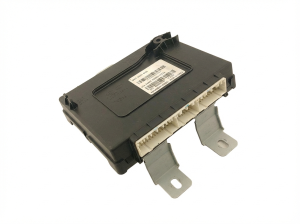
We Have This Part in Stock
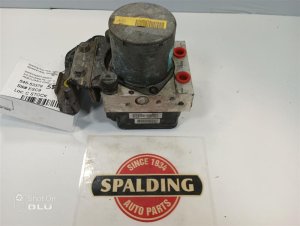

The information in this article is provided for general reference and educational purposes only. Vehicle specifications, procedures, and part compatibility can vary by production date, trim level, and region. Always consult your vehicle's factory service manual and verify part numbers before purchasing or performing repairs. Safety-critical components such as airbags, seat belts, and braking systems should be installed by a qualified professional.
- Hyundai Sonata:
- 🧭 Diagnostic Flowchart
- 🎬 Helpful Videos
- 🛍️ Shop This Part
- What's Unique About the 2015-2019 Hyundai Sonata
- Symptoms You May Notice
- Most Likely Causes
- Rare But Worth Checking
- Diagnosis Steps
- Parts You'll Likely Need
- Related Codes That Often Appear With This One
- Technical Service Bulletins (TSBs) & Recalls
- Platform-Specific Known Issues
- Mechanic-Grade Diagnostic Values
- Scan Tool Commands That Help
- Wiring & Ground Locations
- Real Owner Repair Stories
- Model Year Variations Within This Range
- Other Known Issues on This Vehicle
- Used vs. New Parts: Buying Guide for This Vehicle
- Real Owner Stories
- 2012 Hyundai Sonata
- 2015-2017 Hyundai Sonata
- Documented NHTSA Reports
- Cross-Manufacturer Reference (Ford)
- Cross-Manufacturer Reference (Ford)
- Related OBD-II Codes
- Frequently Asked Questions
- 🎟️ Get 5% Off