

U3000 on 2007-2009 Saturn Aura: Control Module Failure Causes and Fixes
U3000 is a generic 'Control Module' failure code. On a 2007-2009 Saturn Aura, this often points to a faulty Body Control Module (BCM), a bad underhood fuse box, or a wiring issue, particularly poor grounds. Diagnosis requires an advanced scan tool to identify the specific module that has failed, as a basic reader will only show the generic code.
- U3000 is a generic code; you MUST use an advanced scanner to find out which module is actually at fault.
- The most likely culprits on a 2007-2009 Aura are the Body Control Module (BCM), the underhood fuse box, or a bad ground.
- Do not replace any parts until you have checked fuses and verified good power and ground at the failing module.
- This is not a beginner-friendly DIY repair due to the complex diagnostics and the need for module programming after replacement.
- Many owners have reported fixing strange electrical behavior by simply unplugging and replugging the BCM connectors located in the passenger-side kick panel.
What's Unique About the 2007-2009 Saturn Aura
The Saturn Aura and its GM Epsilon platform siblings (like the Pontiac G6 and Chevy Malibu) are known for experiencing a variety of intermittent and difficult-to-diagnose electrical issues. While U3000 is a generic code, on this specific platform it is frequently a symptom of a failing Body Control Module (BCM), a faulty underhood fuse box with internal circuit problems, or poor electrical grounds. GM issued Safety Recall 14V252000 (GM recall #13036) specifically for increased resistance in the BCM connector, which caused widespread electrical issues, confirming a known vulnerability in the platform's wiring and connection integrity.
Symptoms You May Notice
- Intermittent stalling or engine bogging down
- "Service Traction Control" or "Service ESC" message on the dash
- Erratic or dead instrument cluster gauges
- Power door locks rapidly locking and unlocking on their own
- Transmission shifting harshly or getting stuck in one gear (limp mode)
- Check Engine Light is on
- Loss of power steering assist, sometimes accompanied by a shaking steering wheel
- Various seemingly unrelated electrical issues (e.g., radio problems, lighting faults, non-working key fobs)
- Car will not crank or start, just a single click noise
- Replacing a single component like a wheel speed sensor or throttle body when the root cause is a network-wide communication failure originating from a core module like the BCM.
- Condemning the entire transmission for an internal failure when the problem is purely electronic, such as a blown TCM fuse or bad wiring.
Most Likely Causes
- Faulty Body Control Module (BCM) 🔴 High Probability → Shop Body Control Module The BCM on this platform is a common failure point. GM issued recall 14V252000 because increased resistance in the BCM connector could cause voltage fluctuations, leading to brake light failure, disabled traction/stability control, and other issues.
How to confirm: Use an advanced scan tool to check for communication with the BCM. Check for multiple 'B' (Body) or 'U' (Network) codes stored in other modules pointing to a loss of communication with the BCM. The BCM is located behind the passenger side front floor console trim panel. Reseating the connectors (specifically connector X2) after applying dielectric grease is part of the official recall fix and a valid diagnostic step.
Typical fix: First, perform the fix for recall 14V252000, which involves securing the harness connector to the BCM with a spacer and applying dielectric lubricant. If the BCM has failed internally, it must be replaced. The new module must be programmed to the vehicle's VIN and specific options using dealer-level software (GM SPS).
Est. part cost: $150-$300 - Faulty Underhood Fuse Box (UBEC) 🟡 Medium Probability → Shop Fuse Box The internal circuit board of the underhood fuse box (also called the Underhood Bussed Electrical Center or UBEC) can develop cracked solder joints or internal corrosion, causing a loss of power or signals to multiple components and modules.
How to confirm: After confirming a module is not receiving power, trace the circuit back to the fuse box. In some documented cases, owners have fixed no-start conditions by finding blown fuses that were not immediately obvious or by discovering internal breaks in the fuse box's power distribution pathways. Diagnosis involves testing for voltage drops across the fuse box and checking continuity of specific circuits through the box itself, particularly at the main connectors like X1.
Typical fix: Replacement of the entire underhood fuse box assembly. This is typically a direct replacement, but care must be taken to match the part number to the vehicle's options (e.g., with or without fog lights).
Est. part cost: $100-$250 - Poor Ground Connection 🟡 Medium Probability Multiple forum posts and diagnostic videos for the Aura and similar GM vehicles point to loose or corroded ground wires as the source of intermittent, hard-to-trace electrical and communication faults.
How to confirm: Visually inspect and test major chassis and engine ground points. Key locations for the BCM and related interior electronics include G303 (behind the left front kick panel) and G203 (under the dash, on the right side of the console near the floor). A voltage drop test from the module's ground pin to the negative battery terminal (should be < 0.1V) can confirm a bad ground.
Typical fix: Clean the ground location to bare metal and tighten the ground fastener securely. In some cases, a corroded ground wire end must be replaced.
Est. part cost: $1-$20 - Faulty Transmission Control Module (TCM) or Wiring ⚪ Low Probability The 6-speed automatic transmission has known issues, and the TCM can fail or lose communication due to wiring damage. A very common and simple point of failure is the 10-amp TCM fuse in the underhood fuse box, which can blow and cause a U0101 (Lost Communication with TCM) code, mimicking a complete TCM failure.
How to confirm: Use an advanced scan tool to see if the TCM is communicating. If it's not, the first step is to check the 10-amp TCM fuse in the underhood fuse box. If the fuse is good, check for power, ground, and network continuity at the TCM connector. On some models, the TCM is located inside the transmission, but on many Auras, it is an external module.
Typical fix: If the fuse is blown, replace it. If the fuse is good and wiring is intact, the TCM needs to be replaced. If it's an external module, replacement is straightforward. If it's internal, it's a labor-intensive job. The new module will also require programming.
Est. part cost: $200-$500
Rare But Worth Checking
- Low Battery Voltage or Failing Alternator: → Shop Vehicle Battery Control modules are sensitive to voltage. Before diagnosing complex network issues, always ensure the battery is fully charged (above 12.4V at rest) and the alternator is charging correctly (13.5-14.5V when running). Low voltage can cause modules to malfunction and set communication codes, a common issue reported by Aura owners.
- Electronic Power Steering (EPS) System Failure: While documented on other manufacturers, NHTSA ODI Investigation #PE14030 notes that U3000 (with symptom bytes like :46, :49, or :96) can be stored alongside power steering faults, potentially requiring the replacement of the steering assist system.
Diagnosis Steps
- Check Battery Health: Ensure the battery has a full charge (at least 12.4V) and clean, tight terminals. A weak battery is a common cause of electronic issues on these cars.
- Scan with Advanced Tool: Use a GM-specific scan tool (like a Tech 2 or equivalent) to read codes from ALL modules (BCM, EBCM, TCM, etc.). Identify which module is reporting the U3000 internal fault or which module is not communicating.
- Check Recall Status: Verify if GM Safety Recall 14V252000 has been performed. The fix involves securing and applying dielectric grease to the BCM connector and may resolve the issue.
- Check Fuses: Inspect all fuses related to the suspect module, paying special attention to the 10-amp TCM fuse in the underhood fuse panel if transmission symptoms are present.
- Inspect Module Power and Ground: Access the non-communicating or faulty module. Use a multimeter to verify it is receiving battery voltage and has a solid ground connection. Check grounds like G303 and G203 for the BCM.
- Check Network Wiring: If power and ground are good, inspect the CAN bus wiring to the module for any visible damage, corrosion, or loose pins at the connector.
- Test CAN Bus Resistance: With the battery disconnected, measure the resistance between the two CAN bus terminals (Pins 6 and 14 on the OBD-II port). A healthy network should read approximately 60 ohms. A reading of 120 ohms indicates a break in the circuit or a missing terminating resistor (often inside the ECM or BCM). A reading near 0 ohms indicates a short between the CAN high and low wires.
- Isolate the Module: If all wiring and power/ground checks out, the module itself is the most likely cause of the failure.
Parts You'll Likely Need
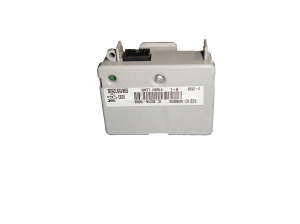
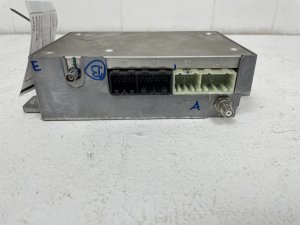
- Body Control Module (BCM)
(OEM #25900930, 25940348, 20784397 (Superseded by 20943341))— This is one of the most common points of electrical failure on the Saturn Aura, responsible for a wide array of symptoms associated with network faults. It is the subject of a major safety recall.
Trusted brands: ACDelco (Genuine GM), Dorman
OEM price range: $250-$400
Aftermarket price range: $150-$250 - Underhood Fuse Box (UBEC) — Internal corrosion or cracked solder joints can cause intermittent power loss to multiple modules, setting network codes.
Trusted brands: ACDelco (Genuine GM), Dorman
OEM price range: $200-$350
Aftermarket price range: $100-$250
Related Codes That Often Appear With This One
- U0100 — Lost Communication With ECM/PCM
- U0101 — Lost Communication with TCM. This is very common if the TCM or its fuse is the failing component.
- U0121 — Lost Communication With Anti-Lock Brake System (ABS) Control Module
- U2100 — Initial CAN Bus Communication Fault. This code is often the first one to set when a network problem begins.
Platform-Specific Known Issues
- GM Safety Recall 14V252000 / GM #13036: Increased resistance in the Body Control Module (BCM) connector can cause voltage fluctuations in the Brake Apply Sensor (BAS) circuit. This can lead to brake lights not working correctly, cruise control not disengaging properly, and the disabling of Traction Control and Electronic Stability Control (ESC), increasing crash risk. The official fix requires a dealer to attach the wiring harness to the BCM with a spacer, apply dielectric lubricant to the BCM and BAS connectors, and relearn the brake pedal position.
Mechanic-Grade Diagnostic Values
- GMLAN Bus Resistance — expected: Approximately 60 Ω (Ohms) when measured between Pin 6 (CAN-H) and Pin 14 (CAN-L) of the DLC with the battery disconnected.. Failure: A reading of 120 Ω indicates an open circuit or one of the two terminating resistors is offline (often in the ECM or BCM). A reading near 0 Ω indicates a short circuit between the CAN high and low wires.
Hidden / Shadow Codes Worth Checking
- U3000 with Symptom Byte: A two-digit hexadecimal code appended to the main DTC that specifies the nature of the internal module failure. This is critical for diagnosis. Common examples include: U3000:49 (Internal Electronic Failure), U3000:44 (Data Memory Malfunction), U3000:5A (Invalid/Incompatible Software). (see via A professional-level scan tool capable of reading manufacturer-specific codes, such as a GM Tech 2 or GDS2 software.)
- B1001: Option Configuration Error. This code commonly appears in the Inflatable Restraint Sensing and Diagnostic Module (SDM) after a BCM is replaced but before it has been properly configured to the vehicle. (see via GM-specific scan tool (Tech 2, GDS2) when scanning all modules.)
Scan Tool Commands That Help
- GM SPS (Service Programming System): Replace and Program ECU — This function is mandatory when installing a new or used BCM. It flashes the module with the correct firmware and VIN for the vehicle.
- GM Tech 2 / GDS2: Setup SDM Primary Key in BCM — This must be performed after programming a new BCM to resolve the B1001 code and extinguish the airbag warning light. It syncs the new BCM with the existing airbag system.
- GM Tech 2 / GDS2: Vehicle Theft Deterrent Relearn — Often required after BCM replacement to synchronize the immobilizer system with the vehicle's keys. This can also be done manually with a 30-minute procedure (cycling the key on for 10 minutes, three consecutive times).
Wiring & Ground Locations
- BCM — Behind the trim panel on the passenger side of the center console. It is integrated with the interior fuse/relay box.. This is the most common module to fail and set a U3000 code or cause network communication loss on this platform.
- G203 / G201 — Under the dash, on the right side of the center console, near the floor.. These are primary interior ground points for the BCM and other nearby modules. A loose or corroded connection here can cause widespread electrical issues.
- G303 — Behind the left front kick panel, near the driver's left foot.. Another critical chassis ground for interior electronics. Intermittent issues are often traced back to this point.
- UBEC Connectors (e.g., X1) — The large connectors on the underside of the Underhood Fuse Box (UBEC).. Corrosion or pin-fitment issues in these main connectors can interrupt power or control signals from the UBEC to other modules, causing communication faults.
- G109 — On the core support in the left front of the engine compartment.. Main ground point for the Electronic Brake Control Module (EBCM). A fault here can cause U-codes related to traction control and ABS.
Real Owner Repair Stories
- YouTube user 'Mark' (2008 Saturn Aura 3.5L) — No start, codes P1682 (Ignition 1 Switch Circuit 2) and P0685 (ECM/PCM Power Relay Control Circuit/Open). The run/crank relay was energizing by itself without the key.
❌ Tried (didn't work) Replacing the relay did not work as the control signal from the fuse box was faulty.
✅ What actually fixed it The technician identified an internal failure within the Underhood Fuse Box (UBEC). The control circuit for the run/crank relay was bad. The fix involved bypassing the faulty internal circuit by wiring in an external relay, using the original control wire (brown wire at connector X1, pin A7) as the ground trigger for the new relay. - CarComplaints.com / NHTSA Database (2008 Saturn Aura) — Brake lights illuminating randomly, loss of power steering, various warning lights flashing. These are the classic symptoms related to the BCM recall (14V252000).
❌ Tried (didn't work) In several cases, owners reported the issues returned years after the official recall repair (applying dielectric grease and a spacer) was performed by a dealer.
✅ What actually fixed it The underlying issue is often a complete failure of the BCM that the recall's preventative fix can no longer address. The final fix in these cases is the complete replacement and reprogramming of the Body Control Module.
"I Checked Everything" — The Actual Cause
- A standard diagnostic path for a no-start might involve checking fuses and relays. A technician would see the run/crank relay is good and the fuses are intact. However, the actual cause was an internal break in the control circuit trace *inside* the underhood fuse box (UBEC). This fault wouldn't be found with a simple fuse check or visual inspection and required bypassing the internal UBEC circuitry to fix.
OEM Part Supersession History
15829740, 25840799, 25885304, 25885305, 25900929, 25900930, 25940348, 20784397, 20793571, and others→20943341— Part consolidation and design revisions by GM over the years to address reliability issues.
Heads up: Using an older, superseded part number, even if new-old-stock, is not recommended. The final part number, 20943341, contains the latest hardware and firmware revisions and is the correct service part for the 2007-2009 Aura.
Model Year Variations Within This Range
- 2007-2009: While the core electrical architecture and common failure points (BCM, grounds) are consistent across this range, there are minor differences in wiring diagrams and ground point numbering (e.g., G105 location varies by engine). However, the primary BCM replacement part (20943341) and diagnostic procedures for U3000 are the same for all three model years.
Diagnostic Flowchart
Used vs. New Parts: Buying Guide for This Vehicle
When a used part is the smart pick: A used Underhood Fuse Box (UBEC) is a good cost-saving option as it does not require programming; just ensure the part number matches your vehicle's options precisely. A used BCM should only be considered if you have access to a specialized service that can clone your original BCM's data (including VIN and mileage) onto the donor unit.
Donor-vehicle mileage cap: roughly under 120000 miles for the part to have meaningful remaining life.
What to inspect on the donor part:
- For a UBEC, inspect all connector pins for corrosion, melting, or damage. Check for any signs of water intrusion or case cracking.
- For a BCM, ensure the part number is an exact match or the latest superseded version (20943341). Avoid modules from flood-damaged vehicles.
- Ask the seller for the VIN of the donor car to check its recall history and original options.
OEM-only on this vehicle (don't cheap out):
- Body Control Module (BCM): While aftermarket BCMs exist, using a genuine ACDelco new part or a properly cloned/programmed used OEM part is highly recommended to avoid compatibility and programming headaches.
Aftermarket brands forum-validated for this vehicle:
- Dorman: Offers replacement UBEC assemblies and sometimes BCMs that are generally considered a viable alternative to OEM.
Brands owners have reported issues with on this vehicle:
- Unbranded, no-name electronic modules from online marketplaces can be poorly manufactured and often fail to program or communicate correctly with the vehicle's network.
Real Owner Stories
Aggregated from forums and TSBs cited above. Mileages and costs reflect what owners reported in those sources.
2007-2009 Saturn Aura
Symptoms: Erratic instrument cluster gauges, harsh transmission shifting, multiple communication codes, and the car entering limp mode, especially when accelerating while in gear.
What fixed it: The issue was identified by other owners as a classic symptom of a failing Body Control Module (BCM) or a poor ground connection, for which these vehicles are notorious.
Source hint: Saturn Forum - aura electrical issues
2007 Saturn Aura
Symptoms: The car would intermittently stall, display 'Service Traction Control' warnings on the dash, and sometimes fail to start.
What fixed it: The source thread indicates this was a widespread and frustrating issue where even dealers struggled to provide a consistent diagnosis, though symptoms point to the BCM issue covered by recall 14V252000.
Source hint: Edmunds Car Forums - Saturn Aura Electrical / Computer Problems?
2009 Saturn Aura
Symptoms: The transmission was stuck in one gear (limp mode) due to a loss of communication with the Transmission Control Module (TCM).
What fixed it: The problem was resolved by replacing the 10-amp TCM fuse located in the underhood fuse box, which had blown and cut power to the module.
Source hint: YouTube - How to fix your Transmission Control Module (TCM) in Saturn Aura 2009
Related OBD-II Codes
Frequently Asked Questions
Is there a recall for the electrical problems on my 2007-2009 Saturn Aura?
Where is the Body Control Module (BCM) located on my Saturn Aura?
My Aura is stuck in one gear and the 'Service Traction Control' light is on. Could it just be a fuse?
If I buy a used BCM for my Aura, can I just plug it in?
What are the most important ground wires to check for intermittent electrical issues on this car?
How can I test the communication network (CAN bus) on my Saturn Aura?
We Have This Part in Stock

The information in this article is provided for general reference and educational purposes only. Vehicle specifications, procedures, and part compatibility can vary by production date, trim level, and region. Always consult your vehicle's factory service manual and verify part numbers before purchasing or performing repairs. Safety-critical components such as airbags, seat belts, and braking systems should be installed by a qualified professional.
- Saturn Aura:
- 🧭 Diagnostic Flowchart
- 🛍️ Shop This Part
- What's Unique About the 2007-2009 Saturn Aura
- Symptoms You May Notice
- Most Likely Causes
- Rare But Worth Checking
- Diagnosis Steps
- Parts You'll Likely Need
- Related Codes That Often Appear With This One
- Platform-Specific Known Issues
- Mechanic-Grade Diagnostic Values
- Hidden / Shadow Codes Worth Checking
- Scan Tool Commands That Help
- Wiring & Ground Locations
- Real Owner Repair Stories
- "I Checked Everything" — The Actual Cause
- OEM Part Supersession History
- Model Year Variations Within This Range
- Used vs. New Parts: Buying Guide for This Vehicle
- Real Owner Stories
- 2007-2009 Saturn Aura
- 2007 Saturn Aura
- 2009 Saturn Aura
- Related OBD-II Codes
- Frequently Asked Questions
- 🎟️ Get 5% Off