


Warning Signs Your Oil Pan Assembly is Failing
- Oil leaks under the engine: This is the most common sign. Look for drips or puddles of oil where you park.
- Low oil pressure warning light: This light comes on if the oil level is too low due to a leak, or if the oil pump can't pull oil correctly.
- Engine noise: A rattling or knocking sound can happen if the engine isn't getting enough oil.
- Burning oil smell: Oil leaking onto hot engine parts can cause a burning smell.
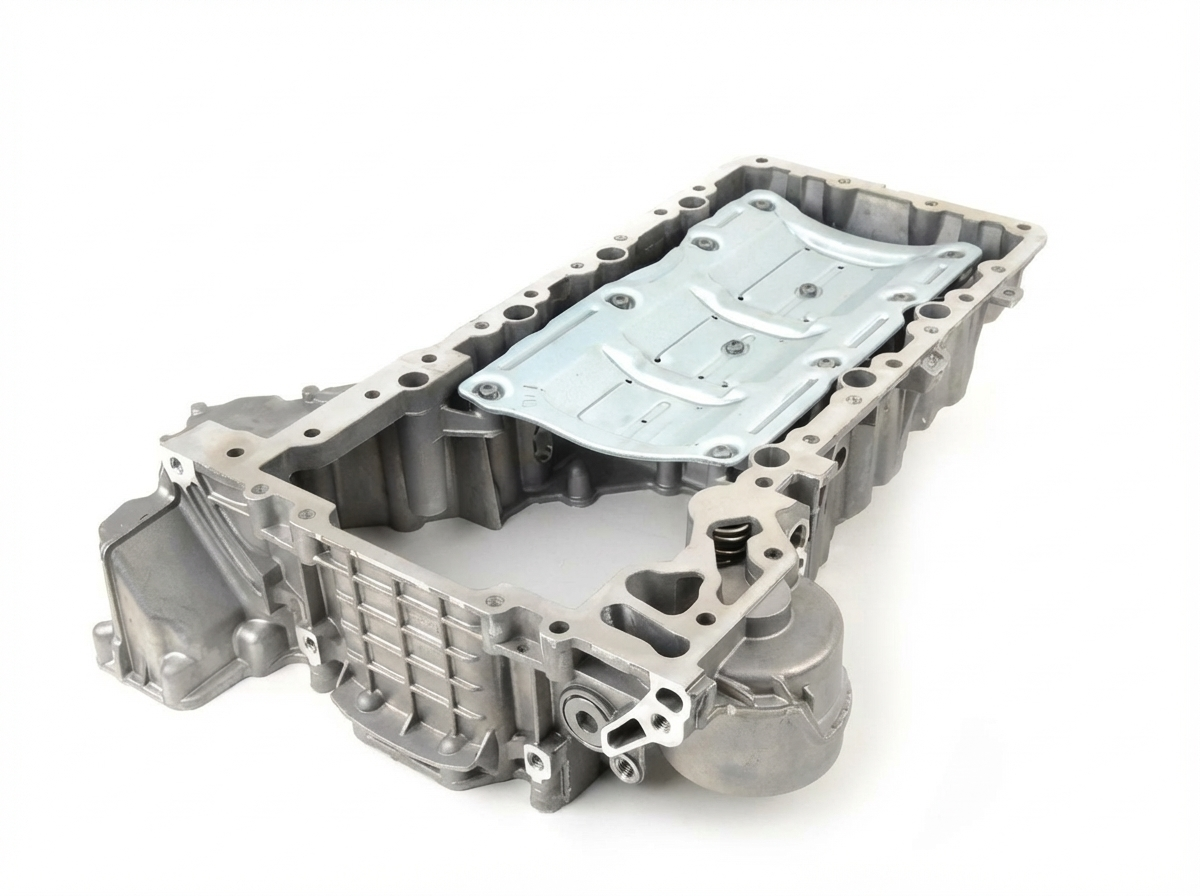
- Visible damage to the oil pan: Dents, cracks, or rust can cause leaks.
How to Test if This Part is the Problem
- Check the oil level: Make sure the oil level is correct. If it's low, add oil and check for leaks.
- Inspect the oil pan: Look for cracks, dents, or rust. Pay close attention to the gasket area where the oil pan meets the engine.
- Check the oil pan drain plug: Make sure the drain plug is tight and the washer is in good condition.
- Pressure test: A mechanic can perform an oil pressure test to see if the oil pump is working correctly and if there are any leaks in the system.
- Dye test: A special dye can be added to the oil to help find leaks. A UV light is used to see where the dye is leaking from.
Common Failure Causes for This Part
- Road debris: Hitting potholes or debris can damage the oil pan.
- Corrosion: Rust can weaken the oil pan and cause leaks, especially in areas with road salt.
- Over-tightening the drain plug: This can damage the oil pan threads and cause leaks.
- Gasket failure: The gasket between the oil pan and the engine can dry out and crack over time.
- Age and wear: Over time, the oil pan can simply wear out and develop leaks.