

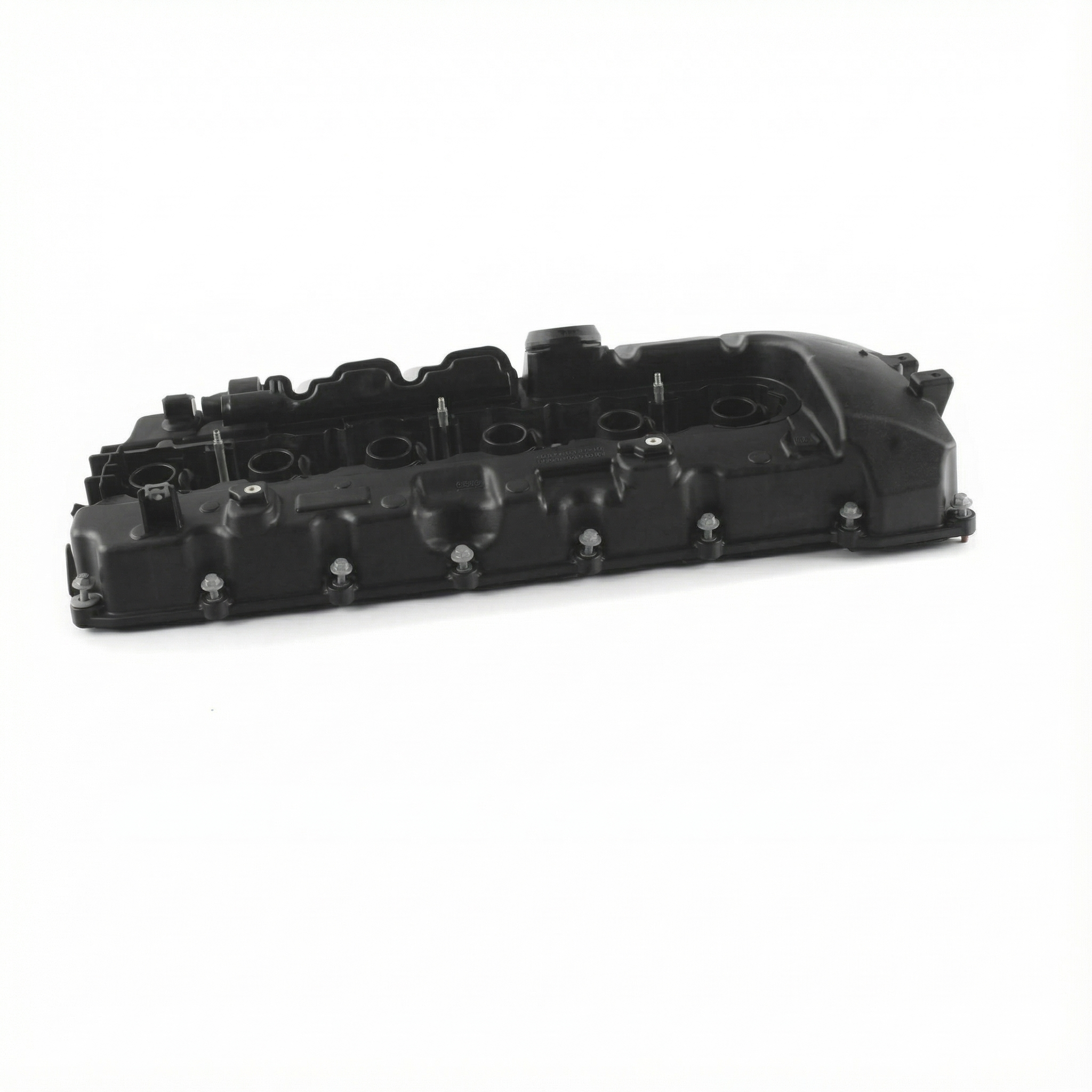

Warning Signs Your Valve Cover is Failing
- Oil leaks around the valve cover gasket area. You might see oil pooling on the engine or smell burning oil.
- Engine misfires. A faulty valve cover can cause oil to leak into the spark plug wells, leading to misfires.
- Rough idling. Oil leaks can affect engine performance and cause rough idling.
- Whistling or hissing noises. Cracks in the valve cover can create vacuum leaks, resulting in unusual noises.
- Check engine light. Various issues related to a failing valve cover can trigger the check engine light.
How to Test if This Part is the Problem
- Visual Inspection: Carefully inspect the valve cover for cracks, leaks, or damage. Pay close attention to the gasket area.
- Oil Leak Check: Look for oil pooling around the valve cover and spark plug wells.
- Pressure Test: A mechanic can perform a pressure test to check for leaks in the valve cover.
- Smoke Test: A smoke test can help identify vacuum leaks caused by a cracked valve cover.
- Spark Plug Inspection: Remove the spark plugs and check for oil contamination.
Common Failure Causes for This Part
- Age and wear. Over time, the valve cover can become brittle and crack due to heat and pressure.
- Deteriorated gasket. The valve cover gasket can dry out and crack, leading to oil leaks.
- Over-tightening bolts. Improperly tightening the valve cover bolts can damage the valve cover.
- Extreme temperatures. Repeated exposure to extreme temperatures can cause the valve cover to warp or crack.
- Clogged PCV valve. A clogged PCV valve can create excessive pressure inside the valve cover, leading to leaks.