


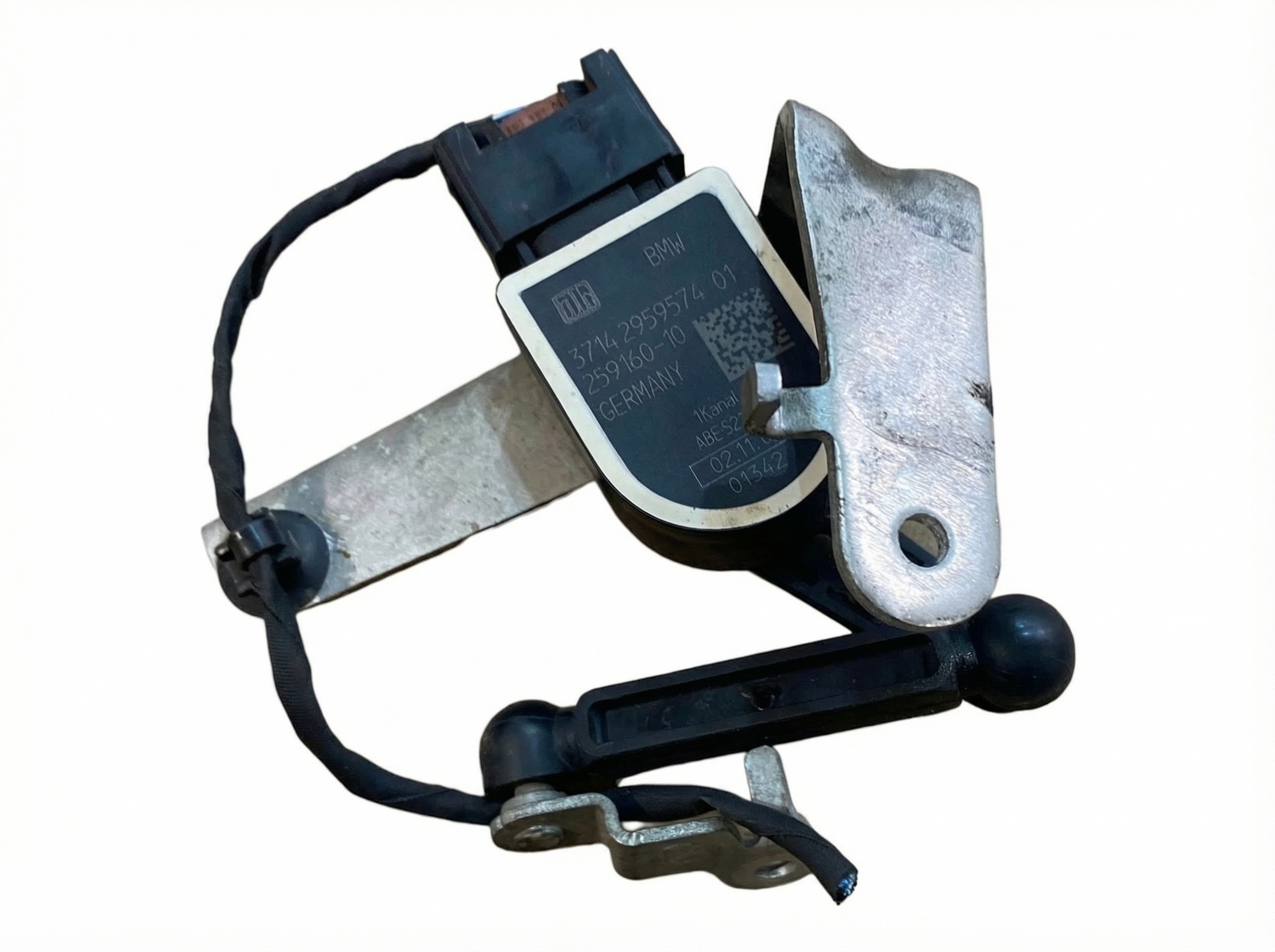

Warning signs the Suspension Height Sensor is failing:
- Your car's suspension might feel bouncy or rough.
- The ride height might be uneven, with one side lower than the other.
- You might see a warning light on your dashboard related to the suspension system.
- The car might have trouble leveling itself when carrying heavy loads.
- The air suspension compressor might run more often or for longer periods.
How to test if this part is the problem:
- Visually inspect the sensor and its wiring for any damage. Look for cracks, breaks, or corrosion.
- Use a scan tool to check for any error codes related to the suspension height sensor.
- Check the sensor's voltage output using a multimeter while the suspension is moving. Compare the readings to the manufacturer's specifications.
- Manually move the suspension and see if the sensor readings change accordingly. If the readings don't change, the sensor might be faulty.
- Rule out other possible causes, such as a faulty air suspension compressor, air leaks, or problems with the suspension control module.
Common failure causes for this part:
- Water and debris can get into the sensor, causing corrosion and damage.
- The sensor's linkage can break or become disconnected.
- The sensor's internal components can wear out over time.
- Road salt and other chemicals can corrode the sensor.
- Physical impact from road debris can damage the sensor.