

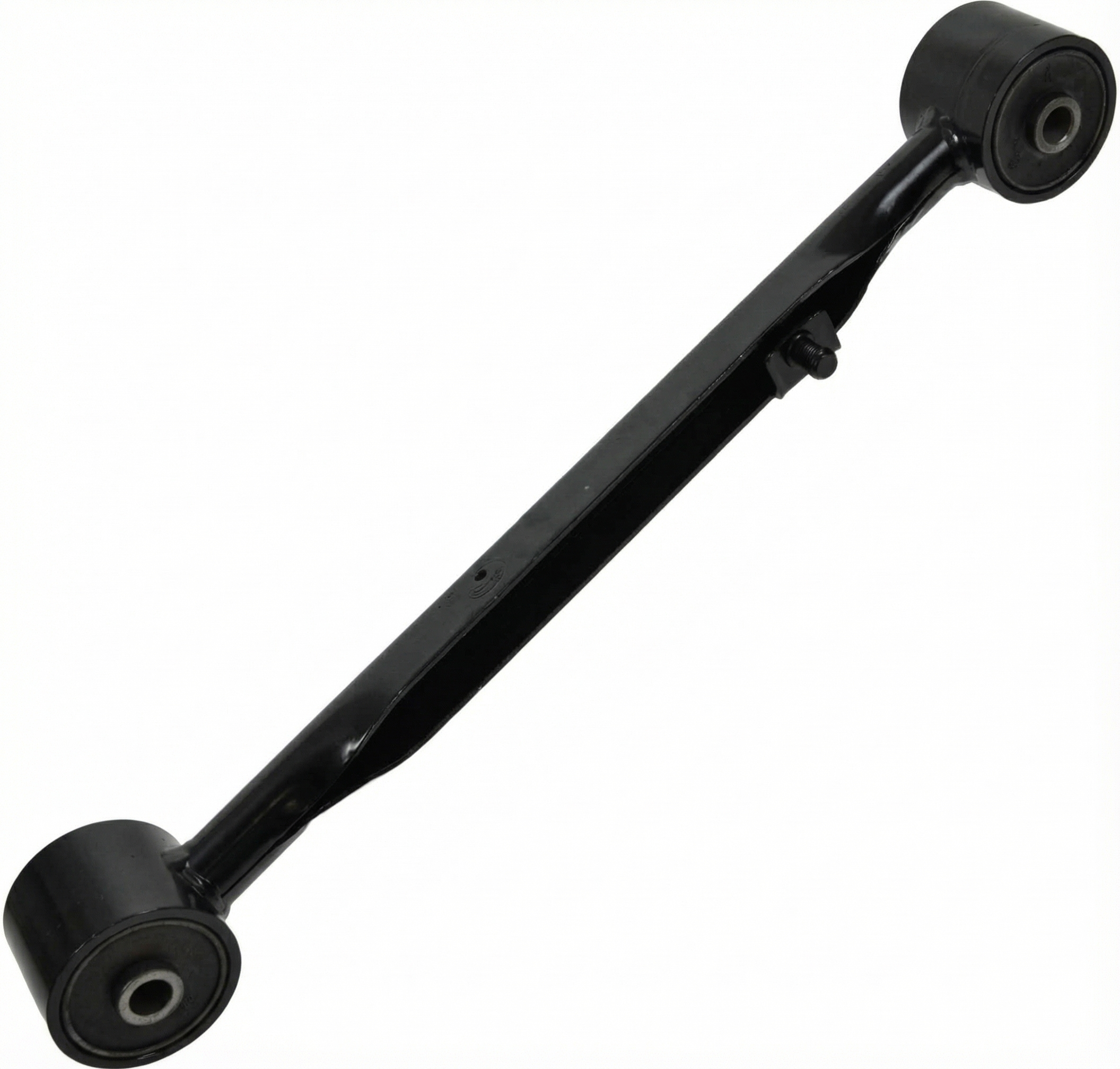

Warning Signs of a Failing Rear Upper Control Arm
- Clunking or rattling noises coming from the rear suspension, especially when going over bumps.
- Uneven tire wear, often on the inside edge of the tire.
- A feeling of looseness or instability in the rear of the vehicle, especially when cornering.
- Difficulty maintaining a straight line while driving.
- Visible damage to the control arm, such as bending, cracking, or excessive rust.
Testing the Rear Upper Control Arm
- Visual Inspection: Carefully inspect the control arm for any signs of damage, such as cracks, bends, or excessive rust. Also, check the bushings for wear or damage.
- Shake Test: With the vehicle safely supported, grab the wheel at the 3 and 9 o'clock positions and try to rock it back and forth. Excessive play could indicate worn bushings or a loose control arm. Repeat this test at the 12 and 6 o'clock positions to check for other suspension issues.
- Pry Bar Test: Use a pry bar to gently apply pressure to the control arm bushings. Look for excessive movement or play, which indicates wear.
Common Failure Causes
- Normal Wear and Tear: Over time, the bushings in the control arm can wear out due to age, exposure to the elements, and constant flexing.
- Impact Damage: Hitting potholes, curbs, or other objects can damage the control arm, causing it to bend or crack.
- Corrosion: Rust can weaken the control arm, making it more susceptible to damage.
- Loose Fasteners: If the bolts that secure the control arm to the vehicle are not properly tightened, the control arm can move and cause damage.