


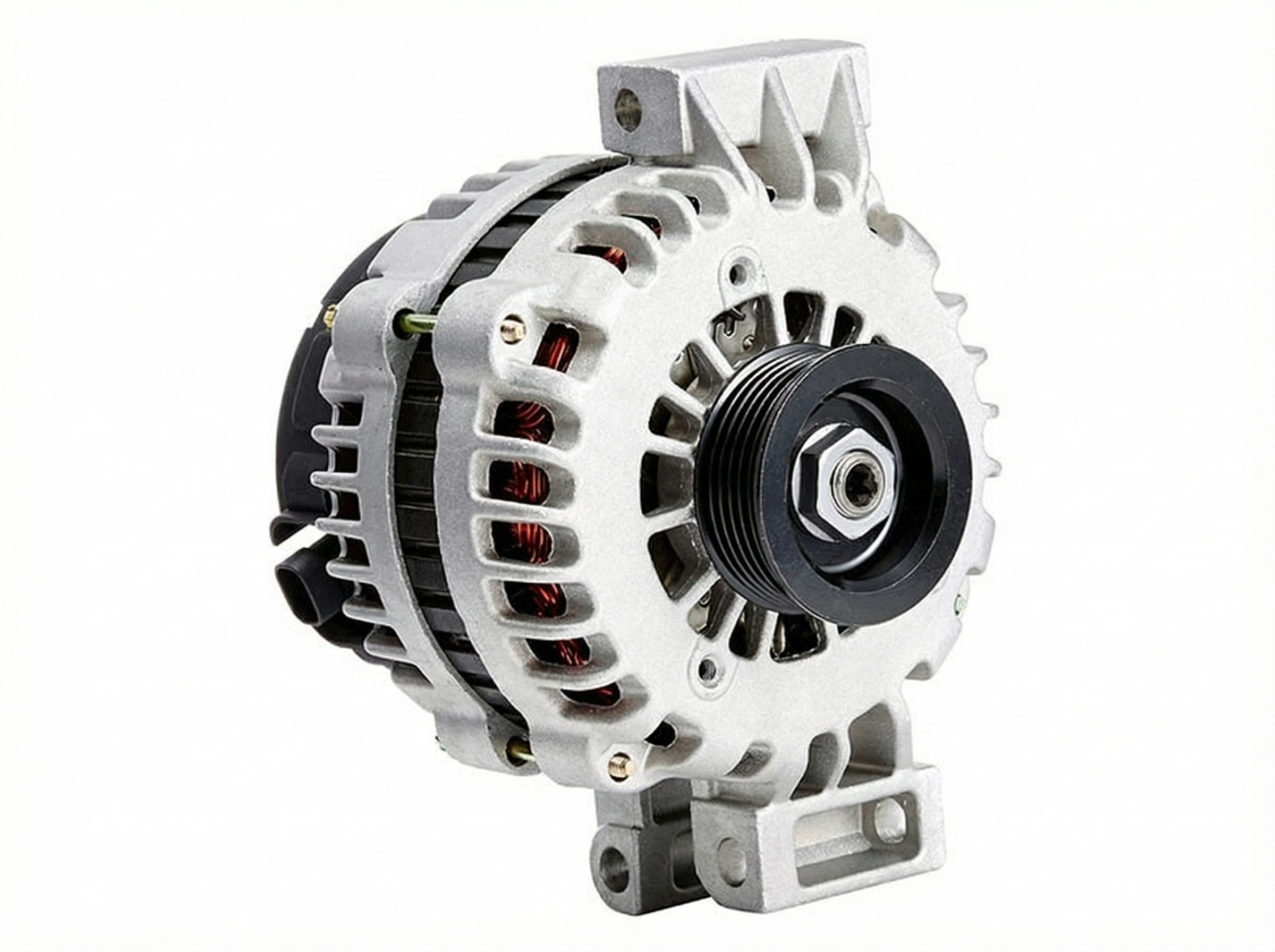

Warning Signs Your Alternator is Failing
- Dim or flickering headlights, especially at low speeds.
- The battery warning light stays on even after starting the engine.
- The engine stalls frequently, especially when using electrical accessories.
- Slow or no-start condition.
- Whining or growling noises coming from the alternator.
- Electrical accessories like power windows or seats operate slowly.
How to Test if This Part is the Problem
- Check the Battery: A weak battery can mimic alternator problems. Make sure your battery is fully charged and in good condition before testing the alternator.
- Visual Inspection: Look for obvious signs of damage to the alternator, such as cracked housing, loose wires, or a burnt smell.
- Voltage Test: Use a multimeter to measure the voltage at the battery terminals while the engine is running. A healthy alternator should produce around 13.5 to 14.5 volts. If the voltage is significantly lower, the alternator may be failing.
- Load Test: Have a professional perform a load test on the alternator to see how it performs under stress. This test will determine if the alternator can provide enough power to meet the vehicle's electrical demands.
Common Failure Causes
- Worn Brushes: The brushes inside the alternator wear down over time, reducing its ability to generate electricity.
- Bad Bearings: Worn bearings can cause the alternator to make noise and eventually fail.
- Faulty Voltage Regulator: The voltage regulator controls the amount of voltage produced by the alternator. If it fails, the alternator may overcharge or undercharge the battery.
- Damaged Diodes: Diodes convert AC voltage to DC voltage. If they fail, the alternator will not produce enough power.
- Overheating: Excessive heat can damage the alternator's internal components.