

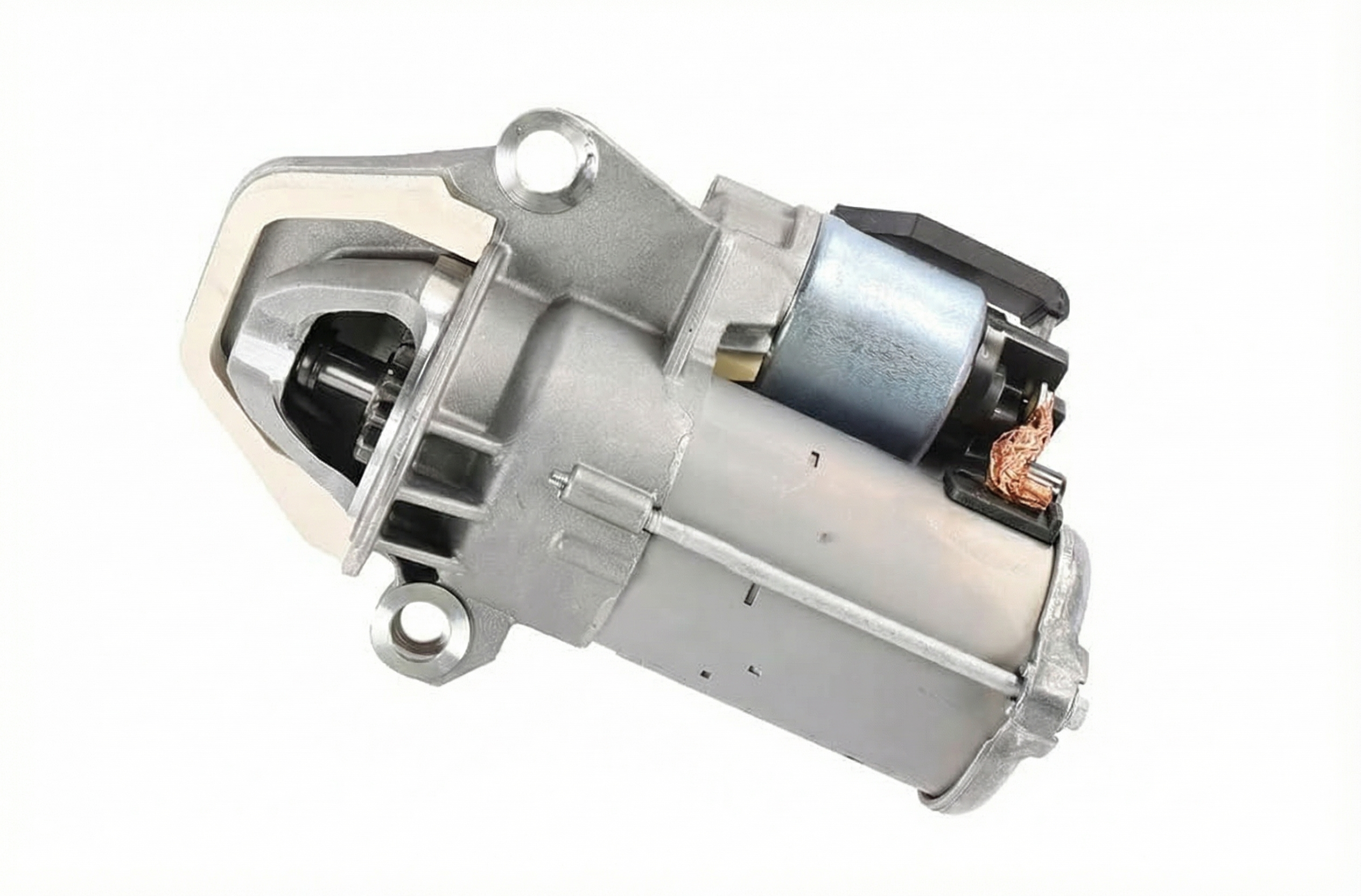

Warning Signs the Starter Motor is Failing
- Slow or No Cranking: The engine turns over slowly or not at all when you try to start it.
- Clicking Sound: A single click or rapid clicking sound when you turn the key.
- Grinding Noise: A harsh grinding sound when the starter engages.
- Engine Starts Intermittently: The engine starts sometimes but not others.
- Smoke or Burning Smell: A burning smell coming from the engine compartment.
How to Test if This Part is the Problem
- Check the Battery: Make sure the battery is fully charged and the connections are clean and tight. A weak battery can mimic starter problems.
- Listen for the Solenoid: Have someone turn the key while you listen near the starter. If you hear a click, the solenoid is likely working, but the motor may be faulty. If you hear nothing, the solenoid could be the issue.
- Use a Multimeter: A mechanic can use a multimeter to check for voltage at the starter when the key is turned. No voltage indicates a wiring or relay problem.
- Jump the Starter: A mechanic can carefully jump the starter terminals to bypass the solenoid. If the starter then engages, the solenoid is likely the problem. Warning: This test can be dangerous and should only be performed by a qualified technician.
Common Failure Causes for This Part
- Wear and Tear: Over time, the internal components of the starter motor wear out.
- Corrosion: Moisture and road salt can corrode the starter's electrical connections.
- Heat Damage: Excessive heat from the engine can damage the starter's windings.
- Faulty Solenoid: The solenoid, which engages the starter, can fail.
- Broken or Worn Brushes: The brushes inside the starter motor can wear down, preventing proper electrical contact.
- Oil Leaks: Oil leaks can contaminate the starter and cause it to fail.