


Warning Signs Your Oil Cooler Assembly Might Be Failing
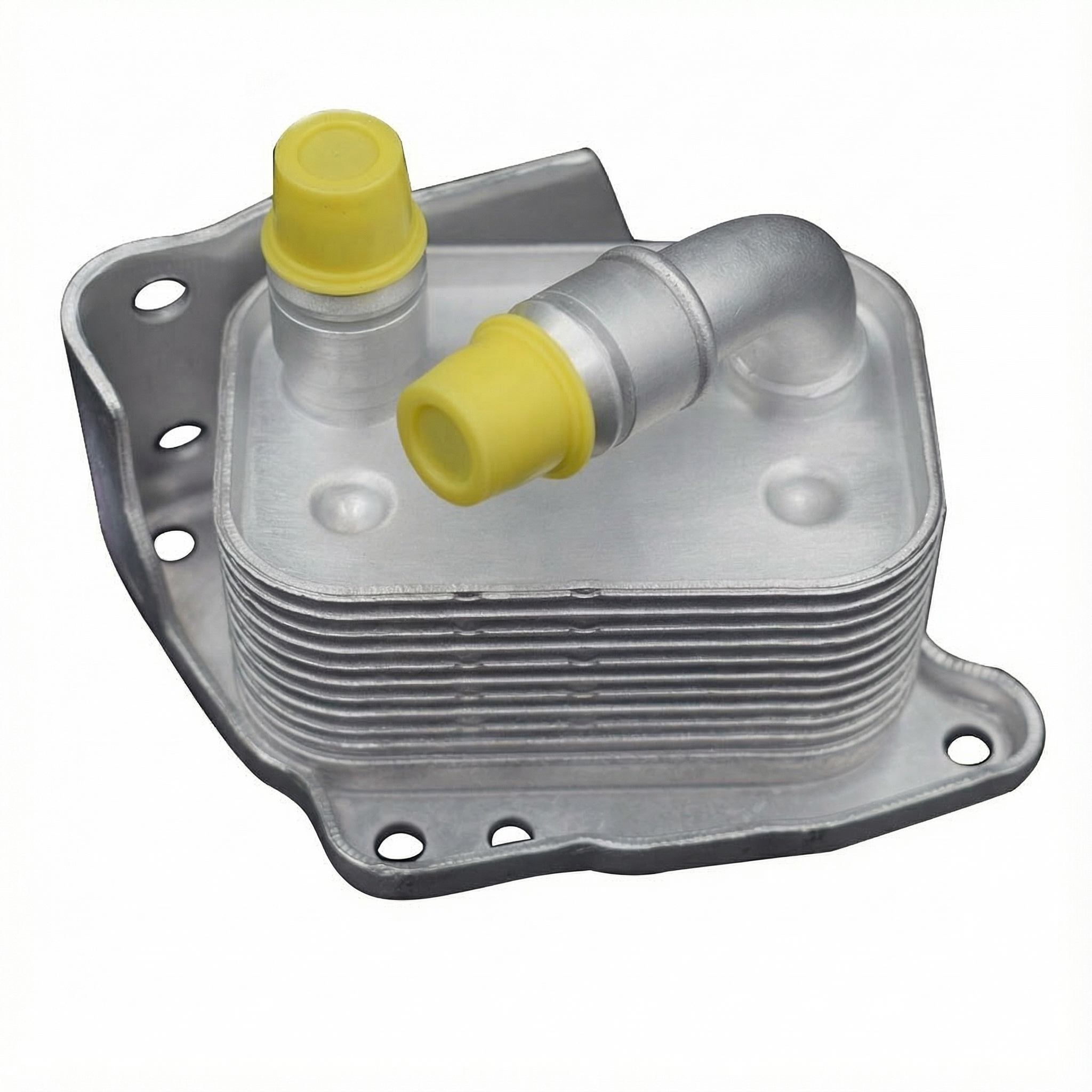
- Oil leaks near the oil cooler. Look for oil puddles under your car.
- Overheating engine. The engine temperature gauge may read higher than normal.
- Milky or foamy oil. This can indicate coolant mixing with the oil.
- Low oil pressure. The oil pressure warning light may come on.
- Visible damage to the oil cooler. Cracks or dents can cause leaks.
How to Test if This Part is the Problem
- Visual Inspection: Check the oil cooler for any visible signs of damage, like cracks or leaks.
- Pressure Test: A mechanic can perform a pressure test to see if the oil cooler is holding pressure.
- Oil Analysis: An oil analysis can detect coolant in the oil, which could indicate a leak in the oil cooler.
- Coolant System Pressure Test: A mechanic can test the cooling system for pressure loss, which could indicate a leak into the oil cooler.
Common Failure Causes for This Part
- Corrosion: Over time, the oil cooler can corrode, especially in areas with road salt.
- Physical Damage: Road debris can hit and damage the oil cooler.
- High Oil Pressure: Excessive oil pressure can stress the oil cooler and cause it to fail.
- Overheating: Repeated overheating can weaken the oil cooler's seals and connections.
- Age: Like any part, the oil cooler can wear out over time.