


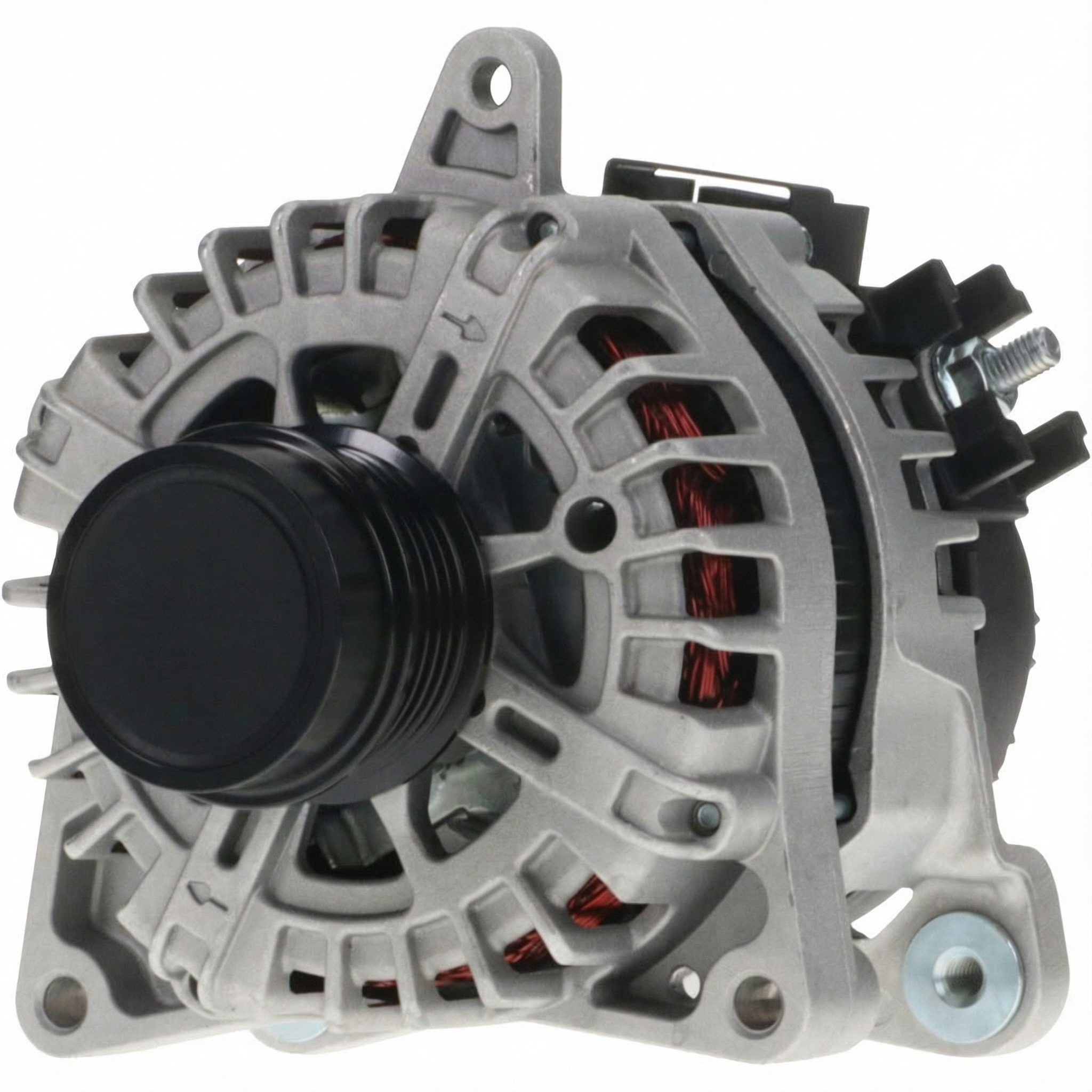

Warning Signs Your Alternator is Failing
- Dim or flickering headlights, especially at idle
- Warning light on the dashboard (battery symbol or "ALT")
- Slow or struggling engine start
- Stalling or difficulty keeping the engine running
- Unusual noises, such as whining or grinding, coming from the engine area
- Electrical problems, like power windows operating slowly or radio cutting out
How to Test if This Part is the Problem
- Visual Inspection: Check the alternator for physical damage, loose wires, or corrosion.
- Voltage Test: Use a multimeter to check the voltage at the battery terminals with the engine running. A healthy alternator should produce around 13.5 to 14.5 volts.
- Load Test: Have a professional mechanic perform a load test to see if the alternator can maintain voltage under a load.
- Battery Test: Rule out a bad battery by having it tested. A weak battery can mimic alternator problems.
Common Failure Causes for This Part
- Age and wear: Alternators have moving parts that eventually wear out.
- Overloading: Adding too many electrical accessories can strain the alternator.
- Heat: High engine temperatures can damage the alternator's components.
- Moisture and corrosion: Exposure to water and road salt can corrode the alternator's internal parts.
- Loose or corroded connections: Poor electrical connections can cause the alternator to work harder and fail prematurely.