


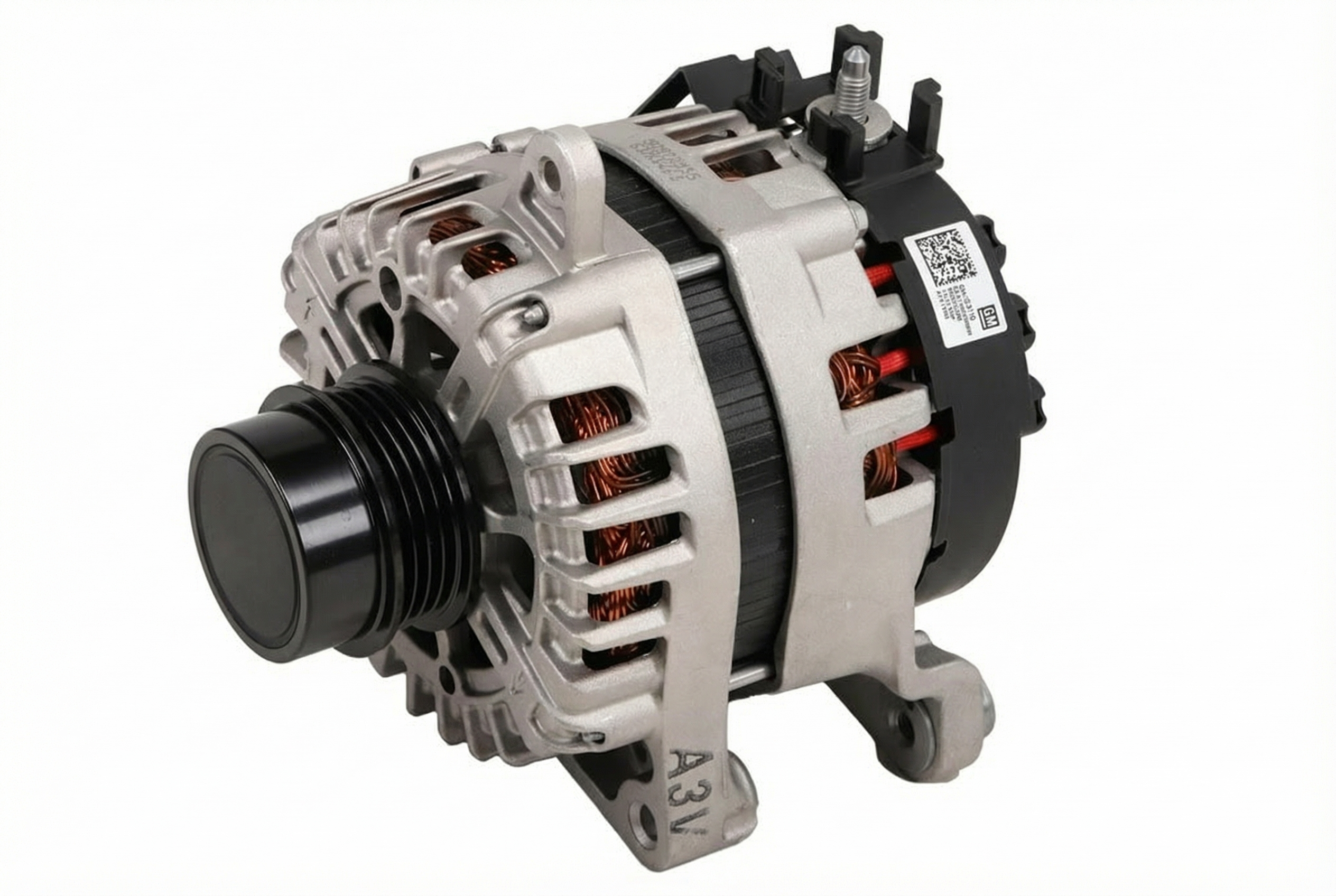

Warning Signs the Alternator is Failing
- Dim or flickering headlights, especially at idle.
- The battery warning light comes on in the dashboard.
- Difficulty starting the vehicle or a dead battery.
- Strange noises coming from the engine, like whining or grinding.
- Electrical issues, such as power windows operating slowly or the radio cutting out.
How to Test if This Part is the Problem
- Visual Inspection: Check the alternator for any visible damage, such as cracks, leaks, or loose connections.
- Voltage Test: Use a multimeter to check the battery voltage while the engine is running. It should be between 13.5 and 14.5 volts. If it's lower, the alternator may not be charging the battery properly.
- Load Test: Have a mechanic perform a load test on the alternator to see if it can handle the electrical demands of the vehicle.
- Belt Inspection: Ensure the serpentine belt is in good condition and properly tensioned. A loose or worn belt can cause the alternator to not function correctly.
- Battery Test: Rule out a bad battery as the source of the problem. A weak battery can mimic alternator issues.
Common Failure Causes for This Part
- Overheating due to a hot engine compartment.
- Normal wear and tear over time.
- Exposure to moisture and contaminants.
- A faulty voltage regulator.
- Excessive electrical load on the system.
- Loose or corroded wiring connections.