

C0045 on 2013-2017 Honda Accord: Causes and Fixes for Left Rear Wheel Speed Sensor Fault
On a 2013-2017 Honda Accord, code C0045 almost always means the left rear wheel speed sensor has failed. This will trigger the ABS, VSA, and sometimes power steering warning lights. Replacing the sensor is a common DIY fix, with the part costing around $40-$60 for an OEM sensor. Before replacing, check the wiring harness for damage, as it's another common failure point.
- Code C0045 on a 9th Gen Accord means the ABS and VSA systems are off due to a fault in the left rear wheel speed sensor circuit.
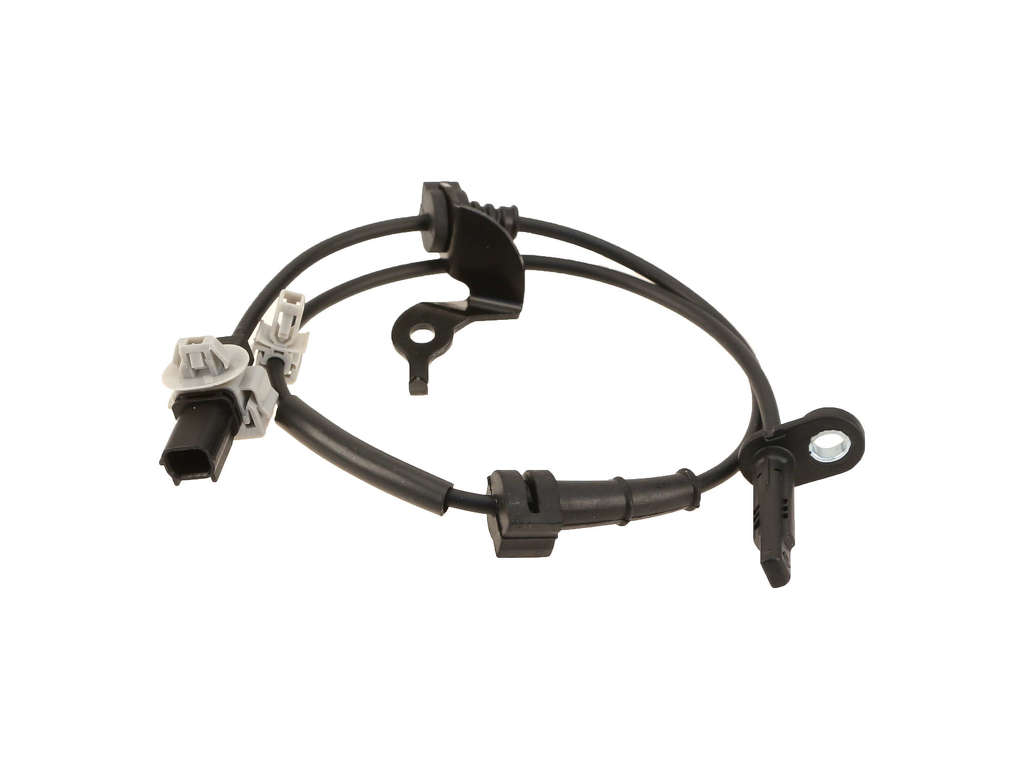
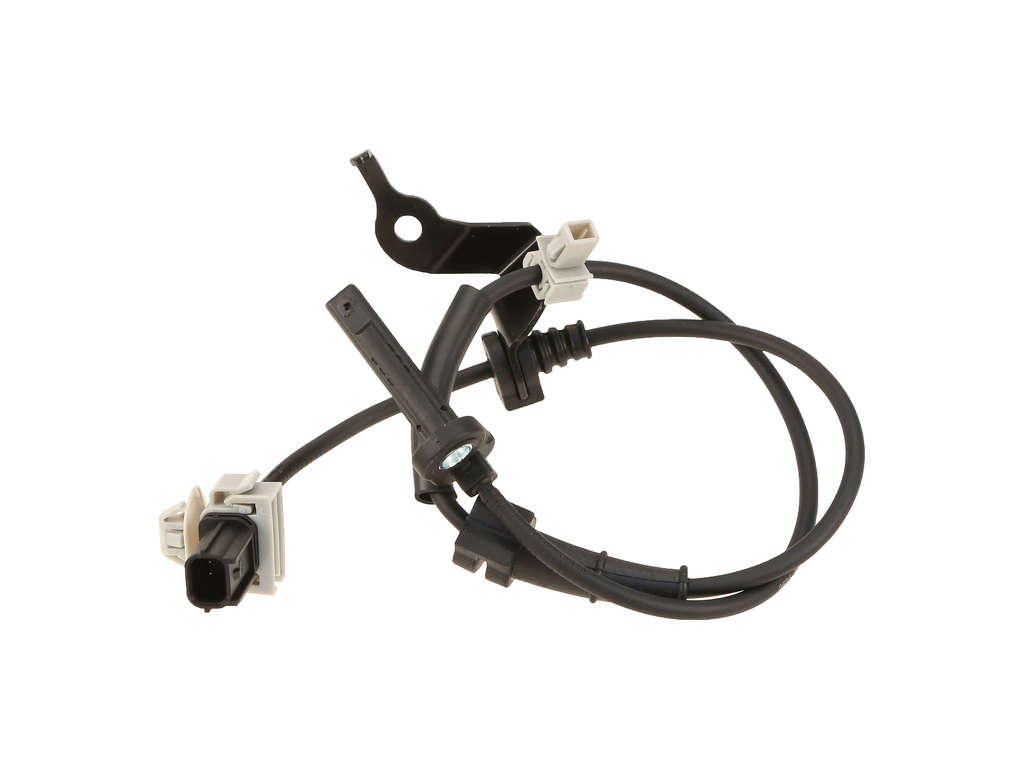
- The most likely fix is replacing the left rear wheel speed sensor (OEM Part # 57470-T2F-A01).
- Before buying parts, use a scanner to watch live wheel speed data to confirm the left rear sensor is not reporting correctly.
- Thoroughly inspect the sensor's wiring harness for damage and the wheel bearing for play or noise before replacing parts.
What's Unique About the 2013-2017 Honda Accord
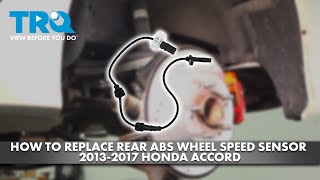
For the 9th generation Honda Accord, the C0045 code is a straightforward fault, typically pointing directly to the sensor itself or its wiring. Unlike some other vehicles where this code can be ambiguous, on the Accord it reliably indicates a problem in the left rear wheel speed circuit. The sensor is a single, accessible unit held by one 10mm bolt, making replacement a common DIY repair. 🎬 Watch: Step-by-step guide to replacing the rear wheel speed sensor. While a recall for a battery management sensor existed for 2013-2016 models which could cause various electrical faults, C0045 is most frequently a standalone issue with the wheel speed sensor. A failing wheel bearing can also trigger this code if the integrated magnetic encoder ring is damaged.
Symptoms You May Notice
- ABS warning light illuminated on the dashboard
- VSA (Vehicle Stability Assist) warning light illuminated
- Traction control light illuminated
- Brake system warning light may be on
- Power Steering (EPS) warning light illuminate
- Forward Collision Warning (FCW) system failure message may appear
- Anti-lock braking system is disabled
- Vehicle Stability Assist system is disabled
- Replacing the ABS/VSA module when the actual fault is a simple bad sensor or broken wire.
- Replacing the wheel bearing/hub when the sensor itself is the point of failure.
- Replacing the sensor when the wiring harness is chafed or the connector is corroded.
Most Likely Causes
- Failed Left Rear Wheel Speed Sensor 🔴 High Probability → Shop ABS Wheel Speed Sensor The sensor is exposed to harsh conditions (water, dirt, road salt, vibration) at the wheel hub, leading to internal electronic failure over time. This is the most common point of failure for this code.
How to confirm: Use a scan tool capable of reading ABS live data. Check if the left rear wheel speed reads 0 MPH or erratically while the other wheels show the correct speed. You can also test the sensor's internal resistance with a multimeter; an open or shorted circuit indicates failure. Passive sensors on similar vehicles have a resistance of ~500–1500 Ω.
Typical fix: Replace the left rear wheel speed sensor. It is held in by a single 10mm bolt and is accessible after removing the wheel.
Est. part cost: $25-$70 - Damaged Wiring or Corroded Connector 🟡 Medium Probability The wiring harness leading from the sensor can be damaged by road debris, improper servicing, or corrosion in the connector pins from moisture. Chafing against suspension components or the frame is a known issue on many vehicles.
How to confirm: Visually inspect the entire length of the sensor wire from the wheel hub into the wheel well. Unplug the connector and check for green or white corrosion, bent pins, or moisture. Perform a continuity test on the wires from the sensor connector to the ABS module if a wiring diagram is available.
Typical fix: Repair the broken or shorted section of wire. Clean the connector pins with an electrical contact cleaner or replace the connector pigtail if corrosion is severe.
Est. part cost: $5-$30 - Damaged Wheel Bearing / Tone Ring ⚪ Low Probability The magnetic encoder (tone ring) is integrated into the wheel bearing/hub assembly. A failing wheel bearing can generate excessive play, increasing the air gap between the sensor and the ring, or it can damage the magnetic ring itself, leading to an incorrect signal.
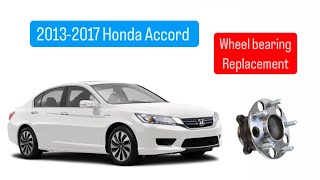
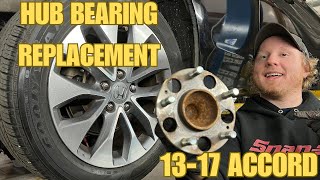
How to confirm: With the wheel raised, check for any play or roughness when spinning the wheel or rocking it at the 12 and 6 o'clock positions. A loud whirling or grinding sound while driving that changes with speed is a classic symptom of a bad wheel bearing. 🎬 See how to identify and replace a noisy rear wheel bearing. Visual inspection of the magnetic ring on the bearing may reveal metallic debris or damage.
Typical fix: Replace the entire rear wheel hub and bearing assembly.
Est. part cost: $70-$150
Rare But Worth Checking
- Faulty ABS/VSA Control Module: This is very rare. The module is usually the last component to be suspected. It typically throws multiple wheel speed sensor codes or communication codes (like 121-11), not just a single one. Only consider this after definitively ruling out the sensor, wiring, and hub. A reset by disconnecting the battery may temporarily resolve module-related glitches.
Diagnosis Steps
- Connect an OBD-II scanner capable of reading ABS/Chassis codes to confirm C0045 is present.
- Access the live data stream for the wheel speed sensors. Observe the readings from all four sensors while driving slowly or spinning the wheel by hand. Confirm that the Left Rear (LR) sensor reads 0 or an erratic value compared to the others.
- Safely raise and support the rear of the vehicle and remove the left rear wheel.
- Visually inspect the wheel speed sensor for any physical damage. It is located on the rear of the knuckle, held by a single 10mm bolt.
- Inspect the wiring harness leading from the sensor for any signs of chafing, breaks, or heat damage. Follow the wire to its connection point in the wheel well.
- Disconnect the electrical connector and inspect the pins for corrosion, moisture, or damage. Clean if necessary.
- If the wiring looks good, test the sensor. If you have a multimeter, you can check for resistance across the sensor's two pins. Compare the reading to the right rear sensor. An open circuit (infinite resistance) or short circuit (zero resistance) confirms a bad sensor.
- If the sensor and wiring test good, inspect the wheel bearing. Check for excessive play by rocking the wheel. Spin the wheel and listen for grinding or roughness, which indicates a failing bearing.
- After repair, clear the codes with the scanner and perform a test drive to ensure the warning lights do not return. A zero-point calibration may be required for the VSA system.
Parts You'll Likely Need
- Rear Wheel Speed Sensor
(OEM #57470-T2F-A01)— This is the most common point of failure for code C0045. The sensor is an electronic component that fails over time due to its exposed location. The same part number is used for the left and right rear positions.
Trusted brands: Honda (Genuine), Denso, Bosch, NGK/NTK, Standard Motor Products (SMP), TRQ
OEM price range: $40-$60
Aftermarket price range: $20-$50
Technical Service Bulletins (TSBs) & Recalls
- Honda TSB 17-069: Safety Recall: 2013–16 Accord Battery Management Sensor Replacement.
Platform-Specific Known Issues
- A recall was issued for the 12-volt battery management sensor on 2013-2016 Accords (Honda TSB 17-069). A faulty battery sensor can cause widespread electrical issues and trigger multiple warning lights. While not a direct cause of C0045, it's important to ensure this recall has been performed to maintain overall vehicle electrical health.
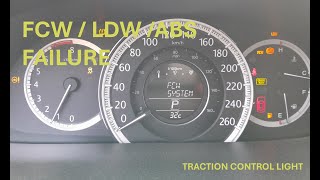
- A failing wheel bearing on this platform can cause a cascade of warning lights, including ABS, VSA, and FCW (Forward Collision Warning) failure, 🎬 Watch this video to fix ABS, FCW, and LDW malfunction lights. accompanied by a loud whirling sound when driving.
Mechanic-Grade Diagnostic Values
- Wheel Speed Sensor Type — expected: Active (Magneto-Resistive/Hall Effect). Failure: This sensor type produces a DC square wave signal. Testing resistance with a multimeter can be misleading; the definitive test is observing the signal with an oscilloscope or checking for power/ground/signal at the connector.
- Comparative Sensor Resistance — expected: The Ohm reading should be very close to the reading from the functioning sensor on the opposite side (Right Rear).. Failure: A reading of OL (Open Loop/infinite resistance) or 0 Ohms indicates a definitive internal short or break. A significant deviation from the known-good sensor also indicates failure.
Hidden / Shadow Codes Worth Checking
- 17-13: Left-Rear Wheel Speed Sensor Circuit Malfunction. This is a format used by some professional scan tools like Autologic for Honda vehicles. (see via Professional-grade scan tool (e.g., Autologic DrivePRO).)
- C0045-0F (Example): Erratic Signal. This indicates the module is receiving a signal, but it is unstable or illogical, often pointing to a damaged tone ring or intermittent wiring connection. (see via Advanced scan tool capable of reading manufacturer-specific symptom bytes.)
- C0045-06 (Example): Circuit Low Voltage / Open. This points specifically to an open wire, a short to ground, or a bad connection. (see via Advanced scan tool capable of reading manufacturer-specific symptom bytes.)
Scan Tool Commands That Help
- Honda Diagnostic System (HDS) or equivalent: VSA Sensor Neutral Position Memorization — Required after replacing the VSA modulator-control unit, performing a wheel alignment, or sometimes after clearing certain complex ABS/VSA codes to re-learn the sensor neutral positions. The path is typically ABS/VSA -> ADJUSTMENT -> ALL SENSOR.
- Autologic DrivePRO or equivalent: Pulser Test — This is a non-intrusive service function to test the wheel speed sensor's pulse count by rotating the wheel one full revolution, confirming if the sensor is generating a signal without a test drive.
Wiring & Ground Locations
- VSA Modulator-Control Unit — Located in the front, passenger side of the engine bay on 4-cylinder models.. This is the control module that receives the signal from the left rear wheel speed sensor and sets code C0045. All sensor wiring terminates here.
- G602 — Under the center rear of the vehicle.. This is a primary chassis ground point in the rear of the vehicle and could be the grounding point for the rear wheel speed sensor circuits. Corrosion or a loose connection here could cause erratic signals.
- G402 / G502 — Located on the left side of the dash, behind interior panels.. These are potential grounding points for the VSA modulator-control unit. A fault at these grounds could cause various VSA system errors, though it would likely trigger more than just a single sensor code.
- Manual VSA Calibration (Paperclip Method) — At the OBD-II Data Link Connector (DLC) under the driver's side dash.. As a non-scanner method to perform VSA neutral position memorization, a technician can short Pin 9 to Pin 4 (Ground) and follow a sequence of key-on and VSA button presses to complete the calibration after a repair.
OEM Part Supersession History
57470-T2F-A01→N/A— No supersession information was found during research. This part number appears to be consistent for the entire 2013-2017 generation for both rear wheels.
Model Year Variations Within This Range
- 2016-2017: The 2016 model year marked a significant mid-cycle refresh with updated styling, an available aluminum hood, retuned suspension, and the introduction of the Honda Sensing suite of safety features. However, the rear wheel speed sensor (PN 57470-T2F-A01) and its fundamental operation remained consistent across the entire 2013-2017 generation.
Diagnostic Flowchart
Other Known Issues on This Vehicle
Issues unrelated to this code that are worth knowing about as an owner of this generation:
- Starter Motor Failure / Grinding Noise 🟠 Medium — Common on both 4-cylinder and V6 models. V6 models (2013-2015) have a specific issue with grinding on startup. (Ref: Honda TSB 16-002 addresses the V6 grinding issue, requiring starter replacement and torque converter rotation.)
- VTC Actuator Rattle on Cold Start (4-Cylinder) 🟠 Medium — A very common issue on the 2.4L K24 engine, causing a loud 2-3 second rattle upon cold startup. While more famous on the prior generation, it still affects 2013-2017 models. (Ref: Honda TSB 16-012 addresses this for some Honda models; the issue is widely documented and can lead to timing chain damage if ignored.)
- Infotainment System Freezing/Crashing 🟡 Low — Widespread complaints, particularly on 2016-2017 models with Apple CarPlay/Android Auto. The system may freeze, crash, or become unresponsive. (Ref: No specific recall, but it is a well-documented issue. A class-action lawsuit was filed regarding the problem.)
- Weak Battery and Battery Sensor Failures 🟡 Low → Shop Vehicle Battery — The stock battery, especially in 4-cylinder models, is considered undersized and can fail prematurely, causing a host of electrical warnings. (Ref: Honda TSB 17-069 (Recall) for the battery management sensor on 2013-2016 models.)
- Torque Converter Judder (Automatic Transmission) 🟠 Medium — Some owners experience a shudder or judder while driving at steady speeds between 20 and 60 mph. (Ref: Honda TSB 17-017 describes the issue and a software update or torque converter replacement as the fix.)
Used vs. New Parts: Buying Guide for This Vehicle
When a used part is the smart pick: A used part is a reasonable choice for the wheel hub/bearing assembly if the original has failed. It is not recommended for the electronic wheel speed sensor itself, as the failure rate is high and the cost of a new aftermarket part is low.
Donor-vehicle mileage cap: roughly under 60000 miles for the part to have meaningful remaining life.
What to inspect on the donor part:
- For a used wheel hub, confirm there is no play or roughness when spinning the bearing by hand.
- Visually inspect the integrated magnetic encoder ring to ensure it is clean, free of metallic debris, and has no visible cracks or damage.
- Ensure the donor vehicle shows no signs of major collision damage in that corner of the car.
OEM-only on this vehicle (don't cheap out):
- VSA/ABS Control Module. Due to the need for precise software compatibility and programming, using a new OEM module is strongly advised if it is diagnosed as faulty.
Aftermarket brands forum-validated for this vehicle:
- Denso
- Bosch
- NGK/NTK
- Standard Motor Products (SMP)
Brands owners have reported issues with on this vehicle:
- Unbranded, 'white-box' sensors from online marketplaces are frequently reported in forums to be dead-on-arrival or fail prematurely.
Documented NHTSA Reports
While C0045 is a standard wheel speed sensor code for Honda, cross-manufacturer records provide additional context on how this fault manifests. For instance, NHTSA ODI #11219167 describes a case where the ABS stability code C0045 was triggered by a broken left rear wheel speed sensor encoder ring, requiring replacement of both the sensor and the rear hub assembly. Similarly, NHTSA ODI #11165895 notes a service center report for code C0045 that recommended replacing the left rear hub bearing assembly to resolve intermittent warning messages. In some cases, the code may appear alongside other system faults; NHTSA ODI #11399819 reports C0045 appearing in conjunction with fuel level sensor codes P0463 and P069E. Furthermore, NHTSA ODI #10382746 illustrates a scenario where C0045 was one of several codes (including C0057 and C0231) that appeared during a powertrain event, which a dealer initially addressed by erasing codes and re-programming software.
Real Owner Stories
Aggregated from forums and TSBs cited above. Mileages and costs reflect what owners reported in those sources.
2013-2017 Honda Accord
Symptoms: ABS, VSA, and FCW (Forward Collision Warning) failure lights all illuminated simultaneously, accompanied by a loud whirling sound while driving that changed with vehicle speed.
What fixed it: Replacement of the rear wheel hub and bearing assembly because the integrated magnetic encoder (tone ring) was damaged.
Source hint: Reddit r/AskMechanics
2015-2020 Acura TLX
Symptoms: The vehicle triggered a C0045 code for the left rear wheel speed sensor, showing the same ABS/VSA warning lights as the 9th Gen Accord.
What fixed it: Replacement of the left rear wheel speed sensor.
Source hint: Platform mates section (2015-2020 Acura TLX)
Related OBD-II Codes
Frequently Asked Questions
Does the battery sensor recall (TSB 17-069) affect my 2013-2016 Honda Accord's ABS system?
My 2013 Accord V6 makes a grinding noise on startup; is this related to the C0045 code?
Can a bad wheel bearing cause the C0045 code on my 2017 Accord?
Why is my Forward Collision Warning (FCW) light on when the code is for a rear wheel sensor?
Is there a TSB for the VTC actuator rattle on my 2014 Accord 2.4L?
Should I buy a used wheel speed sensor for my Accord to save money?
Helpful Videos

We Have This Part in Stock


The information in this article is provided for general reference and educational purposes only. Vehicle specifications, procedures, and part compatibility can vary by production date, trim level, and region. Always consult your vehicle's factory service manual and verify part numbers before purchasing or performing repairs. Safety-critical components such as airbags, seat belts, and braking systems should be installed by a qualified professional.
- Honda Accord:
- 🧭 Diagnostic Flowchart
- 🎬 Helpful Videos
- 🛍️ Shop This Part
- What's Unique About the 2013-2017 Honda Accord
- Symptoms You May Notice
- Most Likely Causes
- Rare But Worth Checking
- Diagnosis Steps
- Parts You'll Likely Need
- Technical Service Bulletins (TSBs) & Recalls
- Platform-Specific Known Issues
- Mechanic-Grade Diagnostic Values
- Hidden / Shadow Codes Worth Checking
- Scan Tool Commands That Help
- Wiring & Ground Locations
- OEM Part Supersession History
- Model Year Variations Within This Range
- Other Known Issues on This Vehicle
- Used vs. New Parts: Buying Guide for This Vehicle
- Documented NHTSA Reports
- Real Owner Stories
- 2013-2017 Honda Accord
- 2015-2020 Acura TLX
- Related OBD-II Codes
- Frequently Asked Questions
- 🎟️ Get 5% Off