

C0050 on 2011-2018 Audi A6: Right Rear Wheel Speed Sensor Causes and Fixes
On a 2011-2018 Audi A6, code C0050 is almost always caused by a failed right rear ABS wheel speed sensor. This will disable your ABS and stability control. Expect to pay $25-$75 for an aftermarket sensor or $100-$150 for an OEM part, but be aware the plastic sensor often seizes in the aluminum wheel hub due to galvanic corrosion and breaks during removal, complicating the repair.
- Code C0050 on your A6 means the right rear wheel speed sensor circuit has a fault, which disables your ABS and stability control systems.
- The most likely fix is replacing the right rear ABS sensor.
- Before buying parts, inspect the sensor's wiring for damage and check the magnetic ring on the wheel hub for metallic debris.
- Be prepared for the old plastic sensor to break during removal; this is a very common complication that makes the job harder.
- Always use a scan tool that can read live data to confirm which wheel sensor is faulty before starting the repair.
What's Unique About the 2011-2018 Audi A6
The 2011-2018 Audi A6 (C7 generation) shares its MLB platform and many components with the Audi A7. A very common issue on this platform is the plastic body of the wheel speed sensor seizing inside the aluminum wheel hub (knuckle) due to galvanic corrosion. This often causes the sensor to break during removal, turning a simple one-bolt replacement into a more difficult job that may require drilling out the remaining plastic piece.
Symptoms You May Notice
- ABS warning light is on
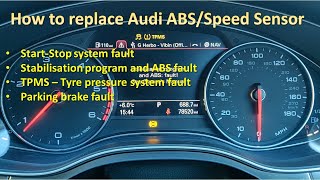
- Electronic Stability Program (ESP/ESC) or traction control warning light is on ('Stabilisation program fault')
- Tire Pressure Monitoring System (TPMS) fault message
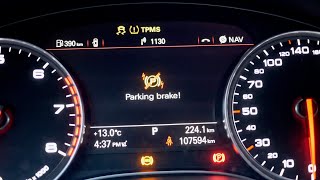
- Parking brake fault message may appear
- Cruise control may not function
- Start/Stop system fault message
- Replacing the ABS control module before thoroughly testing the sensor, wiring, and wheel hub encoder ring.
- Replacing the wheel hub/bearing when only the sensor was bad or the encoder ring was dirty.
- Repeatedly replacing the ABS sensor when the underlying cause is a damaged wiring harness or a faulty wheel bearing encoder ring.
Most Likely Causes
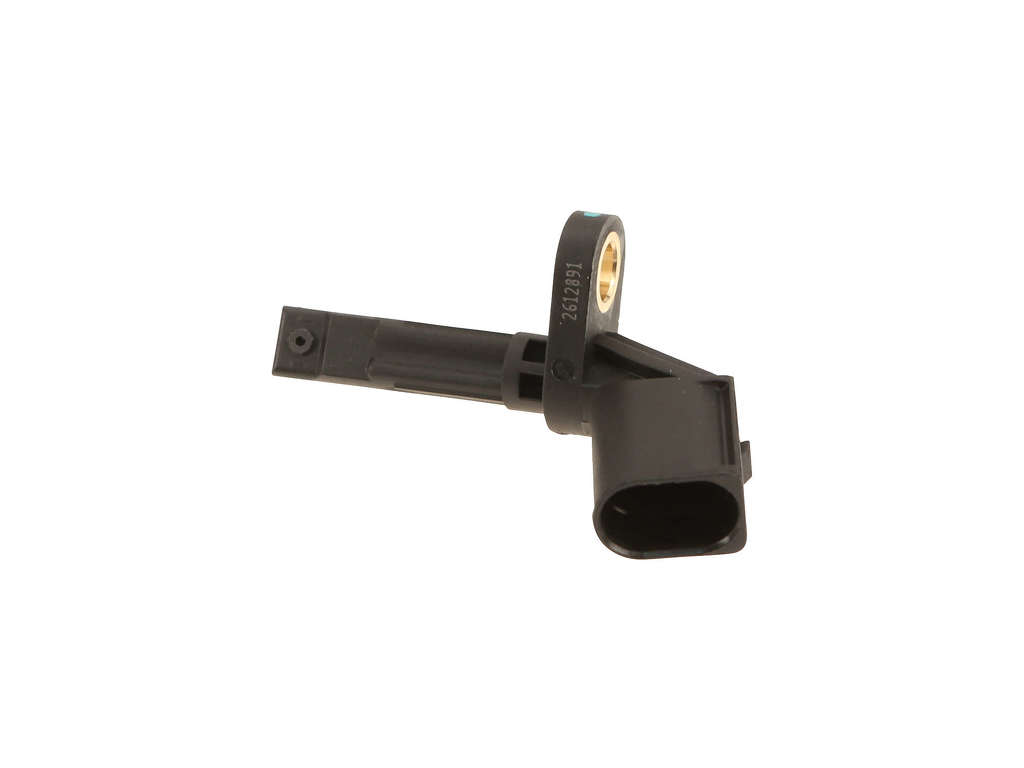
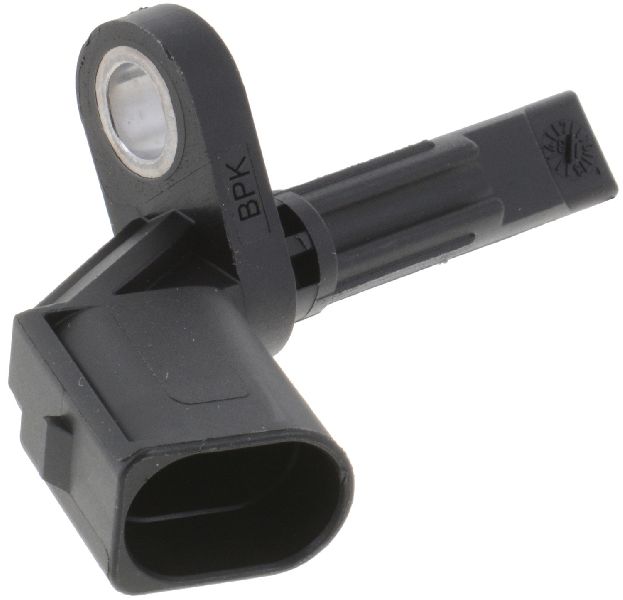
- Failed Right Rear Wheel Speed Sensor 🔴 High Probability → Shop ABS Wheel Speed Sensor The sensor is exposed to road debris, water, and salt, leading to internal electronic failure over time. The plastic sensor body also tends to seize in the aluminum wheel hub due to corrosion, making it prone to breaking upon removal.
How to confirm: Use a scan tool (like VCDS for Audi) to monitor live data from all four wheel speed sensors while driving. The right rear sensor will show a speed of 0 MPH or an erratic signal while the others read correctly. The sensor is an active Hall-effect type and should not be tested for resistance.
Typical fix: Replace the right rear wheel speed sensor. 🎬 Watch: A step-by-step walkthrough of the sensor replacement process. The old sensor may need to be carefully drilled out if it breaks during removal.
Est. part cost: $25-$150 - Damaged Wiring or Connector 🟡 Medium Probability The wiring harness runs near the suspension and wheel, where it is vulnerable to damage from road debris, chafing from suspension movement, or corrosion at the connector pins. The first few inches of wire from the sensor are the most common trouble spot.
How to confirm: Visually inspect the wiring harness from the sensor to where it enters the car body for any cuts, abrasions, or swelling. Unplug the connector and check for green or white corrosion on the pins. A continuity test with a multimeter can confirm an open or short in the circuit.
Typical fix: Repair the damaged section of wire using solder and heat-shrink tubing. If the connector is corroded, it may need to be cleaned with electrical contact cleaner or replaced with a pigtail kit.
Est. part cost: $10-$50 - Debris on Magnetic Encoder Ring ⚪ Low Probability The wheel bearing assembly has an integrated magnetic ring that the sensor reads. Metallic brake dust and road grime can accumulate on this ring, disrupting the signal.
How to confirm: After removing the wheel speed sensor, visually inspect the magnetic ring on the back of the wheel hub. Look for a build-up of metallic paste or debris. In some owner experiences, cleaning the ring only provides a temporary fix, suggesting the underlying issue is a failing bearing.
Typical fix: Carefully clean the magnetic encoder ring with a soft brush and brake cleaner. Be careful not to damage the bearing seal. If the code returns quickly, the wheel bearing assembly itself is likely faulty.
Est. part cost: $0-$10
Rare But Worth Checking
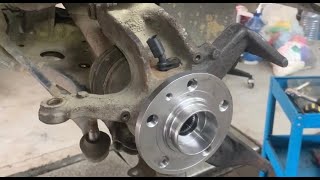
- Failed Wheel Hub / Bearing Assembly: → Shop Hub Assembly The magnetic encoder ring is integrated into the wheel hub. If the ring itself is cracked, delaminated, or damaged, or if the bearing has excessive play, the entire hub and bearing assembly must be replaced. 🎬 Watch: How to replace the wheel bearing and sensor together. This is often the root cause if replacing the sensor and cleaning the ring doesn't solve the problem.
- Failed ABS Control Module: → Shop ABS Control Module In very rare instances, the ABS module itself can fail internally on the specific circuit for the right rear wheel. This is the least likely cause and should only be considered after all other possibilities have been ruled out by a professional.
Diagnosis Steps
- Connect an Audi-compatible scan tool (like VCDS) to the OBD-II port.
- Read fault codes from the '03 - ABS Brakes' module and confirm C0050 is present.
- Access live data (Measuring Blocks or Advanced Measuring Blocks in VCDS) for all four wheel speed sensors.
- Drive the vehicle slowly in a straight line (above 5-10 mph) and observe the speed readings. Confirm that the 'Right Rear' sensor reads 0 or jumps erratically while the other three provide a steady, matching reading.
- Safely lift and support the vehicle and remove the right rear wheel.
- Locate the ABS sensor on the wheel hub and its wiring connector in the wheel well. Inspect the wiring harness for any visible damage, chafing, or corrosion at the connector.
- Unplug the sensor and remove the single Allen bolt (typically 5mm) holding it in place. Spray penetrating fluid around the base of the sensor and let it soak.
- Carefully attempt to remove the sensor by twisting it with pliers. Be prepared for it to be seized and break.
- If the sensor breaks, carefully drill out the remaining plastic. Start with a small pilot bit and progressively use larger bits, finishing with a 10mm bit for the ~11mm hole. 🎬 See how to safely drill out a stuck or broken sensor. Use a right-angle drill for better access and be cautious not to damage the hub or the magnetic encoder ring below.
- Once the sensor is out, inspect the hole and the magnetic encoder ring on the hub for heavy contamination or damage. Clean if necessary.
- If the sensor, wiring, and encoder ring appear fine, use a multimeter to test for reference voltage and ground at the vehicle-side harness connector (with the ignition on).
- After repair, clear the fault codes with the scan tool and perform a test drive to ensure the warning lights do not return.
Parts You'll Likely Need
- Rear Wheel Speed Sensor
(OEM #WHT003858 (or revision WHT003858C))— This sensor is the most frequent point of failure for the C0050 code due to its exposed location and electronic nature.
Trusted brands: Bosch, Hella, NTK, Febi-Bilstein
OEM price range: $100-$150
Aftermarket price range: $25-$75 - Rear Wheel Hub and Bearing Assembly
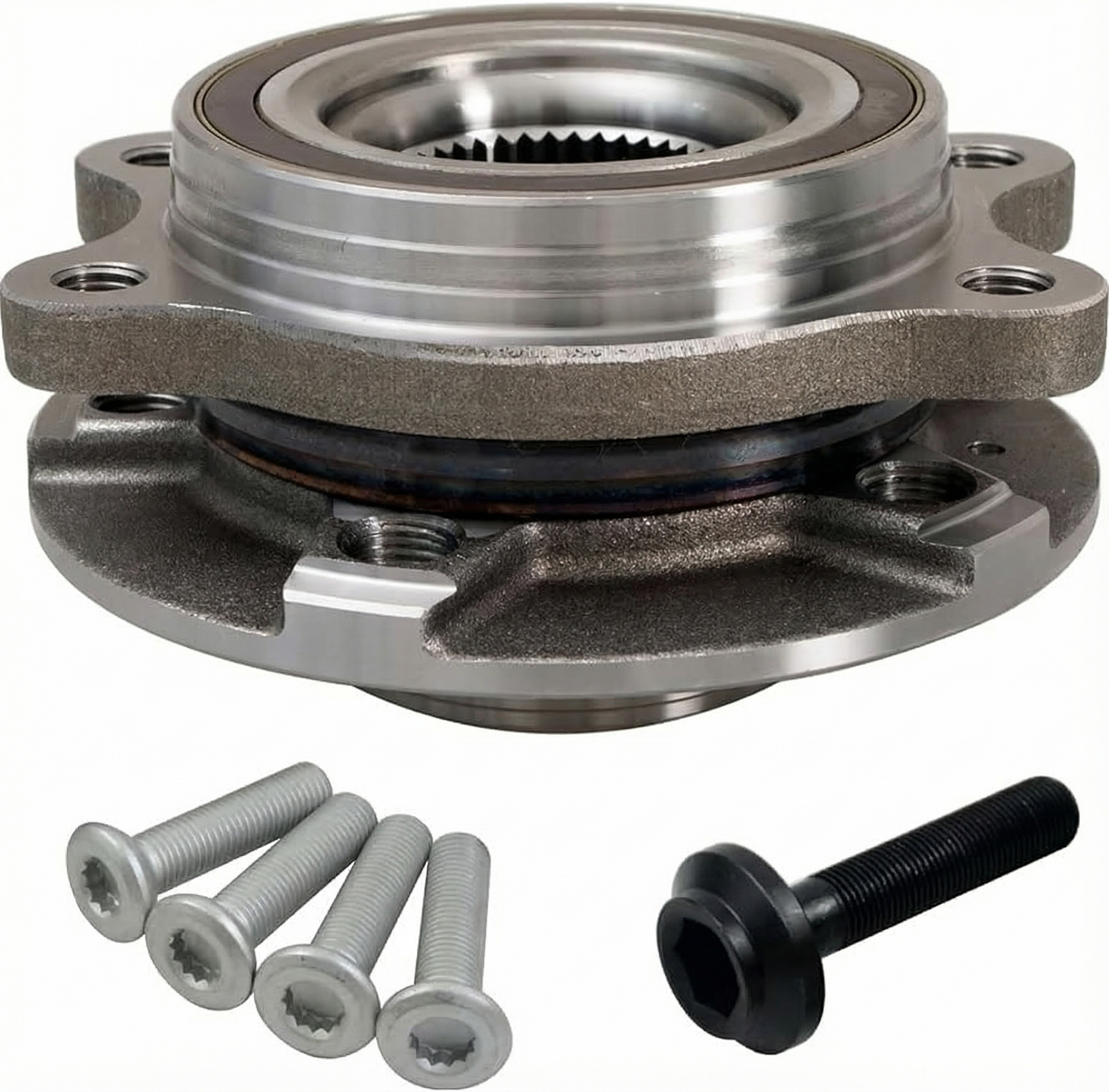
(OEM #8W0598611B (FWD Models) / Verify by VIN for Quattro)— Only needed if the integrated magnetic encoder ring is damaged, or if the bearing itself has failed, causing the C0050 code. This is the next logical step if a new sensor and clean wiring do not resolve the issue.
Trusted brands: SKF, FAG, MOOG, Vaico
OEM price range: $200-$300
Aftermarket price range: $100-$180
Related Codes That Often Appear With This One
- U0415 — This code for 'Invalid Data Received From ABS Control Module' can be set in other modules (like power steering or the ECU) because they rely on the wheel speed data from the ABS system. When the C0050 fault occurs, the ABS module stops sending reliable data. A similar pattern was noted in NHTSA ODI #11228687, where C0050 appeared alongside U0415 and other communication codes on a different vehicle platform.
- C0045 — This is the code for the Left Rear Wheel Speed Sensor. Seeing both codes together could indicate a shared wiring harness problem or that both sensors are failing around the same time due to age.
Platform-Specific Known Issues
- The plastic ABS sensor frequently seizes in the aluminum rear wheel hub due to galvanic corrosion, requiring it to be broken and drilled out for removal. Applying penetrating fluid beforehand and working carefully is crucial.
- A real-world owner experience on the Audi Owners Club forum showed a vehicle that had the sensor replaced twice without fixing the issue. The problem was temporarily resolved by cleaning the hub, but ultimately pointed to a faulty wheel bearing/encoder ring, which required hub replacement.
Documented NHTSA Reports
While the C0050 code on the Audi A6 typically refers to the right rear wheel speed sensor, it is important to note how other manufacturers define this code. For example, NHTSA ODI #10763888 describes a case where C0050 identified a faulty power steering control module (PSCM) on a different make, requiring the replacement of the entire steering column. Additionally, NHTSA ODI #11649367 notes that the code can be set when extra brake fluid is required to return caliper piston contact to the brake pad after service, disabling the ABS and supporting systems. Another report, NHTSA ODI #11693418, mentions C0050-00 appearing when rear brake pads, rotors, and adapter plates required replacement.
Mechanic-Grade Diagnostic Values
- Sensor Type Identification — expected: Active Hall-effect sensor.. Failure: Performing a resistance (ohms) test on this type of sensor is an invalid procedure and will not yield useful results.
- Active Sensor Voltage Test (Oscilloscope) — expected: A clean square wave signal that increases in frequency as the wheel is spun. This is the most definitive test.. Failure: A missing, erratic, or distorted waveform indicates a faulty sensor or damaged encoder ring.
- Active Sensor Voltage Test (Multimeter) — expected: With the connector plugged in, ignition on, and multimeter probes back-probed into the two wires, the voltage should fluctuate as the wheel is slowly turned.. Failure: No voltage change or a steady, unchanging voltage indicates a failed sensor or circuit issue.
Hidden / Shadow Codes Worth Checking
- C0050 00: General circuit malfunction, indicating a possible open circuit, short to ground, or high resistance in the sensor circuit. (see via Advanced scan tools like VCDS or dealership equipment (ODIS) can display these sub-codes.)
- C0050 5A: Signal not plausible, meaning the signal is inconsistent with other wheel speed sensors (e.g., reading 20 MPH when others read 5 MPH). (see via Advanced scan tools like VCDS or dealership equipment (ODIS) can display these sub-codes.)
- C0050 18: Low signal amplitude, indicating a weak or erratic signal from the sensor, which could be caused by a failing sensor, excessive air gap, or debris on the encoder ring. (see via Advanced scan tools like VCDS or dealership equipment (ODIS) can display these sub-codes.)
Scan Tool Commands That Help
- VCDS (or similar advanced tool): ABS Module Long Coding — Only necessary if replacing the entire ABS control module. The long coding from the original module must be copied and pasted into the replacement module to ensure it's configured for the vehicle's specific options.
- VCDS (or similar advanced tool): Security Access (Login: 40168) — Required after coding a replacement ABS module to enable Basic Settings for various sensors.
- VCDS (or similar advanced tool): Basic Settings (Groups 060, 063, 066, etc.) — After installing and coding a replacement ABS module, basic settings must be performed for the Steering Angle Sensor (G85), Lateral/Longitudinal Acceleration Sensors (G200/G251), and Brake Pressure Sensor (G201) to calibrate them to the new module.
Wiring & Ground Locations
- ABS Module Ground Point — On the vehicle frame, directly below the ABS pump/module assembly in the engine bay.. A corroded or loose ground connection at this point can cause intermittent communication loss with the ABS module, leading to a variety of ABS/ESP faults, including C0050. This fault can be missed by simple continuity tests and may only appear under vibration.
- Right Rear Wheel Speed Sensor Connector — In the right rear wheel well, where the sensor pigtail connects to the main body harness.. This 2-pin connector is a common point for corrosion or wire damage due to its exposed location. Checking for power and a clean signal here is a primary diagnostic step.
Real Owner Repair Stories
- Ross-Tech Forums user 'marvin1980' (Audi A6 C7 (year not specified)) — Intermittent ABS/ESP communication errors, often triggered by rough roads. The ABS module would go offline. Disconnecting and reconnecting the module connector would temporarily fix it.
❌ Tried (didn't work) Rebuilding the ABS module connector with new contacts., Bypassing the main connector with spade connectors., Replacing the ABS module. The problem returned after about a week.
✅ What actually fixed it The problem was a bad ground connection. The two brown negative wires from the ABS connector were unbolted from the frame, cleaned with contact spray, and re-secured. A multimeter test showed resistance spiking to 175 ohms when the ground cable was moved, revealing the intermittent connection.
When the Usual Fixes Don't Work
- While the sensor itself is the most common failure, do not assume it is the cause without verification. In one documented case, a technician replaced the ABS module, but the problem returned. The final fix was not a part replacement, but cleaning the main ground point for the ABS module located on the frame below the unit. This highlights that wiring and grounding issues can perfectly mimic component failure and should be thoroughly investigated, especially for intermittent faults.
OEM Part Supersession History
1K0927808→WHT003858— Part number rationalization and revision by VAG.WHT003858→WHT003858C— Latest revision of the part.
Heads up: WHT003858C is the current, correct replacement for WHT003858 for this application and is fully compatible.
Diagnostic Flowchart
Other Known Issues on This Vehicle
Issues unrelated to this code that are worth knowing about as an owner of this generation:
- 3.0T Water Pump & Thermostat Failure 🔴 High — Common, especially on earlier 2012-2013 models. Can occur anywhere from 50,000 to 100,000 miles. Failure can lead to overheating. (Ref: Audi TSB 01 16 68 (2040491/4) addresses a related 'Coolant System: Fault' message due to a faulty thermostat or software on 2012-2015 models.)
- 2.0T Timing Chain Tensioner Failure 🔴 High — A well-known issue on pre-2015 2.0T TFSI engines. The original tensioner can fail, allowing the timing chain to jump teeth, which can cause catastrophic engine damage.
- Active Engine Mount Failure 🟠 Medium — The fluid-filled active engine mounts are a common failure item, often leaking or collapsing between 60,000 and 100,000 miles, resulting in a harsh vibration at idle.
- 3.0T PCV System Failure 🟠 Medium — The PCV (Positive Crankcase Ventilation) valve, located under the supercharger, can fail, causing a loud whistling noise, high idle, lean codes, and increased oil consumption. Replacement is labor-intensive.
Used vs. New Parts: Buying Guide for This Vehicle
When a used part is the smart pick: A used ABS sensor is not recommended as it is a high-failure, low-cost wear item. A used ABS Control Module is a reasonable choice to save significant money over a new unit, provided you have access to a professional shop for coding. A used wiring harness pigtail from a salvage yard is also a smart repair for a damaged connector.
Donor-vehicle mileage cap: roughly under 100000 miles for the part to have meaningful remaining life.
What to inspect on the donor part:
- For an ABS module, ensure the part number matches your original module EXACTLY, including the letters at the end.
- Inspect all connectors for signs of corrosion, bent pins, or physical damage.
- For wiring pigtails, ensure the insulation is not brittle or cracked and that there is ample wire length for splicing.
OEM-only on this vehicle (don't cheap out):
- ABS Control Module: Strongly recommended to use a genuine OEM part (either new or used) due to 'Component Protection' software that locks the module to the original vehicle's VIN. Aftermarket modules are generally not available or viable.
Aftermarket brands forum-validated for this vehicle:
- Bosch
- ATE
- Hella
- VDO
- Delphi
- NTK
Brands owners have reported issues with on this vehicle:
- Unbranded, low-cost sensors from online marketplaces have a higher reported incidence of premature failure or incorrect signal output, leading to the code returning shortly after repair.
Real Owner Stories
Aggregated from forums and TSBs cited above. Mileages and costs reflect what owners reported in those sources.
2012 Audi A7 3.0T
Symptoms: ABS warning light, Electronic Stability Program (ESP) fault, 'Stabilisation program fault' message, TPMS fault, parking brake fault, and loss of cruise control and Start/Stop functionality.
What fixed it: Replacement of the right rear wheel speed sensor; the old sensor was seized and had to be drilled out of the hub using a right-angle drill and a 10mm bit.
Source hint: DIY it ALL (YouTube): 'How To Replace Speed/ABS Sensor on Audi A7 4G & Audi A6 C7'
Audi A6 (C7 Platform)
Symptoms: The owner replaced the ABS sensor twice, but the fault persisted. Cleaning the hub area provided a temporary fix for about a month before the error returned.
What fixed it: The issue was ultimately attributed to a faulty wheel bearing/encoder ring, requiring a full wheel hub replacement.
Source hint: Audi Owners Club (UK): 'Abs sensor type problem'
Related OBD-II Codes
Frequently Asked Questions
Why does my Audi A6 show a 'Stabilisation program fault' and 'TPMS fault' at the same time for code C0050?
Can I just test the resistance of the right rear sensor with a multimeter?
Is there a TSB for the thermostat or water pump issues mentioned in the known issues section?
Why is the right rear sensor so difficult to remove from the hub?
I replaced the sensor but C0050 returned; what else could be wrong on my A6?
Helpful Videos

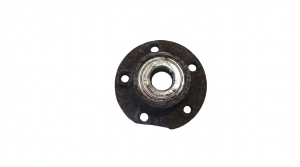
Used OEM Parts in Stock
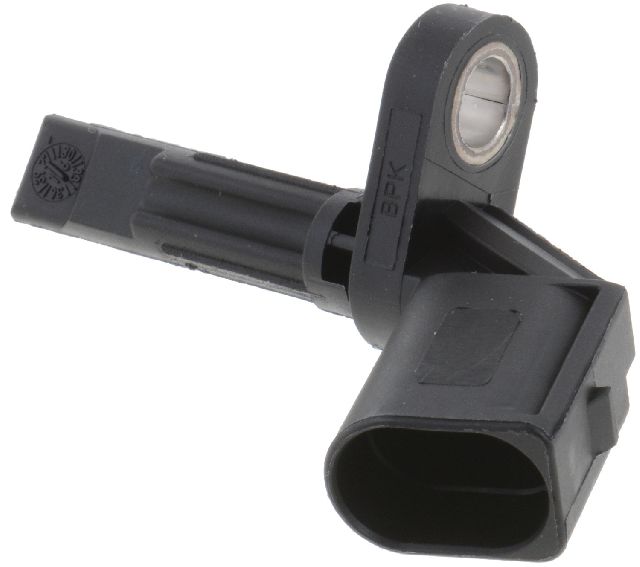
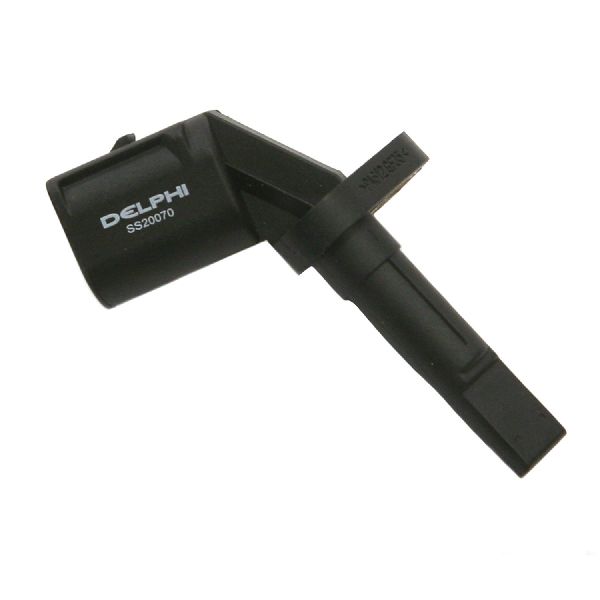
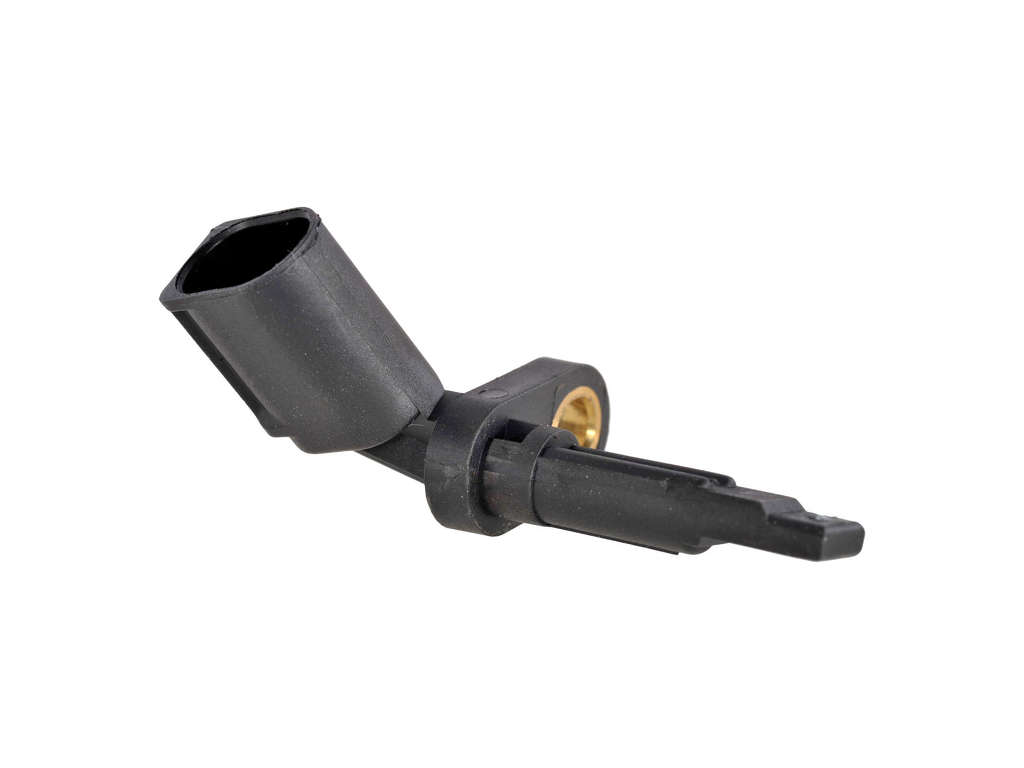
New Aftermarket Parts Available


The information in this article is provided for general reference and educational purposes only. Vehicle specifications, procedures, and part compatibility can vary by production date, trim level, and region. Always consult your vehicle's factory service manual and verify part numbers before purchasing or performing repairs. Safety-critical components such as airbags, seat belts, and braking systems should be installed by a qualified professional.
- Audi A6:
- 🧭 Diagnostic Flowchart
- 🎬 Helpful Videos
- 🛍️ Shop This Part
- What's Unique About the 2011-2018 Audi A6
- Symptoms You May Notice
- Most Likely Causes
- Rare But Worth Checking
- Diagnosis Steps
- Parts You'll Likely Need
- Related Codes That Often Appear With This One
- Platform-Specific Known Issues
- Documented NHTSA Reports
- Mechanic-Grade Diagnostic Values
- Hidden / Shadow Codes Worth Checking
- Scan Tool Commands That Help
- Wiring & Ground Locations
- Real Owner Repair Stories
- When the Usual Fixes Don't Work
- OEM Part Supersession History
- Other Known Issues on This Vehicle
- Used vs. New Parts: Buying Guide for This Vehicle
- Real Owner Stories
- 2012 Audi A7 3.0T
- Audi A6 (C7 Platform)
- Related OBD-II Codes
- Frequently Asked Questions
- 🎟️ Get 5% Off