

C0050 on 2003-2009 Mercedes-Benz E-Class: Right Rear Speed Sensor Fault Causes and Fixes
Code C0050 on a W211 E-Class almost always means the right rear ABS wheel speed sensor has failed. This will disable your ABS, ESP, and cruise control, and may make power steering feel heavy. Replacing the sensor is the typical fix, costing about $25-$80 for an aftermarket part or $100-$150 for an OEM part. The sensor often seizes in the hub, complicating removal.
- C0050 means your right rear wheel speed sensor has a problem, which will disable your ABS and ESP.
- Expect ABS and ESP lights on your dash and potentially heavy steering.
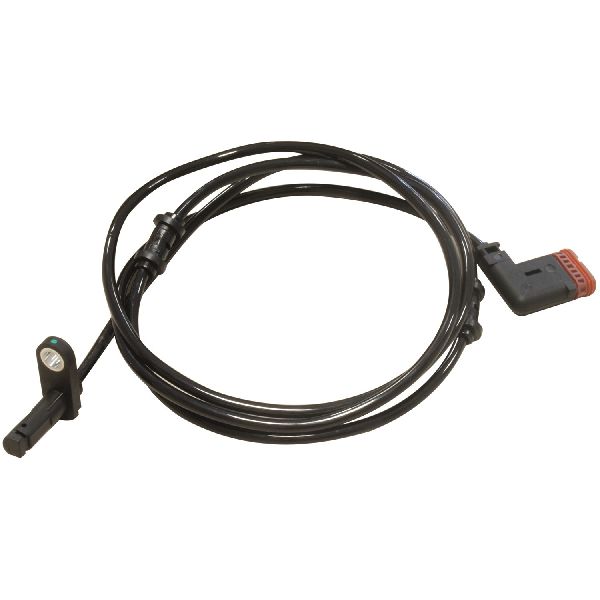
- The most likely fix is replacing the right rear wheel speed sensor (Part # A2115403017).
- Be prepared for the old sensor to be seized in the hub, which can make the job much more difficult.
- Before buying parts, use a scanner that can read live data to confirm the right rear sensor is the one not reporting speed.
What's Unique About the 2003-2009 Mercedes-Benz E-Class
The W211 E-Class relies heavily on wheel speed data for its sophisticated safety systems, including ABS, ESP, and on earlier models (2003-2006), the Sensotronic Brake Control (SBC). A failure of a single wheel speed sensor will cause multiple warning lights and a noticeable loss of power steering assist, as the variable-assist steering goes into a fail-safe (heavier) mode. While the sensor itself is a common failure point, owners frequently report the sensor becomes seized in the rear aluminum hub, complicating what should be a simple replacement. On models with SBC, brake fluid must be changed every two years and the battery kept fully charged to ensure proper system function, as its operation is dependent on good electrical health.
Symptoms You May Notice
- ABS warning light illuminated
- ESP (Electronic Stability Program) warning light illuminated
- Brake warning message on the dashboard (especially on cars with SBC, may show in red)
- Loss of power steering assist, making steering feel heavy
- Cruise control may be inoperative
- ABS system fails to activate during hard braking (wheels lock up)
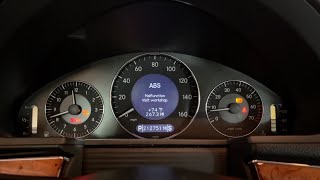
- "Visit Workshop" message on the instrument cluster
- Replacing the steering angle sensor. A fault in a wheel speed sensor can sometimes trigger a secondary, non-related code for the steering angle sensor. Always address the wheel speed sensor code first. 🎬 Watch: Troubleshooting and replacing a faulty wheel speed sensor
- Replacing the wrong wheel speed sensor. It is critical to use a scanner to confirm which corner is faulting rather than guessing.
Most Likely Causes
- Failed Right Rear Wheel Speed Sensor 🔴 High Probability → Shop ABS Wheel Speed Sensor The sensor is exposed to harsh conditions (water, dirt, heat, road salt) at the wheel hub, leading to eventual electronic failure or corrosion. They are a common wear item across many Mercedes models.
How to confirm: Use a Mercedes-specific scan tool (like Xentry/DAS, iCarsoft, Autel) to view live data for all four wheel speed sensors while driving. The right rear sensor will show a reading of 0 MPH or an erratic signal compared to the other three. A multimeter can also be used to test the sensor's resistance and AC voltage output while spinning the wheel.
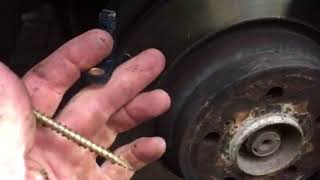
Typical fix: Replace the right rear wheel speed sensor. The sensor is held in by a single E10 Torx bolt. However, it often seizes in the aluminum hub due to galvanic corrosion and may need to be carefully drilled or broken apart to be removed. Soaking it in penetrating oil for hours beforehand is highly recommended. Some owners resort to removing the hub to punch the broken sensor out from the back.
Est. part cost: $25-$150 - Damaged Wiring Harness or Connector 🟡 Medium Probability The wiring runs along the suspension and can be damaged by road debris, improper jacking, or corrosion over time. The connector plug, located behind the wheel arch liner, is a common point for moisture intrusion and pin corrosion.
How to confirm: After confirming a bad signal with a scan tool, visually inspect the entire length of the sensor's wiring harness from the hub to the connector behind the wheel arch liner. Check for breaks, chafing, or corrosion on the connector pins. A multimeter can be used to check for continuity (no open circuits) and shorts to ground from the ABS module connector to the sensor connector.
Typical fix: Repair the damaged section of wire using solder and heat-shrink tubing or replace the pigtail connector if it is corroded. Ensure the harness is properly secured in its clips away from moving parts.
Est. part cost: $10-$50 - Damaged or Corroded Reluctor Ring ⚪ Low Probability The magnetic reluctor ring (or tone ring) is a composite metal/rubber unit pressed onto the rear axle shaft. Over time, rust can form between the ring and the axle, causing the ring to swell, crack, or even completely separate and fall off, leading to a total loss of signal.
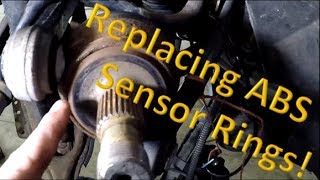
How to confirm: If a new sensor and verified wiring do not fix the issue, the reluctor ring is the next suspect. Remove the sensor and use a borescope or mirror to inspect the ring for rust buildup, debris, or physical damage as you slowly rotate the wheel. In some cases, the outer part of the ring will have completely detached. 🎬 See this walkthrough on replacing a damaged ABS magnet ring
Typical fix: If the ring is just dirty, it can sometimes be cleaned. If it is cracked, swollen, or separated, it must be replaced. Unlike some vehicles, the ring can be purchased separately, but replacement requires removing the rear axle shaft, which is a significant labor-intensive job involving disassembly of the rear suspension. This is considered an advanced DIY repair.
Est. part cost: $30-$100 for the ring, but $400-$1000+ for labor if the axle shaft needs to be replaced.
Rare But Worth Checking
- Faulty ABS/ESP Control Module: → Shop ABS Control Module This is very rare. Before condemning the expensive control module, all other possibilities (sensor, wiring, reluctor ring) must be exhaustively ruled out. A fault in the module's specific input channel for the right rear sensor can trigger the code. Sometimes a poor connection at the module itself is the culprit.
Diagnosis Steps
- Connect a Mercedes-specific or advanced OBD-II scanner (e.g., Autel, iCarsoft, Foxwell NT630 Plus, Xentry) capable of reading ABS/ESP module codes and live data.
- Confirm C0050 is the primary code stored. Note any other codes but prioritize C0050. Check for manufacturer-specific sub-codes like C0050:18 (low signal) or C0050:5A (implausible signal).
- Access the live data stream for all four wheel speed sensors.
- Have an assistant drive the vehicle slowly (above 5 MPH) in a straight line while you observe the sensor readings. Confirm that the Right Rear (RR) sensor reads 0 MPH or shows erratic values while the other three sensors show a consistent, matching speed. 🎬 Watch: How to diagnose and replace the rear ABS sensor
- Safely raise and support the rear of the vehicle. Remove the right rear wheel.
- Visually inspect the wheel speed sensor wiring harness for any signs of physical damage, chafing, or melting from contact with exhaust components.
- Locate the sensor connector behind the wheel well liner. Disconnect it and inspect the pins for corrosion or damage.
- If wiring looks good, replace the wheel speed sensor. Be prepared for it to be seized. Use copious amounts of penetrating oil and try to twist it with pliers before pulling. If it breaks, it will need to be carefully drilled or chiseled out.
- After replacement, clear the codes and test drive. If the code returns, re-check wiring for continuity and shorts.
- If wiring and sensor are confirmed good, remove the sensor and inspect the reluctor ring on the axle shaft for cracks, swelling, or debris.
- If all other components are good, the final and least likely culprit is the ABS control module itself.
Parts You'll Likely Need
- Rear Wheel Speed Sensor
(OEM #A2115403017)— This is the most common failure point for code C0050. The sensor's electronics fail from age and exposure to the elements.
Trusted brands: Bosch, ATE, VEMO, Delphi
OEM price range: $100-$150
Aftermarket price range: $25-$80 - Rear ABS Reluctor Ring
(OEM #A2303570182)— The second most likely part to fail, especially on cars from regions with road salt. Rust causes it to crack or separate from the axle shaft.
Trusted brands: Febi, Meyle
OEM price range: $50-$100
Aftermarket price range: $20-$40
Related Codes That Often Appear With This One
- C0045 - Left Rear Wheel Speed Sensor Circuit: If seen with C0050, this could point to a common issue like a corroded wiring harness connector shared by both rear sensors or a failing ABS module.
- C1479 - This is a manufacturer-specific code that can also point to a problem with the reluctor ring.
Platform-Specific Known Issues
- The rear ABS sensors are notoriously difficult to remove from the aluminum hub. They frequently corrode and seize, requiring the old sensor to be destroyed and drilled out for removal. Applying penetrating oil beforehand and allowing it to soak is highly recommended. Some mechanics recommend removing the hub entirely to press the broken sensor out from the back to avoid damaging the reluctor ring with a drill.
- The reluctor ring is a composite rubber/metal piece pressed onto the axle. It is known to fail from corrosion, causing it to swell and crack. Replacement requires removing the axle shaft.
Mechanic-Grade Diagnostic Values
- Sensor Resistance — expected: 4 to 6 MΩ (Mega-ohms), polarity dependent. Readings should match a known-good sensor.. Failure: Open circuit (infinite resistance) or a significant deviation from a new sensor's readings.
- Sensor AC Voltage Output (while spinning wheel) — expected: A steadily increasing AC voltage starting around 30mV and rising with wheel speed (e.g., ~220mV at 35mph).. Failure: Voltage that is erratic, does not increase with speed, or is absent entirely. A faulty sensor might bounce between 30-60mV regardless of speed.
- Sensor Diode Test — expected: Approximately 0.6V in one direction and 1.5V when reversing the multimeter leads.. Failure: Readings that are open-loop (OL) or significantly different from these values, indicating internal semiconductor failure.
Hidden / Shadow Codes Worth Checking
- C0050:18: Low signal amplitude. This indicates the signal from the sensor is weak, often due to a failing sensor, excessive air gap, or debris on the reluctor ring. (see via Professional scan tools like Mercedes Xentry or high-end Autel/Snap-on scanners.)
- C0050:5A: Signal not plausible. The sensor's signal is illogical compared to the other wheel speed sensors. This often points to an incompatible aftermarket sensor or a damaged reluctor ring. (see via Professional scan tools like Mercedes Xentry or high-end Autel/Snap-on scanners.)
- C0050 00: General circuit malfunction. This often points to an open circuit, short to ground, or high resistance in the wiring harness. (see via Professional scan tools like Mercedes Xentry or high-end Autel/Snap-on scanners.)
Scan Tool Commands That Help
- Xentry/DAS, iCarsoft, Autel: Live Data - Wheel Speed Sensors — This is the primary diagnostic step. It allows you to view the speed reading from all four sensors simultaneously while driving. A faulty right rear sensor will read 0 or show erratic values compared to the other three, confirming the location of the fault without any guesswork.
- Xentry/DAS: Guided Tests for DTC C0050 — If replacing the sensor and checking the wiring does not resolve the code, the guided test function in the dealer-level software can walk a technician through advanced circuit checks, including testing the input signal at the ABS module itself to rule out a module failure.
Wiring & Ground Locations
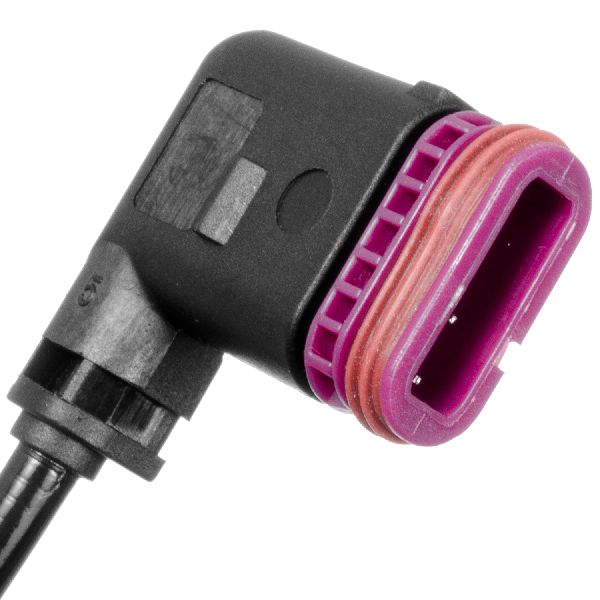
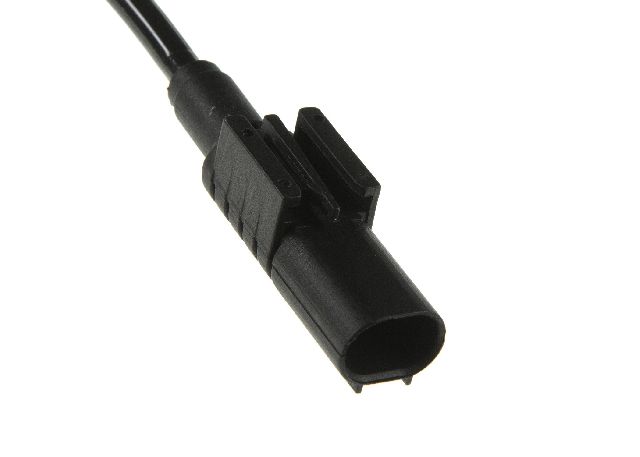
- Rear Wheel Speed Sensor Connector — Located behind the rear wheel arch liner. You must remove several plastic rivets and screws to pull the liner back and access the connector.. This connector is a common failure point due to its exposure to moisture and road debris, leading to corrosion on the pins which can interrupt the sensor signal.
- N47-5 (ESP/SPS/BAS control module) — In the engine compartment, on the driver's side (LHD models), in the corner near the hood hinge, under a plastic cover with slide locks.. This is the module that receives and interprets the wheel speed sensor signal. A poor connection at this module's main harness connector or an internal fault can trigger C0050, though it is rare.
- ABS/ESP Fuses — Fuse F47 (5A) in the front SAM (Signal Acquisition Module) fuse box in the engine bay. Additional high-amperage fuses F72 and F73 may be located in the passenger footwell fuse box on some models.. While a blown fuse is unlikely to isolate only one sensor, checking the fuses for the entire ABS system is a quick and essential preliminary step before more complex diagnostics.
- Main Chassis Ground Points — A PDF document with diagrams of all W211 ground locations is available on forums like MBWorld.org. Key grounds are located in the engine bay near the strut towers and in the passenger footwells.. A poor ground connection for the ABS module can cause a variety of difficult-to-diagnose electrical issues, including erratic sensor codes. Verifying the main module ground is a valid step in advanced diagnosis.
Real Owner Repair Stories
- PeachParts Mercedes-Benz Forum (W211 E320 CDI) — ABS and ESP lights on, stiff power steering.
❌ Tried (didn't work) Replacing the wheel speed sensor., Replacing the wheel bearing.
✅ What actually fixed it The root cause was a worn wheel spindle (knuckle). The wear prevented the wheel bearing from being preloaded correctly, causing excessive play (wobble) in the wheel. This wobble created an inconsistent air gap between the ABS sensor and the reluctor ring, generating a faulty signal. Replacing the spindle allowed for correct bearing preload and resolved the code. - MBClub UK Forum (2008 S211 (W211 Wagon)) — ABS Inoperative warning message appeared. Code reader confirmed rear left sensor fault.
❌ Tried (didn't work) Testing the old sensor with a multimeter (it showed identical resistance and diode readings to a brand new sensor)., Plugging in the new sensor without installing it (fault still appeared immediately).
✅ What actually fixed it The user monitored the AC voltage output from the sensor while driving. The faulty sensor's voltage was erratic and didn't change with speed, while the good sensor on the other side showed a steady increase. This confirmed the original sensor was indeed faulty despite passing basic resistance tests. Replacing the sensor and clearing the codes fixed the issue. - MBClub UK Forum (W211 (model unspecified)) — ABS inoperative warning after replacing a front wheel bearing with an aftermarket (SKF) kit.
❌ Tried (didn't work) Replacing the magnetic hub bearing seal with a genuine Mercedes-Benz part.
✅ What actually fixed it The aftermarket wheel bearing race was not fully seated in the hub assembly. After driving, the bearing developed play. The user had to re-tighten the bearing preload multiple times. Once the bearing was fully seated and preloaded correctly, the gap between the sensor and the magnetic ring was restored, and the ABS fault disappeared.
Documented NHTSA Reports
- NHTSA ODI #10763888: While reported on a different manufacturer's vehicle, an owner noted that code C0050 was diagnosed as a faulty power steering control module (PSCM), requiring the replacement of the entire steering column. This highlights how the code can impact steering systems across different platforms.
- NHTSA ODI #11649367: A technician reported that the vehicle disables ABS and supporting systems when setting code C0050, noting that extra brake fluid required to return caliper piston contact after service may be a factor in system discharge.
- NHTSA ODI #11693418: An owner reported that diagnostic code C0050-00 appeared alongside the need to replace rotors, rear brake pads, and the adapter plate.
- NHTSA ODI #11228687: A report describes code C0050 appearing simultaneously with multiple other communication and sensor codes (C0035, C0040, U0077, etc.) during a diagnostic check at an independent mechanic.
OEM Part Supersession History
A2115401217, A2115401917, A2115402417→A2115403017— Standard part evolution for improved reliability or manufacturing changes.
Heads up: An AliExpress listing notes that A2115403017 is for the left rear and A2115402917 is for the right rear, stating they have different magnetic polarity and are not interchangeable. This contradicts most other sources which list A2115403017 for both rear positions. Always verify the correct part number for your specific VIN with a dealer or reputable parts supplier.
Model Year Variations Within This Range
- 2003-2006: These models were equipped with the Sensotronic Brake Control (SBC) system. While the C0050 code's direct cause (wheel speed sensor circuit) is the same, a fault will also disable SBC functions and may present more urgent red-colored warnings on the dashboard. The SBC system has its own specific maintenance requirements (e.g., fluid changes) and potential failure points that are not present on 2007-2009 models.
- 2007-2009: These facelift models use a conventional hydraulic braking system instead of SBC. The diagnosis and repair of code C0050 are identical, but the overall braking system is simpler and lacks the SBC-specific failure modes and warnings.
Diagnostic Flowchart
Other Known Issues on This Vehicle
Issues unrelated to this code that are worth knowing about as an owner of this generation:
- Sensotronic Brake Control (SBC) Pump Failure 🔴 High — Affects 2003-2006 models. The pump has a finite service life based on brake actuations. Failure can occur between 80,000-150,000 miles. (Ref: Mercedes extended the warranty on the SBC hydraulic unit to 25 years with unlimited mileage, covering replacement if specific fault codes are present.)
- Airmatic Suspension Failure 🟠 Medium — Common on vehicles equipped with Airmatic. Air struts/bags can leak and the compressor can fail, typically between 80,000-120,000 miles, causing the vehicle to sag.
- M272/M273 Engine Balance Shaft/Idler Gear Wear 🔴 High — Affects V6 (M272) and V8 (M273) engines primarily from 2005-2007, though some cases exist outside this range. Premature wear of a soft metal sprocket leads to timing issues and requires engine-out service for repair. (Ref: Mercedes issued a service bulletin (e.g., S-B-03.30/08i) detailing the affected engine number ranges. A class-action lawsuit was filed in the US.)
- 7G-Tronic (722.9) Conductor Plate Failure 🟠 Medium — The transmission's electronic conductor plate, which houses speed sensors and solenoids, can fail, causing harsh shifting, getting stuck in gear, or limp mode. Often occurs from 60,000 miles onward.
- Leaking Radiator (Valeo) 🟠 Medium — On some pre-facelift models (up to 2005), Valeo-brand radiators could develop internal leaks, allowing coolant to contaminate the automatic transmission fluid, leading to transmission failure.
Used vs. New Parts: Buying Guide for This Vehicle
When a used part is the smart pick: For this repair, sourcing used parts is generally not recommended for the electronic sensor itself due to its high failure rate and the unknown remaining lifespan. However, a used wiring harness pigtail from a xjunkyard can be a cost-effective solution if only the connector is damaged. A complete used wheel hub/knuckle assembly could be considered if the original is damaged and a new part is prohibitively expensive, provided it comes from a low-mileage, non-corroded donor car.
Donor-vehicle mileage cap: roughly under 80000 miles for the part to have meaningful remaining life.
What to inspect on the donor part:
- For a wiring pigtail: Check for flexible, uncracked insulation and clean, corrosion-free pins.
- For a hub/knuckle: Verify there is zero play in the wheel bearing. Inspect the reluctor ring area for any signs of rust, swelling, or damage. Avoid parts from regions with heavy road salt use.
OEM-only on this vehicle (don't cheap out):
- While not strictly 'OEM-only', using a sensor from an OEM supplier like Bosch or ATE is highly recommended. Cheaper, no-name aftermarket sensors are notorious for having incorrect magnetic properties or poor durability, often causing the C0050 code to return immediately or fail prematurely.
Aftermarket brands forum-validated for this vehicle:
- Bosch
- ATE
- VEMO
- Delphi
- Febi (for reluctor ring)
Brands owners have reported issues with on this vehicle:
- Unbranded, low-cost sensors from online marketplaces are frequently reported on forums as being 'dead on arrival' or failing within a short period.
Real Owner Stories
Aggregated from forums and TSBs cited above. Mileages and costs reflect what owners reported in those sources.
2005 Mercedes-Benz E-Class (W211)
Symptoms: ABS and ESP failure lights appeared. Initially replaced the sensor, but the issue persisted.
What fixed it: The reluctor ring was found to have failed, which required a driveshaft replacement to resolve the signal issue.
Source hint: MBWorld.org: Thread 'ABS / ESP Failure' (2010)
2007 Mercedes-Benz E-Class (W211)
Symptoms: ABS/ESP warning lights. The rear ABS sensor was seized solid in the aluminum hub.
What fixed it: The sensor had to be destroyed and drilled out. Some owners recommend removing the hub entirely to punch the broken sensor out from the back to avoid damaging the reluctor ring.
Source hint: MBClub.co.uk: Thread 'W211 rear abs/reluctor ring replacement' (2017)
2004 Chrysler Crossfire
Symptoms: ABS, BAS, and ESP lights stay on; issues with the spoiler deployment.
What fixed it: Replacement of the failed wheel speed sensor, which shares the same electronic logic as the Mercedes W211 platform.
Source hint: CrossfireForum.org: Thread 'ABS/BAS/ESP Light stays on'
Related OBD-II Codes
Frequently Asked Questions
Why is my steering feeling heavy along with the ABS light for code C0050?
Is there a recall or warranty extension for the brake warning message on my 2003-2006 E-Class?
I replaced the sensor but C0050 persists. Could it be the reluctor ring?
Why is the right rear sensor so difficult to remove from the hub?
Can I use a standard OBD-II scanner to diagnose C0050 on my W211?
Will a C0050 code affect my cruise control?
Helpful Videos

We Have This Part in Stock




The information in this article is provided for general reference and educational purposes only. Vehicle specifications, procedures, and part compatibility can vary by production date, trim level, and region. Always consult your vehicle's factory service manual and verify part numbers before purchasing or performing repairs. Safety-critical components such as airbags, seat belts, and braking systems should be installed by a qualified professional.
- Mercedes-Benz E-Class:
- 🧭 Diagnostic Flowchart
- 🎬 Helpful Videos
- 🛍️ Shop This Part
- What's Unique About the 2003-2009 Mercedes-Benz E-Class
- Symptoms You May Notice
- Most Likely Causes
- Rare But Worth Checking
- Diagnosis Steps
- Parts You'll Likely Need
- Related Codes That Often Appear With This One
- Platform-Specific Known Issues
- Mechanic-Grade Diagnostic Values
- Hidden / Shadow Codes Worth Checking
- Scan Tool Commands That Help
- Wiring & Ground Locations
- Real Owner Repair Stories
- Documented NHTSA Reports
- OEM Part Supersession History
- Model Year Variations Within This Range
- Other Known Issues on This Vehicle
- Used vs. New Parts: Buying Guide for This Vehicle
- Real Owner Stories
- 2005 Mercedes-Benz E-Class (W211)
- 2007 Mercedes-Benz E-Class (W211)
- 2004 Chrysler Crossfire
- Related OBD-II Codes
- Frequently Asked Questions
- 🎟️ Get 5% Off