

C0050 on 2007-2013 Volvo C30: Right Rear Wheel Speed Sensor Fault Causes and Fixes
Code C0050 on a 2007-2013 Volvo C30 means there is a fault in the right rear wheel speed sensor circuit. This is most often caused by a failed sensor or damaged wiring. Expect to pay $40-$150 for a new sensor and is a DIY-friendly fix if the old sensor isn't seized.
- C0050 on your C30 means the right rear wheel speed sensor circuit has a problem, which disables your ABS and stability control.
- The most likely fix is replacing the right rear ABS sensor. Always inspect the wiring for damage before buying parts.
- Use an ABS-capable scan tool to watch live wheel speed data. This is the best way to confirm which wheel sensor is failing before you start work.
- The sensor can be difficult to remove due to corrosion. Use penetrating oil and be patient.
- Because this fault disables key safety systems, it should be addressed promptly. Driving with caution is advised until the repair is complete.
What's Unique About the 2007-2013 Volvo C30
The Volvo C30 is built on the P1 platform, shared with the S40 and V50. While C0050 almost always points to the wheel speed sensor circuit, this platform is also known for failures of the ATE Teves Mk60 ABS control module. A faulty module can sometimes trigger misleading wheel speed sensor codes, but more commonly presents with a BCM-0130 code related to the internal brake pressure sensor. Therefore, if a new sensor and wiring check don't resolve the issue, the ABS module itself becomes a possible, though less common, culprit for this specific code.
Symptoms You May Notice
- "Anti-Skid Service Required" message displayed on the instrument cluster.
- ABS warning light is on.
- Traction control or DSTC warning light is on.
- Cruise control is disabled.
- ABS system does not activate during hard braking (wheels may lock and skid).
- In rare cases with compounding electrical issues, other warnings like "Brake Failure" may appear, and other systems like wipers or indicators may act erratically.
- Replacing the ABS module first. While module failure is a known platform issue, for a C0050 code specifically, the fault is far more likely to be the sensor or its wiring. Always diagnose from the wheel inward.
- Replacing the wheel bearing/hub assembly without confirming the magnetic encoder ring is actually damaged. A bad sensor or wiring is more common and cheaper to fix.
Most Likely Causes
- Failed Right Rear Wheel Speed Sensor 🔴 High Probability → Shop ABS Wheel Speed Sensor The sensor is located in the wheel hub area, where it is exposed to water, road salt, dirt, and vibration, leading to internal failure over time or contamination from metallic brake dust.
How to confirm: Using an ABS-capable scan tool, monitor live data for the right rear wheel speed while driving. If the speed reads zero or is erratic compared to the other wheels, the sensor is likely bad. You can also test the sensor's internal resistance with a multimeter; a reading of infinite Ohms (open circuit) or zero Ohms (short circuit) indicates failure.
Typical fix: Replace the right rear ABS wheel speed sensor. The sensor can often seize in the hub and may be difficult to remove, sometimes requiring it to be carefully drilled out.
Est. part cost: $40-$160 - Damaged Wiring or Connector 🟡 Medium Probability The wiring harness runs through the wheel well and can be damaged by road debris, improper jacking, or chafing against suspension components. The connector pins can also corrode, especially in wet or winter climates.
How to confirm: Visually inspect the wiring from the sensor to the main harness for any breaks, chafing, or melted sections. Unplug the connector and check for green or white corrosion on the pins. Perform a continuity test on the wires from the sensor connector to the ABS module; resistance should be less than 2 Ohms.
Typical fix: Repair the damaged section of wire using solder and heat-shrink tubing. If the connector is corroded, it may need to be replaced with a new pigtail. Volvo offers a specific repair harness (Part No. 30667438).
Est. part cost: $20-$70 - Damaged or Dirty Magnetic Encoder Ring ⚪ Low Probability The encoder ring is integrated into the wheel bearing and hub assembly. While protected, severe corrosion or a failing wheel bearing can damage the ring, cause it to delaminate, or allow a buildup of metallic debris that interferes with the sensor reading.
How to confirm: After removing the ABS sensor, use a flashlight to inspect the magnetic ring inside the hub. Look for cracks, missing sections, or a heavy buildup of metallic debris. Check for excessive play in the wheel bearing by rocking the wheel at the 12 and 6 o'clock positions. A special magnetic encoder card can also be used to verify the integrity of the magnetic ring.
Typical fix: If the encoder ring is damaged, the entire rear wheel bearing and hub assembly must be replaced.
Est. part cost: $100-$250
Rare But Worth Checking
- Failed ABS Control Module (BCM): → Shop ABS Control Module This is a known issue on the P1 platform's ATE Teves Mk60 unit. While it usually presents with a BCM-0130 code for the internal brake pressure sensor, it can occasionally manifest as a single wheel speed sensor fault. This should only be considered after the sensor, wiring, and wheel bearing have been confirmed to be in good working order. Companies specialize in rebuilding these modules for a fraction of the cost of a new one.
- Low Battery Voltage: A weak or failing battery or a faulty alternator can cause low voltage conditions that may trigger various electronic faults, including ABS/DSTC warnings. It is a strong best practice to ensure the battery is healthy and the charging system is producing ~14V before diagnosing other components.
- Unrelated System Fault: In a documented case on a Volvo forum, a user's "Anti-skid service required" message on a 1.6D C30 that appeared under hard acceleration was accompanied by engine-related fault codes (P0341, P0238). This highlights that the car's systems are interconnected, and faults in the engine management system can sometimes trigger warnings in the chassis control system. Another user with a 1.6D reported the anti-skid message appearing when the engine cut out, which was ultimately diagnosed as a faulty crankshaft position sensor.
Documented NHTSA Reports
While C0050 is primarily a wheel speed sensor code for Volvo, it is important to note that other manufacturers use this identifier differently. For instance, NHTSA ODI #10763888 describes a case where C0050 identified a faulty power steering control module (PSCM) on a different make, requiring a full steering column replacement. Additionally, NHTSA ODI #11649367 notes that C0050 was set after brake service where extra fluid was required to return caliper piston contact to the brake pad, resulting in the system disabling ABS. Another report, NHTSA ODI #11693418, mentions C0050-00 appearing alongside the need to replace rotors, rear brake pads, and adapter plates. Finally, NHTSA ODI #11228687 shows C0050 appearing in conjunction with numerous other communication and sensor codes (C0035, C0040, U0126) during a systemic failure.
Diagnosis Steps
- Connect an ABS-capable scan tool (ideally Volvo VIDA) to the OBD-II port.
- Read fault codes from the Brake Control Module (BCM) and confirm C0050 is present. Check for any sub-codes (e.g., C0050:18 for low signal amplitude) which can provide more clues.
- Access the live data stream on the scan tool and monitor the speeds of all four wheels while driving slowly in a straight line.
- Confirm that the right rear wheel speed sensor is reading 0 mph or has an erratic/implausible signal compared to the other three sensors.
- Before jacking up the car, check the battery voltage. A reading below 12.4V at rest could indicate a battery issue that can cause spurious electronic faults.
- Safely raise and support the vehicle. Remove the right rear wheel.
- Visually inspect the ABS sensor wiring harness for any signs of physical damage, chafing, or corrosion at the connector.
- Remove the single Torx bolt (typically a T25) holding the ABS sensor in the wheel hub. The sensor may be seized and require penetrating oil and gentle prying to remove.
- Inspect the sensor tip and the mounting hole for excessive rust or metallic debris. Clean both thoroughly.
- Inspect the magnetic encoder ring on the wheel hub for damage or heavy contamination.
- If cleaning does not resolve the issue, replace the ABS wheel speed sensor.
- If the code returns after replacing the sensor, perform a continuity and voltage check on the wiring harness between the sensor connector and the ABS module.
- If wiring and sensor are confirmed good, the fault may lie with the wheel bearing/hub assembly or, in rare cases, the ABS module itself.
Parts You'll Likely Need
- Rear ABS Wheel Speed Sensor
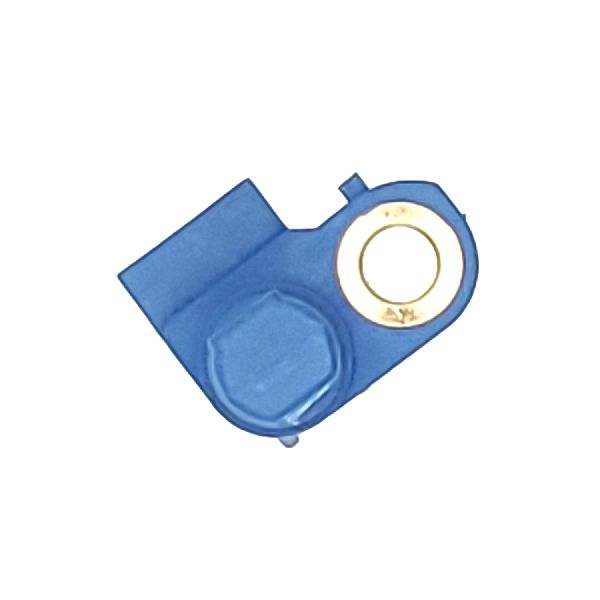
(OEM #31423573 (supersedes 30736634, now superseded by 32373145))— This is the most common component to fail, triggering the C0050 code. The rear sensor fits both the left and right sides on FWD models.
Trusted brands: Bosch, ATE, Facet, Genuine Volvo
OEM price range: $90-$160
Aftermarket price range: $40-$90 - Rear Wheel Bearing and Hub Assembly
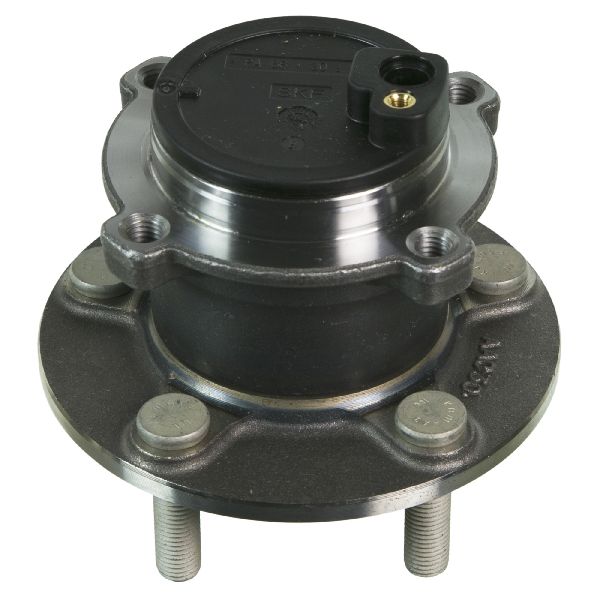
(OEM #31340686)— This part is only needed if the integrated magnetic encoder ring is found to be damaged, or if the bearing itself has failed. The part number is often cross-referenced with aftermarket number 512411.
Trusted brands: SKF, FAG, GMB, Genuine Volvo
OEM price range: $200-$300
Aftermarket price range: $100-$180
Mechanic-Grade Diagnostic Values
- Active Wheel Speed Sensor Supply Voltage — expected: ~11.5-12V with key on, engine off, measured at the sensor connector.. Failure: Significantly lower or no voltage indicates a wiring or ABS module power supply issue.
- Wiring Harness Continuity — expected: Less than 2 Ohms of resistance on each wire between the sensor connector and the ABS module connector.. Failure: Resistance is higher than 2 Ohms, or the reading is OL (Over Limit), indicating a break in the wire.
- Wiring Harness Short to Ground — expected: OL (Over Limit / infinite resistance) between each sensor wire and a known good chassis ground.. Failure: Any continuity or low resistance reading indicates the wire is shorted to ground.
Hidden / Shadow Codes Worth Checking
- C0050-00: General circuit malfunction (short to ground, open, or high resistance). (see via Volvo-specific scanner like VIDA or high-end professional scan tools.)
- C0050-18: Low signal amplitude, indicating a weak, erratic, or intermittent signal. This can point to a failing sensor, excessive air gap, or debris on the magnetic ring. (see via Volvo-specific scanner like VIDA or high-end professional scan tools.)
- C0050-5A: Signal not plausible. The signal from the sensor is inconsistent with the signals from other wheel speed sensors (e.g., reading a speed when the car is stopped). (see via Volvo-specific scanner like VIDA or high-end professional scan tools.)
Scan Tool Commands That Help
- Volvo VIDA: Fault Tracing & Live Data Monitoring — This is the primary function for this code. It allows you to read Volvo-specific DTCs and sub-codes, and most importantly, to monitor the live wheel speed data from all four sensors simultaneously to confirm the right rear sensor is the one failing.
- Volvo VIDA: BCM Reload / Reconfigure — This function is used if you replace the ABS module with a used unit. It allows the vehicle to 'pair' with the donor module. Without this step, the car may not start or the ABS system will remain inoperative.
Wiring & Ground Locations
- Brake Control Module (BCM) — At the left rear corner of the engine compartment, attached to the ABS hydraulic unit, often below the air filter box.. This is the destination for the wheel speed sensor signal. The main connector on this module is the end-point for testing wiring continuity from the sensor.
- Ground Connection 31/114 — On the left front strut tower in the engine compartment.. This is a primary ground point for several engine bay components. A poor connection here could potentially cause various electrical issues, though it's not a direct cause for a single sensor code.
- Ground Connection 31/115 — Base of the left 'A' pillar.. This is a major interior chassis ground. While less likely to be related to a rear wheel speed sensor, it's a key ground to be aware of for general electrical diagnostics.
Real Owner Repair Stories
- Volvo Owners Club Forum user 'BlackC3016' (2009 Volvo C30 1.6D, 71,000 miles) — Car juddered and cut out, followed by "Anti Skid Service Required" message and traction control light. Restarted and it happened again multiple times. Eventually drove home fine.
❌ Tried (didn't work) The user had recently had a DPF service and a full tank of fuel, which were initially suspected but unrelated.
✅ What actually fixed it Another user diagnosed the issue as a faulty crankshaft position sensor, a common cause for these exact symptoms on the 1.6D engine.
OEM Part Supersession History
30736634→31423573, which was then superseded by 32373145— Standard part evolution for improved reliability or manufacturing changes.
Heads up: All parts are interchangeable for the rear axle on FWD models.
Diagnostic Flowchart
Other Known Issues on This Vehicle
Issues unrelated to this code that are worth knowing about as an owner of this generation:
- Clogged Sunroof Drains 🔴 High — Extremely common. The drain tubes, particularly at the A-pillars and C-pillars, can shrink, disconnect, or clog, leading to water leaking into the cabin, soaking carpets, and potentially damaging sensitive electronics like the Central Electronic Module (CEM).
- PCV/Oil Filter Housing Diaphragm Failure (T5 Engine) 🟠 Medium — Common after 80,000-100,000 miles. The PCV diaphragm inside the oil filter housing assembly tears, causing a loud whistling or squealing noise from the engine, high oil consumption, and potential oil leaks from seals due to excessive crankcase pressure. (Ref: Volvo issued an extended warranty (No. 205) for this part on some vehicles, but it has likely expired for most.)
- Failing Alternator 🟠 Medium — A frequent failure item, often after 100,000 miles. Symptoms include a distinct whining or grinding noise from the engine bay, flickering lights, various electrical fault messages ('Anti-Skid Service' can be one), and eventual battery drain.
- Cracked Coolant Expansion Tank 🟡 Low — The plastic coolant reservoir is prone to developing hairline cracks from heat and age, leading to slow coolant leaks. It's a relatively inexpensive and easy part to replace as preventative maintenance.
- Automatic Transmission (AW55-51) Valve Body Issues 🔴 High — On automatic models, the Aisin-Warner transmission can develop harsh shifting, flares, or slipping, particularly when warm. This is often due to wear in the valve body solenoids. Volvo's 'lifetime fluid' recommendation is often cited as a contributor to premature wear; regular fluid changes are recommended.
- AC Compressor Clutch Failure 🟠 Medium — The clutch on the A/C compressor is a common failure point. The air gap can become too large, preventing the clutch from engaging and resulting in no cold air. Sometimes this can be fixed by re-shimming the clutch, but often the entire compressor is replaced.
Used vs. New Parts: Buying Guide for This Vehicle
When a used part is the smart pick: A used ABS Control Module (BCM) can be a cost-effective option, as new units are very expensive. However, it MUST be from a donor car with a similar configuration (e.g., FWD to FWD) and requires a software 'reload' or 'pairing' using a tool like Volvo VIDA to make it work with your car. A used wheel bearing/hub assembly is generally not recommended due to unknown wear.
Donor-vehicle mileage cap: roughly under 80000 miles for the part to have meaningful remaining life.
What to inspect on the donor part:
- For an ABS module, ensure the part numbers match exactly or are known compatible.
- Ask the seller if the donor car had any ABS-related fault codes before being dismantled.
- Visually inspect the connector pins for any corrosion or damage.
Aftermarket brands forum-validated for this vehicle:
- Sensors: Bosch, ATE, Facet
- Wheel Bearings: SKF, FAG
Brands owners have reported issues with on this vehicle:
- Unbranded, no-name ABS sensors from online marketplaces are frequently reported as being dead-on-arrival or failing prematurely. One review noted a part advertised as Volvo was a 'very bad copy'.
Real Owner Stories
Aggregated from forums and TSBs cited above. Mileages and costs reflect what owners reported in those sources.
2007 Volvo C30
Symptoms: Anti-skid message followed by brake failure warnings, erratic wipers, and a no-start condition.
What fixed it: The issue was identified as a systemic electrical failure, possibly involving the alternator or Central Electronic Module (CEM), rather than a simple wheel speed sensor.
Source hint: Reddit r/Volvo thread titled '07 Volvo C30 Anti-skid message followed by...'
Volvo C30
Symptoms: Anti-skid service required message displayed; owner was reluctant to visit a main dealer and sought advice on cleaning sensors.
What fixed it: Basic troubleshooting including checking fault codes and considering sensor cleaning.
Source hint: Volvo Owners Club Forum thread titled 'Anti skid service required c30'
Volvo C30
Symptoms: Anti-skid service required light remained on even after a technician spent 10 hours diagnosing and replacing the ABS module.
What fixed it: A faulty EGR valve was the surprising culprit triggering the anti-skid warning.
Source hint: Reddit r/MechanicAdvice thread titled 'Volvo C30 - Anti-skid service required'
Related OBD-II Codes
Frequently Asked Questions
My 2007 Volvo C30 has an 'Anti-Skid Service Required' message and the wipers are acting crazy. Is this just a wheel sensor?
Is there a specific repair kit for the ABS wiring on my C30?
Can I just clean the right rear sensor to fix the C0050 code?
I'm having trouble removing the sensor from the hub; is this common?
If the magnetic encoder ring is damaged, can I replace just the ring?
Does the C30 share this ABS issue with other Volvo models?
We Have This Part in Stock


The information in this article is provided for general reference and educational purposes only. Vehicle specifications, procedures, and part compatibility can vary by production date, trim level, and region. Always consult your vehicle's factory service manual and verify part numbers before purchasing or performing repairs. Safety-critical components such as airbags, seat belts, and braking systems should be installed by a qualified professional.
- Volvo C30:
- 🧭 Diagnostic Flowchart
- 🛍️ Shop This Part
- What's Unique About the 2007-2013 Volvo C30
- Symptoms You May Notice
- Most Likely Causes
- Rare But Worth Checking
- Documented NHTSA Reports
- Diagnosis Steps
- Parts You'll Likely Need
- Mechanic-Grade Diagnostic Values
- Hidden / Shadow Codes Worth Checking
- Scan Tool Commands That Help
- Wiring & Ground Locations
- Real Owner Repair Stories
- OEM Part Supersession History
- Other Known Issues on This Vehicle
- Used vs. New Parts: Buying Guide for This Vehicle
- Real Owner Stories
- 2007 Volvo C30
- Volvo C30
- Volvo C30
- Related OBD-II Codes
- Frequently Asked Questions
- 🎟️ Get 5% Off